
June 10, 2026
Property Dealer Website: Listings and WhatsApp Leads
Plan a property dealer website with verified listings, buyer and owner forms, WhatsApp qualification, CRM ownership, privacy, and listing expiry controls.
Read articlePublished Updated
Website development for real estate agents with property leads, listing pages, WhatsApp CTA, CRM flow, lead source tracking, and local SEO.
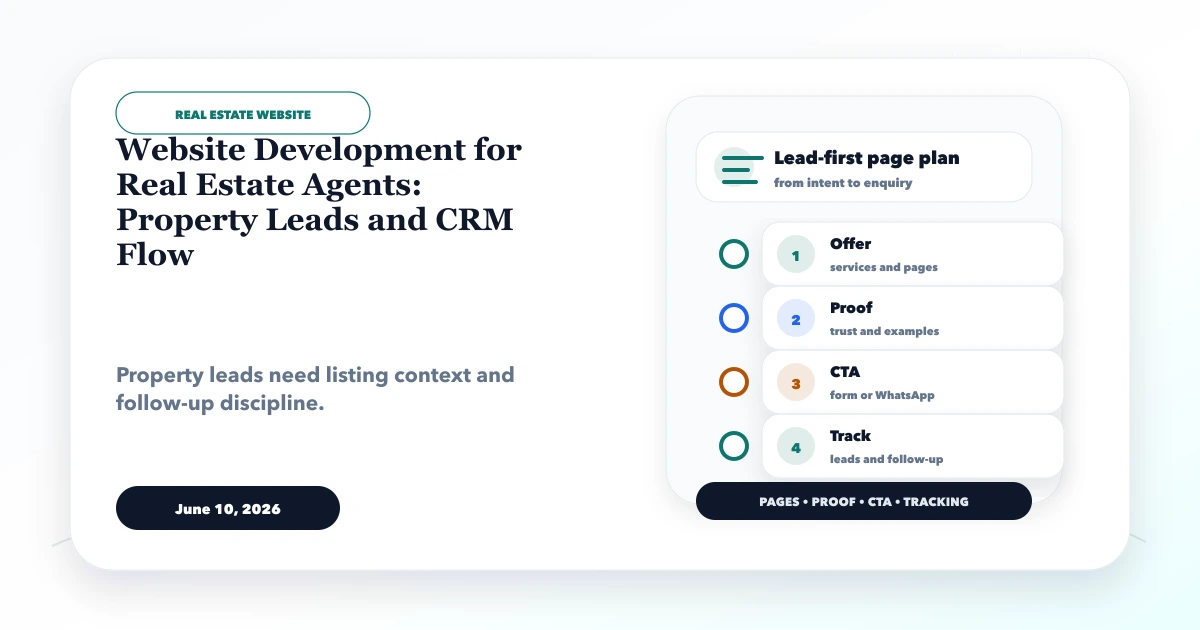
A real estate agent website should qualify property demand before the first callback. Instead of collecting only a name and phone number, it should capture property type, purpose, preferred locality, budget, possession timeline, and financing stage, then pass that context into a CRM or lead sheet.
This guide explains the listing structure, location content, lead forms, WhatsApp references, CRM stages, and follow-up rules needed by independent brokers and small property teams. It also separates verified inventory from generic project content so the website remains useful when availability changes.
By Tushar C. (Founder, VASUYASHII). Reviewed by VASUYASHII Editorial for practical website planning, SEO structure, lead generation, WhatsApp flow, enquiry forms, and business website delivery.
A real estate agent website should include property listings, location pages, buyer requirement form, WhatsApp CTA, CRM flow, lead source tracking, and trust proof.
A buyer may ask for flats, plots, rental options, or investment property. Without listing context and CRM follow-up, leads are hard to manage.
The practical target is a searchable, verified property layer that sends the agent a usable buyer requirement rather than another context-free phone number.
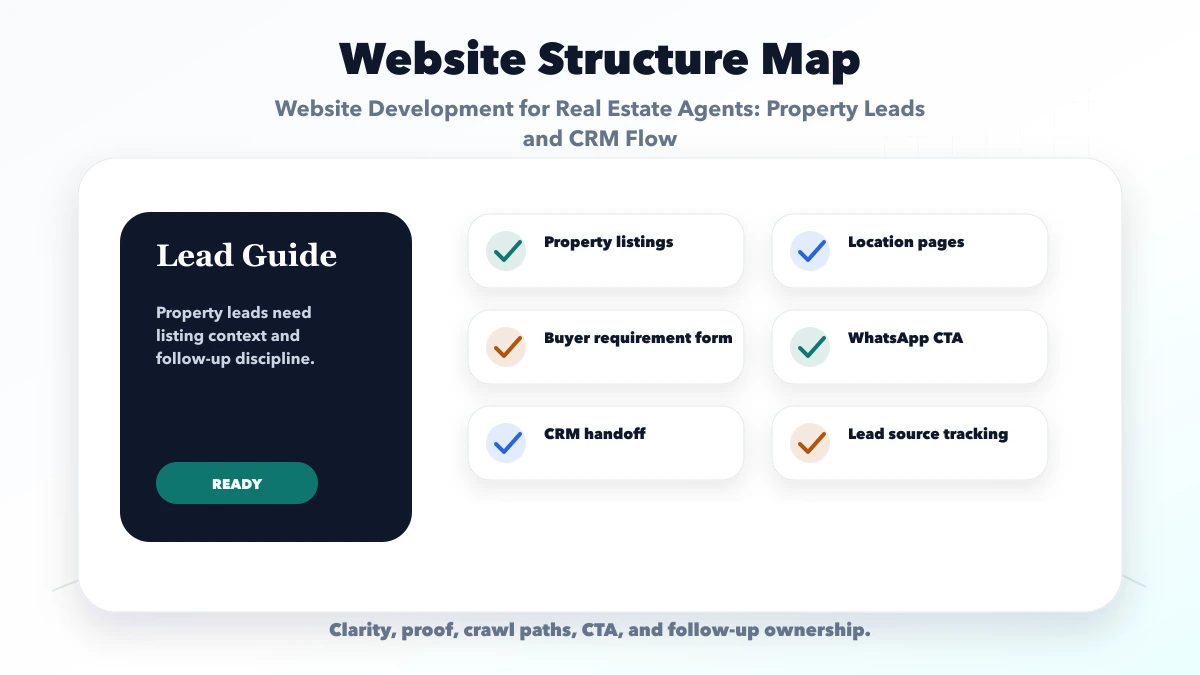
Each check should support inventory trust, buyer qualification, agent follow-up, or a documented property decision. Remove sections that merely repeat generic brokerage claims.
| Website area | What to include | Why it matters |
|---|---|---|
| Project layer | Listings, portfolio, locations | Shows available work |
| Trust layer | Photos, approvals, testimonials | Builds buyer confidence |
| Lead layer | WhatsApp, form, CRM handoff | Captures property enquiries |
The structure depends on whether the agency handles new projects, resale, rentals, commercial property, or a mix. These inventories require different fields, verification frequency, and enquiry questions.
Launch with a clean sample of verified inventory and one working pipeline. Expand only after search logs, buyer requirements, response times, and visit outcomes reveal what the team can maintain.
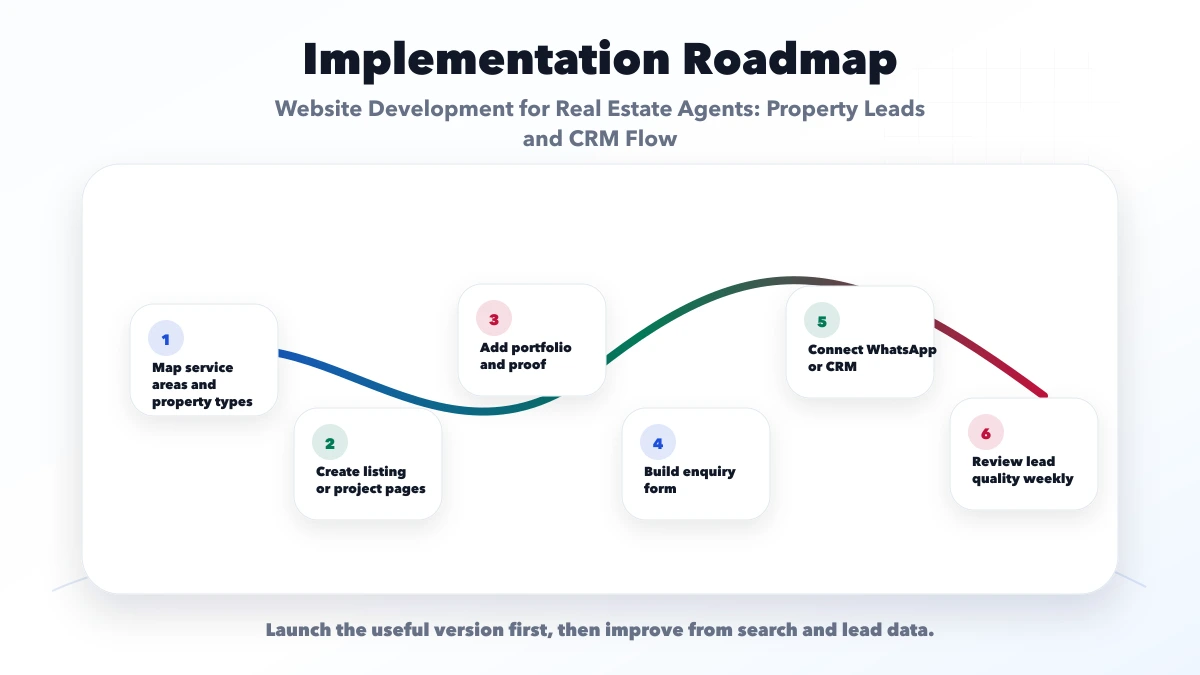
This checklist prevents a polished listing site from feeding agents stale properties, duplicate buyers, and enquiries with no budget or locality context.
VASUYASHII would first audit inventory fields, verification ownership, buyer requirement capture, agent roles, CRM stages, WhatsApp references, location architecture, and reporting. The first phase would prove listing-to-visit flow before adding broker portals or complex automation.
Useful links: web application services, software development, integrations, services, and contact.
Every listing should use consistent fields: property type, transaction type, locality, price or price range, area and unit, bedrooms, furnishing, possession, verification date, status, media, and responsible agent. Projects may also need developer, RERA reference, configuration, amenities, and construction status.
Do not use a free-form page as the only record. Structured fields make filters, comparison, expiry, CRM references, and future imports possible. They also help the team find incomplete listings before publishing.
These page types answer different questions:
| Page type | User question | Update requirement |
|---|---|---|
| Available listing | Can I enquire about this exact property? | High; verify or expire regularly |
| Project page | What does this development offer? | Medium; update milestones and availability |
| Locality guide | Is this area suitable for my needs? | Lower; maintain infrastructure and price context |
Do not make an expired unit look available to keep traffic. Mark it unavailable, suggest relevant alternatives, and preserve the page only when it still provides useful project or locality context. Add the last verified date where availability is important.
The enquiry should carry the listing or locality reference automatically. Ask only fields that change the next conversation: buy or rent, property type, budget, preferred locality, move or possession timeline, and financing stage. Long forms that ask every family and document detail will reduce completion.
For WhatsApp, prefill a short message containing the listing reference, not a generic “Hi.” The CRM should store the source page and campaign so the agent does not ask the buyer to repeat which property they saw.
A practical pipeline is new → attempted → connected → requirement verified → visit planned → negotiation → won/lost. Add a follow-up date and owner to every active lead. Keep property matches as related records so one buyer can consider several listings without duplicate leads.
After a site visit, record outcome, objections, next action, and selected properties. Managers need an overdue-follow-up view, source conversion, locality demand, visit-to-deal ratio, and reasons for loss. These reports are more useful than total enquiry count.
Assume a broker has 80 resale listings but only 25 were verified this week. The website publishes verified stock first and labels older records for internal review. A buyer looking for a two-bedroom flat in a defined budget submits one requirement, then receives matched options from the agent.
The CRM records which listings were shared and when the next call is due. If a property is sold, it stops appearing in search while the project and locality pages remain available. This workflow creates better trust than hundreds of copied listing pages with unclear availability.
The website should support due diligence, not replace it. Buyers still need relevant legal, project, title, and financing checks before a transaction.
Index pages only when they provide durable search value. A project page with verified details, useful configuration information, FAQs, and internal links can remain valuable. A temporary listing with two sentences and no unique evidence may be better kept out of the sitemap or allowed to expire according to a documented rule.
Use one canonical URL per real page and avoid generating crawlable combinations for every filter. Search results such as “2 BHK + furnished + under ₹50 lakh + one locality” are useful inside the website, but thousands of empty or near-duplicate filter URLs can dilute discovery. Curate important locality and property-type landing pages manually and link them from the main real-estate structure.
Locality pages should answer practical questions: property mix, buyer fit, connectivity context, nearby demand drivers, typical decision factors, and how the agency verifies current options. Do not copy the same paragraph and replace only the locality name. The location-page duplication guide provides a safer structure.
Assign a verification interval by record type. Active resale inventory may need a weekly call; a new project’s construction milestone may need a monthly check; a locality guide may need a quarterly editorial review. Store last_verified_at, verifier, and outcome in the admin rather than changing only the public “updated” date.
Create queues for expiring verification, missing media rights, price changes, and owner withdrawal. If an agent ignores the queue, hide the listing from public search until it is checked. This protects trust and reduces wasted buyer calls.
Track qualified requirements, listing-to-enquiry rate, WhatsApp clicks with listing reference, duplicate-lead rate, time to first response, visit bookings, and lead-to-visit conversion. Search impressions are useful, but a page attracting unrelated rental or job queries is not succeeding commercially.
Review zero-result searches inside the website. They reveal locations, budgets, and property types visitors want but cannot find. Use that evidence to improve inventory acquisition and navigation rather than automatically generating new SEO pages.
Do not approve the project from listing-card screenshots. Test expiry, filters, duplicate enquiries, listing references, agent assignment, follow-up dates, mobile WhatsApp context, and source reporting with real sample data.
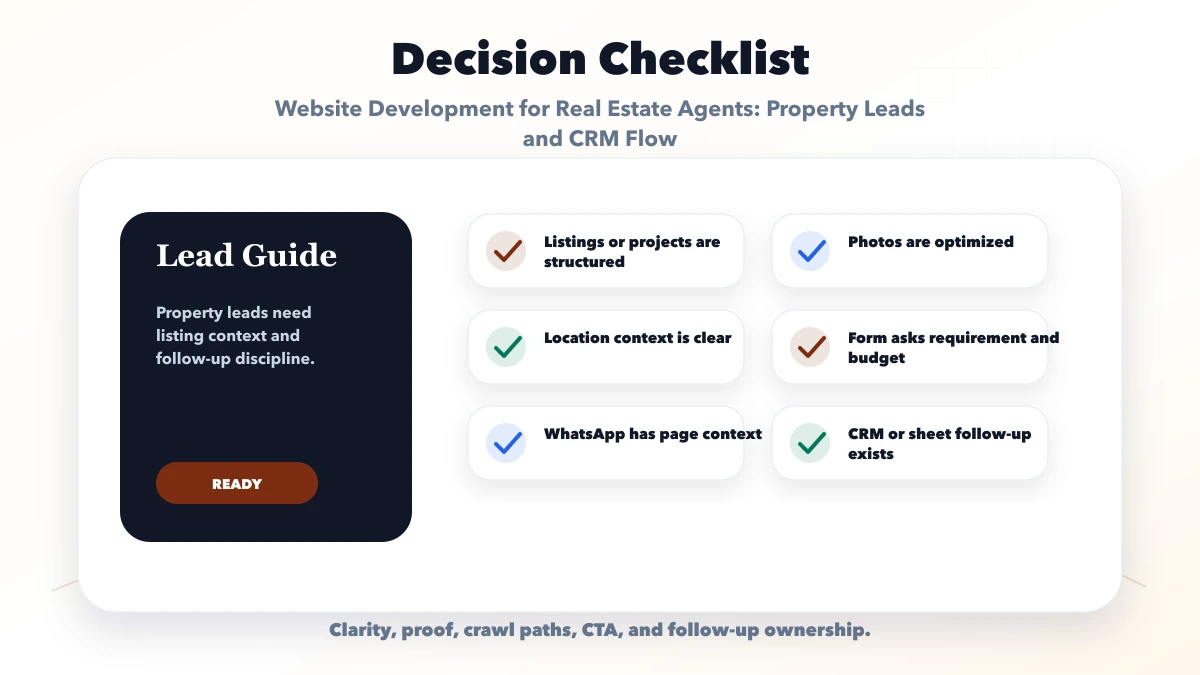
It should include pages and sections for property listings, location pages, buyer requirement form, whatsapp cta, plus contact options and SEO basics.
Yes, when the target users prefer quick enquiries. The WhatsApp message should include page or service context.
Show pricing context, fee factors, package ranges, or quote logic where it helps qualify enquiries.
Yes. Forms and WhatsApp leads can be routed to a CRM, sheet, or follow-up workflow depending on the setup.
Yes. VASUYASHII can plan, design, build, and launch this type of business website with lead flow and SEO basics.
For a field-level inventory model, buyer requirement form, owner intake, listing expiry, and WhatsApp reference flow, continue with the property dealer website implementation guide.
When inventory, assignments, visits, and source reporting must operate in one workspace, use the real estate listing and leads dashboard guide to define records, permissions, and acceptance tests.
If you want a practical plan for website development for real estate agents, VASUYASHII can help with scope, design, development, SEO setup, lead flow, launch, and maintenance.
Related Articles
June 10, 2026
Plan a property dealer website with verified listings, buyer and owner forms, WhatsApp qualification, CRM ownership, privacy, and listing expiry controls.
Read article
May 25, 2026
Plan a real estate lead CRM with source tracking, qualification, property matching, site visits, follow-ups, broker assignment, privacy, and reports.
Read article
June 10, 2026
Website development for training institutes with batch pages, fee details, course enquiries, WhatsApp CTA, CRM lead system, and checklist.
Read article
May 26, 2026
Plan a real estate listing and leads dashboard with verified inventory, source tracking, agent assignment, visits, follow-ups, consent, and reliable reports.
Read article