
March 30, 2026
Real Estate CRM: Features, Automation and Pricing
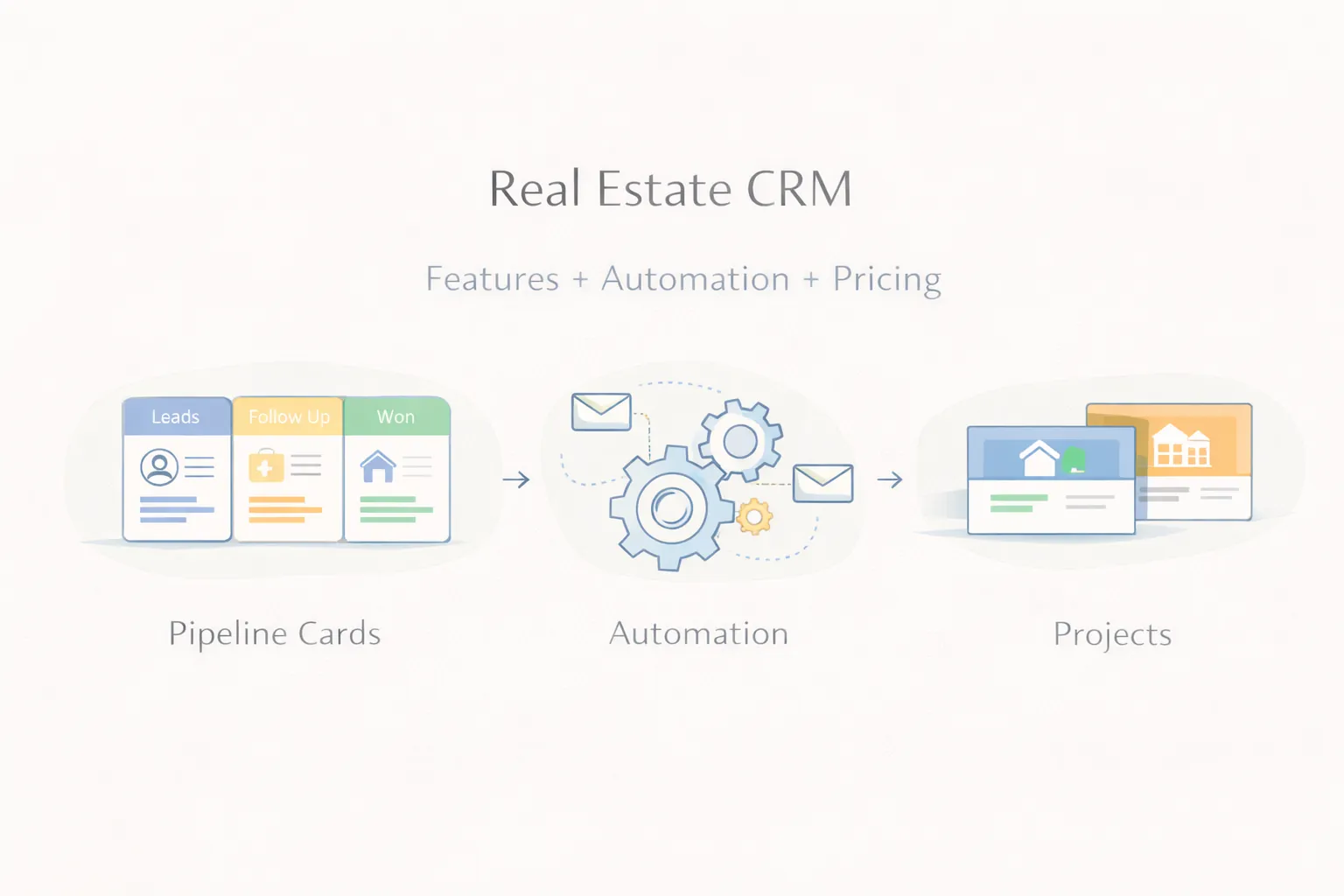
Plan a real estate CRM with lead capture, project matching, site visits, follow-ups, automation, reports, pricing, and rollout guidance.
Read articlePublished Updated
Compare real estate CRM features and cost in India, including lead sources, property matching, site visits, follow-ups, roles, reports and rollout phases.
This guide is for real estate brokers, property dealers, builders, channel partners, and sales teams that need to control enquiries, requirements, property matches, site visits, follow-ups, inventory status, and source reporting. It explains the workflow, feature boundaries, indicative cost, rollout phases, data ownership, and the difference between configuring an existing CRM and building a custom system.
By Tushar C. (Founder, VASUYASHII). Reviewed by VASUYASHII Editorial for field experience, buyer usefulness, SEO clarity, and practical implementation relevance.
Serving Delhi NCR and nearby business markets: Ghaziabad, Noida, Delhi, Gurugram, Faridabad, Meerut, Hapur, and remote clients across India.
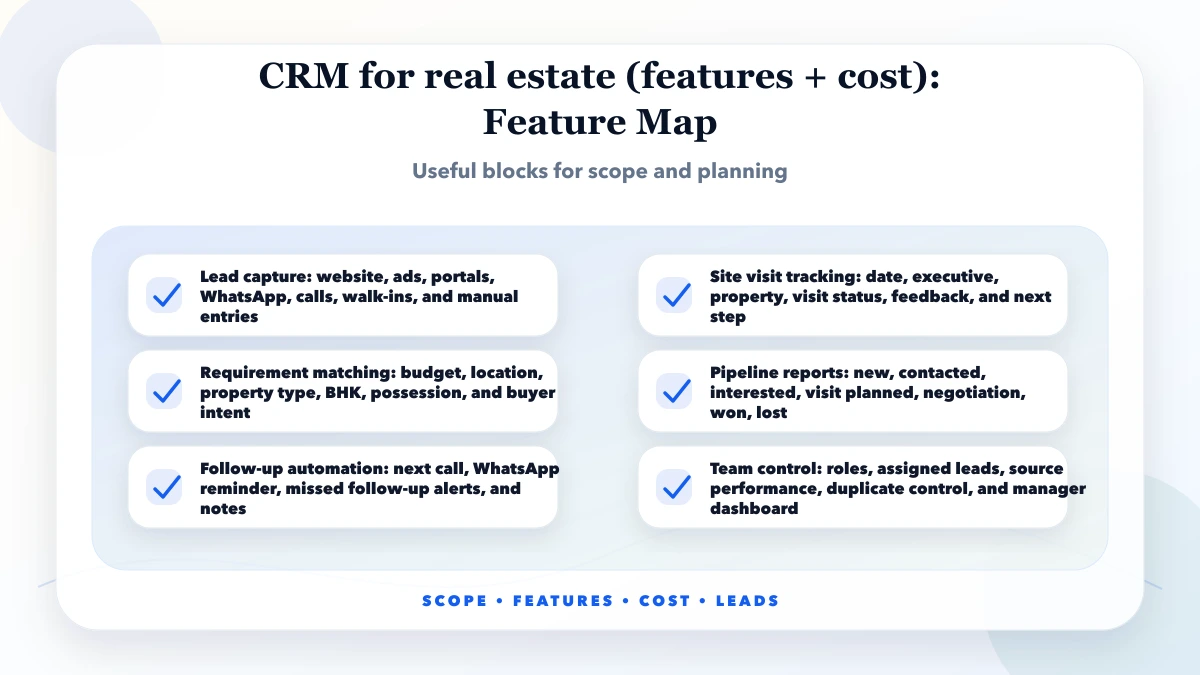
A real estate CRM should manage leads, properties, requirements, follow-ups, site visits, WhatsApp reminders, sales pipeline, team roles, source tracking, and reports for brokers or builders.
The best approach is not to copy a generic template. Start from the actual buyer journey, then build pages, forms, dashboards, reports, and CTAs around that journey. A good build should improve trust, reduce manual work, and make follow-up measurable.
A CRM becomes useful when it records one accountable path instead of scattering leads across portal exports, personal phones, spreadsheets, and WhatsApp chats:
lead source -> duplicate check -> buyer requirement -> property match -> agent assignment -> follow-up -> site visit -> negotiation -> booking/lost reason
Every active lead should have an owner, current stage, next action, and last-contact time. Property availability needs its own verification timestamp so agents do not continue promoting unavailable inventory. Training, data cleanup, permission rules, and source reconciliation are part of rollout—not optional work after the screens are built.
Each feature should have a business reason. A gallery without project details is weak. A form without tracking is incomplete. A dashboard without useful reports becomes another data-entry screen. Build only what helps enquiries, operations, reporting, or trust.
For a website, the structure should usually include a strong homepage section, service or category pages, proof blocks, FAQs, contact/WhatsApp CTA, and local trust. For software, the structure should include modules, users, permissions, reports, imports/exports, and support process.
The first screen should explain who the service is for and what problem it solves. The middle section should show features, proof, pricing context, and workflow. The bottom section should answer objections and push a clear next action.
| Scope | Practical price range | Typical timeline |
|---|---|---|
| CRM-lite setup | ₹45,000 to ₹1.2 lakh | 2 to 4 weeks |
| Custom real estate CRM | ₹1.2 lakh to ₹4 lakh | 1 to 3 months |
| CRM + portal/ad integrations | ₹4 lakh to ₹10 lakh+ | 3 to 6 months |
These are planning ranges, not fixed quotes. Final pricing depends on scope, number of pages or modules, design quality, integrations, data import, admin panel, reports, content writing, image preparation, tracking, and post-launch support.
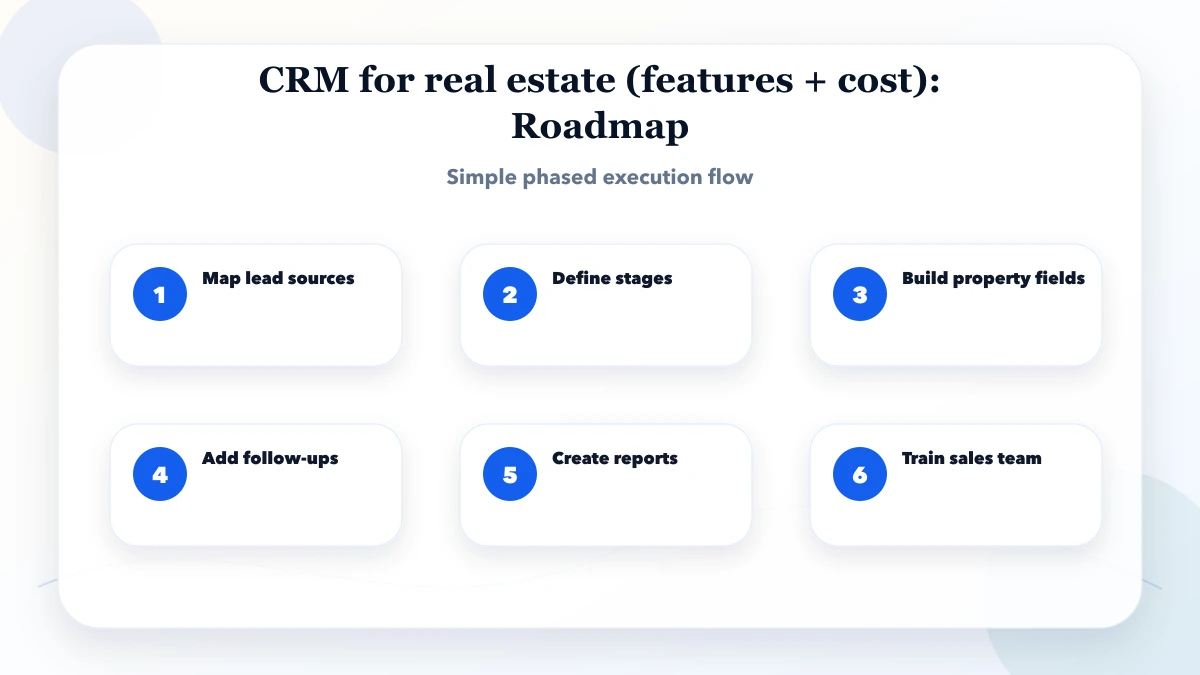
Keep the first version focused. If the business needs many features, split the work into phases: launch essentials first, then reporting, automation, integrations, and advanced dashboards. This reduces delay and keeps cost under control.
The stack should match the business. A simple website may not need a heavy custom backend. A billing, inventory, CRM, or ERP system should have strong data structure, role-based access, backups, exports, and future maintenance planning.
The biggest cost driver is usually not the homepage design. It is content preparation, custom workflow, data structure, integrations, reports, permissions, and revisions. Scope clarity before development saves money.
Before approving the project, compare three options: a basic website or tool, a growth-focused version, and a custom operational system. The basic version is useful when you only need online presence, contact details, and a simple enquiry path. The growth-focused version is better when you want SEO pages, proof sections, tracking, admin updates, and better lead quality. A custom operational system is needed when staff must manage data, permissions, inventory, billing, CRM, orders, or reports daily.
Ask these questions before finalizing scope: Who will use it every day? What data will be entered? What reports will the owner check weekly? What happens after a lead comes in? Which fields are compulsory? Which actions need approval? Who can export data? What should happen when staff leave or roles change? These questions prevent expensive rework later.
For Indian SMBs, the best project is usually not the largest first version. A phased build works better: launch the pages or core modules first, train the team, collect feedback, then add automation and integrations. This keeps budget practical and helps the owner see value before expanding.
Plan maintenance before launch. A website needs content updates, image compression, security updates, form testing, tracking checks, and periodic SEO refreshes. A software system needs backups, user management, bug fixes, data exports, report corrections, and small workflow improvements. If nobody owns these tasks, the project becomes outdated quickly.
At minimum, keep admin credentials, hosting details, source access, backup process, domain/DNS access, analytics access, and documentation organized. For software projects, also keep a role matrix, module list, database backup plan, and change-request process. This protects the business if staff or vendors change.
For public pages, do not depend only on design. Add page titles, meta descriptions, internal links, FAQs, proof, compressed images, schema where relevant, and a clear CTA. Use helpful language instead of keyword stuffing. If the page targets a specific industry, write about that industry's workflow instead of copying the same paragraph across many pages.
For lead conversion, keep the first action simple. WhatsApp works well for Indian buyers, but serious projects also need a form or scope request that captures service type, budget range, timeline, and contact details. This helps you respond faster and avoid low-quality conversations.
Avoid building only for appearance. A good website or system should answer buyer questions, reduce manual follow-up, and create measurable leads or operational control. If the team cannot update content, export data, or track enquiries, the build will feel incomplete.
Google's SEO Starter Guide recommends useful, people-first content, clear site structure, descriptive links, and crawlable pages. Use that as the baseline while keeping every page genuinely helpful for buyers.
If you are still planning the scope, start with a small checklist: target audience, must-have pages/modules, proof assets, enquiry flow, budget range, timeline, and who will update the system after launch. If you want help converting this into a proper scope, VASUYASHII can guide you.
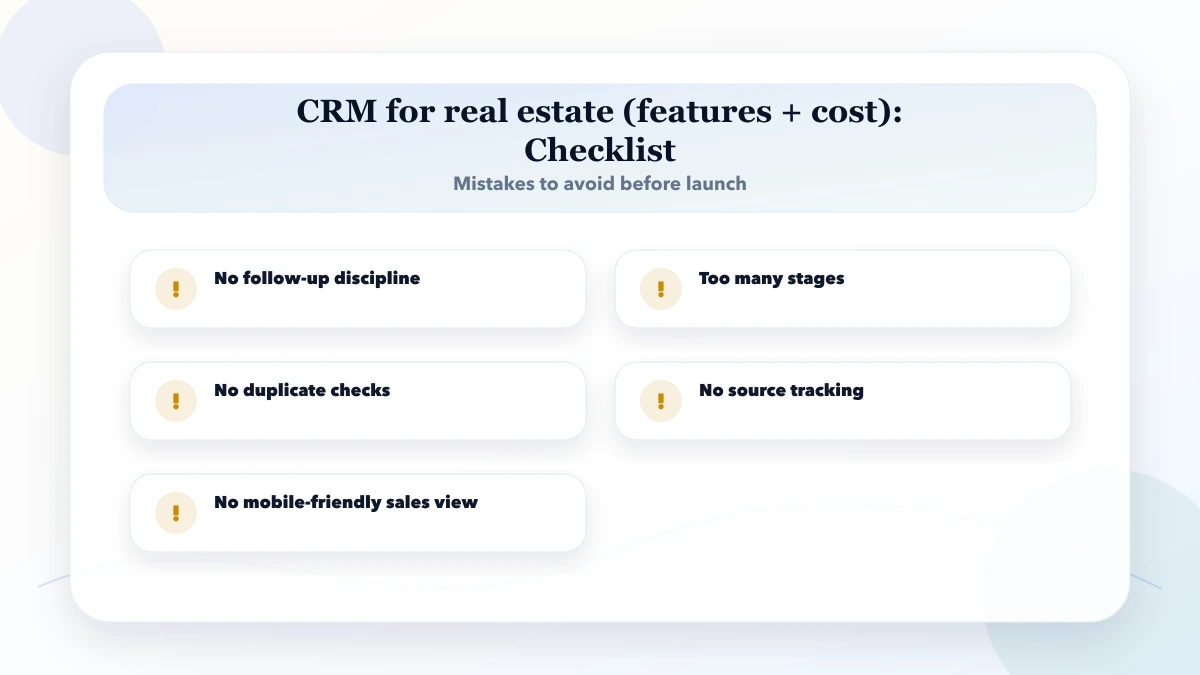
After publishing, track impressions, clicks, WhatsApp clicks, form submissions, calls, qualified leads, and closed projects. Review Search Console after indexing and add FAQs based on real queries. If the page gets traffic but no leads, improve proof, CTA placement, form fields, and pricing clarity.
For industry pages, refresh content every 45 to 90 days. Add new proof, screenshots, FAQs, cost notes, and internal links. This keeps the page useful and prevents the website from looking stale.
A basic CRM-lite can start around ₹45,000, while custom real estate CRM with automation and reports can cost ₹1.2 lakh to ₹4 lakh or more.
Zoho can work for standard workflows, but custom CRM helps when property matching, site visits, and team reporting need custom rules.
Follow-up tracking is usually the most important because real estate conversion depends on timing.
Yes, reminders and templates can be added depending on WhatsApp API or manual-click flow.
Yes. Source tracking improves lead quality measurement and follow-up speed.
A focused rollout can start in 2 to 4 weeks, while advanced integrations take longer.
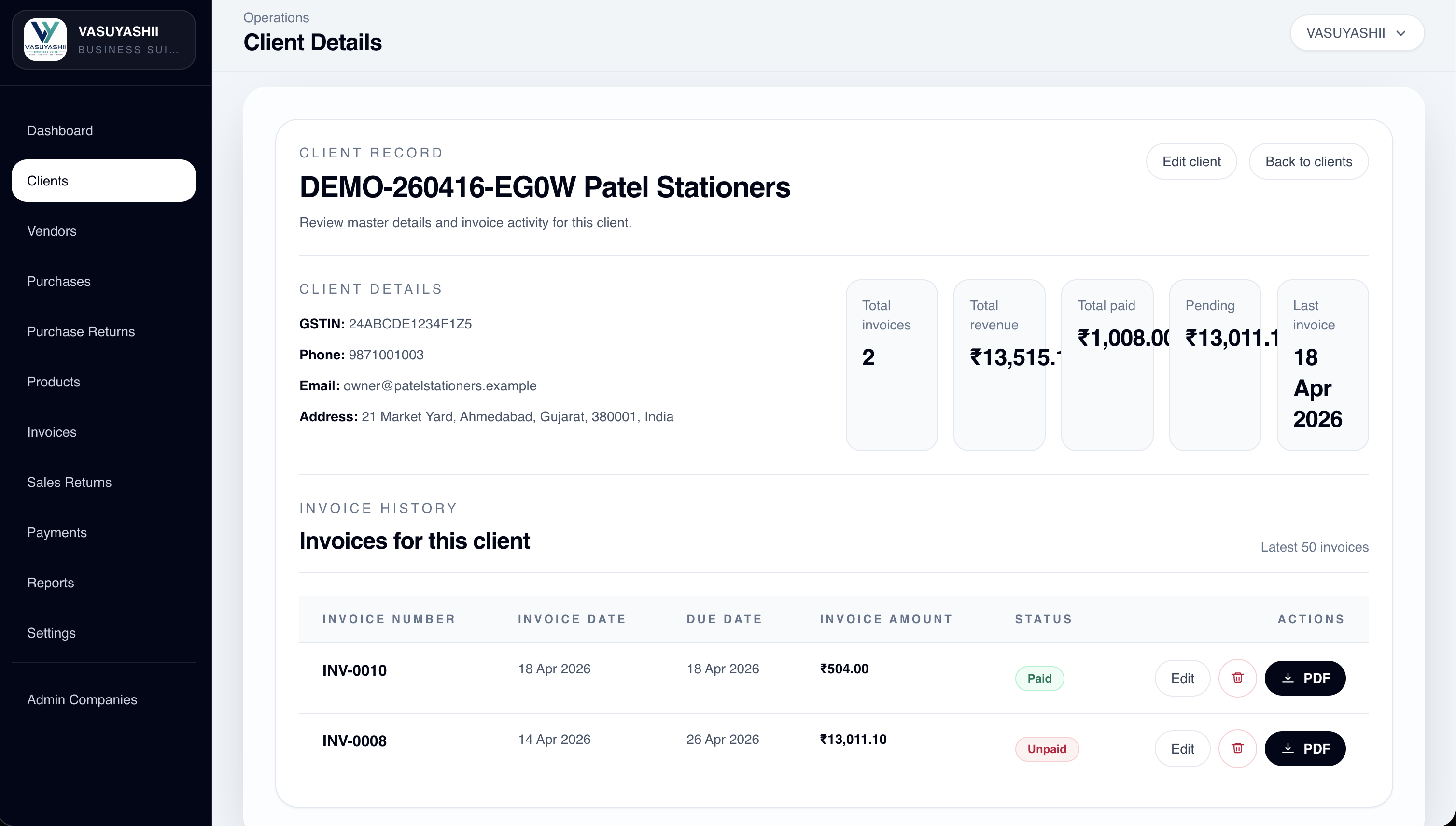
VASUYASHII Business Suite currently implements company-scoped client records, contact details, invoice/payment history and business reports. The screenshot below is an actual current client-detail interface with demo data. It demonstrates record ownership and linked activity, while a real-estate CRM would still need property, campaign and site-visit modules.
| Real-estate event | Required CRM state | Owner decision |
|---|---|---|
| portal or ad lead arrives | source, campaign, consent and duplicate status | merge or create record |
| agent follows up | outcome and next action date | continue, nurture or disqualify |
| site visit booked | project, unit interest, slot and assigned agent | confirm transport and reminder |
| inventory changes | unit availability and last verified time | stop promoting unavailable unit |
| booking progresses | document and payment checklist | hand off to operations |
Decision example: a five-person brokerage may configure an existing CRM if its main need is lead assignment and reminders. A multi-project developer that must match budget, tower, floor, unit status and channel partner data may justify a custom workflow and inventory integration.
Limitations: the screenshot is not a completed real-estate client case study. Current Business Suite positioning does not include advanced property matching, portal sync, telephony attribution or legal-document automation as standard. WhatsApp automation also depends on approved templates, consent and provider rules.
Because property leads contain personal data, define notice, purpose, access and retention with reference to India's official Digital Personal Data Protection Act, 2023. Obtain legal guidance for the organisation's actual compliance duties.
Use the real estate listing and leads dashboard guide to validate inventory ownership, lead deduplication, assignment, visits, consent, and reporting before selecting CRM features.
If you want a practical website, CRM, inventory, billing, ERP, or use-case landing page plan with clear pricing and implementation steps, VASUYASHII can help you scope it properly.
Related Articles
March 30, 2026
Plan a real estate CRM with lead capture, project matching, site visits, follow-ups, automation, reports, pricing, and rollout guidance.
Read article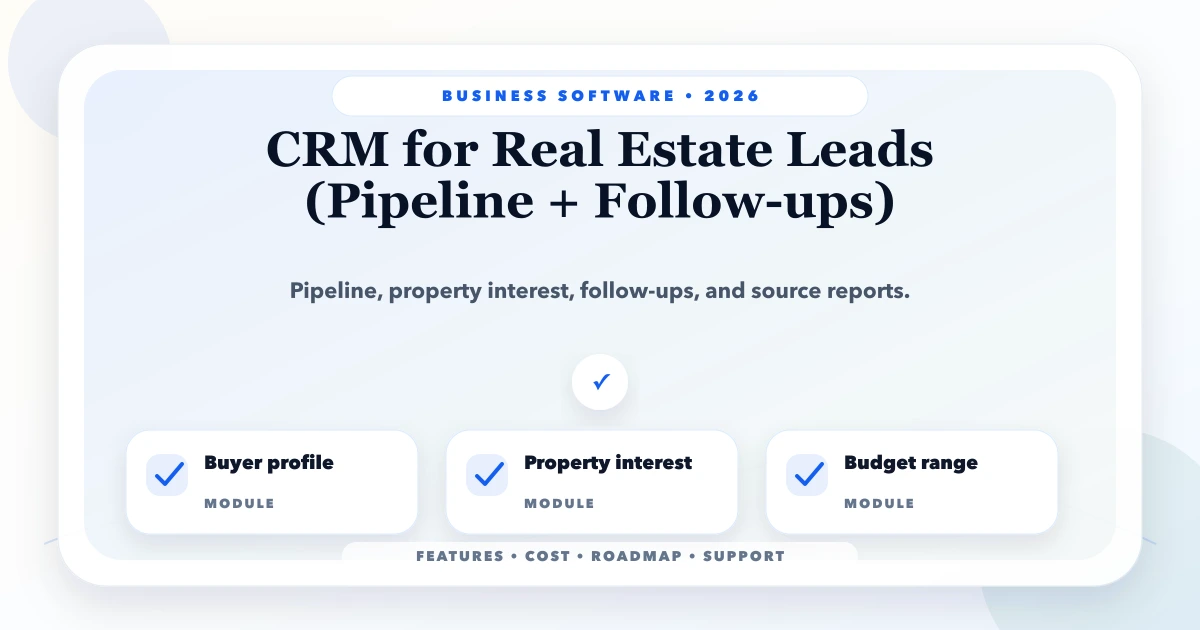
May 25, 2026
Plan a real estate lead CRM with source tracking, qualification, property matching, site visits, follow-ups, broker assignment, privacy, and reports.
Read article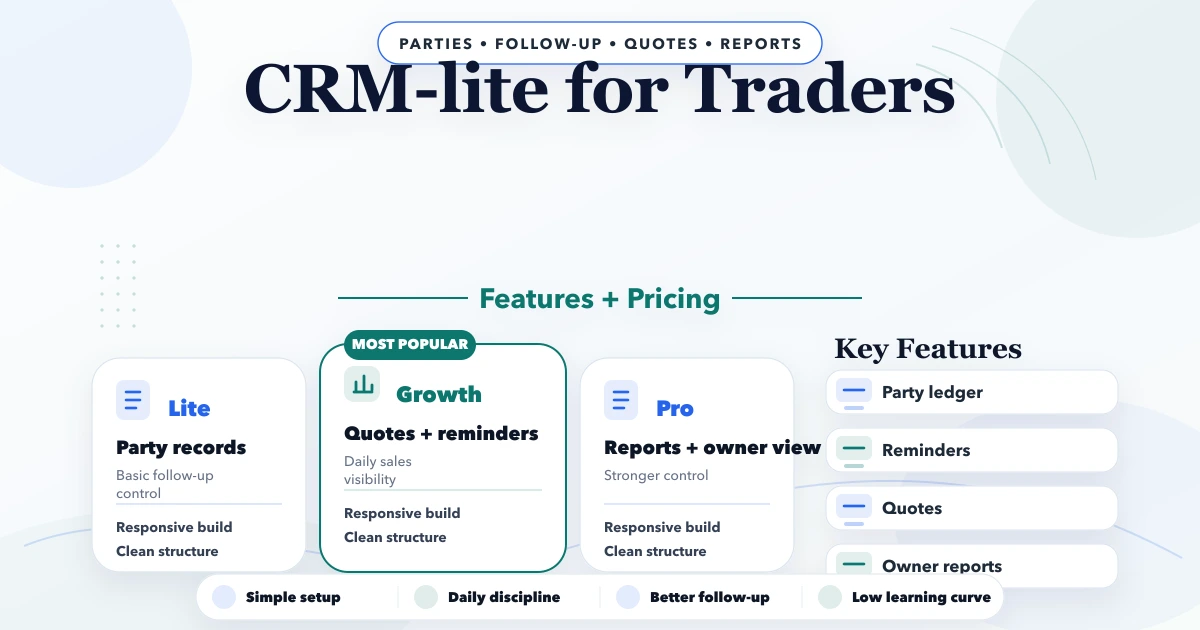
April 21, 2026
Plan a CRM-lite for Indian traders with customer history, follow-ups, quotations, WhatsApp, team roles, reports, realistic cost, and rollout steps.
Read article
May 28, 2026
CRM development cost in India: 2026 India pricing guide with modules, timeline, cost drivers, mistakes, quote checklist, and practical planning ranges.
Read article