
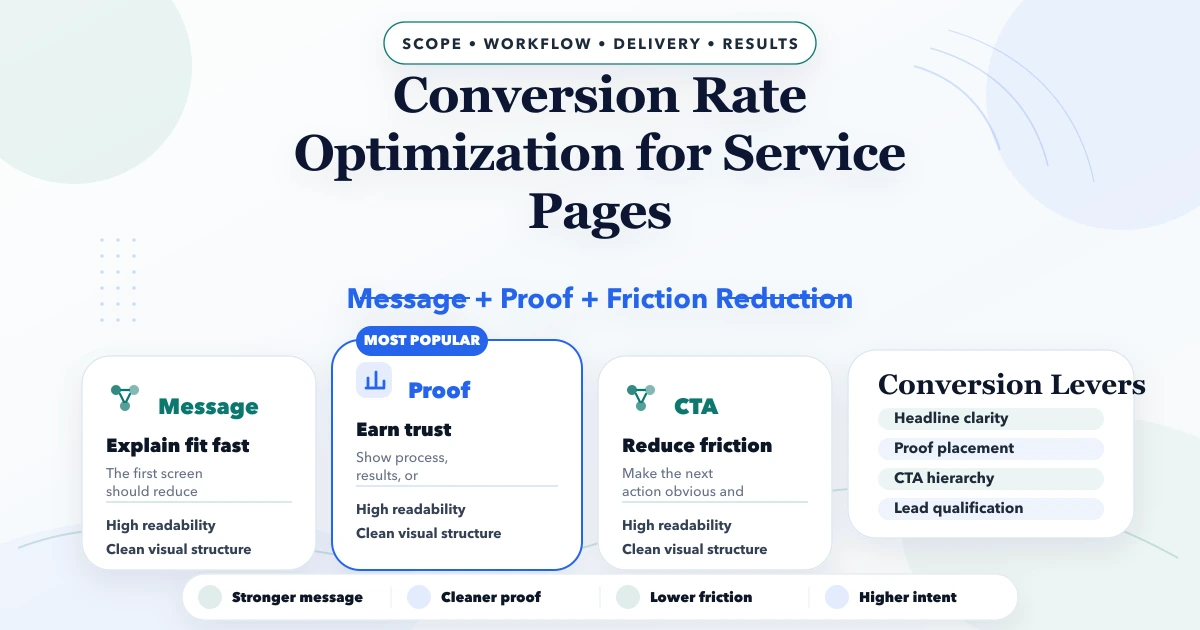
April 30, 2026
Conversion Rate Optimization for Service Pages
Conversion rate optimization for service pages with copy, UX, trust, CTA, pricing, and implementation guidance for better leads in 2026.
Read articlePublished Updated
Plan a consultant website with focused offers, authority proof, service pages, case studies, qualification forms, booking flow, analytics, and SEO.
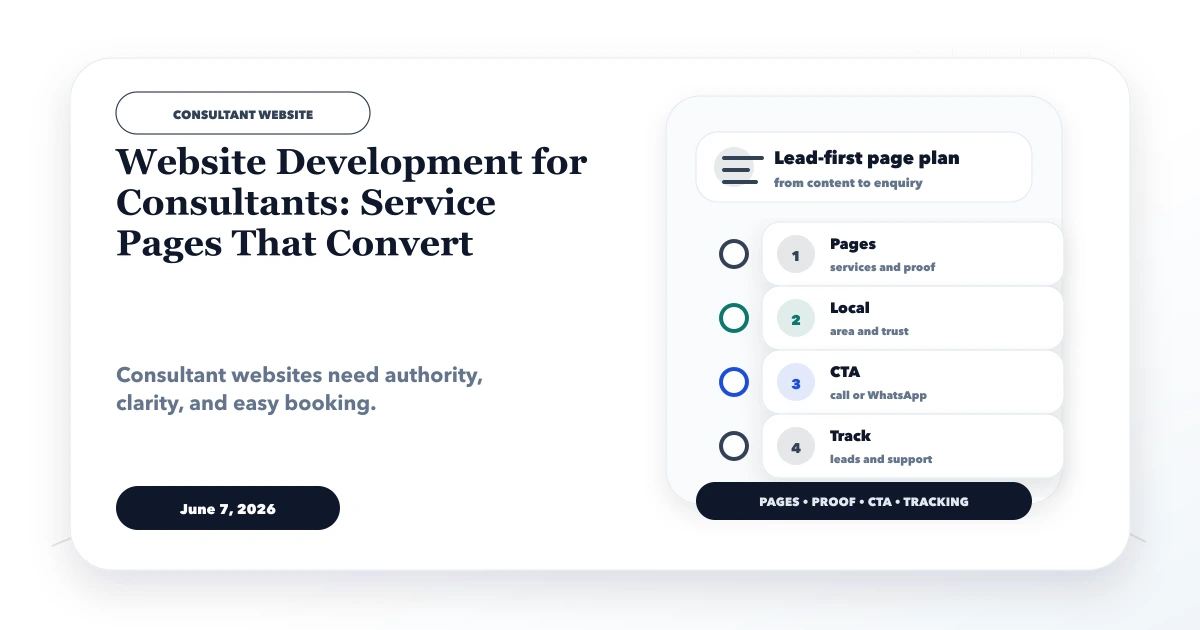
This guide explains website development for consultants for business, HR, finance, marketing, technology, and independent consultants building a lead-focused website. It focuses on practical website planning, page structure, trust signals, SEO basics, lead capture, and a clean handover.
The goal is simple: build a website that helps visitors understand the business, trust the offer, and contact faster through call, form, or WhatsApp.
By Tushar C. (Founder, VASUYASHII). Reviewed by VASUYASHII Editorial for practical website planning, local SEO, lead generation, contact flow, and small business website delivery.
A consultant website should include clear service offers, problem-solution sections, case proof, testimonials, process, booking CTA, contact form, FAQs, and SEO-focused service pages.
Consulting buyers need to trust expertise before booking. A website should explain the consultant's approach, outcomes, fit, and next step clearly.
The practical target is not only a modern-looking page. The website should reduce buyer confusion, show proof, and make the contact path measurable.
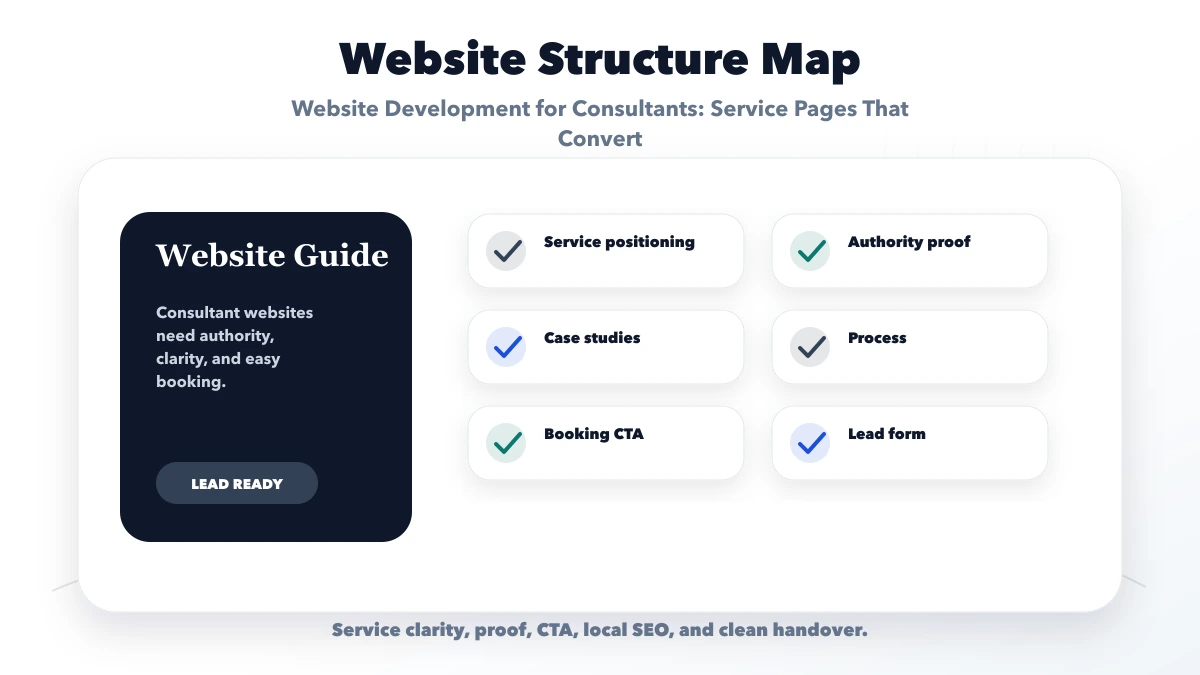
Each check should connect to a real buyer action. If a section does not support trust, search visibility, contact, or follow-up, it should be simplified or moved.
| Website area | What to include | Why it matters |
|---|---|---|
| Authority layer | Profile, results, case proof | Builds trust |
| Service layer | Offers, outcomes, process | Clarifies value |
| Booking layer | Call CTA, form, calendar | Converts interest |
The right structure depends on the business type. A shop, clinic, consultant, professional firm, and local service provider should not all use the same page plan.
Use this roadmap to build one useful launch version first. After launch, improve pages based on enquiries, search data, and customer questions.
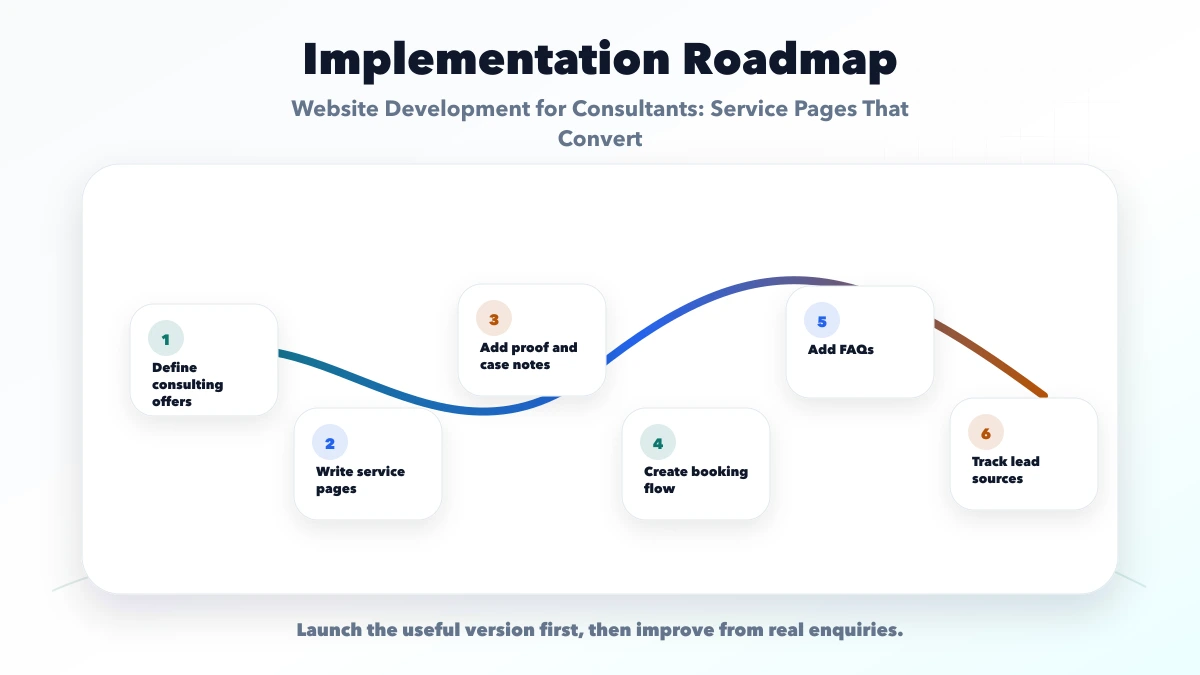
This checklist protects the project from looking complete but failing commercially. A good website should make the next step obvious and easy to measure.
VASUYASHII would first map services, target users, pages, proof, CTA, WhatsApp or form flow, SEO metadata, and handover needs. Then we would build the website in a focused phase instead of adding unnecessary complexity.
Useful links: web application services, software development, integrations, services, and contact.
Consultants often describe capabilities instead of packaging decisions a buyer can understand. Separate services when they solve different problems, involve different stakeholders, or need different proof. A strategy diagnostic, implementation engagement, retained advisory service, and team workshop should not all share one vague paragraph.
For each offer, define the buyer, triggering problem, expected deliverable, working method, approximate engagement shape, required client input, and next step. The website can discuss outcomes without promising unverified financial results.
A credible case study does not need a famous logo. It needs a clear situation, constraint, intervention, and observable outcome. If exact business metrics are confidential, explain the process change: for example, replacing an unstructured weekly reporting process with an agreed dashboard and review rhythm.
Label fictional examples, anonymized engagements, and real named work correctly. Do not place sample companies beside genuine testimonials without a visible distinction.
The primary form should collect only information needed for the first decision: name, business email or phone, organization, service interest, current problem, and preferred contact method. Budget and timeline can be optional or use broad ranges.
After submission, show what happens next and when the prospect should expect a response. Track form completion, booking clicks, WhatsApp clicks, and calls as separate events so the consultant can see which pages create qualified conversations.
The current VASUYASHII contact form below demonstrates a concise requirement path with service context and a defined submission surface.
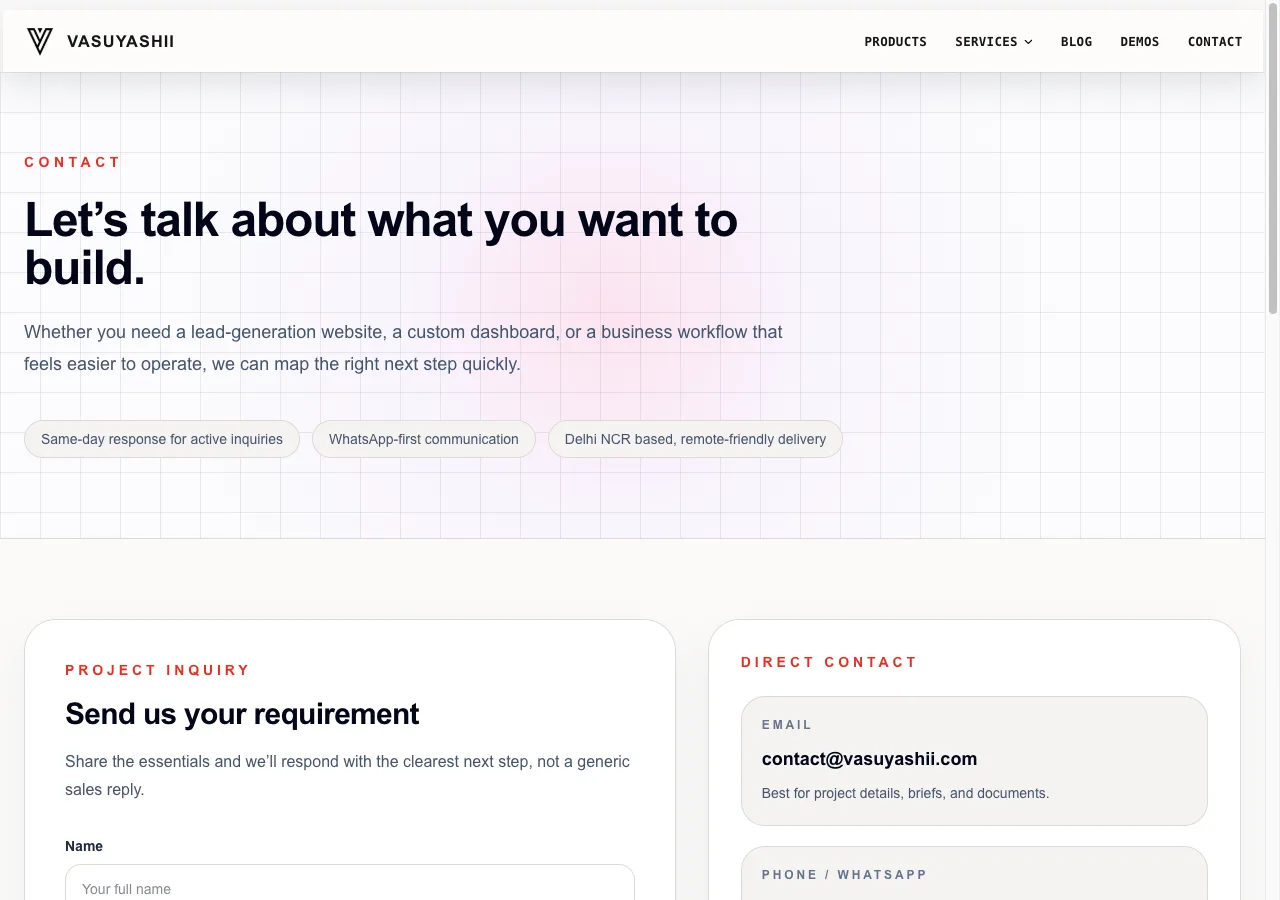
This screenshot proves the interface exists. It does not prove that a consultant will receive a fixed number of enquiries. Lead quality also depends on positioning, authority, traffic, response speed and qualification.
Consultants often list broad capabilities without showing what a buyer can purchase. Turn expertise into a clear offer hierarchy.
| Page | Buyer question | Evidence to include | Primary action |
|---|---|---|---|
| Homepage | Is this adviser relevant to my problem? | Focus, sectors and approach | Review a service |
| Service page | What decision or outcome is supported? | Process, deliverables, exclusions | Request fit call |
| About | Why trust this person or team? | Experience, credentials and boundaries | View evidence |
| Case study | How was a similar problem approached? | Context, work, approved result | Discuss similar scope |
| Insights | How does the consultant think? | Original frameworks and sources | Read related service |
| Contact | What happens after I enquire? | Fields, response owner and privacy | Submit requirement |
Separate advisory, audit, implementation support and retainers when their deliverables differ. A “strategy consulting” page should not force buyers to infer duration, preparation, output and next step.
A new practice may not have permission to publish client outcomes. Use honest alternatives: anonymised process examples, original diagnostic frameworks, sample deliverables with fictional data, talks, published analysis, verified qualifications and a clearly labelled demonstration.
Do not create fake logos, reviews or revenue improvements. Google's people-first content guidance recommends original information and clear first-hand expertise for an intended audience.
Ask only what changes the next step: business context, problem, urgency, decision stage and preferred contact method. State whether the first call is diagnostic, sales-oriented or paid. If a calendar is used, define timezone, cancellation and confirmation behaviour.
Track the page and service category without sending names, email addresses or message text to analytics. Fire a confirmed lead event only after the server accepts a valid form submission.
Assign one named owner for every service claim, credential, price note, availability statement, case example and policy. The consultant should approve specialist claims; the website editor should control formatting, links and publication dates. Record when a page was reviewed and what evidence supports any measurable statement.
Before publishing, verify that the contact recipient, booking calendar, consent wording, privacy link and confirmation message are current. Remove departed team members, expired credentials, unavailable services and old event claims promptly. This operational review protects trust more effectively than continuously adding generic thought-leadership posts.
For regulated or high-risk advice, involve a qualified reviewer and clearly distinguish educational information from personalised professional advice. The website should never imply a licence, client relationship or guaranteed outcome that does not exist.
Review search queries, landing pages, CTA events, form completion, booked calls, and lead quality every month. If traffic reaches a service page but qualified visitors do not contact, improve the offer, proof, objection handling, or CTA before publishing more articles. If visitors begin forms but abandon them, shorten the questions and confirm that the mobile experience is clear.
Use actual enquiry language to update FAQs and service copy. This creates a stronger feedback loop than redesigning sections based only on preference.
Avoid judging a website only by design screenshots. Leads usually improve when service clarity, trust proof, speed, CTA, tracking, and follow-up work together.
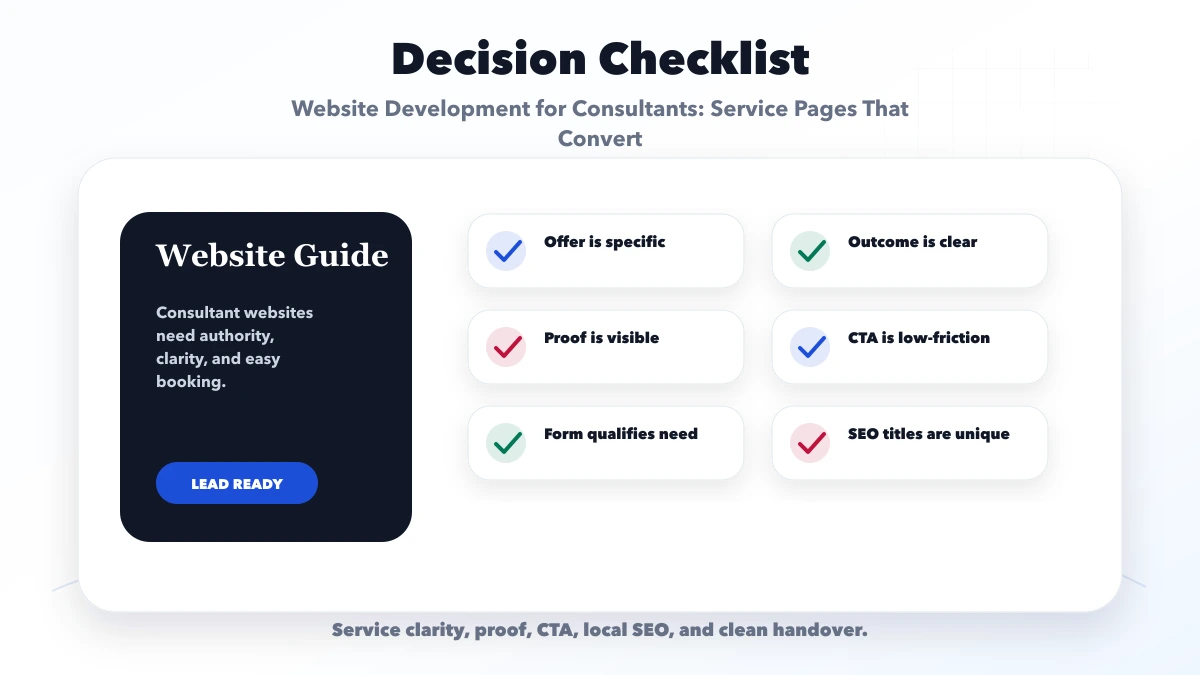
Include service offers, profile, proof, process, booking CTA, FAQs, and contact form.
Yes, if different services solve different buyer problems.
Yes. Even short case notes can improve trust.
Both can work. Use the channel your target buyers prefer.
Yes. We can build consultant websites focused on service clarity and booked calls.
If you want a practical plan for website development for consultants, VASUYASHII can help with scope, design, development, SEO setup, lead flow, launch, and maintenance.
Related Articles
April 30, 2026
Conversion rate optimization for service pages with copy, UX, trust, CTA, pricing, and implementation guidance for better leads in 2026.
Read article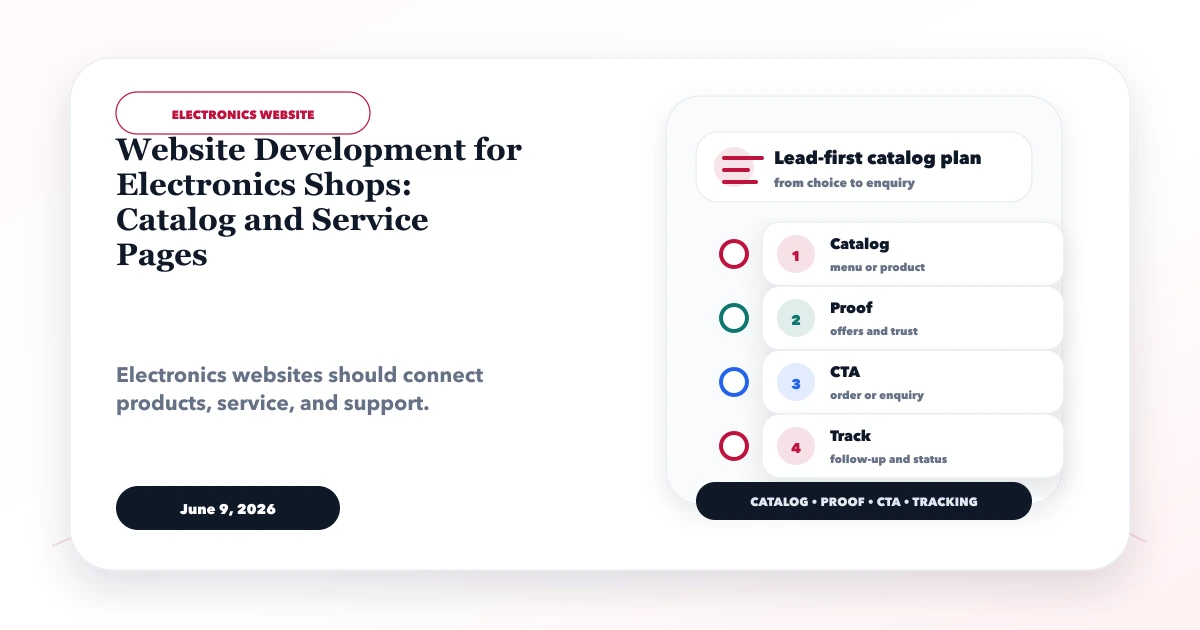
June 9, 2026
Website development for electronics shops with catalog pages, service pages, warranty notes, WhatsApp enquiry, local SEO, and checklist.
Read article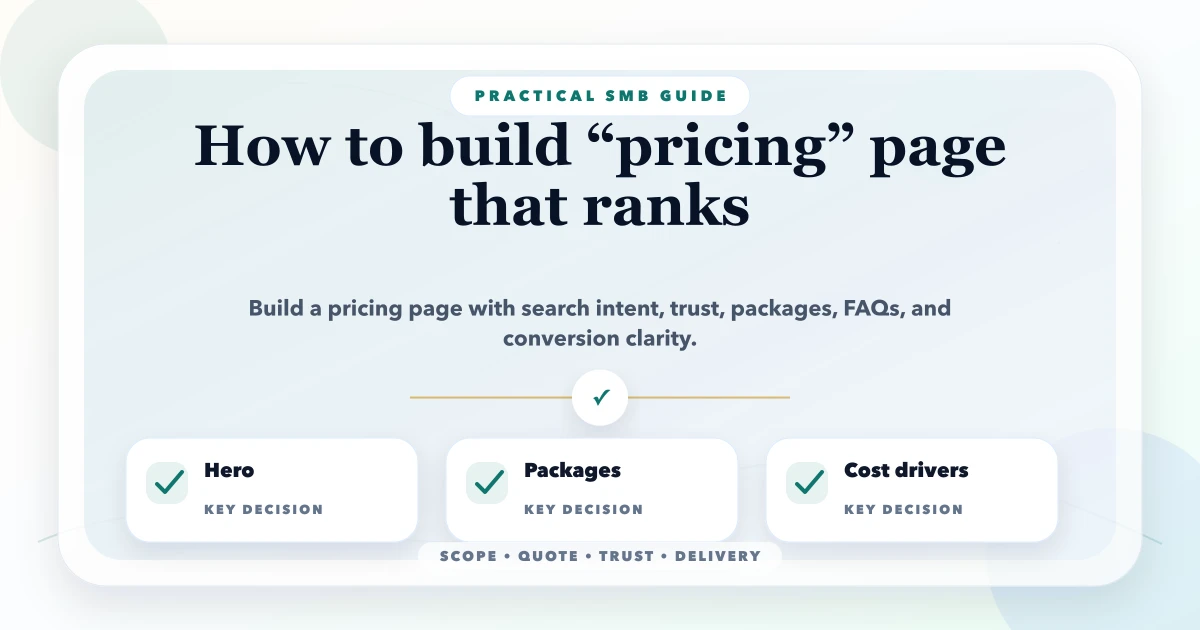
May 10, 2026
Build an SEO-friendly pricing page with clear packages or cost drivers, inclusions, exclusions, comparisons, FAQs, internal links, and qualified CTAs.
Read article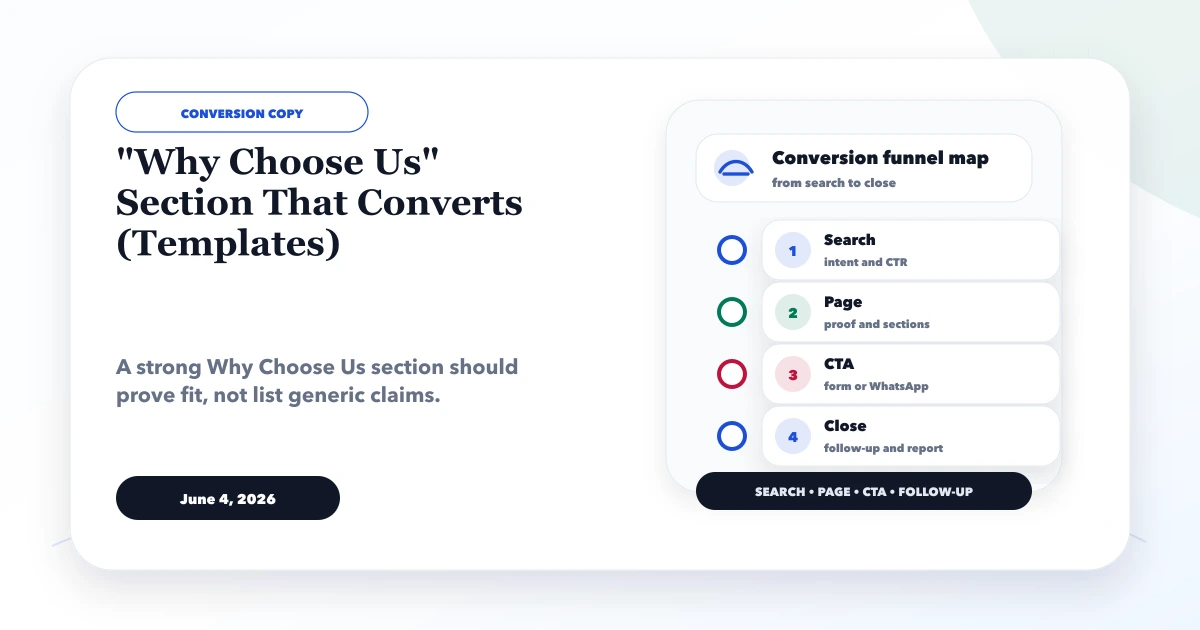
June 4, 2026
Write a credible Why Choose Us section using specific fit, proof, process, ownership and risk reduction. Adapt six practical templates without vague claims.
Read article