
May 29, 2026
Local Citation Sources for Delhi NCR Businesses
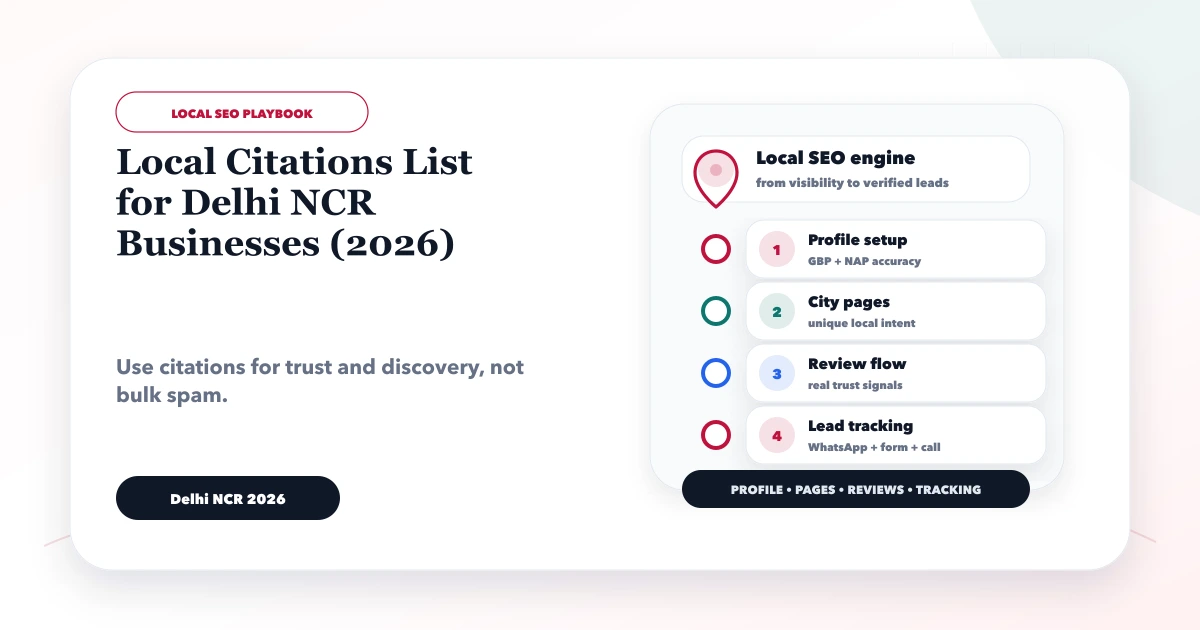
Evaluate local citation sources for Delhi NCR businesses by customer value, eligibility, data accuracy, ownership and maintenance instead of bulk submissions.
Read articlePublished Updated
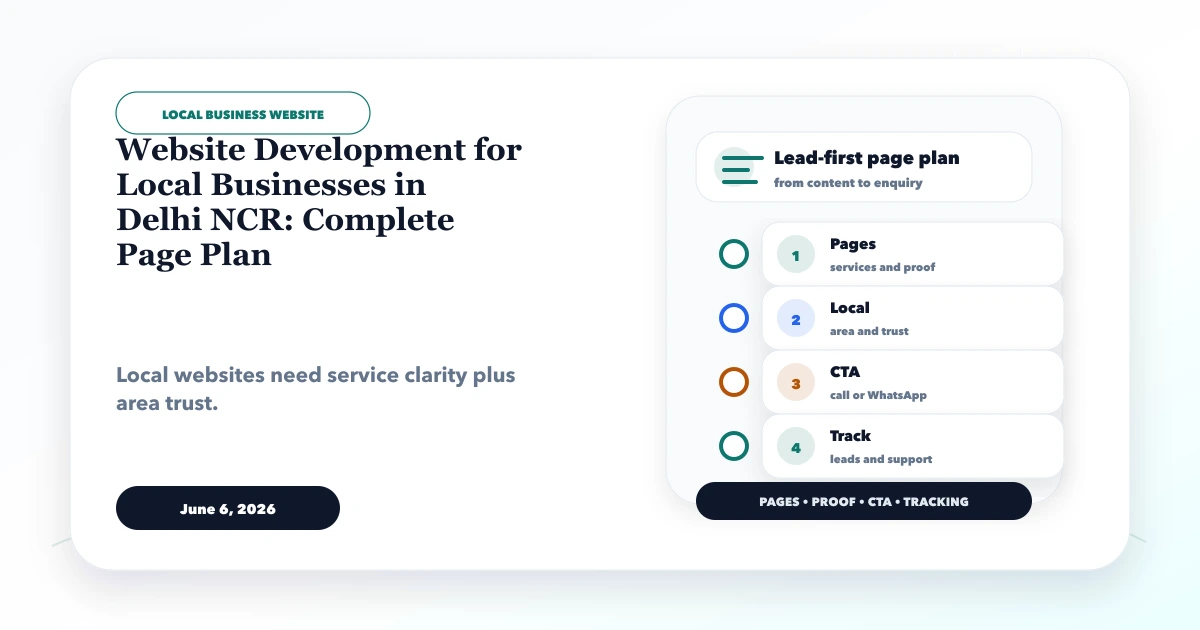
Website development for local businesses in Delhi NCR with complete page plan, local SEO, service pages, WhatsApp CTA, proof, and contact flow.
Service-area note: VASUYASHII is based in Delhi NCR and supports businesses remotely across India. A city-focused guide describes service and planning context; it does not claim a physical office in every location mentioned.
Explore the parent topic: Website Development Delhi NCR Hub →This guide explains website development for local businesses in Delhi NCR for Delhi NCR local businesses that need service pages, city visibility, trust proof, and lead-focused contact flow. It focuses on practical website planning, page structure, trust signals, SEO basics, lead capture, and a clean handover.
The goal is simple: build a website that helps visitors understand the business, trust the offer, and contact faster through call, form, or WhatsApp.
By Tushar C. (Founder, VASUYASHII). Reviewed by VASUYASHII Editorial for practical website planning, local SEO, lead generation, contact flow, and small business website delivery.
A Delhi NCR local business website should include homepage, service pages, service area, local proof, reviews, FAQs, contact page, WhatsApp CTA, Google Business Profile consistency, and local SEO basics.
A local customer may search by service and area. If the website does not show where the business serves, what it does, and how to contact quickly, the lead can move to a competitor.
The practical target is not only a modern-looking page. The website should reduce buyer confusion, show proof, and make the contact path measurable.
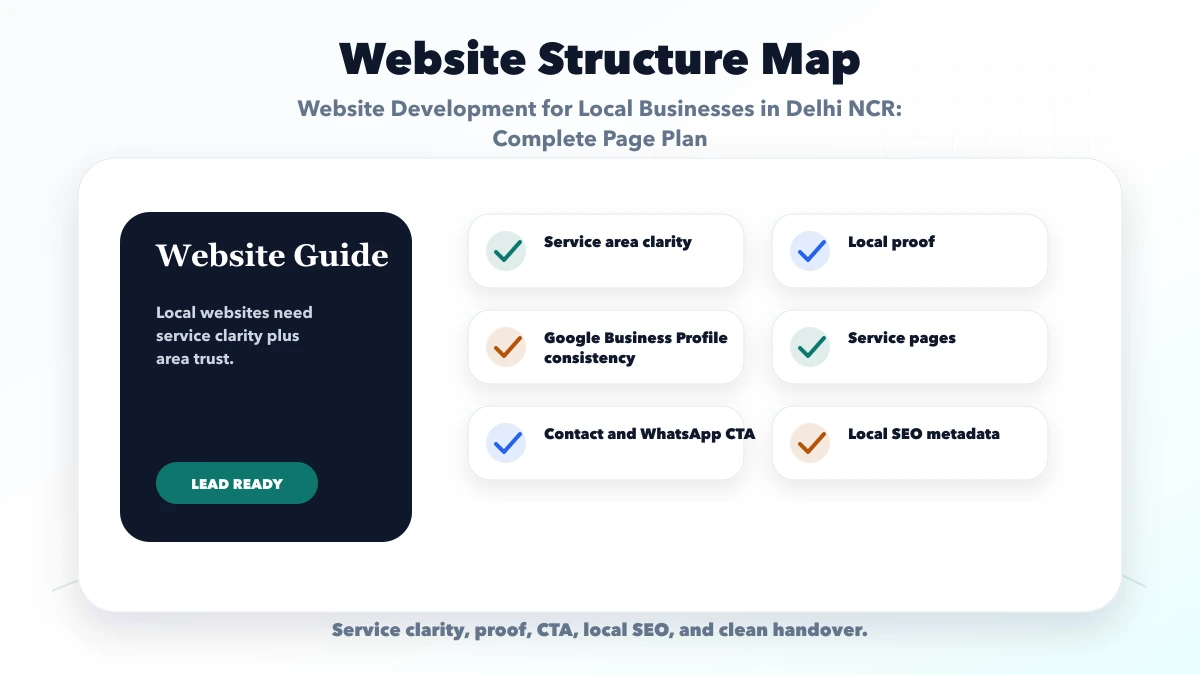
Each check should connect to a real buyer action. If a section does not support trust, search visibility, contact, or follow-up, it should be simplified or moved.
| Website area | What to include | Why it matters |
|---|---|---|
| Core pages | Home, services, about, contact | Builds foundation |
| Local pages | Area, proof, reviews, FAQs | Supports local intent |
| Lead system | Call, WhatsApp, form, map | Improves enquiry flow |
The right structure depends on the business type. A shop, clinic, consultant, professional firm, and local service provider should not all use the same page plan.
Use this roadmap to build one useful launch version first. After launch, improve pages based on enquiries, search data, and customer questions.
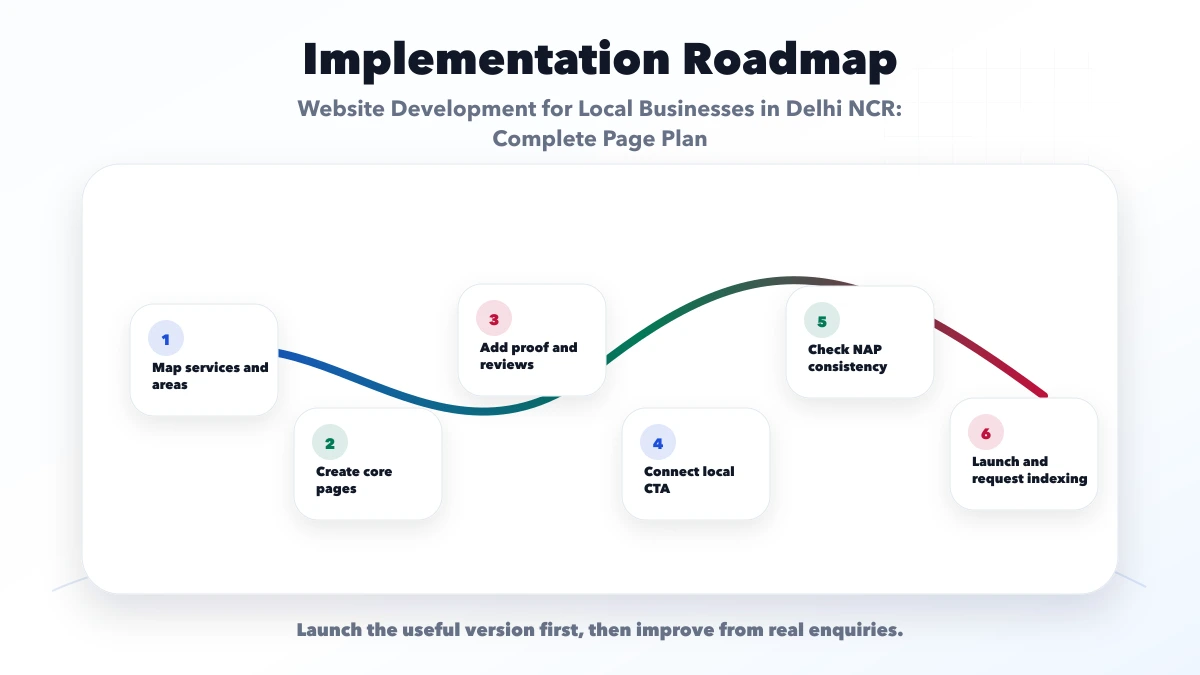
This checklist protects the project from looking complete but failing commercially. A good website should make the next step obvious and easy to measure.
VASUYASHII would first map services, target users, pages, proof, CTA, WhatsApp or form flow, SEO metadata, and handover needs. Then we would build the website in a focused phase instead of adding unnecessary complexity.
Useful links: web application services, software development, integrations, services, and contact.
Avoid judging a website only by design screenshots. Leads usually improve when service clarity, trust proof, speed, CTA, tracking, and follow-up work together.
The same page list does not work for every local business. Start with the buying decision and the information required before someone calls.
A consultant, CA, advocate, architect, or agency needs strong service pages, founder or team credibility, process, case studies, FAQs, and a consultation CTA. The website should explain who the service is for and what happens after enquiry.
A clinic, dentist, physiotherapist, salon, or other appointment-led business needs practitioner or team proof, service details, hours, location information, policies, and booking choices. Do not show appointment slots unless the business can keep them accurate.
Use product categories, capabilities, specifications, brands, supply areas, certificates, and an RFQ path. A catalogue should help a buyer shortlist products without exposing outdated stock or pricing.
Use course pages, batch information, faculty, outcomes, admission steps, FAQs, and an enquiry flow. Results and testimonials should be genuine and attributable.
Use one strong page for the primary service, then create a city or locality page only when it can answer a different question with real local value. A safe structure is:
For example, the Delhi website guide, Noida website guide, and Ghaziabad website guide each need a different operating context. They should not repeat the same packages and replace only the city name. The regional Delhi NCR hiring guide serves the broader comparison intent.
The main commercial offer should remain on the website development Delhi NCR service page. Support articles should answer research questions and guide qualified visitors toward that page instead of acting like duplicate service pages.
A location page should have at least one reason to exist beyond the locality name. Collect the evidence before writing:
Do not publish a customer's identity, review, address, or project result without permission. If no location-specific evidence exists, strengthen the main service page and use one broader city or regional page. This is safer than generating many near-identical locality pages.
After launch, keep the page only if it remains useful. Review Search Console queries, impressions, clicks, landing-page leads, backlinks, and content accuracy. A page with no traffic can still be useful for customers, but it should have a clear business purpose. A page with impressions for unrelated queries needs better intent. A page that duplicates a stronger URL should be considered for consolidation only after checking backlinks, leads, indexing, and an approved redirect destination.
NAP means business name, address, and phone. Keep these details consistent wherever they are published. A service-area business should follow the address-visibility rules of each platform and should not invent offices to target more cities.
Check:
The website should support the Google Business Profile, not copy every profile field into every page. Read the NAP consistency guide before changing business listings.
Track page views, WhatsApp clicks, call clicks, demo opens, and valid lead submissions. Do not send names, phone numbers, emails, or message content to GA4. Use the website or CRM for lead details and analytics only for privacy-safe interaction events.
A practical follow-up process is:
Days 26-30: launch, verify Search Console, record the baseline, and improve from real enquiries.
Do not publish ten new location pages during this month. First prove that the main service, city, industry, and contact pages are useful and measurable.
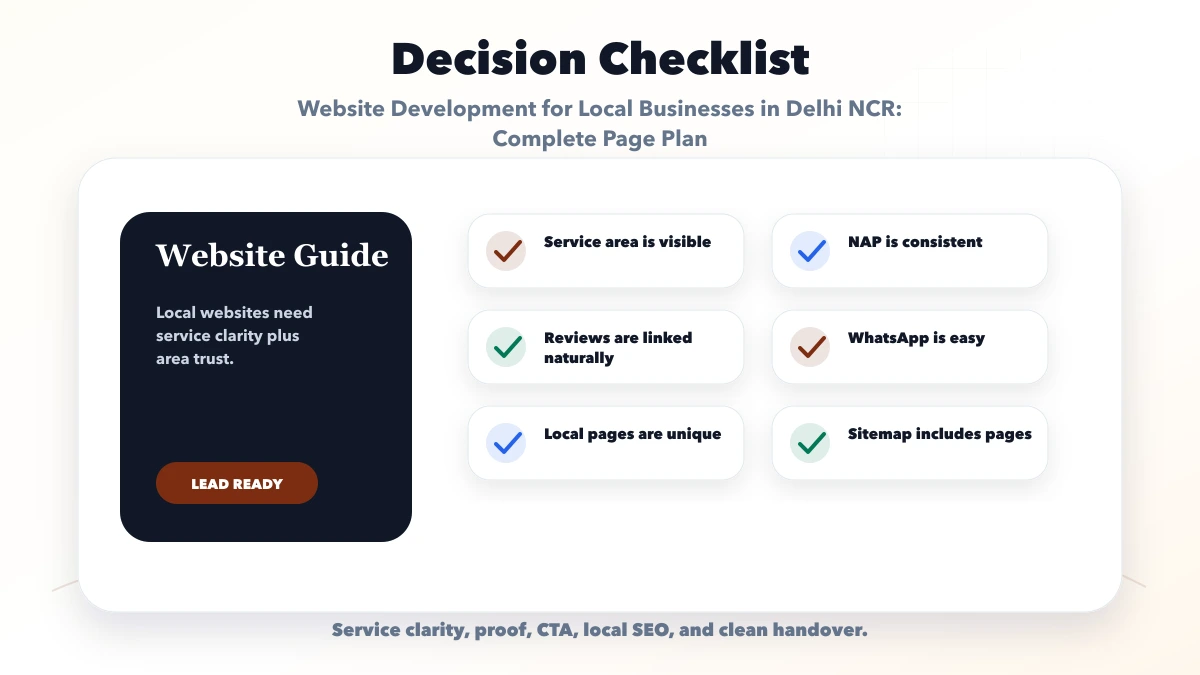
It should include service pages, local proof, contact flow, WhatsApp, FAQs, and clear service area details.
They can help if each city page has unique intent, proof, and useful content.
Yes. Name, address, phone, and service details should stay consistent.
Yes, after core service and local pages are strong.
Yes. We build local business websites with service pages, local SEO, and lead flow.
If you want a practical plan for website development for local businesses in Delhi NCR, VASUYASHII can help with scope, design, development, SEO setup, lead flow, launch, and maintenance.
Related Articles
May 29, 2026
Evaluate local citation sources for Delhi NCR businesses by customer value, eligibility, data accuracy, ownership and maintenance instead of bulk submissions.
Read article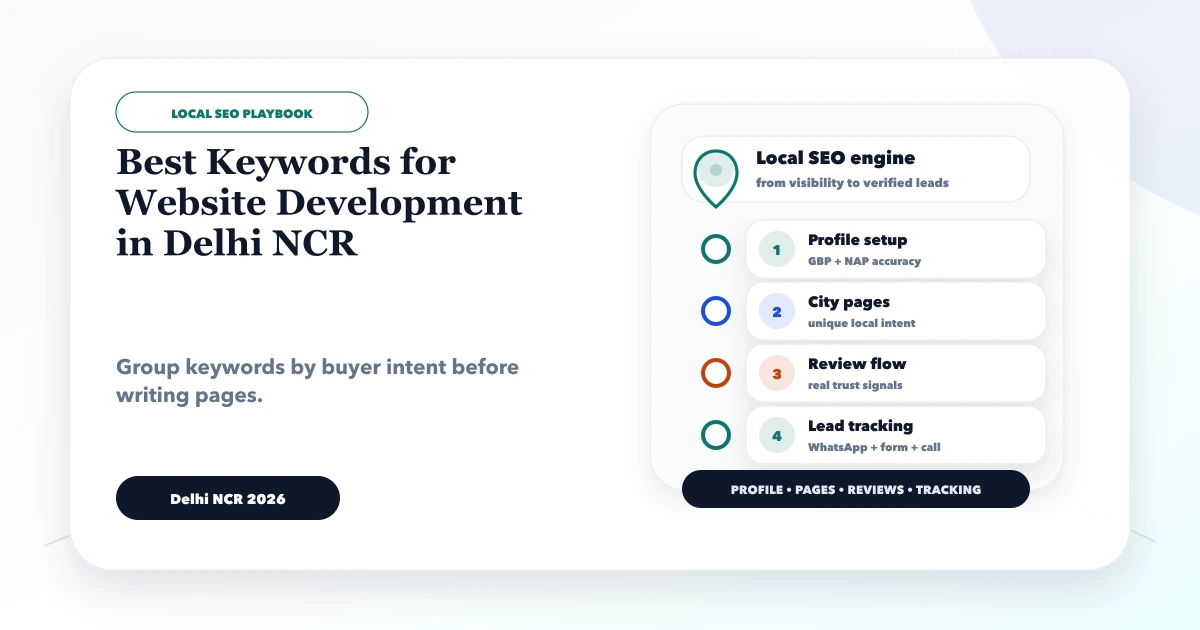
May 29, 2026
Build a Delhi NCR website-development keyword map by search intent, service, cost, industry and location, then assign one useful page to each buyer job.
Read article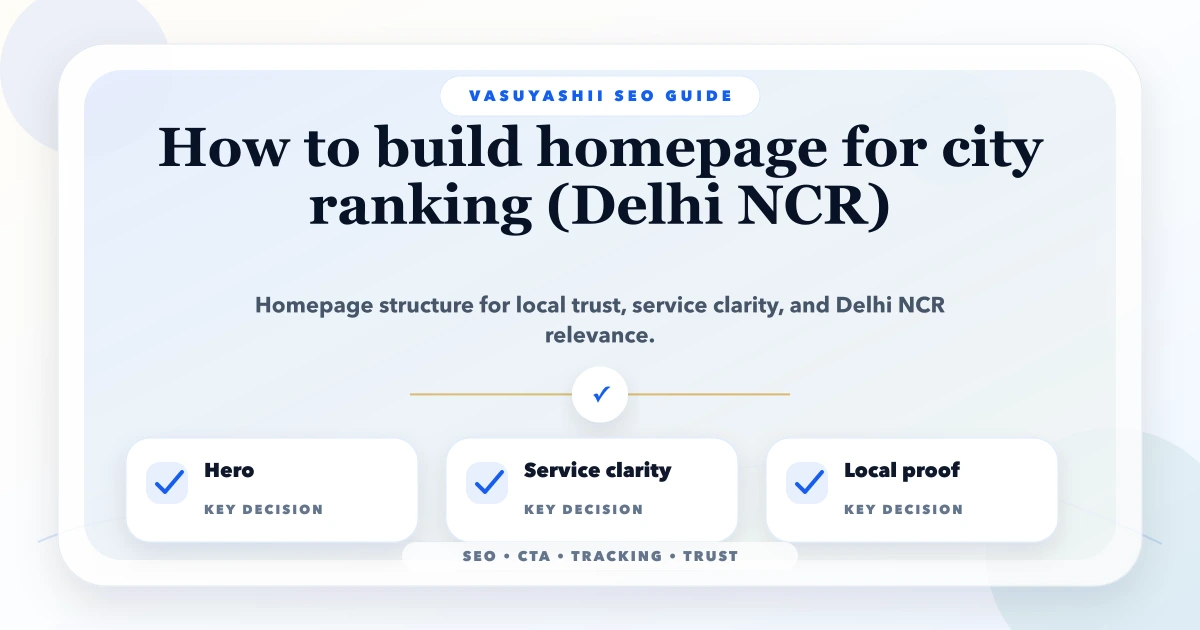
May 12, 2026
homepage for city ranking Delhi NCR: practical 2026 guide with structure, pricing, checklist, mistakes, FAQs, tracking tips, and next steps for Indian SMBs.
Read article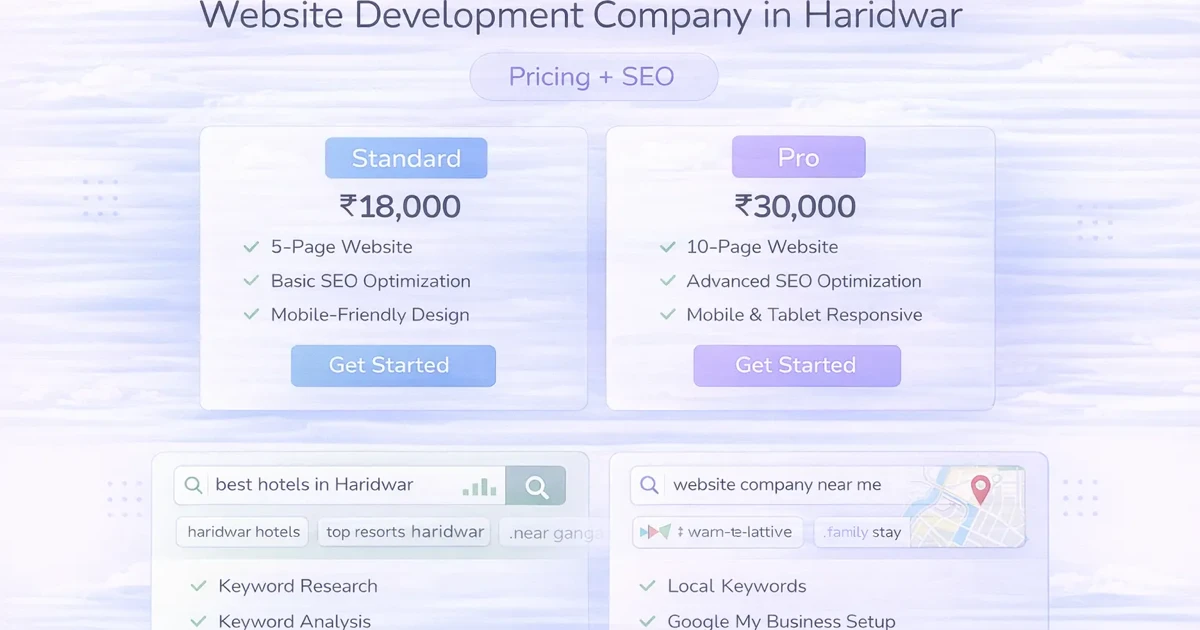
April 3, 2026
Plan a Haridwar seasonal-demand website with capacity updates, availability rules, temporary notices, booking states, SEO hygiene, and lead measurement.
Read article