
May 9, 2026
Safe Local Backlink Strategies for Small Businesses
Safe local backlink strategies for Indian small businesses covering citations, partnerships, outreach, link checks, monitoring, and spam risks.
Read articlePublished Updated
Evaluate local citation sources for Delhi NCR businesses by customer value, eligibility, data accuracy, ownership and maintenance instead of bulk submissions.
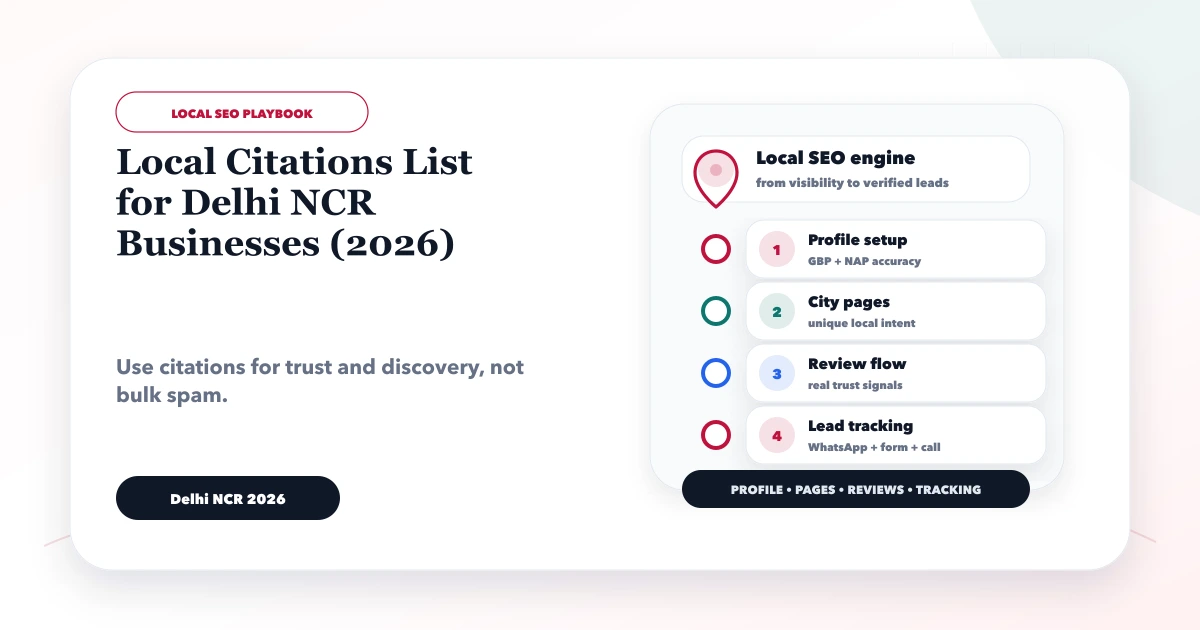
Service-area note: VASUYASHII is based in Delhi NCR and supports businesses remotely across India. A city-focused guide describes service and planning context; it does not claim a physical office in every location mentioned.
Explore the parent topic: Local SEO for Web Development Companies →A local citation is an online reference to a business identity, usually including its name, location or service area, phone number and website.
The useful question is not “How many directories can we submit to?” It is “Which sources help customers verify or contact this real business, and can the business maintain the information?”
Platform availability, categories and verification methods change. Treat this as a selection framework for 2026, not a guaranteed submission list or a promise of ranking improvement.
Prioritise:
Skip bulk packages that create hundreds of low-quality records with no ownership or customer value.
Score a source from 0 to 2 in each area:
| Criterion | 0 | 1 | 2 |
|---|---|---|---|
| Customer use | No realistic use | Limited | Customers actively use it |
| Business relevance | Unrelated | Broad | Industry or location relevant |
| Verification | None | Email/phone | Strong owner/location process |
| Data control | Difficult | Partial | Owner can update and close |
| Profile quality | Thin/spammy | Basic | Useful details and contact path |
| Maintenance | No owner | Occasional | Review process exists |
A high score supports prioritisation. It does not prove that a link passes ranking credit.
The website is the primary controlled source for:
Correct the website before copying information elsewhere.
Use only when the business is eligible. Google’s representation guidelines require accurate real-world identity, location or service area and appropriate profile ownership.
Do not create profiles for virtual offices, every city landing page or unsupported service areas.
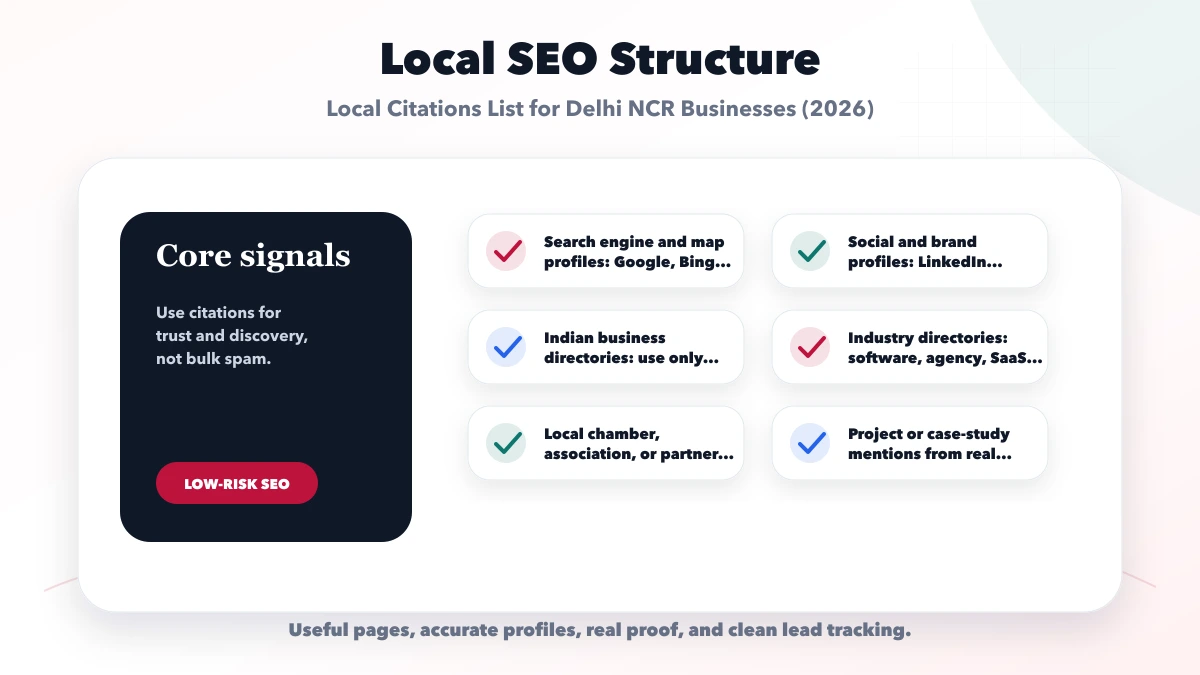
Depending on customer behaviour and business type, evaluate:
Before submitting, confirm:
Do not assume data synchronises perfectly between providers. Verify the public record.
Potential sources include:
These platforms serve different buyer journeys. A software consultancy, hardware wholesaler, clinic and wedding service should not use the same profile mix.
Check:
Do not claim a listing is “must-have” simply because it accepts submissions.
Evaluate:
Social profiles are not substitutes for an eligible location profile. They can support identity, content distribution and contact discovery when maintained.
Examples:
| Business type | Potential source category |
|---|---|
| Clinic | Recognised healthcare directory subject to professional rules |
| Restaurant | Food, reservation or delivery platform actually used |
| Hotel | Booking and travel platforms |
| Manufacturer | Trade marketplace and industry association |
| Education | Relevant approved education directories |
| Professional service | Professional body or chamber |
| Software company | Technology ecosystem or partner directory with real eligibility |
Verify the platform’s current rules and reputation. Avoid profiles that imply certification or membership the business does not have.
High-quality local mentions may come from:
The relationship should be real. Do not exchange money solely for an unqualified ranking link.
Google’s current spam policies identify low-quality directory links, automated link creation and paid links that pass ranking credit as link-spam risks.
The NAP consistency guide explains the master record. At minimum, approve:
Do not ask an agency to submit listings before these fields are controlled.
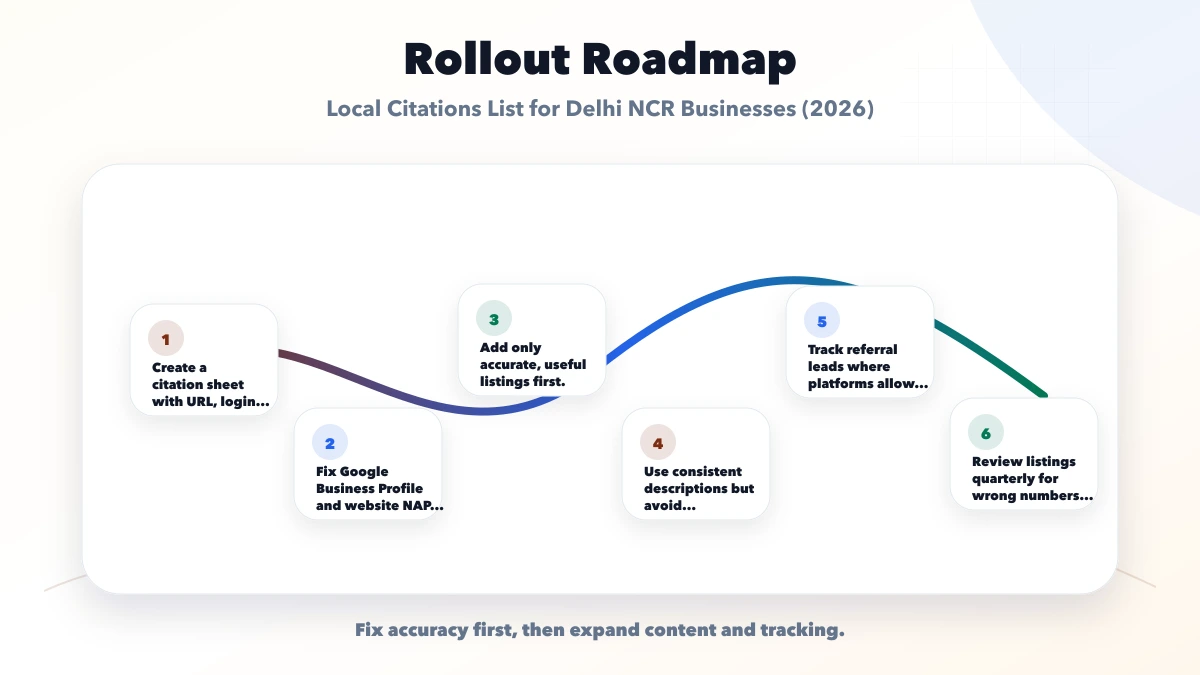
Search the brand, old names, phone numbers and addresses. Record duplicate or unauthorised pages.
Update the website and eligible verified profile first.
Use the quality score and choose a small relevant set.
Use a company-controlled account and password manager. Add an agency as manager where supported.
Provide accurate categories, hours, service details, photos and contact routes. Avoid copied keyword blocks.
Open the listing, test phone and website, inspect map pin and record the public URL.
Review after phone, address, hours, category or brand changes.
Recommended columns:
| Field | Purpose |
|---|---|
| Platform | Source name |
| Public URL | Evidence that profile exists |
| Login owner | Recovery responsibility |
| Location/business ID | Platform reference |
| Status | Planned, submitted, verified, duplicate, closed |
| NAP check | Data consistency |
| Website destination | Final URL |
| Last verified | Maintenance date |
| Lead value | Qualified contacts, if measurable |
| Notes | Policy or support history |
Do not store passwords in the sheet.
Point a business-level profile to the most relevant stable page:
Avoid:
Write a plain description of:
Do not insert a list of city keywords, promotional symbols, phone numbers in prohibited fields or unsupported superlatives.
Choose the most specific legitimate category available. Do not select unrelated categories for additional exposure.
Use original, current images:
Do not upload stock photos as evidence of a physical business location.
Ask genuine customers for an honest review without dictating sentiment or offering incentives. Google’s review guidance prohibits incentives in exchange for posting, changing or removing reviews.
Respond professionally and protect customer privacy. Do not create employee or friend reviews for services they did not use.
Measure:
Referral traffic can be underreported when apps or calls are involved. Combine platform data with business records.
VASUYASHII does not present this list as evidence of current profiles, local offices or backlinks. The current website uses a consistent final domain and transparent service coverage, but any external profile must be created only after eligibility, ownership and business facts are confirmed.
The Google Business Profile optimisation guide covers profile operations. The local SEO hub explains the wider website architecture.
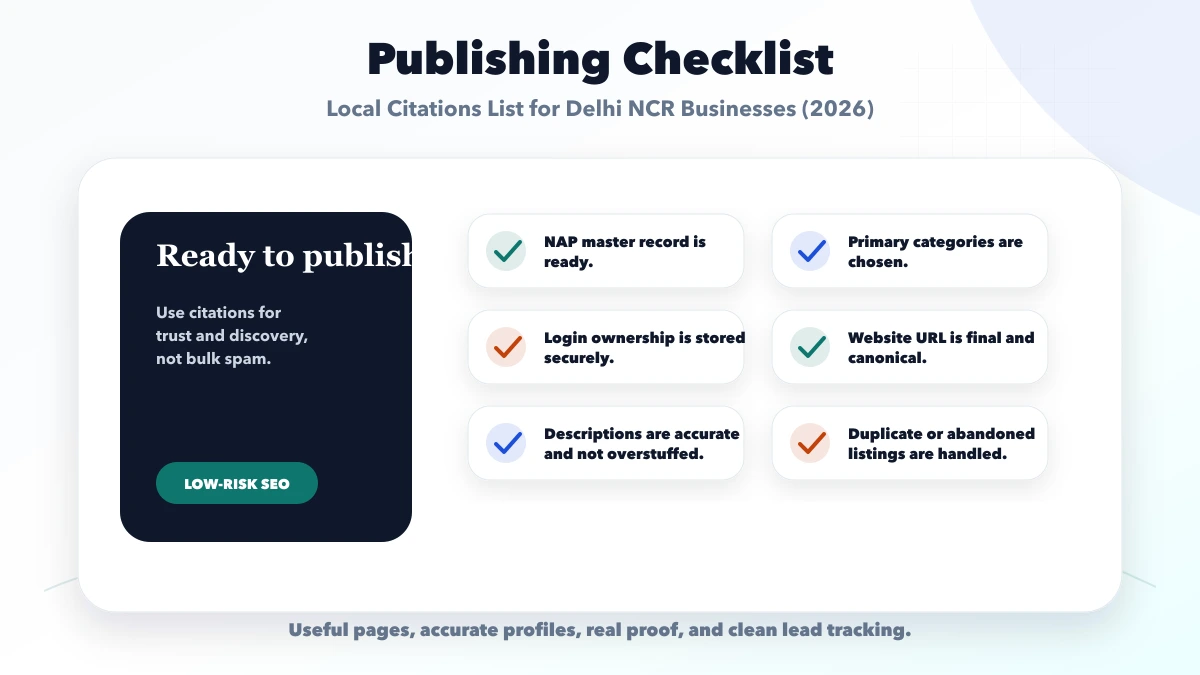
There is no universal number. A small set of accurate, relevant and maintained profiles is more defensible than hundreds of low-value records.
No. Some links may be nofollowed or have little customer value. Select sources for verification and discovery, not only link acquisition.
Yes where a platform supports the model, but it must follow address and service-area rules and avoid fake storefront claims.
Core facts should be consistent, but descriptions can follow platform fields and audience needs. Avoid automated keyword variants.
Review after any business change and on a scheduled basis. Critical sources deserve more frequent checks.
Evaluate ownership, source quality, link treatment, cancellation and maintenance. Do not buy solely for ranking links.
Build the master business record, audit existing profiles and select five sources using the quality score. Expand only after those records are accurate and owned.
Related Articles
May 9, 2026
Safe local backlink strategies for Indian small businesses covering citations, partnerships, outreach, link checks, monitoring, and spam risks.
Read article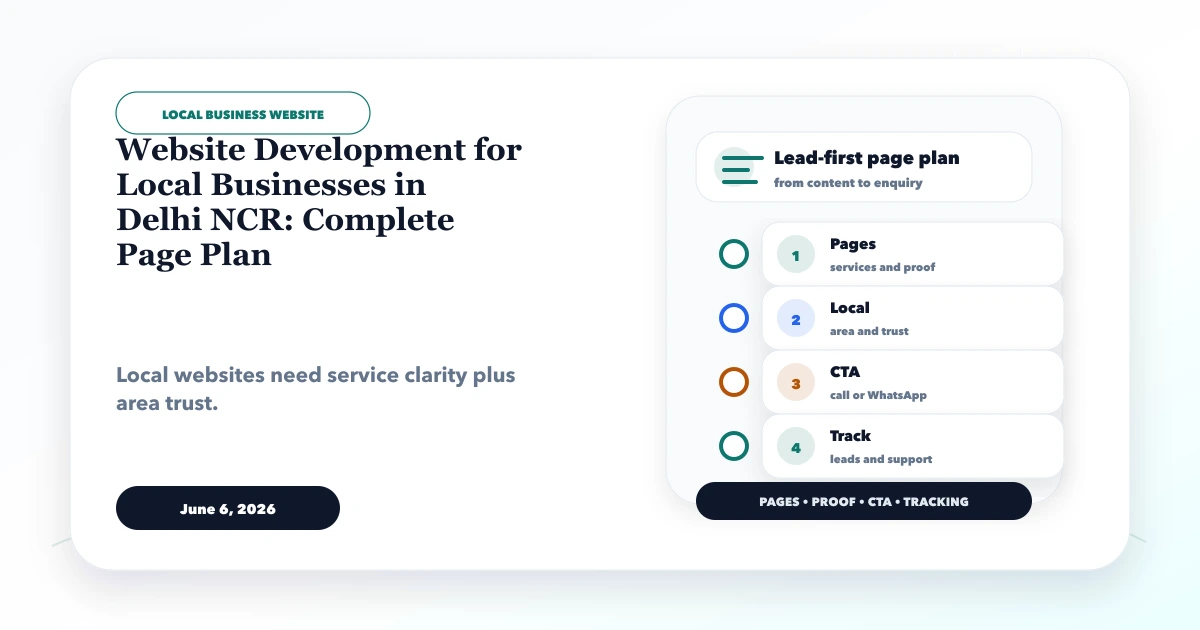
June 6, 2026
Website development for local businesses in Delhi NCR with complete page plan, local SEO, service pages, WhatsApp CTA, proof, and contact flow.
Read article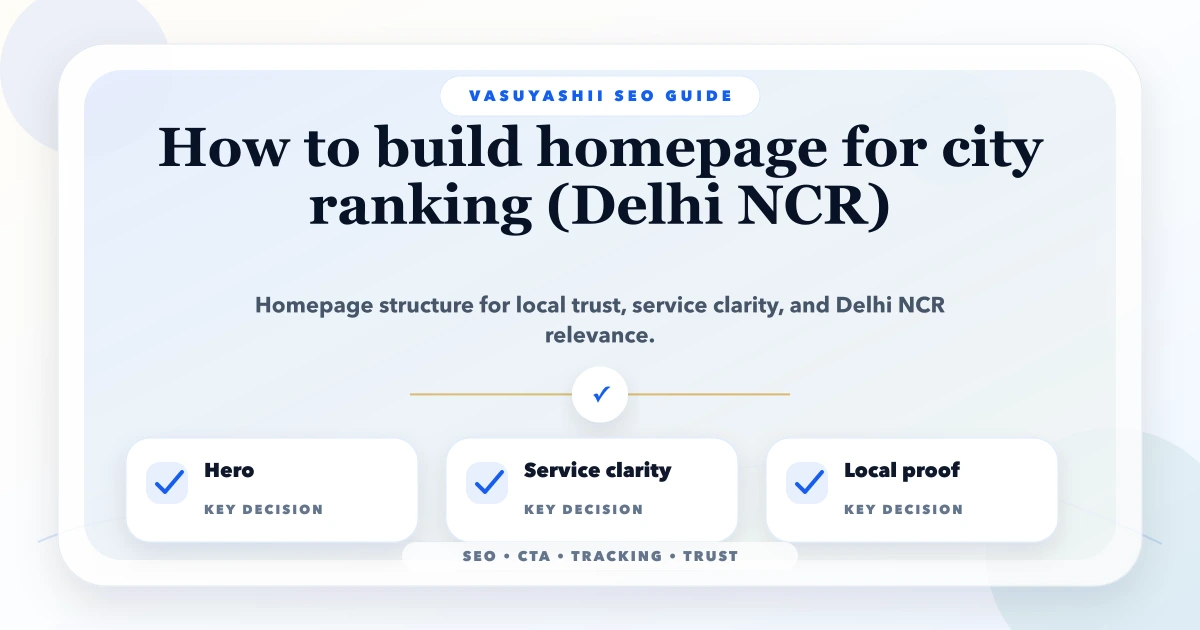
May 12, 2026
homepage for city ranking Delhi NCR: practical 2026 guide with structure, pricing, checklist, mistakes, FAQs, tracking tips, and next steps for Indian SMBs.
Read article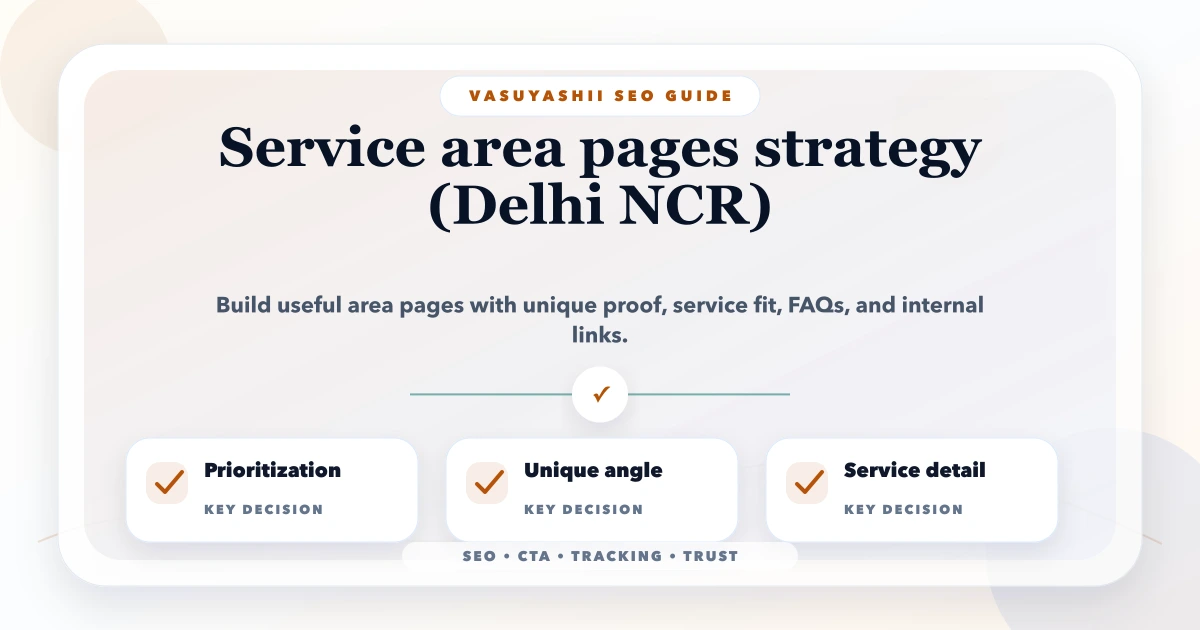
May 12, 2026
Plan Delhi NCR service-area pages with evidence gates, parent hubs, consolidation rules, internal links and measurement without creating doorway pages.
Read article