
May 20, 2026
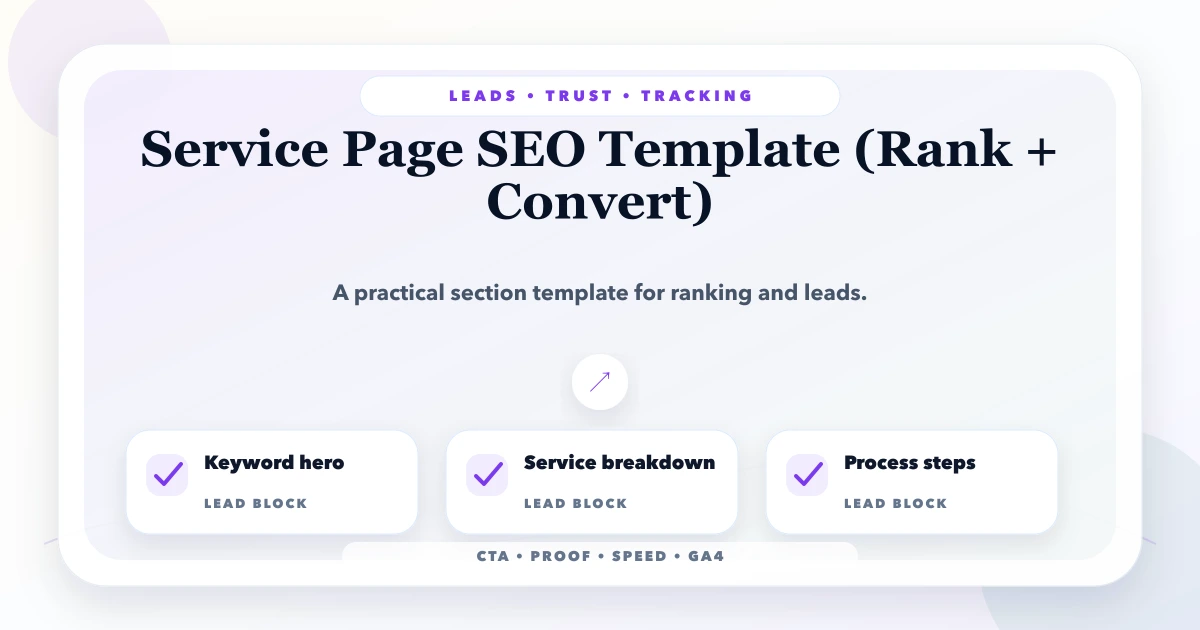
Service Page SEO Template: Rank and Convert
Use this service page SEO template to structure search intent, proof, FAQs, internal links, conversion CTAs, local relevance, tracking, and content updates.
Read articlePublished Updated
About page template that builds trust with story, proof, process, founder note, values, service fit, CTA, and small business examples.
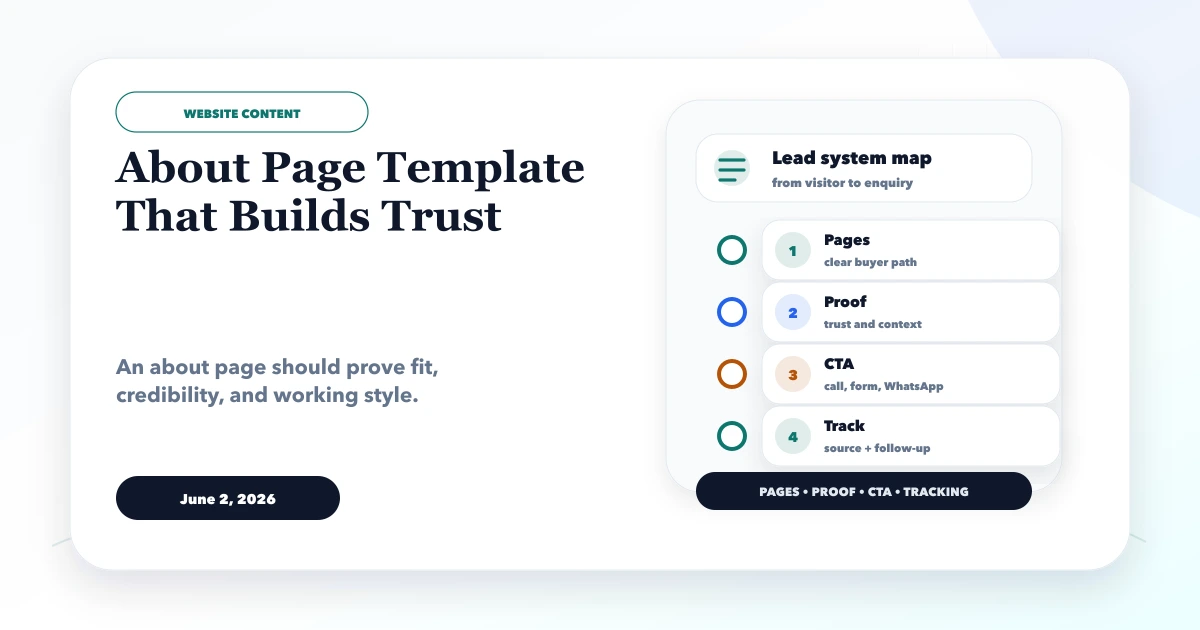
This about page template that builds trust helps a small business answer five questions: who is responsible, who the company serves, what it can actually deliver, how it works, and which claims a visitor can verify.
An About page is not a biography exercise. For a service buyer, it is a risk-reduction page between discovering the company and starting a conversation.
By Tushar C. (Founder, VASUYASHII). Reviewed by VASUYASHII Editorial for practical website development, small business CRM, inventory, billing, WhatsApp CTA, conversion strategy, and business software delivery.
An about page that builds trust should explain who you help, what problem you solve, why the business exists, how you work, proof of experience, founder or team context, values, service area, and next CTA. It should not be only a generic company history.
A buyer finds a software company through a cost guide. Before sharing business records or requesting a quote, they open the About page. The page says "we are an innovative team delivering excellence" but gives no founder, working approach, current product, service boundary, business location, or correction path.
A stronger page identifies the responsible person, explains current capabilities, links to inspectable product or process evidence, labels demos accurately, and avoids unsupported customer or performance claims.
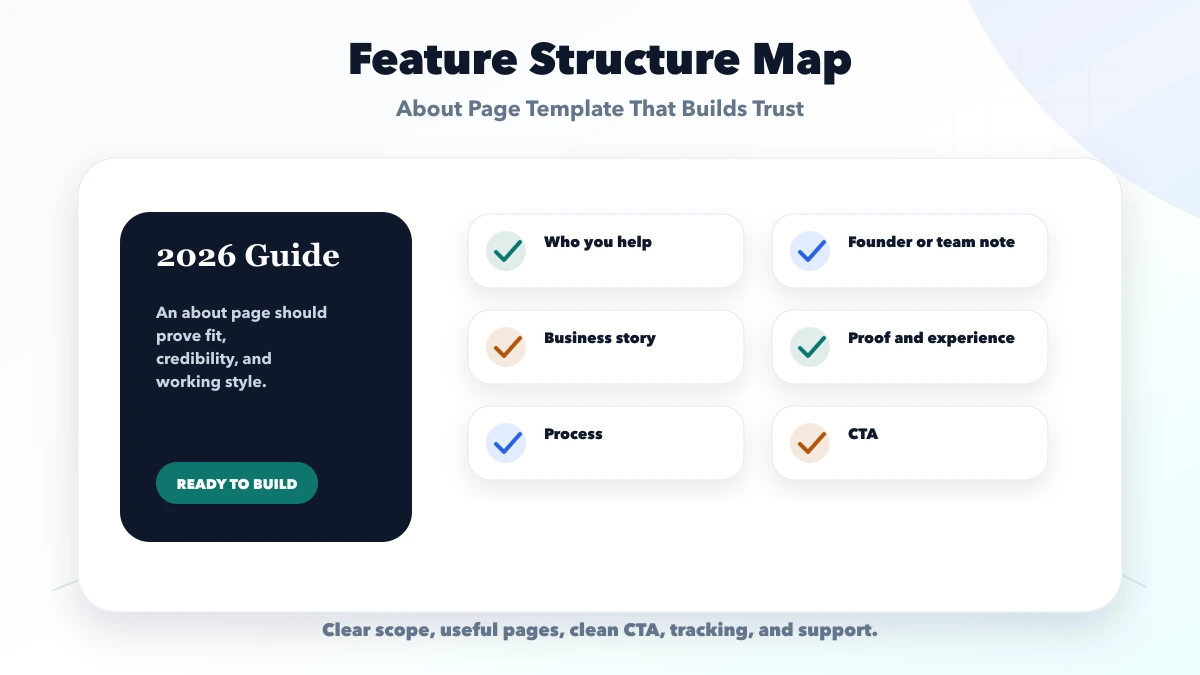
Each feature should connect to a business outcome. If a page, button, field, or module does not help trust, conversion, operations, reporting, or support, it may be better saved for a later phase.
| Setup | What to include | Best for |
|---|---|---|
| Basic about page | Story, team, contact | Best for simple sites |
| Trust-focused about page | Audience, proof, values, process, CTA | Best for service businesses |
| Authority about page | Case notes, metrics, media, FAQs | Best for competitive services |
The right setup depends on the business stage. A new service business may need a clean website and WhatsApp flow first. A growing team may need CRM, inventory, billing, dashboards, and reporting only after the core flow is stable.
Ask the founder or responsible team member:
Keep source notes. Do not add a founder qualification, customer count, award, office, or experience claim only because it makes the page sound stronger.
[Company] is a [location or delivery model] business that helps [audience] with [specific services/products]. We focus on [operating principle or practical differentiator].
Explain current offers in plain language and link to their dedicated pages. Separate products from custom services and current functionality from roadmap items.
Describe discovery, scope, review, delivery, launch, support, and ownership. Buyers should understand what happens after the CTA, not only what technologies are used.
Name the responsible person, role, areas of work, and author/profile page where relevant. Use a real photograph only when approved and current; a missing photo is better than a misleading stock identity.
Link to working products, approved screenshots, reviews, case studies, process documents, or clearly labelled demos. State important exclusions and avoid guaranteed ranking, revenue, security, or delivery claims.
Offer the most useful action for the buyer: inspect a product, review services, complete a project brief, or contact the business with specific requirements.
| Evidence available | How to use it honestly |
|---|---|
| Current product | Show real screens, modules, limits, demo access, and setup process |
| Delivered service | Publish a permission-approved case study or review with scope context |
| Fictional demo | Label it as design/workflow demonstration, not client work |
| Documented process | Show requirement templates, QA steps, handover checklist, or support model |
| No public customer evidence yet | State current capability and process without inventing results |
For example, VASUYASHII can point visitors to its current Business Suite product, service documentation, author profile, and public demos while explicitly stating that industry demos are fictional concepts. That is more trustworthy than presenting old or unverified portfolio material as current delivery proof.
Assign an owner and review the page when the team, address, product scope, services, contact details, or public profiles change. Link to a correction/contact route. Remove expired claims instead of leaving them because they once helped the layout.
The following is an outline, not a customer claim:
This outline demonstrates how an About page can connect identity, capability, evidence, limitations, and conversion without becoming a sales brochure.
Replace unsupported words such as "best," "leading," "award-winning," and "guaranteed" with specific facts. Check every number for a source and date. Confirm that office and service-area language matches reality. Verify that team members have approved their public details.
Read the page from a cautious buyer's perspective: can they identify who is responsible, inspect a relevant capability, understand what happens next, and report an error? If not, the page still needs operational information rather than more brand adjectives.
Use this roadmap to keep the project focused. Launch the useful first version, review real enquiries or staff usage, then add automation, integrations, SEO pages, reports, or advanced workflows.
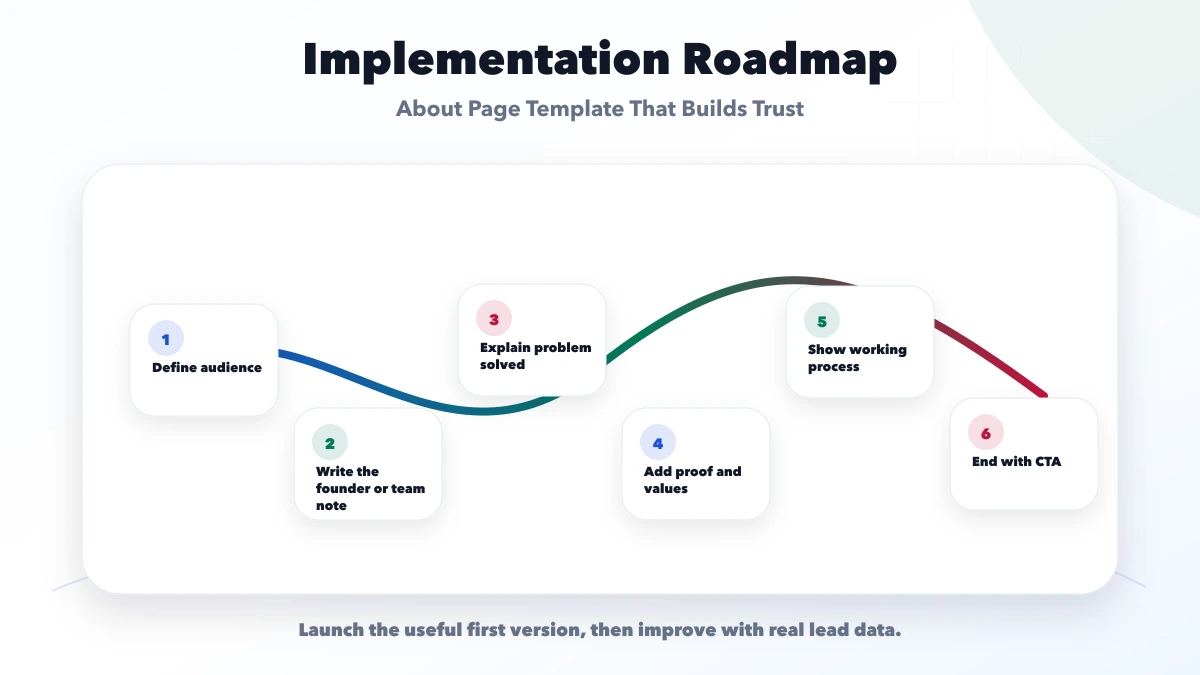
This checklist protects the project from vague scope. A good implementation should explain what is included, what is excluded, who owns access, how leads or records are tracked, and how support works after launch.
VASUYASHII would first map the business goal, buyer intent, pages or modules, lead flow, data flow, tracking, and launch priority. Then we would create a phase-wise plan instead of forcing unnecessary features into phase one.
Useful links: web application services, software development, integrations, services, and contact.
Avoid judging only by the first mockup or tool name. For small businesses, clarity, contact flow, ownership, reporting, and support matter more than a feature list that nobody uses.
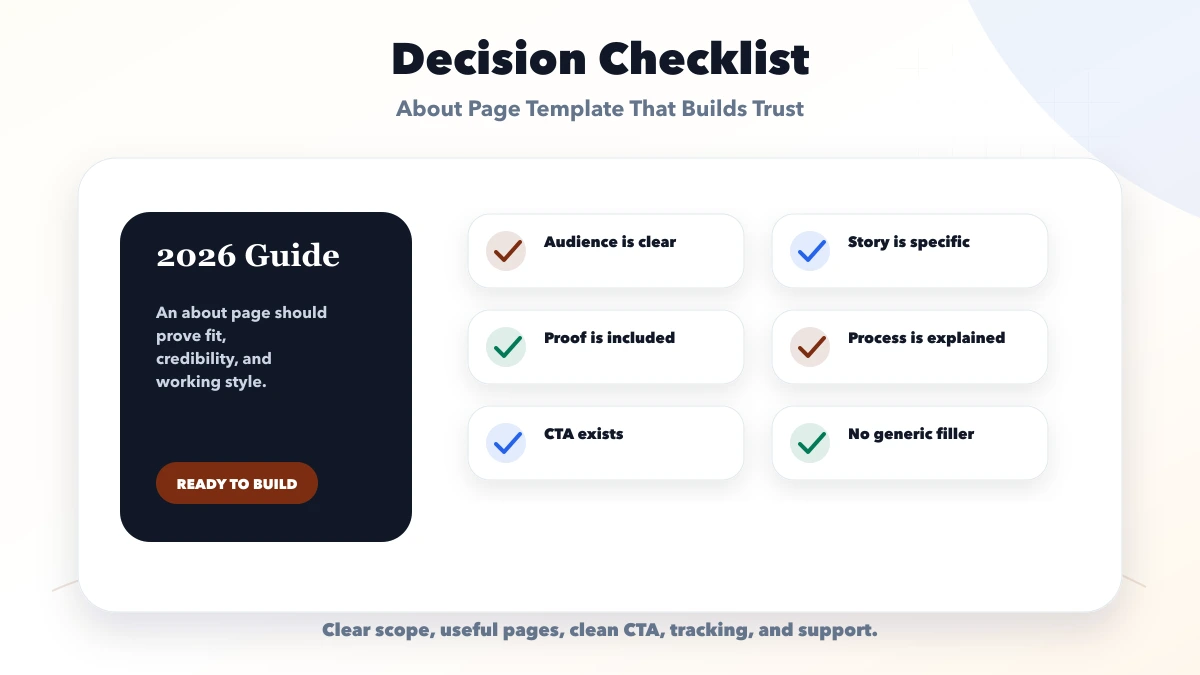
It should include audience, story, proof, team context, process, values, and a clear next step.
If possible, yes. Founder or team context can improve trust for service businesses.
Yes. Many visitors check it before contacting, especially for services.
Usually not required, but it can link to service or quote pages where pricing context exists.
Yes. We can structure about pages that support trust, SEO, and enquiries.
If you want a practical plan for about page template that builds trust, VASUYASHII can help with scope, design, development, SEO setup, integrations, tracking, launch, and maintenance.
Related Articles
May 20, 2026
Use this service page SEO template to structure search intent, proof, FAQs, internal links, conversion CTAs, local relevance, tracking, and content updates.
Read article
May 20, 2026
Write credible case studies with context, constraints, decisions, delivery evidence, attribution and privacy. Use this template without inventing claims.
Read article
May 20, 2026
Build a portfolio page that helps buyers compare work. Plan project cards, filters, role disclosure, proof, mobile UX, CTAs and maintenance.
Read article
May 18, 2026
Use this ecommerce returns and refunds policy template to define eligibility, timelines, shipping costs, exchanges, approvals, and customer communication.
Read article