
April 16, 2026
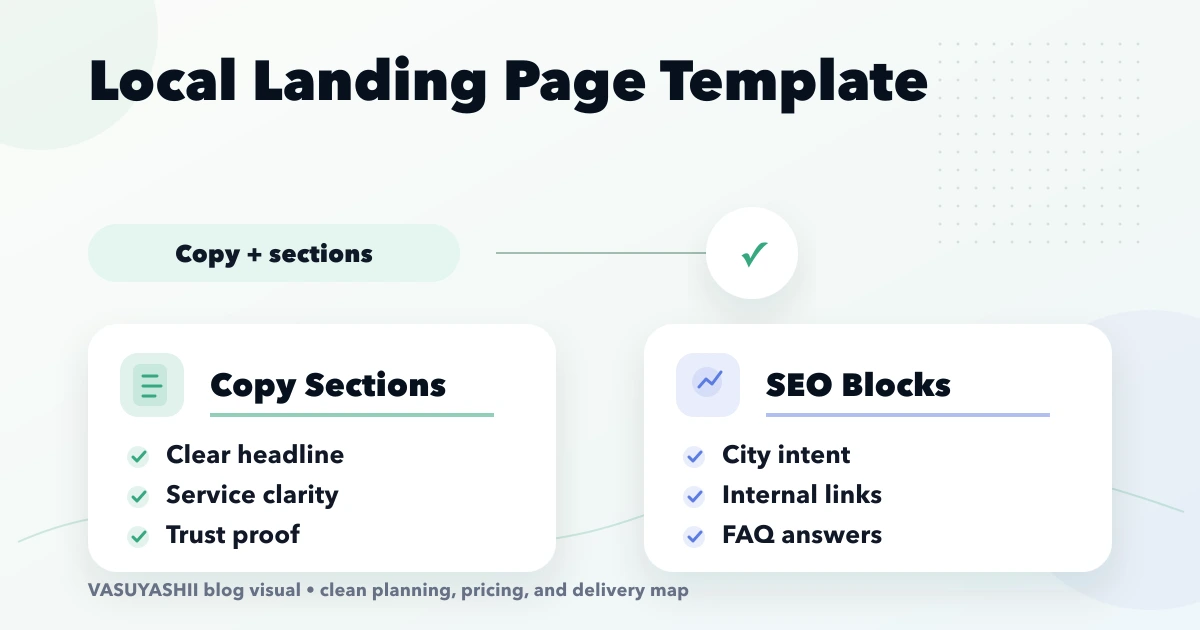
Local Landing Page Template: Copy and Sections
Use a local landing page template with unique service intent, genuine city proof, useful pricing, FAQs, internal links, conversion tracking, and quality checks.
Read articlePublished Updated
Write website copy for better leads using clear positioning, customer language, proof, objection handling, qualification and measurable calls to action.
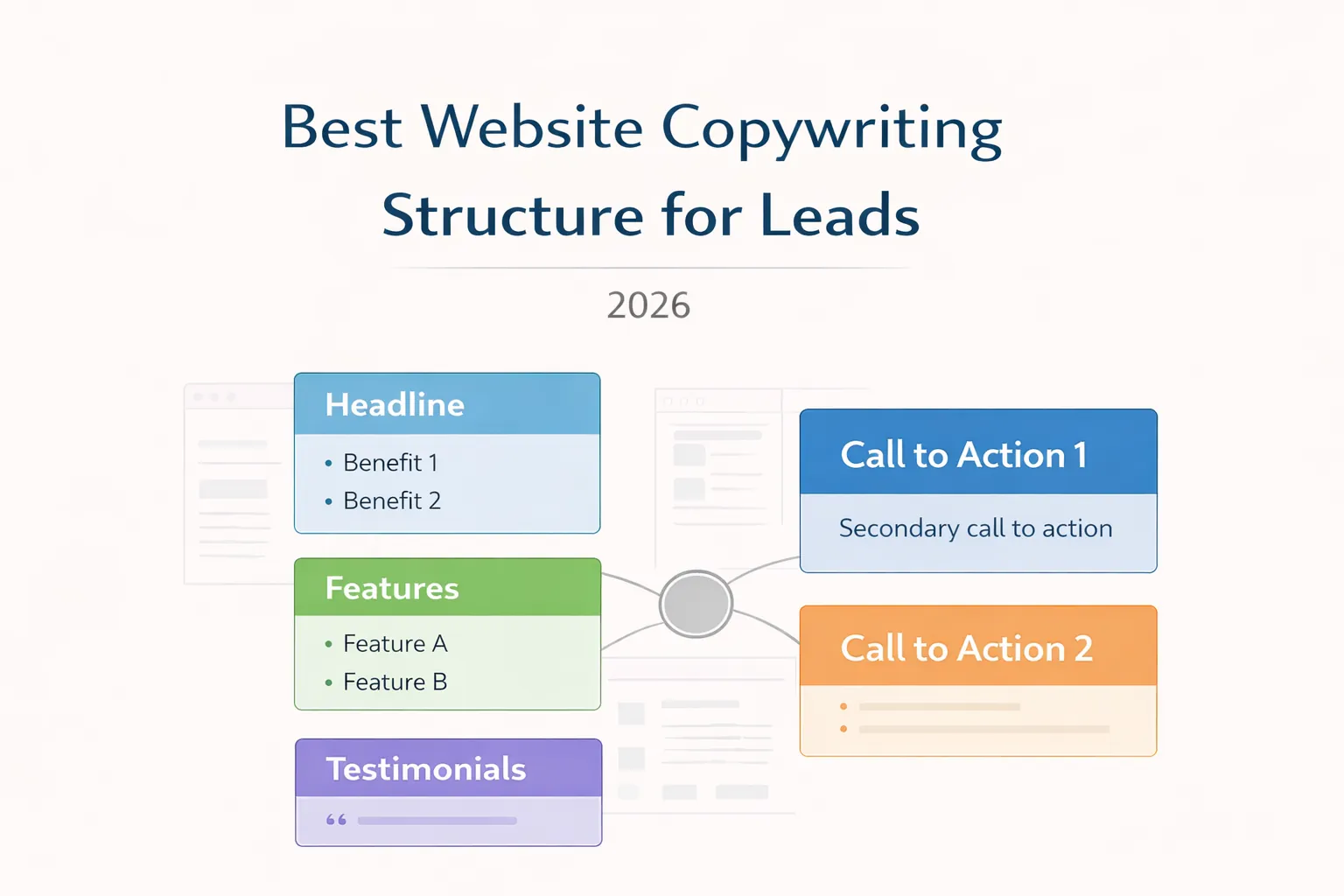
Website copy should help the right buyer understand the offer, trust the claims, answer important doubts, and take a suitable next step.
That is different from filling a page with search keywords or polished adjectives. “Innovative,” “best,” and “customer-centric” do not explain what the company delivers, who it fits, or what happens after an enquiry.
This guide focuses on message architecture: the sequence of claims, evidence, objections and calls to action that can improve lead quality for service businesses and B2B software companies.
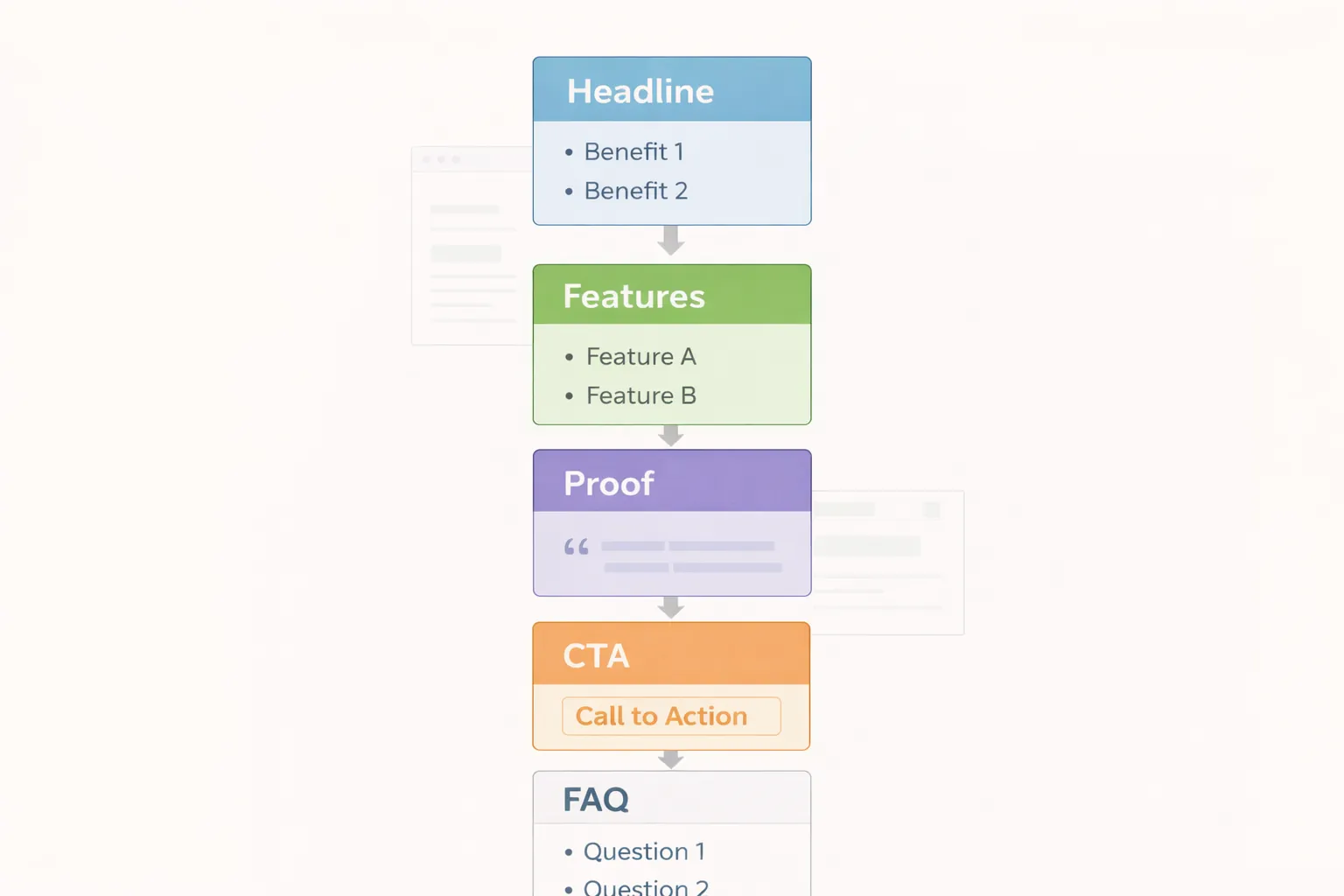
A strong lead-generation page usually answers these questions in order:
The page should not push every visitor into the same CTA. A ready buyer may request a quote, while an early-stage visitor may view a relevant demo or read a decision guide.
Good copy begins with evidence, not a blank document.
Collect language from:
Create a voice-of-customer table:
| Input | Example | Copy use |
|---|---|---|
| Desired result | “I need more genuine enquiries” | Headline and outcome |
| Current pain | “Leads come, but nobody follows up” | Problem and workflow section |
| Objection | “Will I be able to update it?” | FAQ or scope answer |
| Risk | “I do not want hidden charges” | Pricing and exclusions |
| Trust need | “Show me something similar” | Demo or proof CTA |
| Qualification | “We need GST billing and stock” | Product-fit section |
Use the customer's meaning, but do not invent quotations or claim that one comment represents every buyer.
Each page should own one primary buyer task.
Examples:
Trying to make one page rank for every service and convert every audience produces vague copy.
Before writing the headline, complete this internal sentence:
We help [specific audience] achieve [useful outcome] through [service or mechanism], with [credible differentiator or delivery boundary].
Example:
We help Indian SMEs manage GST billing, stock, purchases and payments through a practical business suite without positioning it as a full enterprise accounting ERP.
This sentence may not appear exactly on the page. It keeps the remaining copy aligned.
The hero must identify the offer before it tries to sound memorable.
Use one of these:
The subheadline should add information that the headline could not hold:
Weak:
We deliver innovative digital excellence.
Stronger:
Plan, build and support web applications for billing, dashboards, integrations and internal operations, with the scope agreed before development begins.
Match the CTA to visitor readiness:
Avoid unclear buttons such as “Explore” when the destination or action is not obvious.
After the offer, help the reader decide whether the page matches their situation.
Use specific signals:
Then state who the service is and is not for.
Example:
This service fits businesses with a repeatable workflow that standard SaaS cannot support cleanly. It may not be the right choice when an established tool already covers the requirement at a lower total cost.
That boundary can improve trust and reduce low-fit enquiries.
Do not describe a service only through benefits. Buyers also need scope.
For a website project, deliverables may include:
For software, the page may describe:
Link to the most relevant route rather than repeating every detail. For example, visitors who need logged-in operational workflows can review web application development, while businesses with unusual internal processes can review custom software development.
Trust copy should use evidence the business can support.
Useful proof types:
Unsupported:
Instead of writing “high-quality development,” show how quality is controlled: scope sign-off, responsive review, build validation, security checks and deployment verification.
Do not hide every concern in the FAQ.
Common service-business objections:
Place the answer near the section that creates the concern. Mentioning integrations? Explain that feasibility depends on API access. Mentioning SEO? State that technical implementation does not guarantee rankings.
A process section should reduce uncertainty, not decorate the page with generic steps.
| Stage | What the buyer should learn |
|---|---|
| Discovery | What information is required |
| Scope | How requirements and exclusions are approved |
| Prototype or demo | What will be reviewed before full build |
| Development | How progress and changes are handled |
| QA | What devices, flows and data are checked |
| Launch | Who controls domain, hosting and deployment |
| Support | What is covered after handover |
Use verbs and outputs. “We collaborate” is not a process step. “Approve the page map and form fields before visual build” is.
If a fixed price is not appropriate, explain cost drivers.
For example:
Do not use “starts at” pricing if almost no realistic project qualifies for it. A pricing range should specify the assumptions behind it.
You can use a website project agreement and scope guide to align copy with what the proposal will actually promise.
One page can use several CTAs if their roles are clear.
For a high-intent visitor:
For a visitor who needs evidence:
For users who prefer a channel:
Keep labels consistent. If the top CTA says “Request a demo,” do not call the same action “Get started,” “Submit,” and “Learn more” elsewhere.
The service website layout guide covers where these actions should appear. This article focuses on what the message should say.
The form should collect enough information to route the lead without asking for a complete project specification.
Useful fields:
Explain what happens next:
Share the current requirement. We will review the fit and reply with the next practical step, not an automatic project commitment.
Avoid collecting sensitive credentials, customer records or production data in an enquiry form.
A WhatsApp button should set the conversation context.
Instead of only “Chat now,” consider:
Discuss website requirement on WhatsApp
The prefilled message can include the page or service name, but the user should be able to edit it. The WhatsApp CTA implementation guide explains placement and measurement considerations.
Search visibility and lead quality are not competing goals.
Use the primary query naturally in:
Then answer the search task completely. Do not repeat the same phrase in every heading.
The service-page SEO guide covers search intent and content depth. Copy should remain readable even if every bold keyword is removed.
Use three passes.
Track actions that reflect the page's purpose:
The conversion tracking guide explains how to create an event contract for forms, calls and WhatsApp.
Do not judge copy only by total form submissions. More low-fit leads may indicate that the promise is too broad or qualification is missing.
VASUYASHII uses literal service and product positioning, visible contact paths, demo experiences, practical implementation guides and explicit product boundaries. Content refresh work also separates layout advice, technical implementation and message strategy instead of repeating one generic lead-generation template.
The important standard is consistency: website copy, demo, proposal and actual delivery scope should describe the same offer.
Start with the offer and audience, explain the problem and fit, show deliverables and proof, handle objections, describe the process, clarify cost drivers, and end with a suitable action.
It should route visitors to the main offers, not reproduce every service page. Keep detail on the destination pages.
Show fixed pricing when scope is standardized. For custom work, explain realistic cost drivers or qualified ranges rather than hiding the subject.
The page must satisfy the search task and help the reader decide. Keyword repetition without a useful answer is weak SEO and weak sales copy.
Use the strongest proof that can be verified. One relevant live demo or detailed case study can be more useful than many unsupported claims.
No. Place actions where a visitor may reasonably be ready: after the core promise, after proof or scope, and near the final decision.
It can help organize material, but the business must provide real offer details, boundaries, proof and customer language. Generic generated claims should not be published as evidence.
Review it when the offer, pricing model, product capability, customer objections or search intent changes. Use conversion and lead-quality data to prioritize revisions.
Choose one commercial page and create its message map before changing individual sentences. Gather real enquiries, objections, deliverables and proof, then rewrite the page in decision order.
For a scoped review, share the page and target service with VASUYASHII.
Related Articles
April 16, 2026
Use a local landing page template with unique service intent, genuine city proof, useful pricing, FAQs, internal links, conversion tracking, and quality checks.
Read article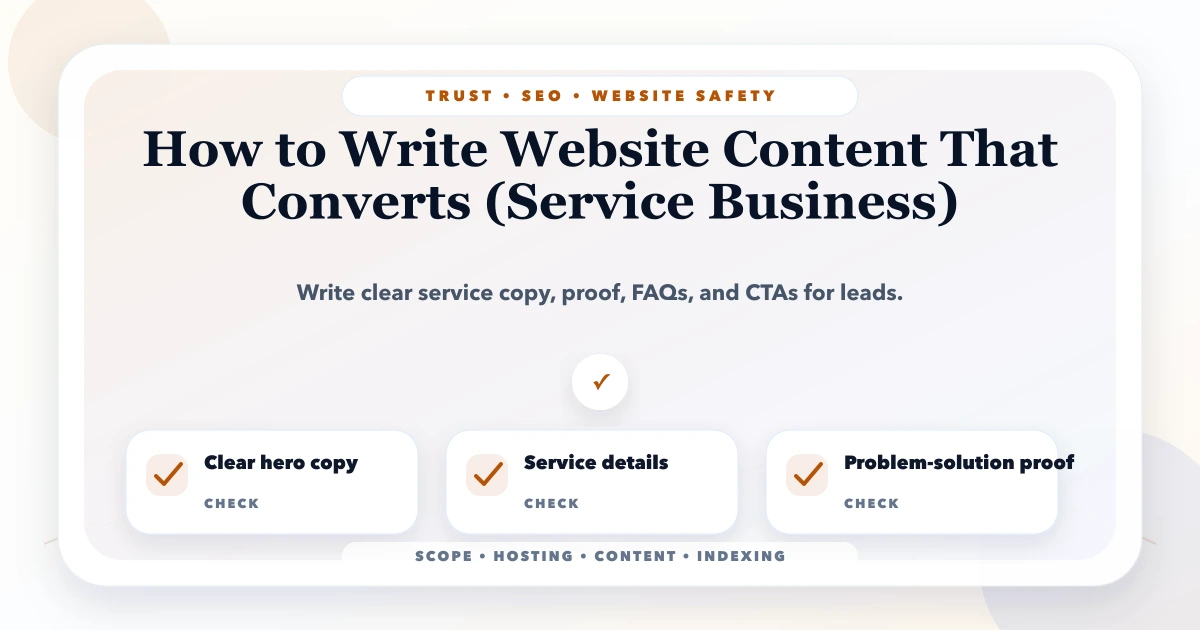
May 21, 2026
Write service-business website copy with clear buyer intent, proof, scope, objections, pricing context, useful CTAs, SEO structure and conversion measurement.
Read article
May 20, 2026
Plan a service-business homepage that clarifies the offer, earns trust, routes visitors, proves capability, answers objections, and tracks qualified leads.
Read article
June 5, 2026
Prepare accurate website content for a new business: services, proof, process, FAQs, images, contact details, SEO fields, policies, and ownership.
Read article