
May 2, 2026
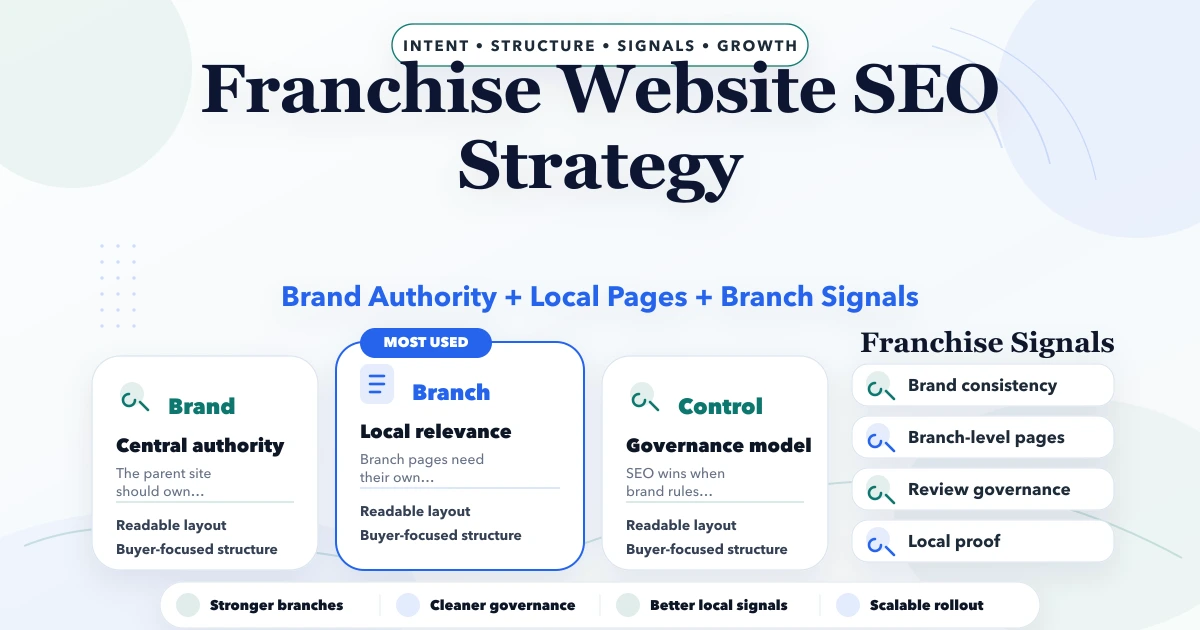
Franchise Website SEO Strategy
Franchise website SEO strategy with branch pages, local proof, governance, internal links, and rollout planning for multi-location brands in 2026.
Read articlePublished
Multi-location business website structure for SEO: city-page architecture, internal links, canonicals, content rules, and rollout plan for 2026.
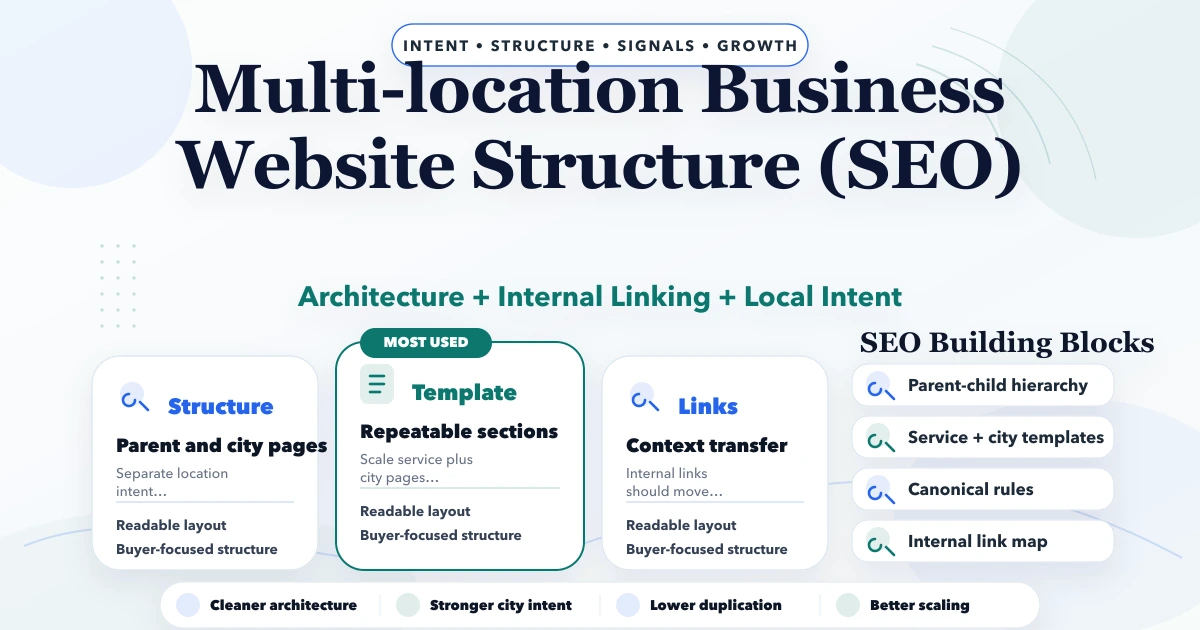
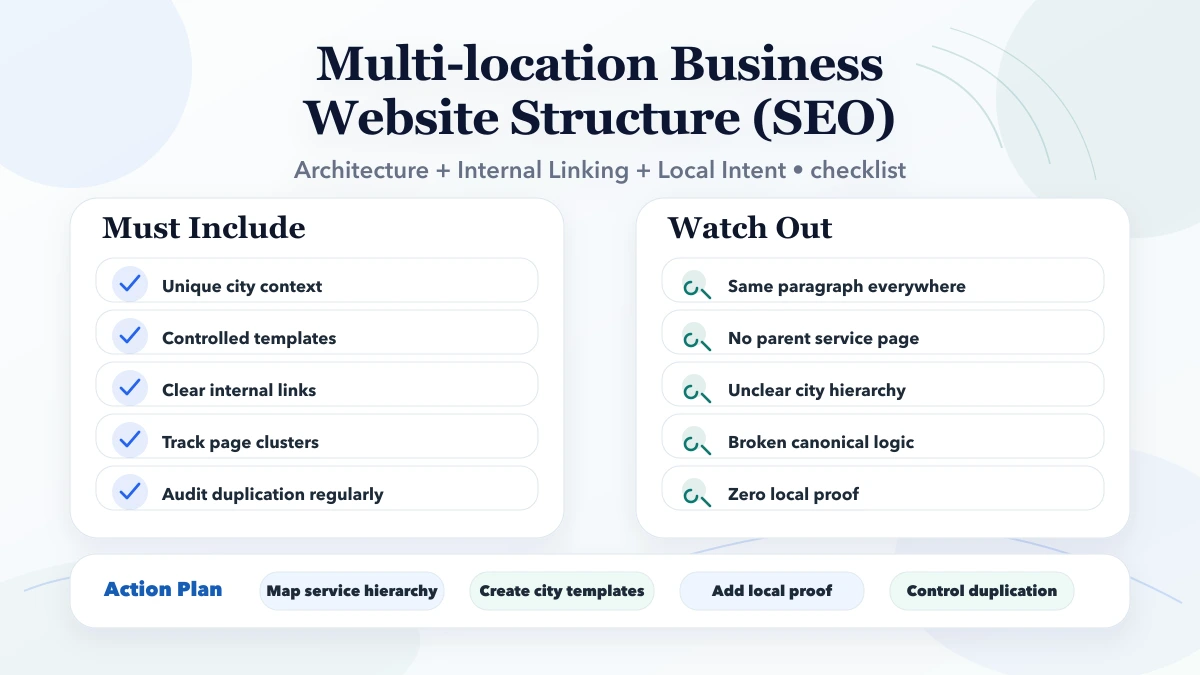
A multi-location business website structure for SEO is for service businesses, healthcare groups, education brands, franchises, and multi-city companies that want location visibility without creating a spammy mess. This guide explains how to structure service pages, city pages, internal links, and canonical logic so the site can scale without confusing Google or users.
The problem is not creating more pages. The problem is creating pages that have clear jobs. A good multi-location structure helps users choose the right city or branch, tells Google how pages relate to each other, and prevents content cannibalization from weak duplication.
By Tushar C. (Founder, VASUYASHII). Reviewed by VASUYASHII Editorial for practical scope, pricing, implementation clarity, and local business relevance.
For most businesses, the right approach is not to overbuild the first release. The stronger move is to define a clear first phase, remove the biggest friction points, and launch with proof, structure, and tracking in place. That keeps scope realistic, improves adoption, and makes later SEO or conversion work far easier.
| Scope | Price range | Timeline |
|---|---|---|
| Architecture audit | ₹30,000 to ₹75,000 | 5 to 10 days |
| SEO structure + templates | ₹75,000 to ₹2.2 lakh | 2 to 6 weeks |
| Scaled multi-location rollout | ₹2.2 lakh to ₹5 lakh+ | 6 to 14 weeks |
When a business expands into multiple cities, the website often becomes chaotic very quickly. Teams create one-off city pages, repeat the same service copy, and hope local SEO improves. In reality, that usually creates thin pages, weak internal linking, and poor crawl efficiency.
A structured model works better. The site should separate primary service intent, city intent, and proof intent. That means parent service pages, location-aware child pages, and supporting local proof or FAQ blocks need to work together instead of competing with each other.
Good execution here usually improves both SEO and conversion because the website stops behaving like a brochure and starts behaving like a serious business asset. The biggest improvement usually comes from clarity: clear messaging, clear proof, clear routing, and clear review discipline.
Pricing changes based on how much structure, proof, tracking, content work, and post-launch refinement the business actually needs. Two websites or SEO projects can sound similar at the title level but involve very different effort once page quality, stakeholder review, tracking, and content depth are included.
| Scope | Price range | Timeline |
|---|---|---|
| Architecture audit | ₹30,000 to ₹75,000 | 5 to 10 days |
| SEO structure + templates | ₹75,000 to ₹2.2 lakh | 2 to 6 weeks |
| Scaled multi-location rollout | ₹2.2 lakh to ₹5 lakh+ | 6 to 14 weeks |
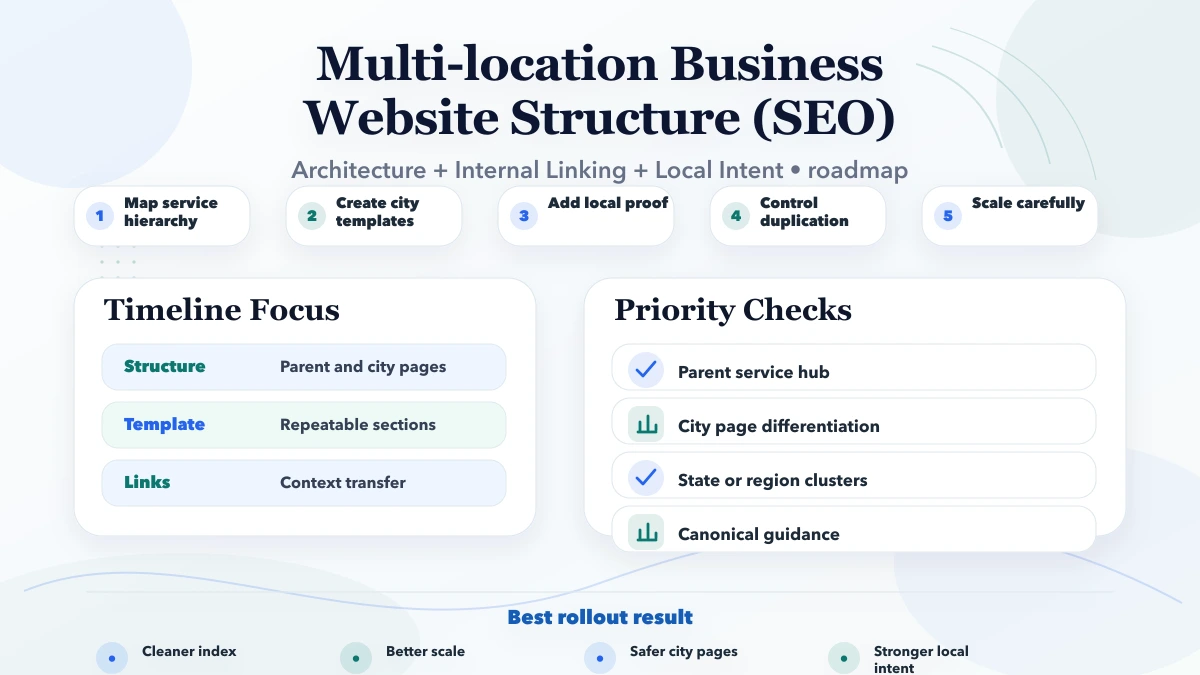
The practical way to budget is phase-wise. Define what must go live first, what supports SEO later, and what should only be built once real user behaviour gives better input.
A rollout becomes smoother when every phase has one owner, one measurable output, and one review point. When implementation runs without those anchors, even good design or development work starts feeling slow and expensive because the real issue is scope drift.
The stack should serve clarity, measurement, and future scale. In most business projects, data structure, content structure, and event visibility matter more than chasing a fashionable tool choice.
If these drivers are defined early, quoting becomes more honest and launch risk drops. If they are ignored, the project usually becomes cheap only on paper and expensive in revision cycles, weak results, or later cleanup.
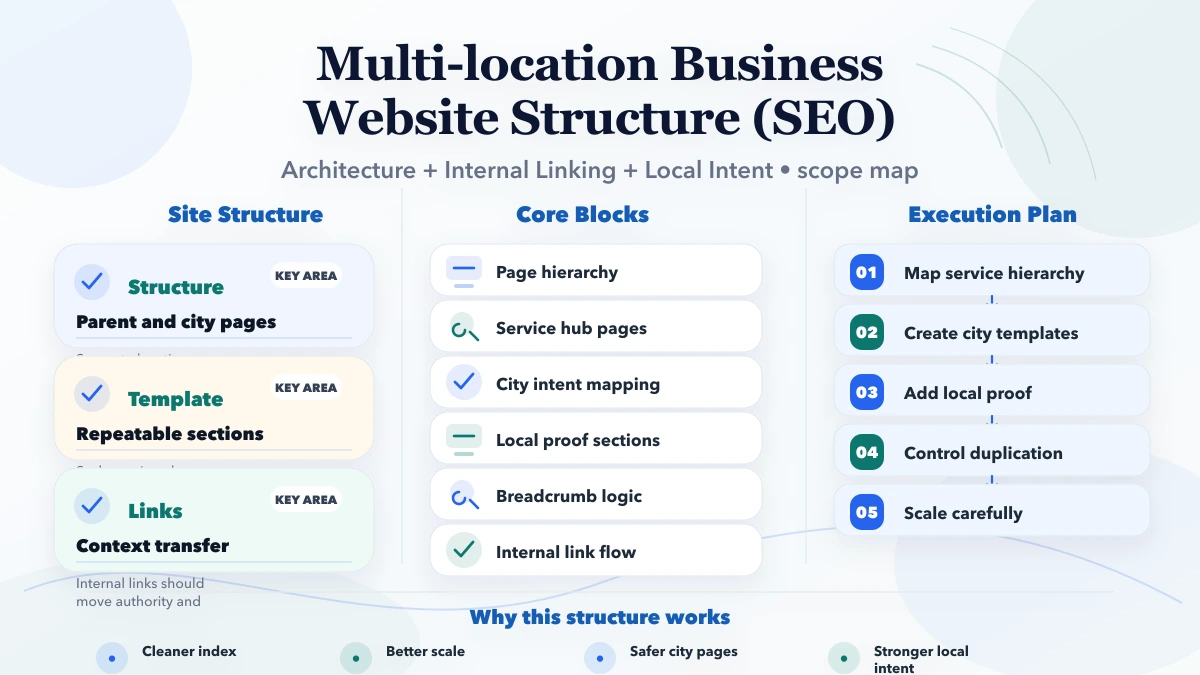
Most multi-location businesses should not start by creating dozens of city pages in parallel. The safer model is to define the service hierarchy first. Once the site has strong parent service pages, child city pages can inherit context while still adding local specificity through proof, FAQs, and conversion cues.
This hierarchy also makes internal linking easier. Instead of every page trying to rank for every keyword, the site learns which page should own the broader service term, which pages should capture city demand, and where supporting content should sit.
After publishing, measure more than just impressions. Review whether city pages are getting the right queries, whether users are moving from service hubs to city pages and then to contact actions, and whether low-value pages are being indexed unnecessarily.
If the site adds new city pages faster than it adds proof or structure, quality drops. That is why scaling should follow performance and usefulness, not only ambition.
We serve businesses across India from our Delhi NCR base and plan, build, and refine websites with a practical focus on clarity, trust, SEO structure, and lead quality.
If you are comparing vendors or deciding whether this scope is worth doing now, compare the real structure: page quality, proof depth, CTA logic, tracking, and how the plan expands later without rebuilding from scratch.
These mistakes usually hurt twice. They reduce user trust in the short term and weaken SEO or lead quality over time. Avoiding them is often more valuable than adding one more shiny section or feature.
Usually start with the highest-priority cities where the business already has delivery capability, proof, or clear commercial intent. Publishing fewer strong pages beats publishing many thin pages.
Yes. The structure can repeat, but the proof, FAQs, service emphasis, and local delivery context should be unique enough to serve real users.
No. Parent service pages and city pages should have different roles. Otherwise the site creates cannibalization and weakens topical clarity.
A template can work as a framework, but not as identical body copy. It should allow city-specific proof, objections, and trust cues.
Often yes, especially when local business relevance, service area, FAQs, or breadcrumbs are part of the page’s job.
Add more only after the first cluster is indexed well, generating qualified traffic, and not creating duplication issues.
Yes. The structure is useful nationwide. We serve businesses across India from our Delhi NCR base and can plan multi-city rollout remotely.
If you want a practical plan instead of vague website promises, share your requirement and we will map the first version, realistic pricing, timeline, and the sections needed to support SEO plus qualified enquiries.
Related Articles
May 2, 2026
Franchise website SEO strategy with branch pages, local proof, governance, internal links, and rollout planning for multi-location brands in 2026.
Read article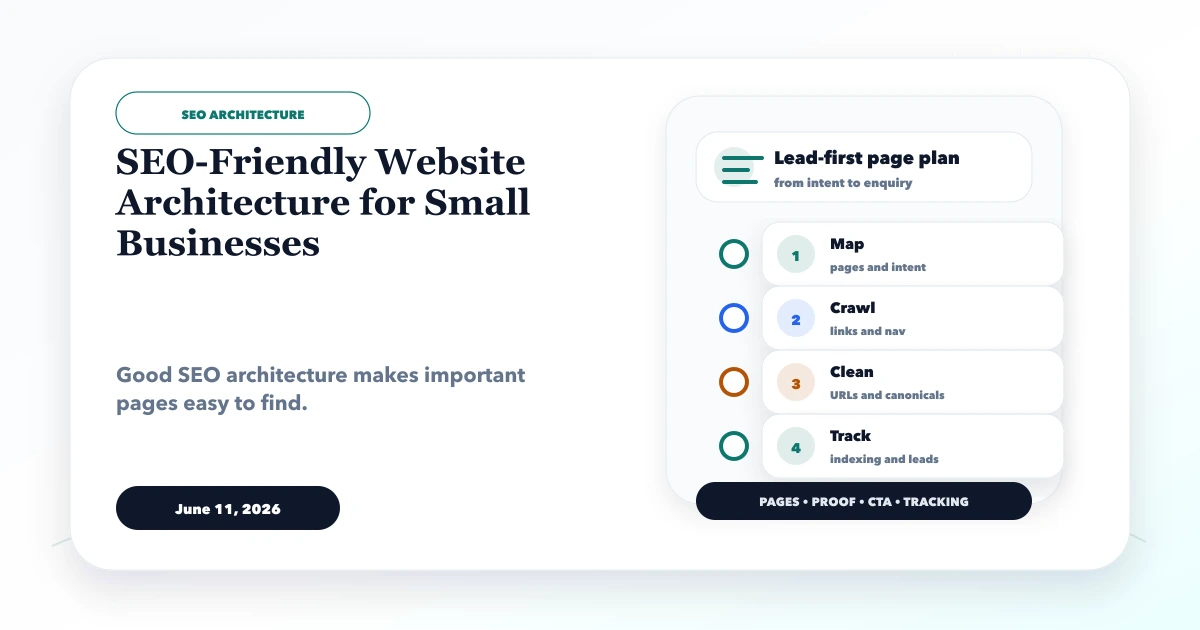
June 11, 2026
SEO-friendly website architecture for small businesses with service pages, location pages, blog clusters, internal links, sitemap, and canonical checklist.
Read article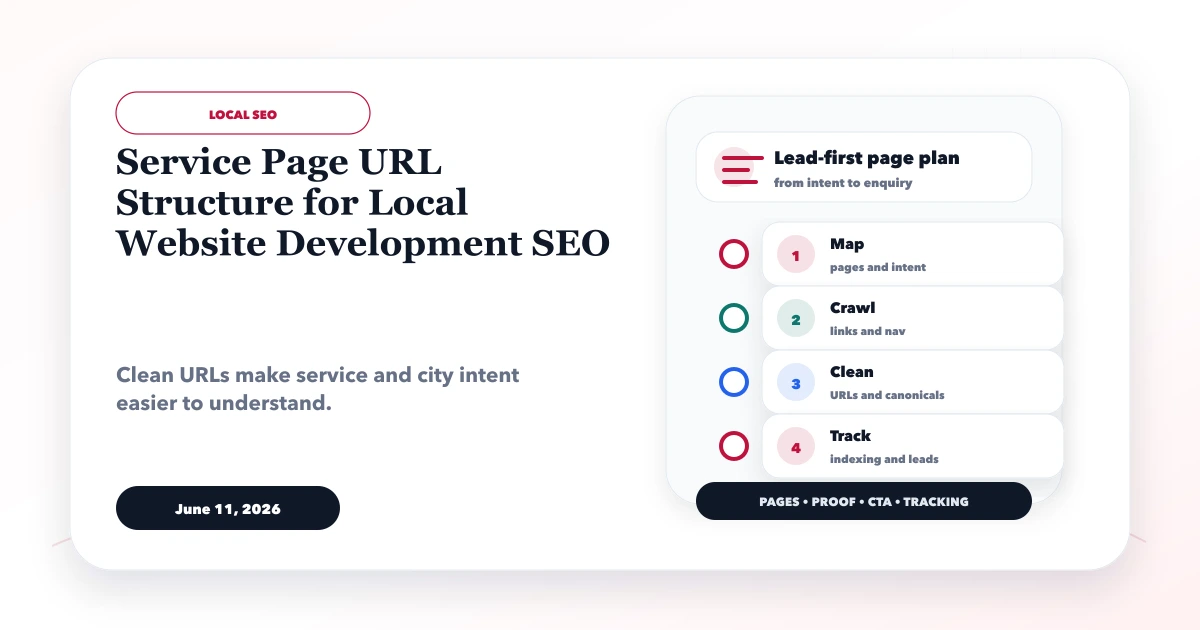
June 11, 2026
Plan stable local service URLs with parent hubs, genuine location pages, self canonicals, direct redirects, crawlable links, and sitemap consistency.
Read article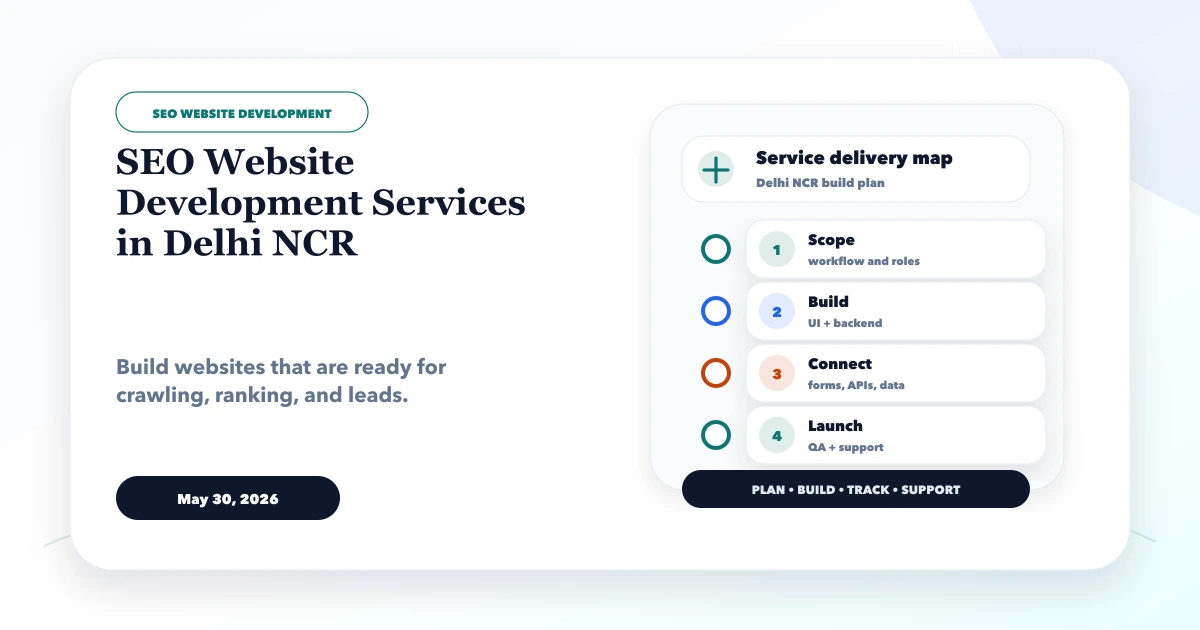
May 30, 2026
Scope SEO website development in Delhi NCR across architecture, rendering, metadata, structured data, performance, internal links and launch QA.
Read article