
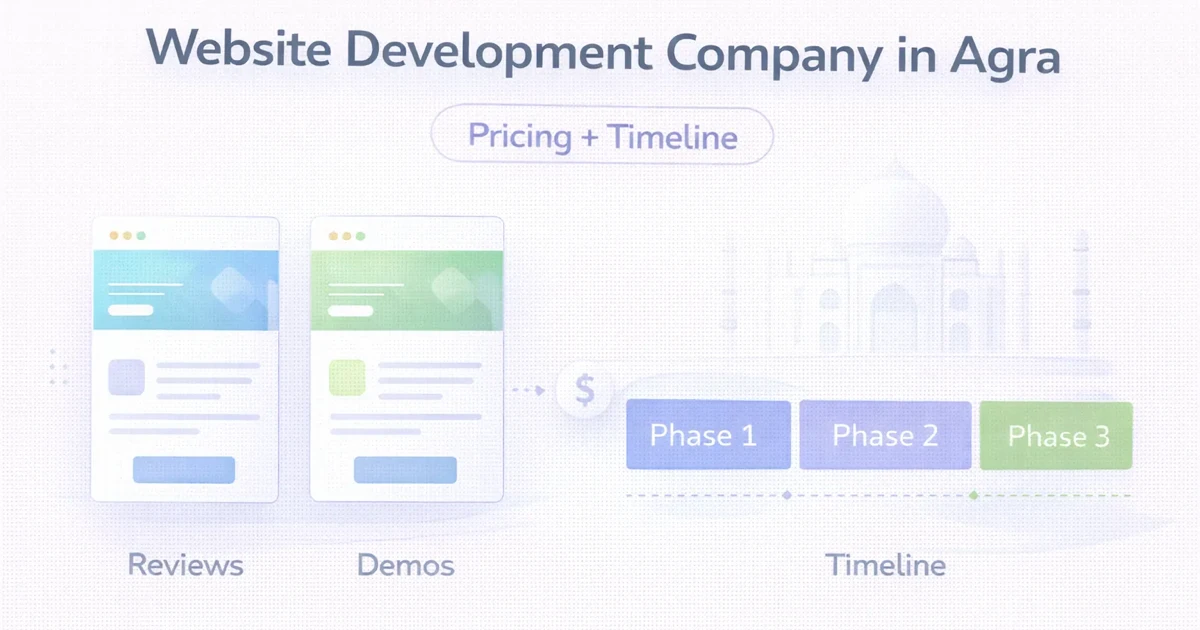
April 1, 2026
Website Development Company in Agra: 2026 Guide
Website development company in Agra: pricing, timeline, deliverables, and what local businesses should expect before hiring in 2026.
Read articlePublished Updated
Estimate a 5-page business website cost in India using design, copy, SEO, lead forms, tracking, revisions, ownership, launch and maintenance scope.
A five-page business website is not a fixed product merely because it has five URLs.
One quote may include a template, customer-supplied text and a basic contact form. Another may include custom design, copy planning, technical SEO, analytics events, accessibility, performance work, domain configuration and post-launch support. Comparing only price hides these differences.
This guide gives Indian small businesses an indicative planning range and a deliverable-based way to compare packages. It does not present the ranges as universal market prices.
| Package shape | Indicative range | Typical fit |
|---|---|---|
| Template-led starter | ₹15,000–₹30,000 | Basic presence with ready content |
| Custom lead-focused website | ₹35,000–₹75,000 | Service business needing positioning, proof and tracking |
| Advanced business website | ₹75,000–₹1.5 lakh+ | Custom interactions, copy, integrations or deeper SEO |
Hosting, domain, paid assets, external tools, ongoing SEO and maintenance may be separate. Ask for an inclusion sheet before comparing prices.
Five pages are a planning constraint, not an SEO rule.
A common structure is:
But the right structure depends on search intent and buyer questions.
A clinic may need Doctors and Appointment pages. A manufacturer may need Products and RFQ. A software company may need Services, Product and Demo. Use the small-business page planning guide before locking a package.
The home page should:
It should not contain the full history of the company or every keyword.
One Services page can work when the offers are closely related and the business is early-stage.
It should separate:
When services target very different searches, dedicated service pages may be required. That is more than a five-page scope and should be priced accordingly.
The About page should reduce risk:
Avoid invented team photos, inflated metrics and unsupported awards. The About page trust template gives a practical structure.
Choose the page that answers the strongest buying objection.
Options:
Do not publish outdated or unverifiable projects. If no client case study is approved, use a transparent process page or a fictional demo that is clearly labelled.
A contact page should include:
The contact-page conversion guide explains field and CTA decisions.
The conversion tracking guide separates clicks from accepted leads.
Content can change the quote substantially.
Clarify:
“Content included” should not mean generic AI text without business review. The service-business copywriting guide helps prepare real inputs.
Custom design does not require animation everywhere. The objective is clarity, trust and usable action.
A basic form may send an email. A stronger system may include:
Each integration adds provider access, testing and failure handling. Name the exact form outcome in the quote.
| Workstream | Why it changes cost |
|---|---|
| Discovery and architecture | Decides page roles and scope |
| Copy | Requires interviews, evidence and revisions |
| UI design | Template vs custom system |
| Development | Components, forms and responsive states |
| SEO foundation | Metadata, schema, sitemap, redirects |
| Analytics | Event design and QA |
| Integrations | API/provider complexity |
| Launch | DNS, hosting and production verification |
| Support | Stabilization vs ongoing changes |
Do not demand a line-item fee for every button. Use workstreams to understand what is included and where scope can change.
| Phase | Typical duration | Owner dependency |
|---|---|---|
| Discovery and page map | 1–3 days | business inputs |
| Content and proof | 3–10 days | facts and approvals |
| Design | 4–10 days | revision decisions |
| Development | 5–12 days | stable scope |
| QA and launch | 2–5 days | domain and final approval |
A focused project may launch in two to four weeks. Delays usually come from missing copy, changing scope, late proof and slow approvals rather than coding alone.
Approve:
Approve one key page and mobile direction before every page is built.
Review a staging URL. Record changes in one list rather than scattered messages.
Confirm forms, analytics, domain, sitemap, canonical URLs, backup and ownership.
Use the website project agreement guide and safe payment terms before paying against vague milestones.
An add-on should include its acceptance criteria and recurring fees.
The buyer should receive:
Do not make the final payment only because the home page looks complete. Use a website delivery checklist.
A static five-page website may require limited routine care, but forms, analytics, dependencies, hosting and content still need ownership.
Ask:
VASUYASHII scopes business websites from the actual page, content, proof, form, tracking and launch requirements. Website development should not be confused with ongoing ranking guarantees, paid advertising or custom web-app modules.
Demo websites demonstrate design direction and structure; they are not presented as completed customer projects.
It may buy a basic template implementation. Verify content, mobile QA, forms, metadata, deployment, ownership and support before comparing it with a broader package.
Page count does not guarantee ranking. A small site can be useful, but competitive services may need dedicated pages, evidence, internal links and ongoing authority.
A focused project often takes two to four weeks when content and approvals are ready. Custom work or integrations can take longer.
Sometimes. Ask whether domain, hosting, SSL, email and renewal fees are included and whose account owns them.
Only when current, permissioned proof exists. Otherwise use process, demos or industry-fit content without implying fictional client work.
No. Metadata, sitemap and crawlability are foundations. Ongoing content, link earning and search performance work are separate.
Use accepted milestones. Keep a final payment tied to launch QA, ownership, handover and working forms.
Complete the business website planning checklist, then contact VASUYASHII with the five page roles, content status and required lead actions for an accurate scope.
Related Articles
April 1, 2026
Website development company in Agra: pricing, timeline, deliverables, and what local businesses should expect before hiring in 2026.
Read article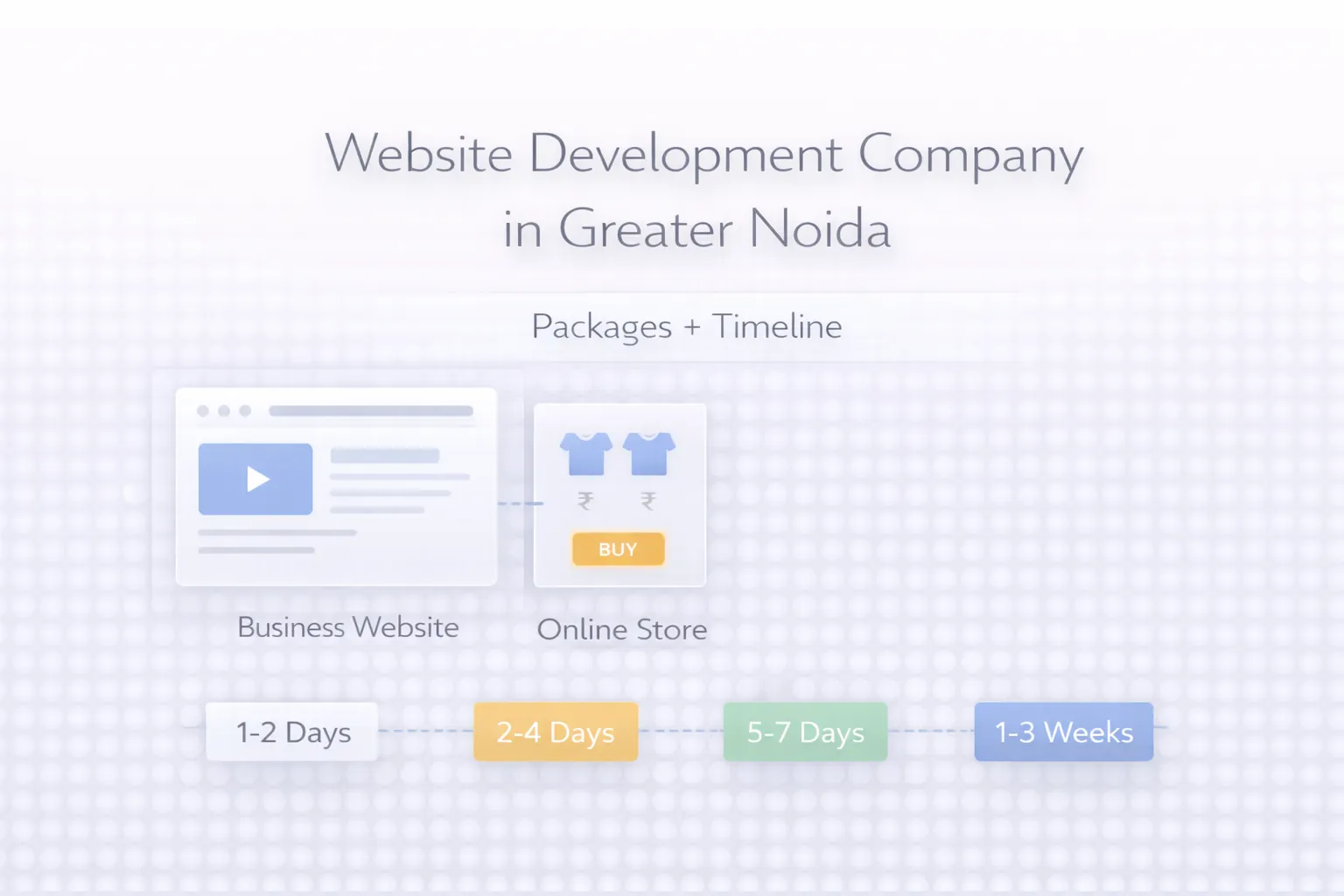
March 29, 2026
Website development company in Greater Noida: packages, timeline, launch scope, SEO basics, and what local businesses should build first in 2026.
Read article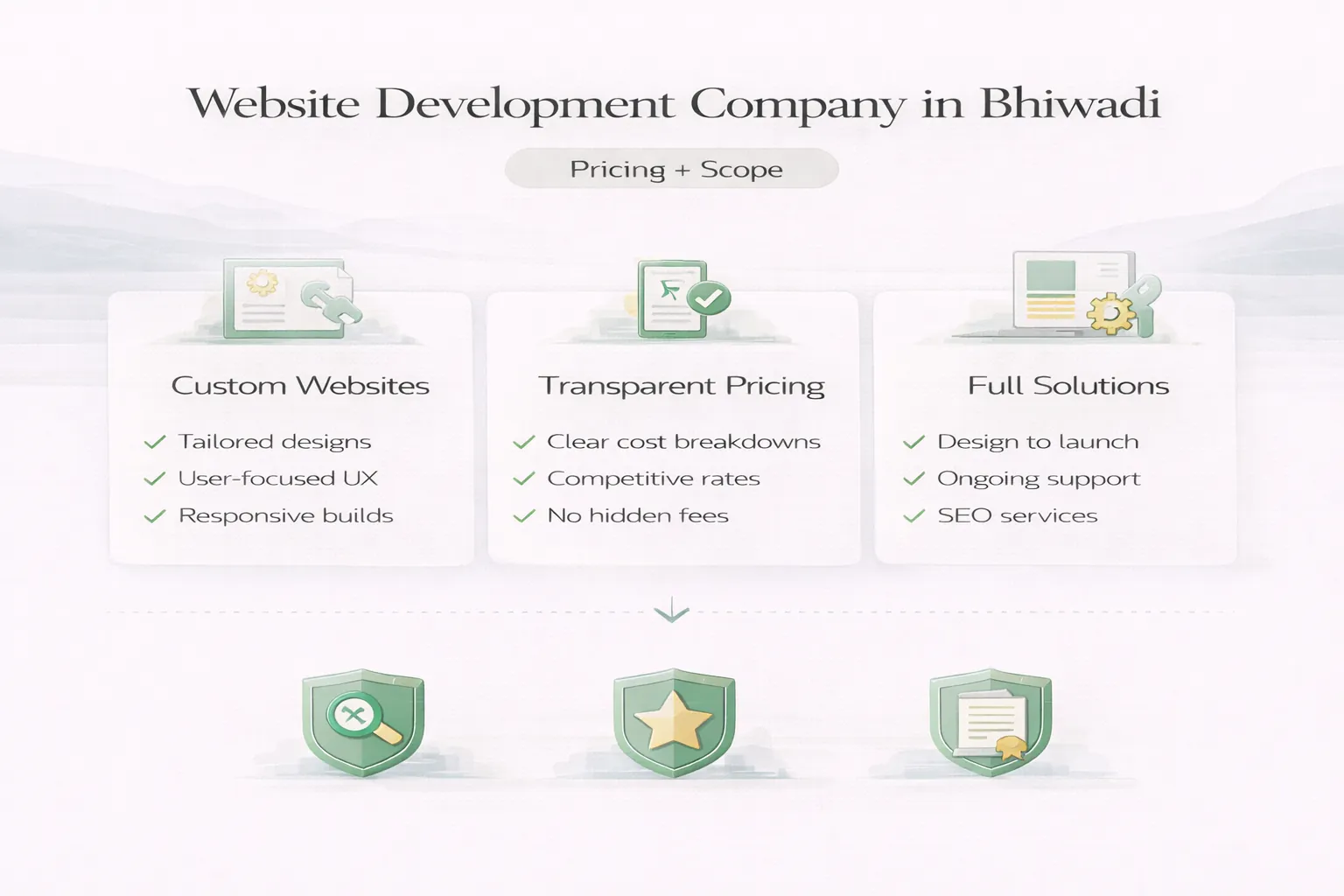
April 7, 2026
Website development company in Bhiwadi: pricing, timeline, deliverables, and what local businesses should expect before starting in 2026.
Read article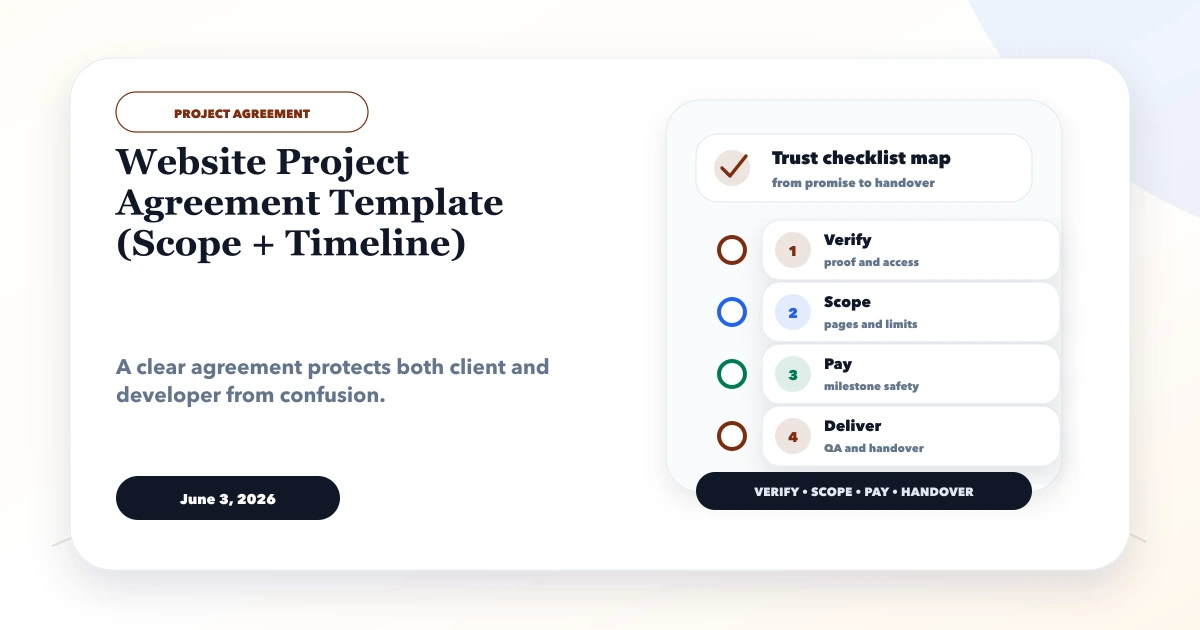
June 3, 2026
Use this website project agreement template to define deliverables, exclusions, timeline, revisions, payments, ownership, acceptance, support and termination.
Read article