
April 21, 2026
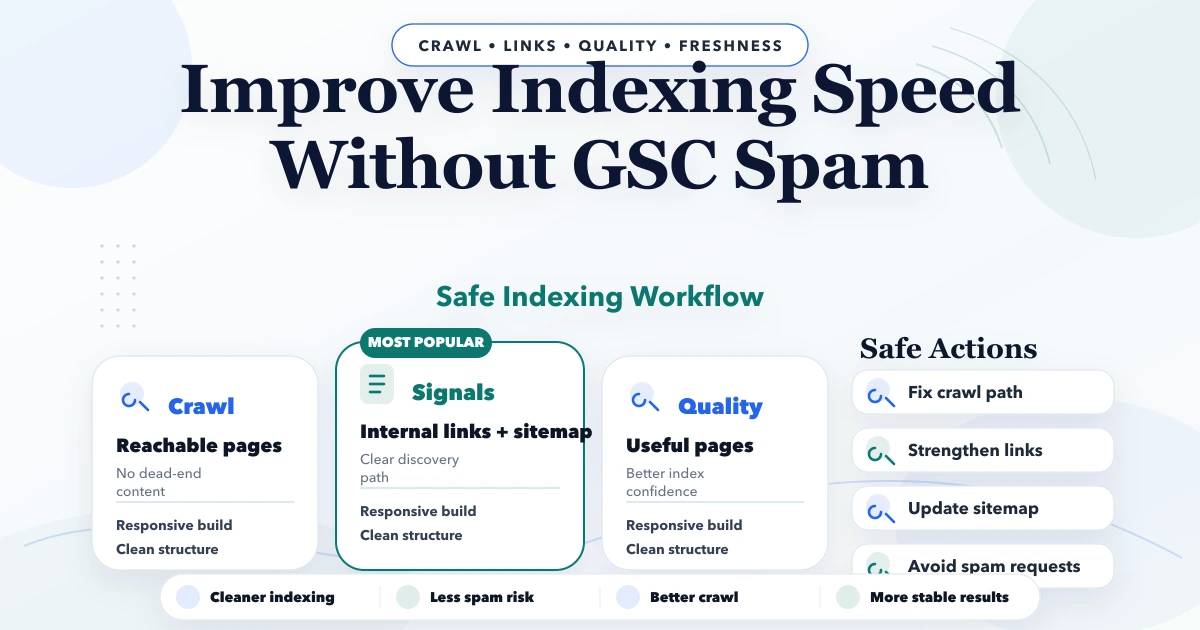
Improve Indexing Speed Without GSC Submission Spam
Improve Google indexing by fixing crawl access, canonical signals, sitemap dates, internal links, rendering and content quality before requesting recrawl.
Read articlePublished Updated
Avoid scaled content, weak city pages, canonical noise, sitemap clutter, spam links, poor intent matching, and measurement gaps with this practical SEO review.

SEO failure in 2026 is often caused by publishing scale without information gain. Hundreds of technically valid pages can still compete with one another, waste crawl attention, or fail to earn clicks because they repeat the same promise with different keywords.
This review is for Indian SMBs and service companies that already publish blogs, service pages, landing pages, or city pages. It prioritizes search intent, evidence, index hygiene, internal architecture, and conversion measurement over output volume.
By Tushar C. (Founder, VASUYASHII). Reviewed by VASUYASHII Editorial for field experience, SEO usefulness, buyer clarity, and implementation practicality.
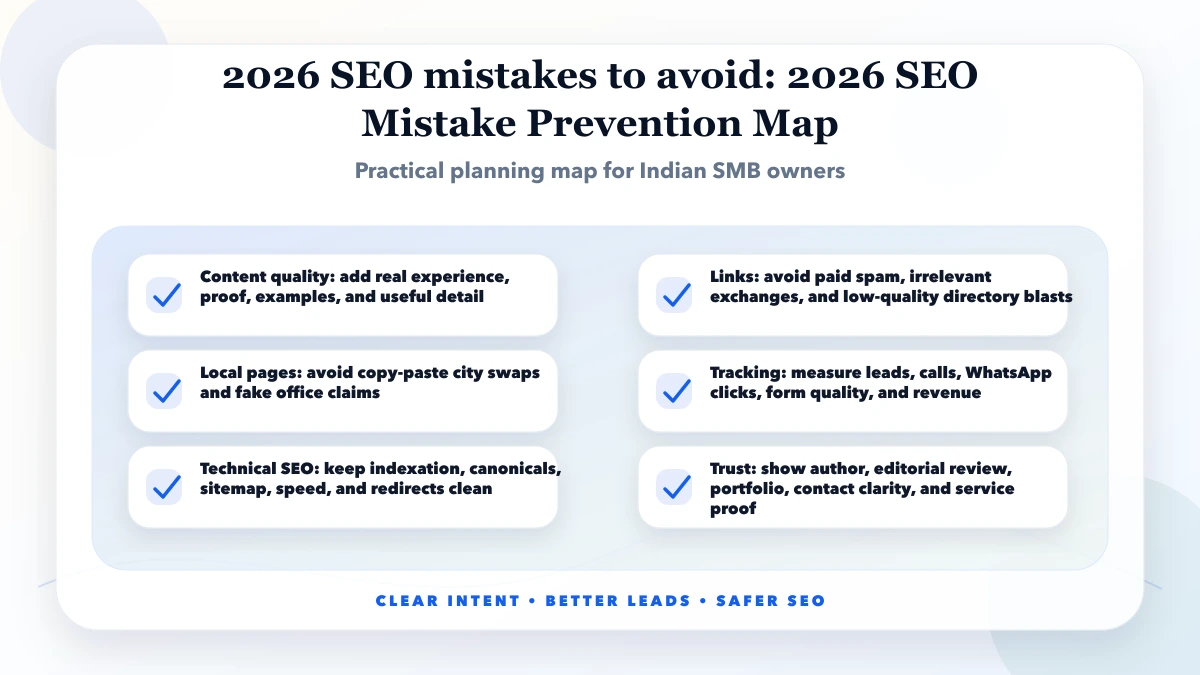
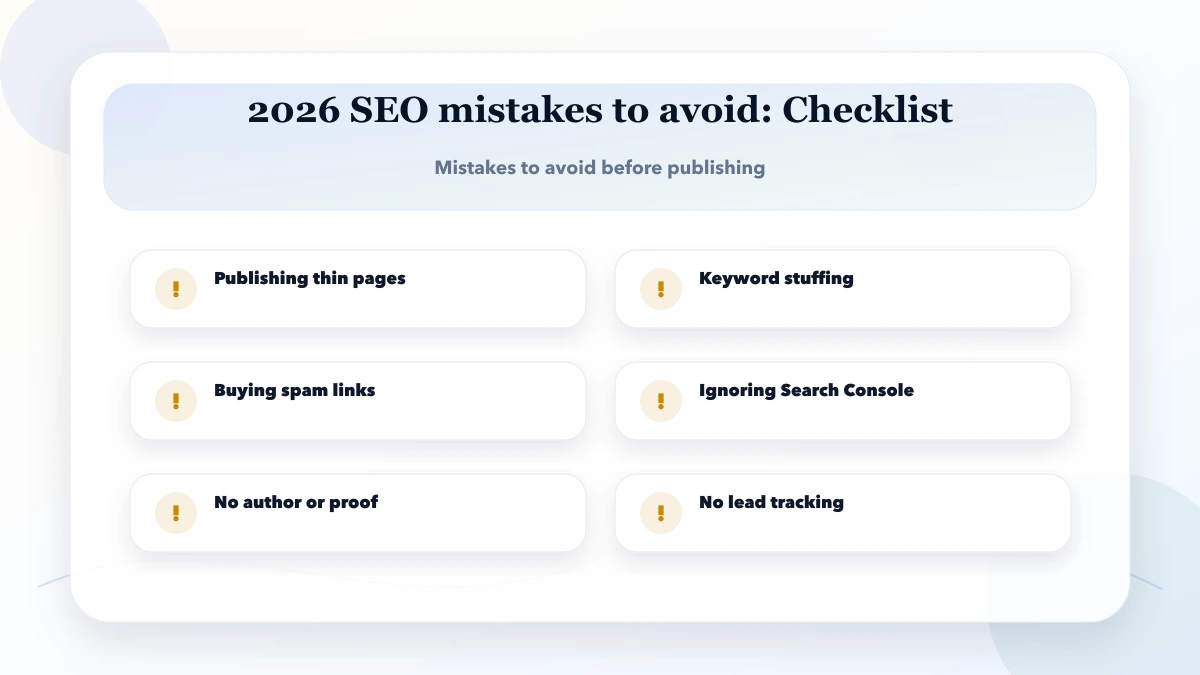
The biggest 2026 SEO mistakes to avoid are thin AI-like pages, duplicate city pages, keyword stuffing, buying spam links, ignoring technical basics, no conversion tracking, and publishing without real experience.
| Scope | Practical price range | Typical timeline |
|---|---|---|
| SEO mistake audit | ₹8,000 to ₹25,000 | 2 to 5 days |
| Technical + content cleanup | ₹25,000 to ₹1 lakh | 1 to 4 weeks |
| Full SEO recovery roadmap | ₹1 lakh to ₹4 lakh+ | 4 to 12 weeks |
Google's spam policies warn against manipulative tactics like keyword stuffing, link spam, doorway abuse, and scaled low-value content.
No. Daily publishing is fine if pages are useful, unique, internally linked, and based on real intent.
The risk is low-value, generic, or inaccurate content. Add real experience, proof, editing, and practical examples.
Avoid spam link packages. Focus on real mentions, partnerships, portfolio proof, directories with value, and useful content.
Creating many duplicate city pages without unique proof, service relevance, or local usefulness.
Technical SEO helps access and performance, but weak content and poor intent match still limit results.
Check Search Console, leads, pages indexed, CTR, top queries, technical errors, and pages with traffic but no enquiries.
Avoid guessing from a site-wide score. Classify the exact failure as discovery, indexing, query relevance, CTR, or conversion using the Google ranking diagnosis guide.
| Mistake | What the evidence looks like | Corrective action |
|---|---|---|
| publishing before mapping intent | several pages answer the same query | choose a primary page and give support pages narrower jobs |
| scaled city or near-me pages | only the place name changes | add genuine service-area evidence or stop expansion |
| weak pages in the sitemap | URLs exist but offer little unique value | improve priority pages before requesting indexing |
| canonical and redirect noise | http, apex, www, and old slugs appear together | standardize internal links and direct redirects |
| flat internal architecture | hundreds of articles depend on pagination | connect hubs, services, and contextual support content |
| search-first copy | keywords appear but buyer decisions are unanswered | add comparisons, constraints, proof, and next actions |
| spam promotion | unrelated comments or paid links use commercial anchors | earn relevant editorial references and business citations |
| ranking-only measurement | reports omit clicks, leads, and qualified outcomes | connect GSC, analytics events, and lead review |
Google's current spam policies explicitly cover scaled content abuse and manipulative practices. Using automation is not automatically a violation; creating many low-value pages primarily to manipulate rankings is the risk. Every published page should have a reason to exist beyond changing a keyword.
Do not repeatedly request indexing while the page remains unchanged. A request asks Google to revisit; it does not create quality or demand.
The current content review covers 616 blog posts through a repeatable classifier. Updates are being applied in scoped batches while slugs, original dates, canonical behavior, and final-www URLs remain stable. The site uses an XML sitemap, crawlable blog archives, topic hubs, contextual links, robots.txt, and llms.txt. These controls improve consistency, but they do not guarantee ranking or indexing.
The important lesson from this first-party inventory is that publication count is not a growth target. Thin, overlapping, weakly linked posts must be improved or reviewed before more location content is added. The process is documented through dated classification reports rather than an unsupported “SEO score.”
For implementation detail, use the SEO content QA checklist, local spam penalty guide, and discovered-not-indexed troubleshooting guide.
When two pages overlap, compare query impressions, clicks, backlinks, internal links, conversions, freshness, and business relevance. Keep the URL that best matches the intended search task, then decide whether the weaker page should be differentiated, merged with a redirect, retained for a separate audience, or reviewed for indexing.
Do not redirect pages merely because a similarity tool gives a high score. A local service page and a national buyer guide can share vocabulary while serving different decisions. Conversely, two differently worded posts may still compete when they answer the same query with the same page type.
Any consolidation should update internal links, sitemap output, canonical behavior, related cards, and archived references. Verify that the destination contains the useful information from the retired page and that the redirect reaches it directly.
Low CTR at an eligible position can indicate a weak title, vague benefit, wrong page type, or a query mismatch. Review GSC page-and-query data rather than rewriting every title from a generic formula. The title should describe the actual page, and the description should set an honest expectation.
After changing a priority snippet, record the date and allow enough impressions before judging it. A CTR increase with irrelevant enquiries is not success; combine search data with lead quality.
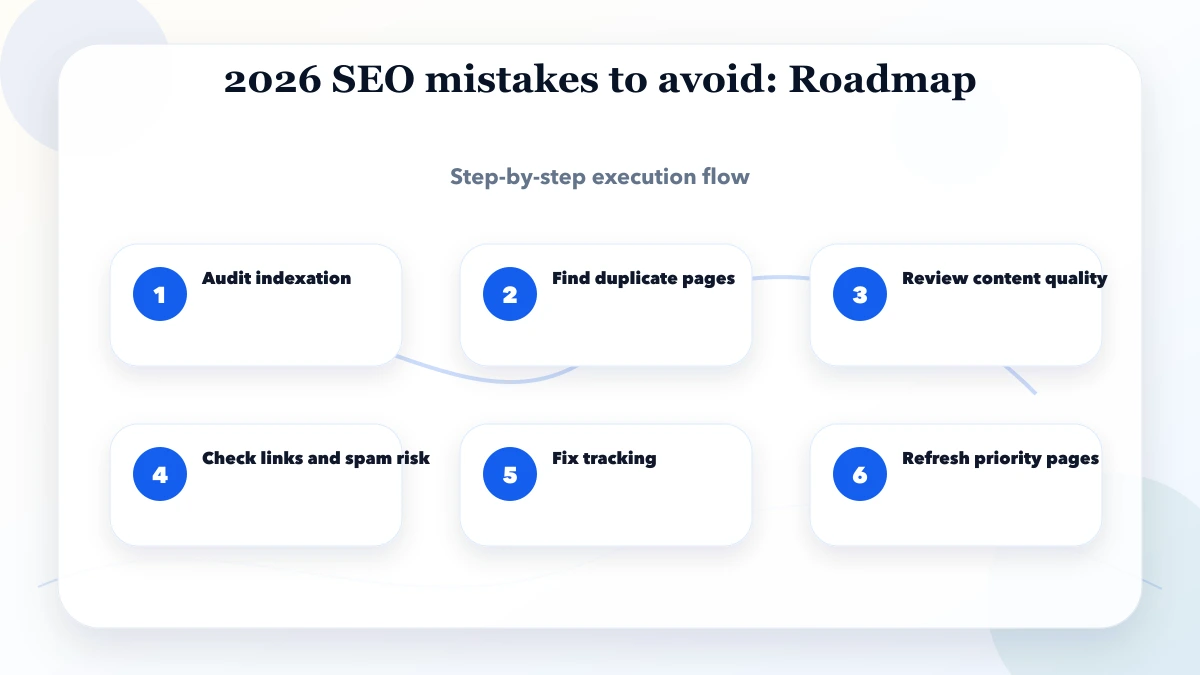
Before approving a new article, require a defined audience, search task, unique outline, internal parent, planned support links, factual sources, first-party contribution, conversion path, and maintenance owner. If the page cannot meet that standard, improve an existing URL instead.
Record the URL, issue, evidence, edit date, expected signal, and review date for every priority SEO change. This prevents repeated title rewrites, indexing requests, and canonical experiments before Google or users have had time to respond.
Technical fixes can be verified immediately in source and production. Search performance needs a suitable observation period and enough impressions. Keep those evidence windows separate so urgency does not become random editing.
Related Articles
April 21, 2026
Improve Google indexing by fixing crawl access, canonical signals, sitemap dates, internal links, rendering and content quality before requesting recrawl.
Read article
March 31, 2026
Launch SEO for a new domain with a crawlable base, focused money pages, useful clusters, internal links, Search Console evidence and safe iteration.
Read article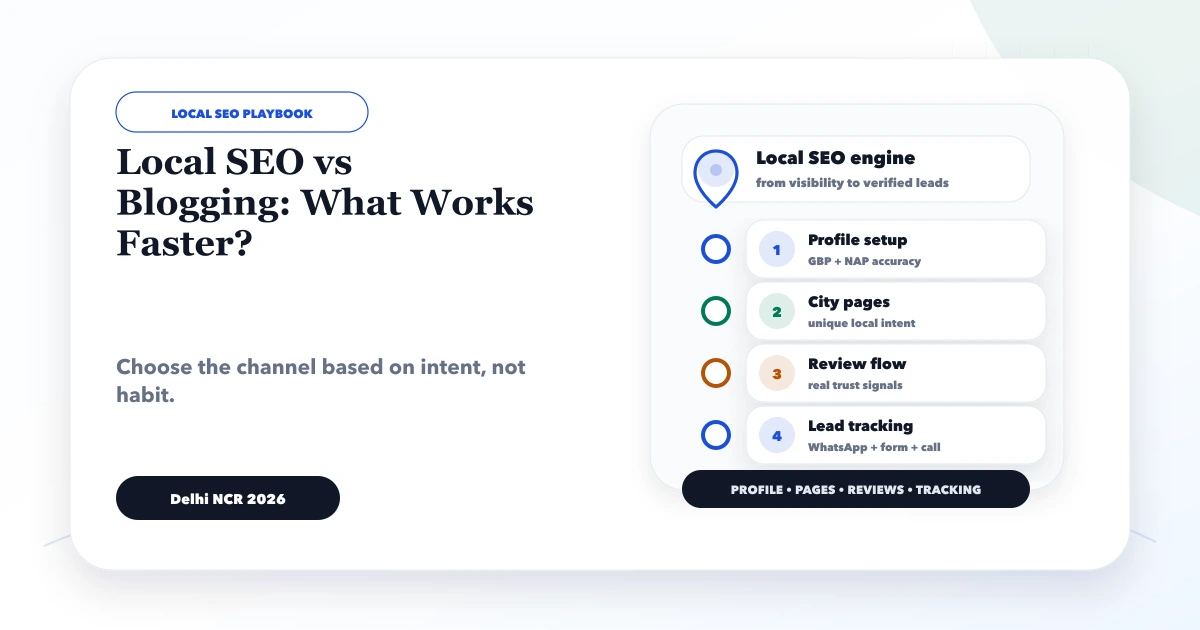
May 29, 2026
Compare local SEO and blogging for service businesses using search intent, GBP eligibility, service pages, local proof, content clusters, and lead tracking.
Read article
May 2, 2026
Business directory listing strategy for local SEO: citations, NAP consistency, duplicate cleanup, tracking, and rollout priorities for 2026.
Read article