
May 21, 2026
Why Pages Are “Discovered Not Indexed” & How to Fix
Discovered Not Indexed fix: practical 2026 guide with checklist, pricing, timeline, risks, tools, FAQs, and Indian business tips today safely before launch.
Read articlePublished Updated
Diagnose why a website does not rank on Google using index status, query intent, content quality, duplication, internal links, authority, and performance.
A page can be technically indexable and still receive no useful Google visibility. Ranking depends on whether Google can discover and understand the page, whether it is eligible to appear, whether it satisfies the query better than alternatives, and whether the site has enough trust and authority for that result.
Do not begin by changing every title or publishing more pages. First identify the failing stage: discovery, crawl, indexing, query relevance, search-result click-through, or conversion. Each stage needs different evidence and a different fix.
Google states that its systems aim to prioritise helpful, reliable, people-first content and use many ranking systems rather than one simple score. No checklist can guarantee a position.
Separate these situations:
| Situation | Evidence | Likely investigation |
|---|---|---|
| URL unknown to Google | URL Inspection shows no discovery/crawl | Links, sitemap, crawl access |
| Crawled but not indexed | Google fetched the page but did not retain it | Quality, duplication, canonical, rendering |
| Indexed with no impressions | Page is eligible but not matching demand | Query intent, relevance, authority |
| Impressions at low position | Google tests the page but alternatives are stronger | Content, proof, links, page-type fit |
| Good position, low CTR | Search result is seen but rarely selected | Title, description, brand, intent |
| Clicks, no leads | SEO delivered visits but the page does not convert | Offer, proof, UX, CTA, lead handling |
Use Google Search Console page and query reports, URL Inspection, the live rendered page, and analytics together. A site: search is a rough observation, not a complete index report.
Check basic eligibility before rewriting:
200 for the final URL;noindex directive is present;Follow Google's current technical requirements and Search Essentials. Fixing eligibility does not guarantee indexing, but a blocked page cannot compete normally.
Self-canonical tags do not force Google to choose a page. Similar city, service, category, parameter, or HTTP/non-www variants can send conflicting signals.
Audit:
Strengthen one intended URL consistently. Do not canonicalise an important unique page to a different page merely to remove a Search Console label.
A service page, comparison, tutorial, list, product page, and local landing page answer different needs. A 3,000-word guide may not rank for a query where users expect a vendor shortlist. A thin sales page may not rank where users expect instructions.
Review the current search results manually:
Then decide whether to improve the existing page, create a different page type, or change the target query. Avoid making two pages compete for the same intent.
Generic content repeats definitions and checklists without helping a reader make a decision. Useful content provides specific scope, examples, constraints, trade-offs, evidence, and next actions.
Weak signals include:
Use Google's content self-assessment questions and the website content checklist. Word count alone is not a ranking factor; depth is useful only when it answers the topic.
Publishing many pages around small keyword variations can dilute relevance and create deduplication noise. Common clusters include:
Create an inventory with title, slug, focus query, page type, impressions, clicks, backlinks, leads, and similarity. Choose a primary page per intent. Differentiate genuine adjacent intents; consider consolidation only after checking evidence and planning redirects carefully.
A sitemap helps discovery, but internal links communicate relationship and priority. A page buried behind twenty pagination clicks or linked only through automated cards has weak context.
Strengthen the path:
Use the internal links versus backlinks guide and the SEO-friendly website architecture guide before adding random links to every page.
A new or little-known business can publish useful content and still be outranked by established sources. Authority is not solved by buying bulk backlinks or posting keyword-rich comments.
Build legitimate evidence through:
Google's spam policies explicitly address link spam and scaled low-value content. Avoid paid links that pass ranking credit, automated comments, private site networks, and fabricated reviews.
If a page has impressions and a reasonable position but low clicks, inspect the title and description in context. Problems may include:
Change snippets in controlled batches. Search engines may rewrite them. Compare CTR by query and position, not as one site-wide percentage.
For local service queries, a city name in the title is not enough. Searchers need evidence that the business serves the area and understands the local buying context.
Useful signals can include:
Do not mass-publish near-identical city pages. A focused local SEO service architecture should use pages only where the business can provide unique value and evidence.
Slow or unstable pages can frustrate users and make crawling or conversion less effective. Check:
Performance is one signal among many. A fast page with weak intent and content will not become useful simply because it scores 100 in a lab test.
Use this sequence to avoid random edits:
Change one coherent group of causes, deploy, and wait for meaningful recrawl and performance data.
| Evidence | Priority action |
|---|---|
| Blocked/noindex/wrong canonical | Fix technical eligibility first |
| Indexed, no impressions | Reassess query relevance and page type |
| Position 8-20 with impressions | Improve intent satisfaction, proof, links, and snippet |
| High impressions, low CTR | Test title/description and result positioning |
| Several similar URLs | Differentiate or evaluate consolidation |
| Strong page, weak authority | Earn relevant editorial mentions and strengthen trust |
| Clicks, no enquiries | Fix offer, proof, CTA, form, and response workflow |
In our implementation work, VASUYASHII separates technical eligibility from content competitiveness. We crawl final URLs, inspect generated metadata and structured data, map the internal-link graph, classify overlap, and use Search Console evidence before recommending content or index-control changes.
We do not promise rankings or request indexing repeatedly as a substitute for quality. Our website development service preserves crawlable HTML, responsive UX, stable URLs, and measurable conversion paths while content work remains evidence-led.
200.There is no fixed period. Discovery, recrawl, competition, site authority, query demand, quality, and updates all affect timing. Monitor Search Console over meaningful weeks rather than promising a date.
No. It can invite Google to recrawl an eligible URL, but it does not make weak or duplicate content competitive.
Not automatically. Check whether the page is unique, useful, internally linked, canonical, and important. Improve, consolidate, redirect, or remove only after an evidence-based URL decision.
Google does not specify a magic word count. Use enough content to satisfy the intent accurately and clearly without padding.
No. Backlinks cannot repair a blocked URL, wrong canonical, poor intent match, duplicate page, or unusable experience. Relevant editorial links help strongest when the destination already deserves them.
Yes, particularly for focused service or local queries, but supporting content can answer adjacent questions and strengthen topical relationships. Publish only when the content serves a real audience task.
Choose one priority URL and classify its problem by stage: discovery, indexing, relevance, CTR, or conversion. Record current evidence before changing anything. Contact VASUYASHII for a focused technical and content audit without ranking guarantees.
Related Articles
May 21, 2026
Discovered Not Indexed fix: practical 2026 guide with checklist, pricing, timeline, risks, tools, FAQs, and Indian business tips today safely before launch.
Read article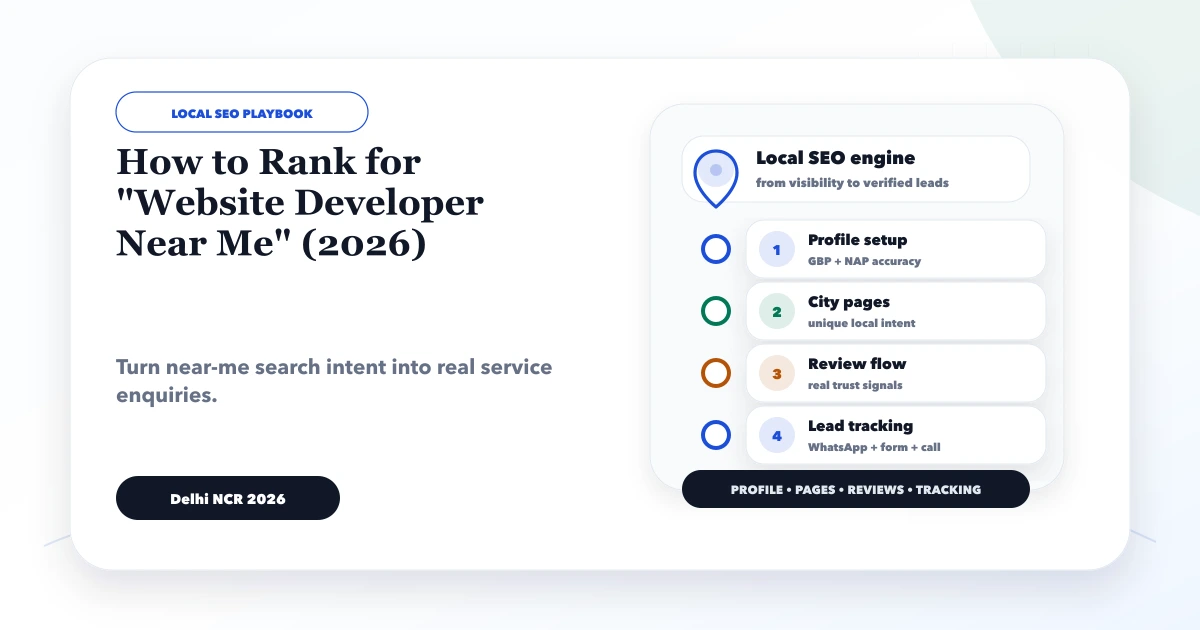
May 29, 2026
A safe near-me SEO framework for website developers using eligibility, relevance, verified business data, service evidence, reviews, links, and measurement.
Read article
May 13, 2026
website audit checklist: practical 2026 audit guide with checklist, pricing, roadmap, mistakes, FAQs, tools, and next steps for Indian SMBs today safely.
Read article
March 30, 2026
How to fix Discovered - Currently Not Indexed in GSC: practical checks, crawl issues, content fixes, and what actually helps in 2026.
Read article