
March 28, 2026
Google Search Console Indexing Guide 2026
Google Search Console indexing guide for 2026: how to get pages indexed faster without spam, common issues, checks, and practical workflow.
Read articlePublished Updated
How to fix Discovered - Currently Not Indexed in GSC: practical checks, crawl issues, content fixes, and what actually helps in 2026.
Seeing Discovered - currently not indexed in Google Search Console is frustrating because the page often looks normal in the browser. For a business site, the real question is not "how do I force Google to index this?" The better question is "why is this URL not important, accessible, or useful enough yet?"
This status means Google has found the URL, but has not crawled and indexed it yet. Sometimes the page is new. Sometimes the internal link path is weak. Sometimes the page is too similar to other pages. Sometimes the canonical, sitemap, redirect, or content quality signals are not clean enough.
This guide gives a practical troubleshooting order for Indian SMB and service websites so you can fix real indexing blockers instead of repeating URL inspection requests.
If a page is stuck in Discovered - currently not indexed, check these first:
200 properly?robots.txt, noindex, or login?For most business websites, the fastest useful fixes are:
Imagine a Delhi NCR software company publishes a new service blog, adds it to the sitemap, and submits it in Search Console. After a few days, the URL still shows Discovered - currently not indexed. The page is live, but it is not linked from the main service page, the intro looks similar to five older SEO posts, and the non-www version was also seen in GSC.
In this situation, the useful fix is not to request indexing again every day. The page should be strengthened, linked from a relevant cluster, checked for final https://www canonical consistency, and resubmitted only after the page is clearly better.
Google has found the URL, but has not yet processed it into the index. That can happen because:
For most normal business websites, it is not really a crawl budget problem. It is usually a page quality, discovery, or site structure issue.
Make sure the page loads publicly and returns a proper 200 status.
Make sure the page is not blocked by robots.txt and does not carry a noindex rule.
If the page canonical points elsewhere, Google may decide another URL is the preferred one.
If the page is buried and barely linked, Google may treat it as low priority.
Thin pages, doorway-style pages, or near duplicates often wait longer or never make it into the index.
For a business website, also check whether the page answers a real search intent. A practical guide, pricing page, case-style article, or clear service explainer has a better indexing case than a generic keyword page.
Related reading:
Start with the basics:
200noindex is absentAsk honestly:
If not, expand or merge it.
Link the page from:
For example, a custom software indexing guide should connect naturally to software development services, web application services, relevant SEO blogs, and the contact page when the user needs help.
After fixes, keep the page in the XML sitemap and use URL Inspection for the exact URL.
Google does not guarantee immediate indexing. Many pages need time after fixes.
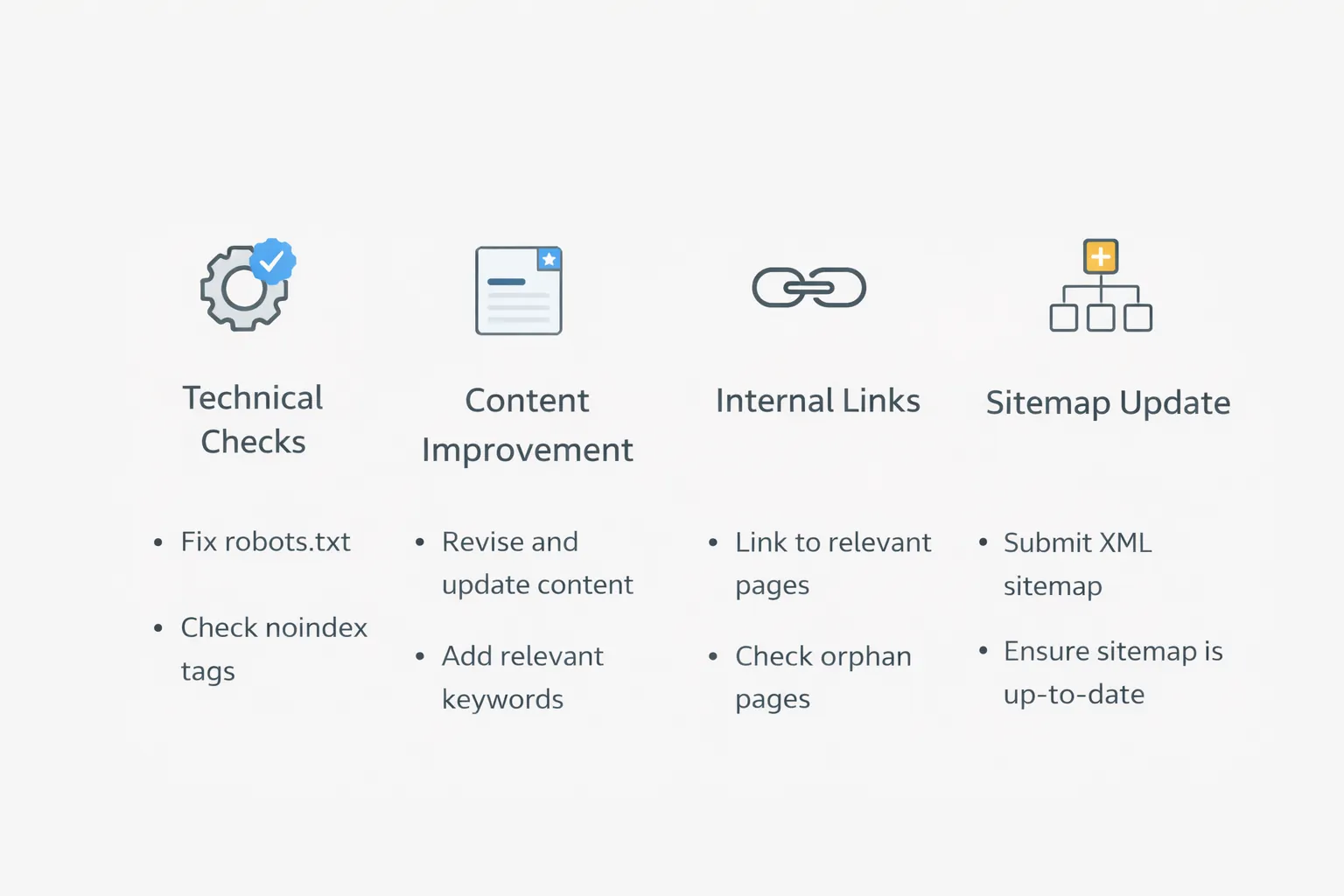
Use this checklist before pressing request indexing:
https://www.vasuyashii.com version.200 and is not blocked.If two or more items are weak, fix the page first. Requesting indexing before improving the URL usually wastes the inspection action.
noindex to work at the same timeIf many important pages are sitting in Discovered - currently not indexed, the right next step is to audit access, content quality, and internal link structure together instead of chasing shortcuts.
Yes. It means the URL was discovered, but not yet indexed.
No. Sometimes the page is accessible but still weak, low-priority, or too similar to other pages.
Not by itself. Sitemaps help discovery, but they do not guarantee indexing.
No. Repeated requests do not replace actual improvements in accessibility and quality.
Usually no. For most small business sites, page quality and internal linking matter more.
There is no guaranteed time. It can take days or longer depending on the page and site signals.
Yes. Thin location pages and near-duplicate service pages are common reasons.
Fix technical access first, then improve the content and link the page properly.
Usually no. Keep the URL stable if the slug is correct. Improve the existing page, fix canonical and internal links, then request indexing for the final canonical URL.
If your good pages are not getting indexed properly, the right move is to review site structure, content quality, and technical access together instead of forcing low-value URLs into Google.
Before requesting another crawl, check the affected URL against the 2026 SEO mistakes risk register.
Related Articles
March 28, 2026
Google Search Console indexing guide for 2026: how to get pages indexed faster without spam, common issues, checks, and practical workflow.
Read article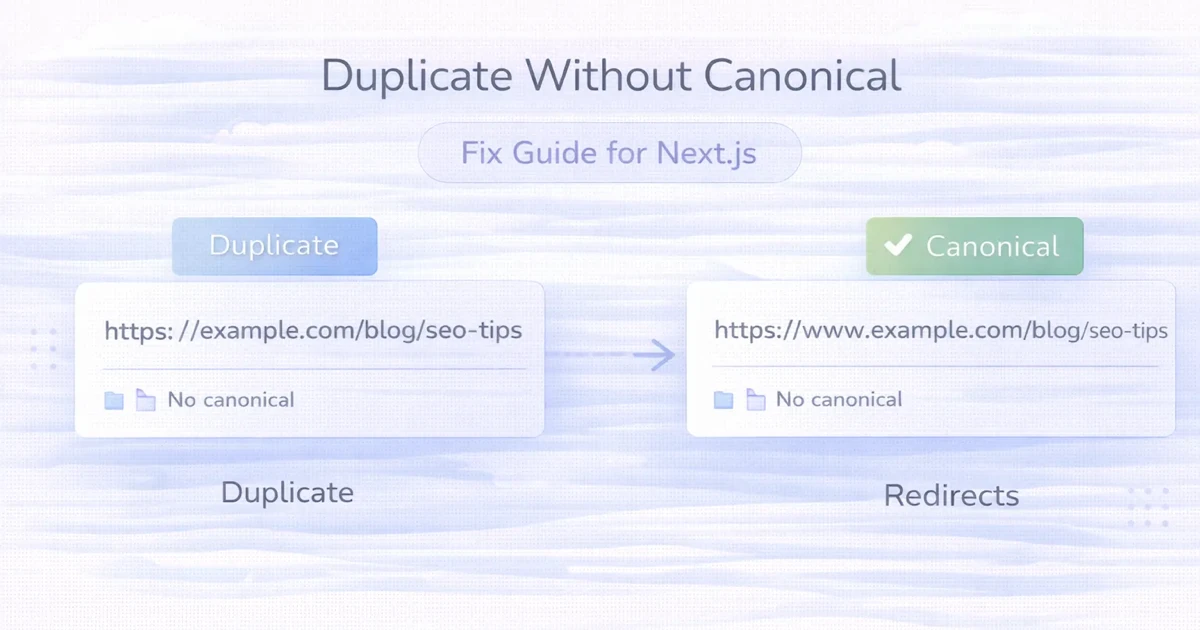
April 2, 2026
Fix Duplicate without user-selected canonical in Next.js by aligning rendered canonicals, redirects, sitemap URLs, internal links, parameters, and final HTML.
Read article
May 3, 2026
GSC Coverage errors fix guide: excluded pages, crawl issues, canonicals, noindex, sitemap fixes, and practical troubleshooting steps for 2026.
Read article
May 21, 2026
Diagnose why a website does not rank on Google using index status, query intent, content quality, duplication, internal links, authority, and performance.
Read article