
April 20, 2026
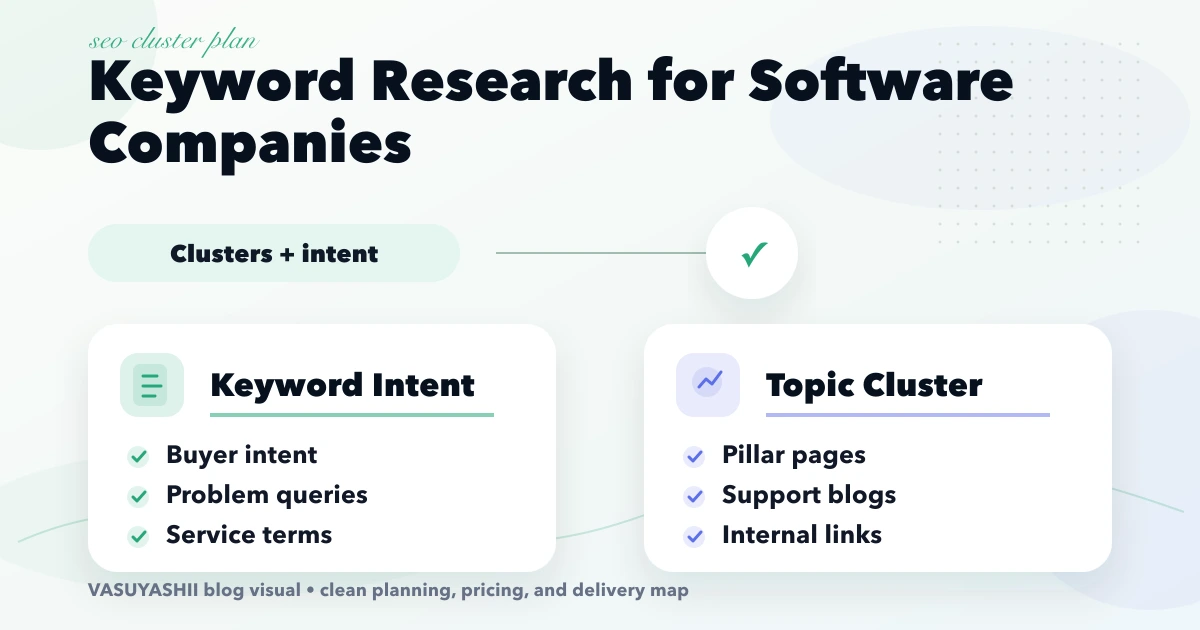
Keyword Research Clusters for Software Companies
Build software keyword clusters by buyer intent, service fit, page type, internal-link role, cannibalization risk, priority, and business value.
Read articlePublished Updated
How to create SEO topic clusters for software companies: keyword mapping, cluster structure, internal links, publishing plan, and examples.
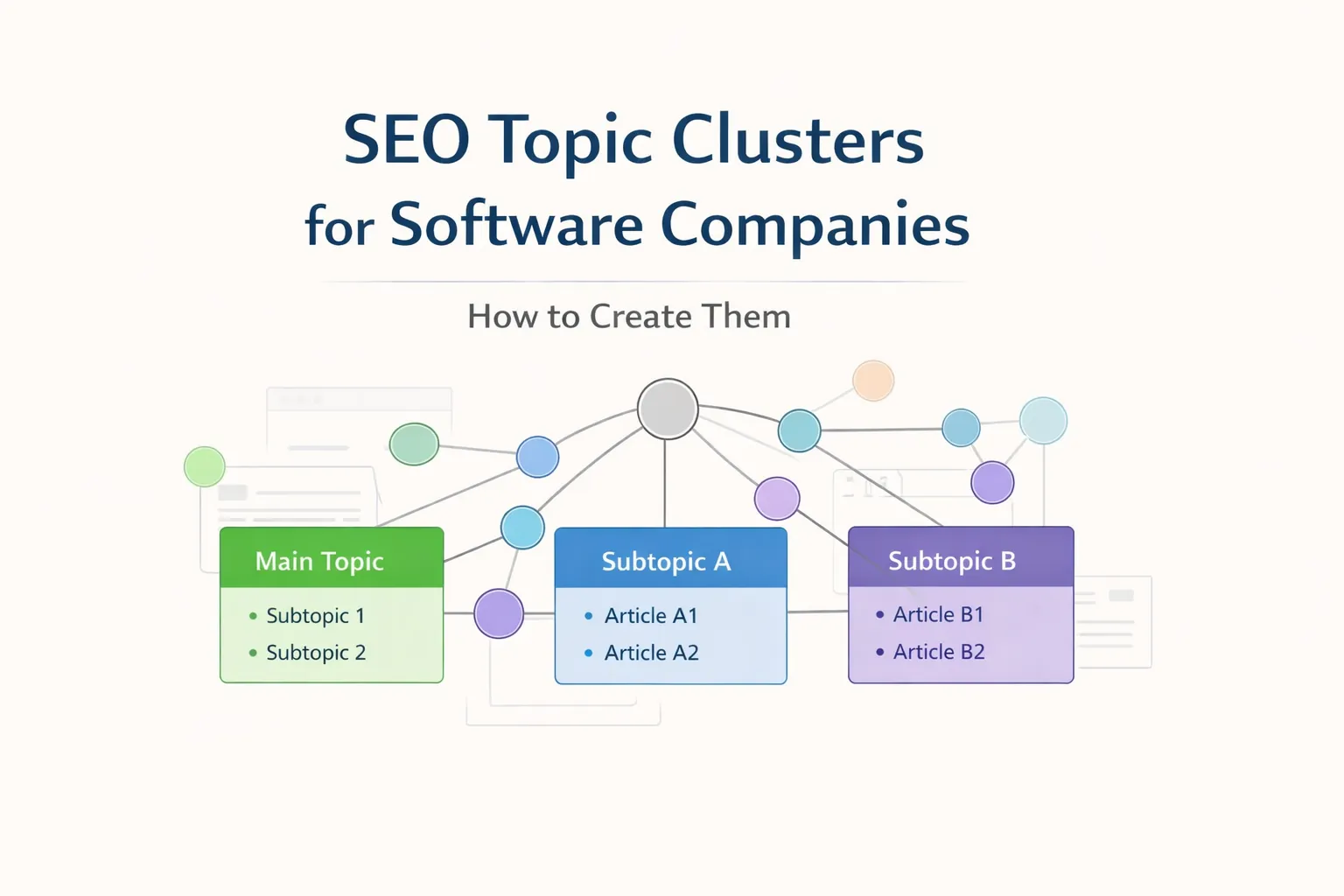
Software company websites often publish blogs one by one without a real content system behind them. One post talks about web development cost, another about CRM, another about automation, and then a random comparison article gets added. The site grows, but topical authority stays weak because Google and users cannot easily see what the company is strongest at.
Topic clusters solve that problem by connecting service pages, commercial guides, comparison posts, pricing articles, and practical use-case content around one subject. For software companies, this matters because buyers rarely decide from one blog. They compare cost, trust, process, integrations, timelines, and proof before contacting a vendor.
This guide explains how to create SEO topic clusters for software service websites without turning every article into the same generic content.
A topic cluster is a content system built around one strong subject area. For software companies, a cluster might be built around:
Each cluster usually includes:
Imagine a company offers web applications, custom software, integrations, and admin dashboards. If it publishes separate blogs for each topic without a plan, each post competes alone. A better structure is to build one cluster around custom software, one around web apps, one around integrations, and one around SEO or lead generation.
For example, the web application cluster can connect web application services, cost guides, admin dashboard posts, login and roles articles, performance guides, and project proof. That helps a buyer move from education to evaluation instead of leaving after one article.
A topic cluster is not just a group of related blogs. It is a deliberate content structure where a main page and multiple supporting pages reinforce the same subject from different angles.
Software buyers search in journeys, not isolated keywords. They may start with cost, then compare options, then check process, then look for proof or implementation detail.
Clustered content makes your website useful across that journey.
Start with real service lines or business themes like CRM development, app development, admin dashboards, or software integrations.
The pillar page should be the broad, high-value page around the topic.
Support content should answer buyer questions such as:
Some posts are informational. Some are commercial. Some are comparison-heavy. Mixing intent carelessly weakens the cluster.
Here is a simple software-company example.
Support posts:
Support posts:
Support posts:
Support posts:
This cluster should connect naturally to integration services, software service pages, and project examples where automation is visible.
Related reading:
Internal links make clusters work. Without them, the structure is incomplete.
Use this checklist before publishing a cluster:
The goal is not just more posts. The goal is a connected path from search query to business enquiry.
If a software company outsources cluster planning and execution, the cost depends on depth.
₹15,000 to ₹40,000₹40,000 to ₹1 lakh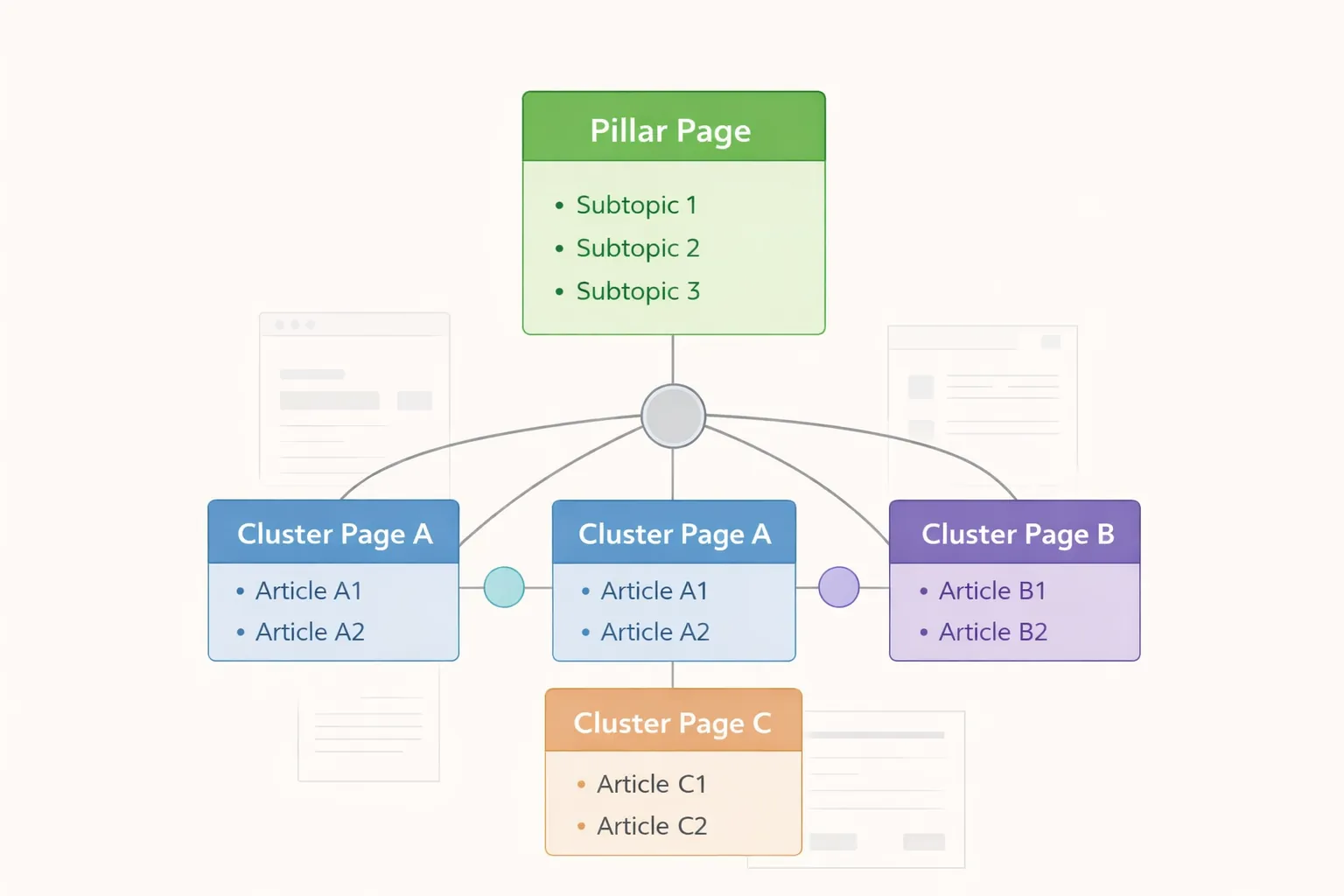
Good clusters are not built in one day, but the planning can be done quickly.
The faster the company can decide on service priorities, the better the cluster quality.
If your software blog feels active but not connected, it probably means you need cluster logic, not just more random article ideas.
It is a structured group of related pages built around one core subject and connected through internal linking.
Because software buying journeys involve many questions across cost, comparison, process, and implementation.
There is no fixed number, but 5 to 15 strong related pages is a practical start for many clusters.
Publishing many related blogs without pillar logic or internal link discipline.
Sometimes yes, especially when local service intent is important.
Yes. They help visitors move deeper into relevant commercial content.
Not immediately. Start with the most commercially important services first.
No. Even smaller software company websites benefit from clearer content architecture.
For commercial topics, yes. A cluster should usually point users toward a relevant service page, project page, or contact path. Otherwise the content may bring readers but not enough business intent.
If you want your content to build topical authority instead of just increasing blog count, the next step is to map pillars, support posts, and internal links around real service intent.
See the GST billing keyword cluster example for a product-truth ledger, intent map, publishing sequence, and support-to-hub linking model.
Then maintain the relationships with the software-development blog interlinking map, including source, target, reader question, anchor, placement, and review date.
Related Articles
April 20, 2026
Build software keyword clusters by buyer intent, service fit, page type, internal-link role, cannibalization risk, priority, and business value.
Read article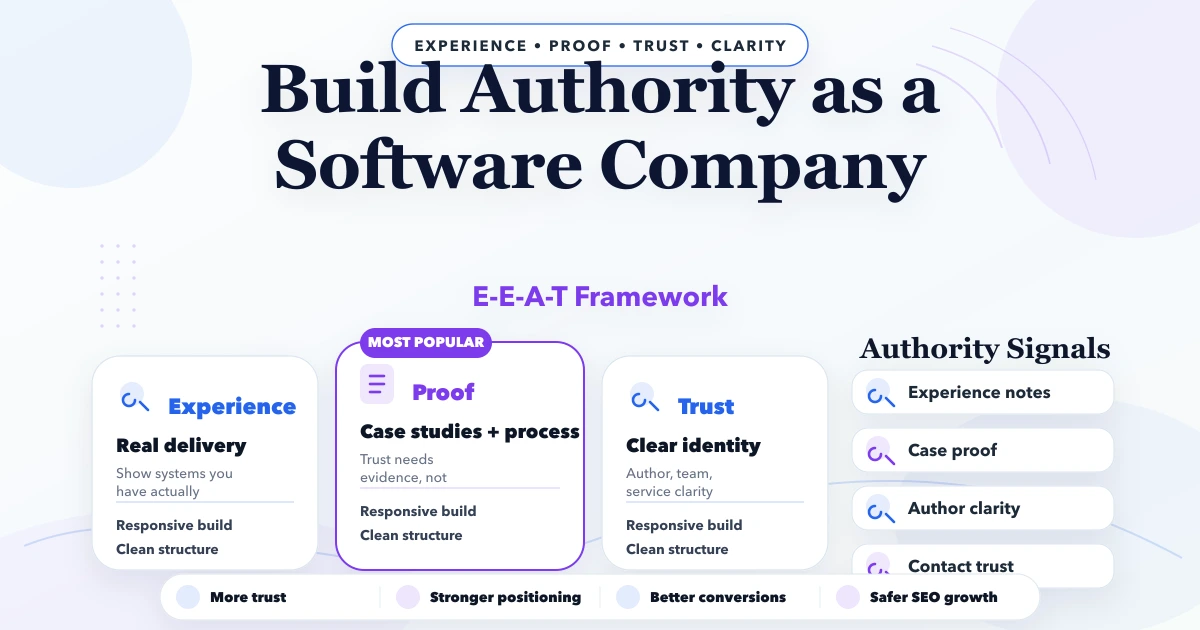
April 23, 2026
Build software-company authority with honest authorship, useful proof, technical depth, transparent service boundaries, case evidence, and consistent entities.
Read article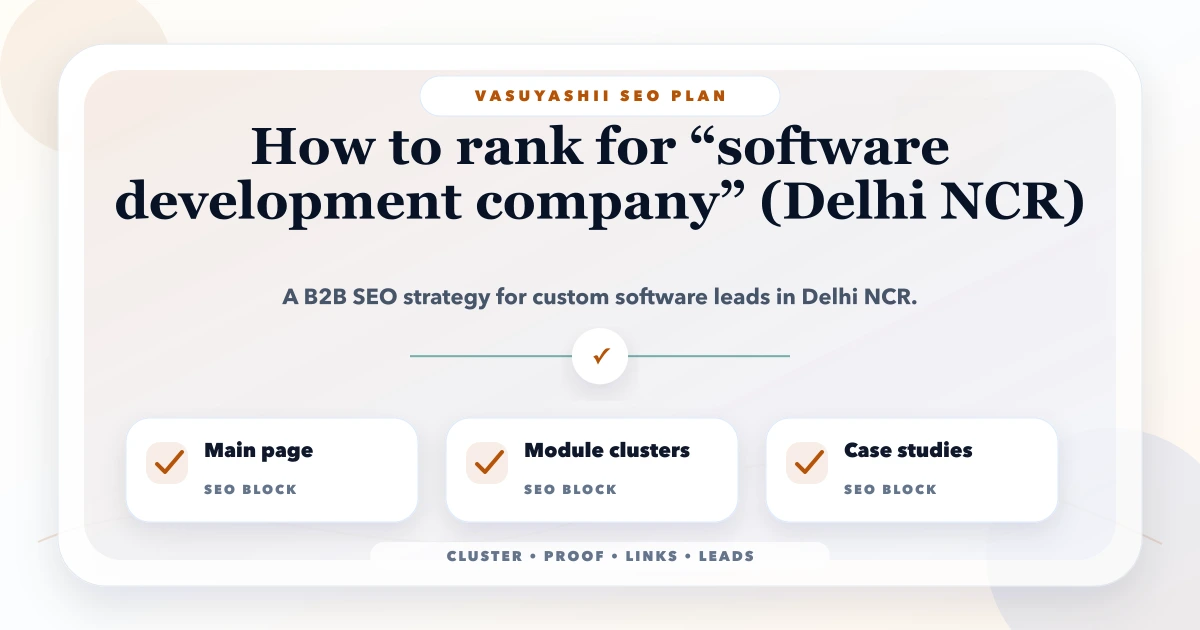
May 14, 2026
Build a Delhi NCR software-company SEO structure with one commercial parent, distinct module pages, approved proof, local relevance, internal links, and lead tracking.
Read article
March 18, 2026
Build an SEO-friendly website with crawlable architecture, clean canonicals, fast mobile pages, structured data, internal links, and conversion tracking.
Read article