
March 29, 2026
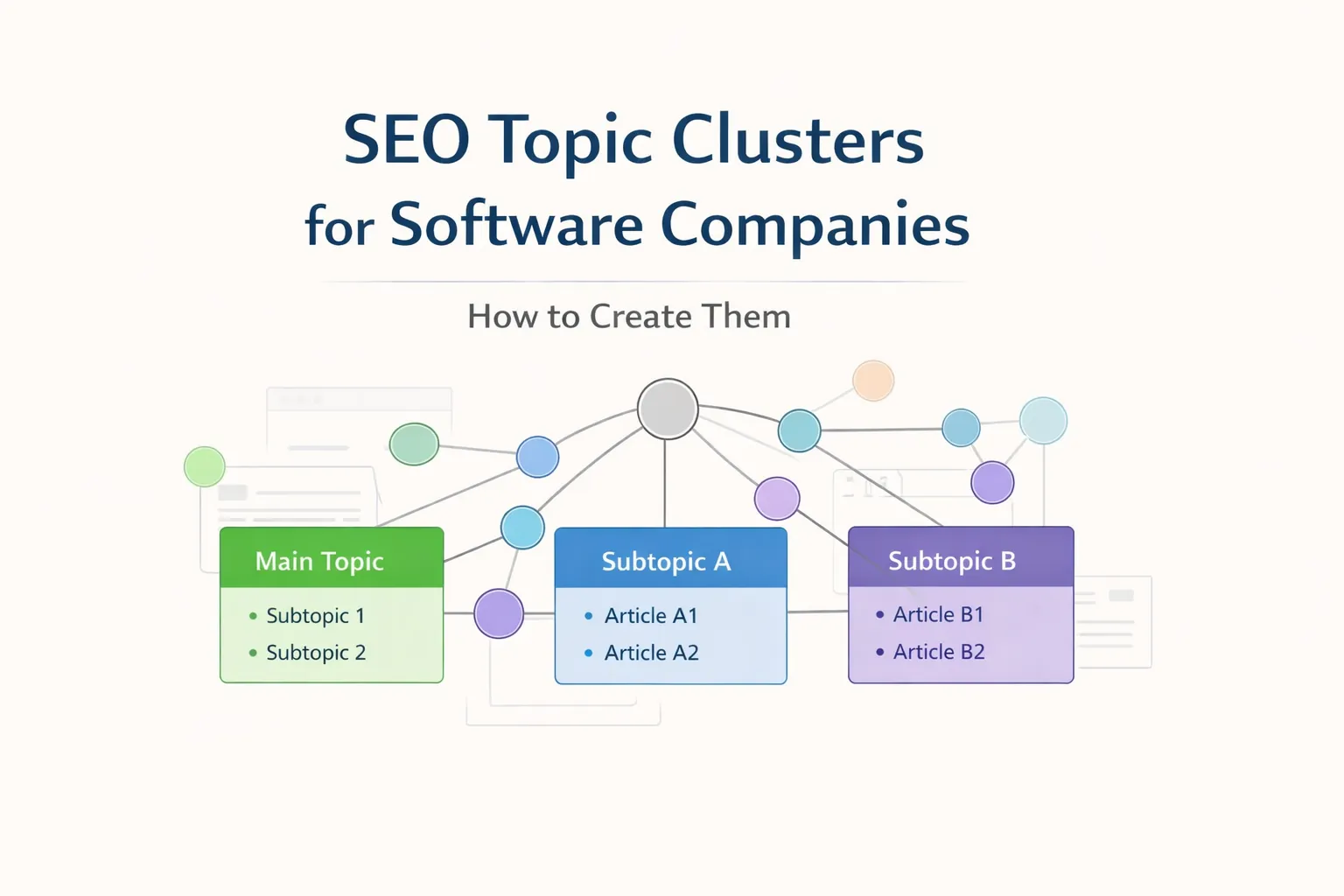
How to Create SEO Topic Clusters (for Software Companies)
How to create SEO topic clusters for software companies: keyword mapping, cluster structure, internal links, publishing plan, and examples.
Read articlePublished Updated
Build software keyword clusters by buyer intent, service fit, page type, internal-link role, cannibalization risk, priority, and business value.
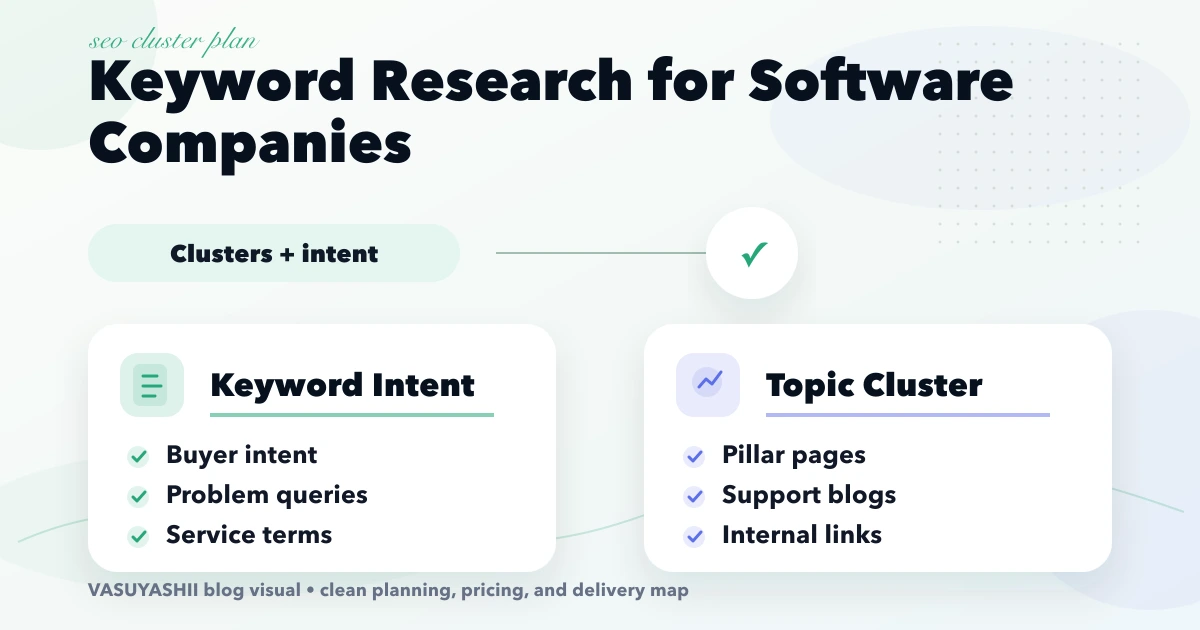
keyword research for software companies is important for software companies that want SEO leads from service pages, city pages, comparison blogs, and technical guides. Keyword research for software companies should be organized into clusters, not random blog ideas. This guide is for agencies, SaaS teams, and custom software companies that want content mapped to actual buyer intent. This guide is written for Indian SMB owners who want practical scope, cost, timeline, and decision clarity without generic theory.
| Scope | Typical range |
|---|---|
| Keyword research sprint | ₹15,000 to ₹40,000 |
| Cluster map + content plan | ₹40,000 to ₹1 lakh |
| SEO content system | ₹1 lakh+ |
Group terms by the decision a searcher is making. “CRM development company” suggests vendor intent; “CRM development cost” suggests budgeting; “CRM modules” suggests scope research; and “CRM vs Zoho” suggests comparison. These queries may share words but should not automatically use the same page.
Informational volume is useful only when the topic can support a commercial parent or establish relevant expertise. Avoid filling the calendar with programming tutorials when the business sells implementation and software services.
| Page role | Example intent | Destination |
|---|---|---|
| Parent service | custom CRM development | Service hub |
| Cost support | CRM development cost India | Pricing guide |
| Decision support | custom CRM vs SaaS CRM | Comparison article |
| Use case | CRM for coaching institutes | Industry guide |
| Proof | CRM workflow case study | Project or case study |
Every support article should have a reason to link upward. The parent page should link back only to the strongest decision guides, not a directory of every related post.
Before creating a page, search the existing titles, slugs, focus keywords, and Search Console landing pages. If two pages already answer the same query with the same format, strengthen one instead of publishing a third variation.
When two pages serve different intent, make that difference visible in the title, introduction, headings, examples, and internal links. Canonical tags should not be used to hide a planning problem between two useful but poorly differentiated pages.
Score each proposed page for service relevance, buyer intent, evidence available, internal-link value, ranking feasibility, conversion path, and maintenance requirement. Publish pages with strong business fit and enough original information first.
Track impressions, qualified enquiries, assisted conversions, and links to the parent service. Search volume alone cannot show whether a cluster supports revenue. Use the Custom Software, CRM and ERP hub and Local SEO hub as examples of parent routes.
For every planned page, note the subject-matter source: an implemented workflow, verified project, approved customer question, product documentation, public standard, or responsible expert review. Pages without enough evidence should wait. This improves accuracy and makes updates easier when pricing, software versions, regulations, or service scope change.
Review clusters quarterly. Mark pages to refresh, consolidate, redirect, or leave unchanged based on query overlap and business relevance rather than publishing dates alone.
Keep the ledger beside the content map so research and publishing decisions remain connected.
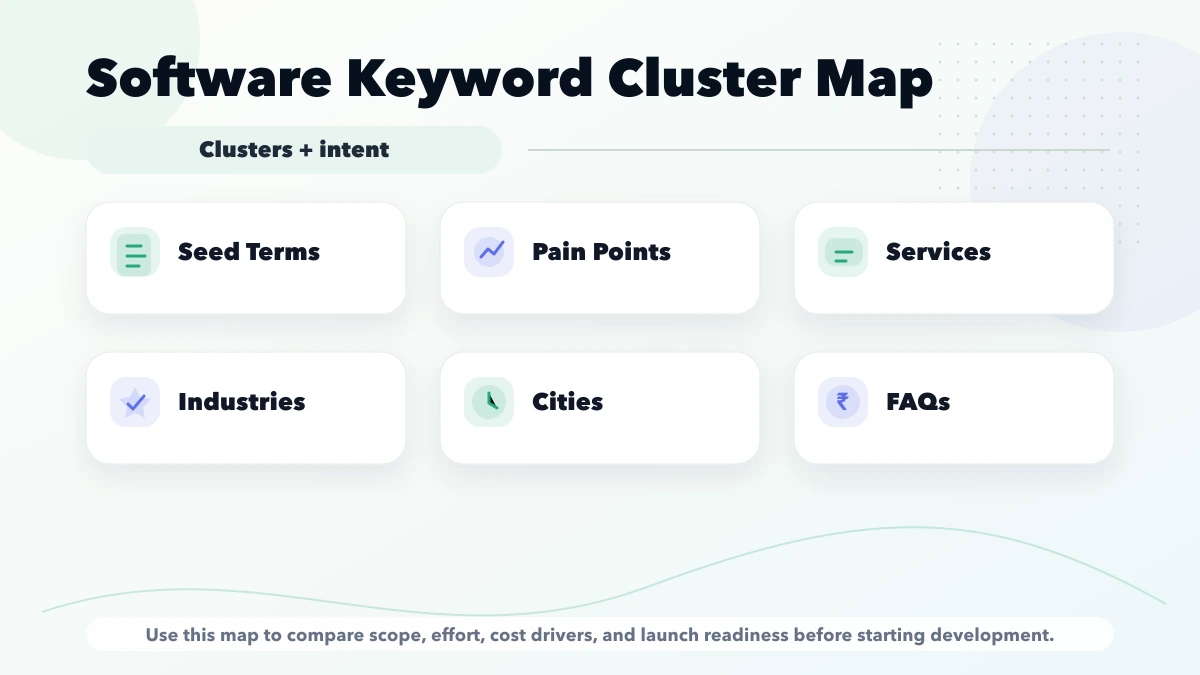
Keyword tools should not decide what a software company sells. Start with an approved offer inventory: website development, web applications, CRM, ERP-lite systems, integrations, automation, mobile apps, maintenance, or another service that the team can genuinely deliver. For every offer, record the buyer, business problem, deliverable, service area, proof available, and preferred conversion action.
This step prevents a common mismatch. A high-volume keyword may attract developers looking for tutorials while the company needs Indian business owners comparing implementation partners. A smaller query such as “custom CRM development cost India” can be more useful when the service, proof, and conversion path all match.
Use public keyword tools, but combine them with first-party language:
Record the exact wording and the business context. “Inventory software” can mean a simple stock register to one buyer and multi-location barcode operations to another. The page brief must resolve that ambiguity.
Remove spelling variants that do not change intent, then classify each surviving query. A working sheet can use these columns:
| Field | Decision it supports |
|---|---|
| Primary query | One main search problem |
| Intent | Commercial, comparison, cost, use case, or informational |
| Offer and audience | Service fit and qualified buyer |
| Page type | Hub, service, guide, comparison, checklist, or case study |
| Parent page | The page that should receive authority |
| Evidence source | Product, project, expert review, or reliable public source |
| Conversion path | Contact, demo, audit, or related decision page |
| Overlap risk | Existing page competing for the same intent |
Do not create separate pages only because singular, plural, city suffixes, or year modifiers differ. Create a separate route only when the searcher expects a meaningfully different answer.
A software cluster works when each page has a defined job. The service page explains the offer and qualification criteria. A cost guide explains budget and scope drivers. A comparison page helps choose between approaches. A use-case page shows how a workflow changes for a specific business. Supporting technical articles should prove implementation depth without competing with the commercial parent.
Write this role at the top of every content brief. If two briefs have the same audience, promise, headings, and CTA, they are probably one page rather than two.
Search the site by title, slug, focus keyword, and likely query. Compare:
Strengthen the clearest URL when overlap is high. If both pages are valuable, differentiate the title, introduction, examples, supporting entities, and conversion path. A canonical tag is not a substitute for resolving two pages that both claim to be the main answer.
Score ideas from one to five for offer relevance, qualified-buyer intent, evidence, realistic competitiveness, internal-link value, conversion clarity, and update cost. A page with modest volume but strong commercial fit can outrank a broad idea that produces no useful enquiries.
Re-score after Search Console data appears. Queries near positions 8-20 with relevant impressions may deserve an update before another new article is published.
| Cluster | Parent page | Useful support |
|---|---|---|
| Custom software | Custom software service | Cost, module planning, build-vs-buy, implementation risks |
| Web applications | Web app service | Architecture, security, dashboard, API, and workflow guides |
| CRM and ERP | CRM/ERP hub | Role matrix, migration, reporting, integration, and pricing guides |
| Local service | One genuine service-area hub | Local proof, process, pricing factors, and selection guidance |
| Technical SEO | Technical service or audit page | Speed, indexing, schema, internal links, and measurement |
Avoid scaling city pages before the business has unique local value, proof, and operational relevance for each area.
Each brief should contain the primary question, audience, decision stage, excluded subtopics, factual sources, original examples, required internal links, CTA, and update owner. Include the competing internal URLs so the writer can preserve clear boundaries.
The final article should link to its parent and two or more genuinely helpful sibling pages. The parent should surface only the best support pages rather than hundreds of undifferentiated links.
Review impressions, query-to-page alignment, CTR, qualified enquiries, assisted conversions, and internal-link coverage. A rising impression count with irrelevant queries is not success. A page that generates fewer visits but better-fit enquiries may be doing the more valuable job.
Keep an update log for changed prices, platforms, standards, screenshots, and service scope. Consolidate weak overlap only after checking traffic, links, and conversion history so useful equity is not discarded.
This framework reflects the content architecture used to connect VASUYASHII service hubs and practical software guides. It is a planning method, not a guarantee of rankings, leads, or a fixed delivery price. Keyword demand, competitors, Search Console signals, and available proof should be verified for the specific offer before publishing.
Start with a short discovery checklist that defines users, workflow, required outputs, and success metric.
Yes. A phased build is usually safer because it keeps cost and adoption under control.
Avoid building too many advanced features before the core workflow is tested with real users.
Compare exact deliverables, timeline, ownership, support, and reporting instead of only the final price.
No. Custom development is useful when workflow, roles, reports, or integrations are specific to your business.
Yes, if the first phase is scoped around one clear business problem.
Related Articles
March 29, 2026
How to create SEO topic clusters for software companies: keyword mapping, cluster structure, internal links, publishing plan, and examples.
Read article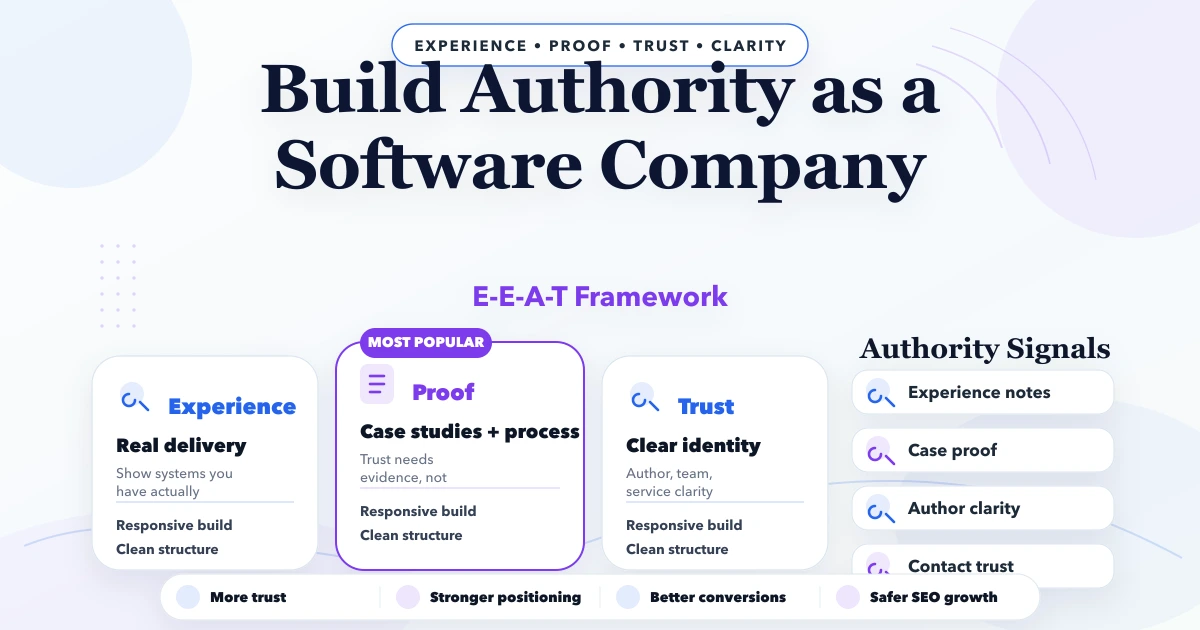
April 23, 2026
Build software-company authority with honest authorship, useful proof, technical depth, transparent service boundaries, case evidence, and consistent entities.
Read article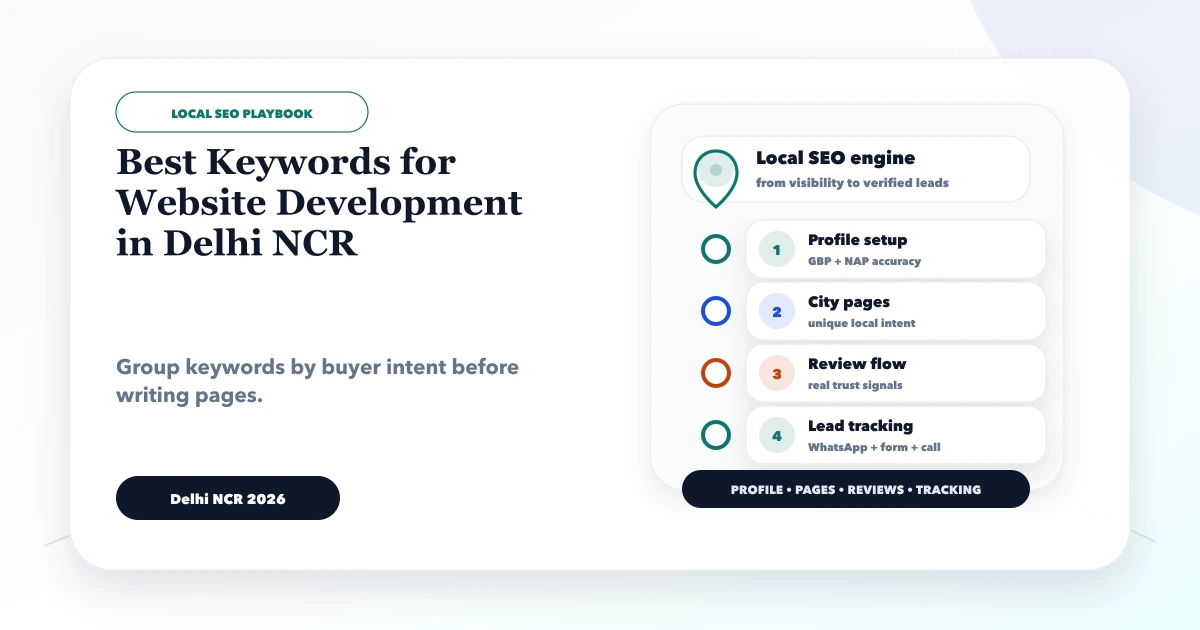
May 29, 2026
Build a Delhi NCR website-development keyword map by search intent, service, cost, industry and location, then assign one useful page to each buyer job.
Read article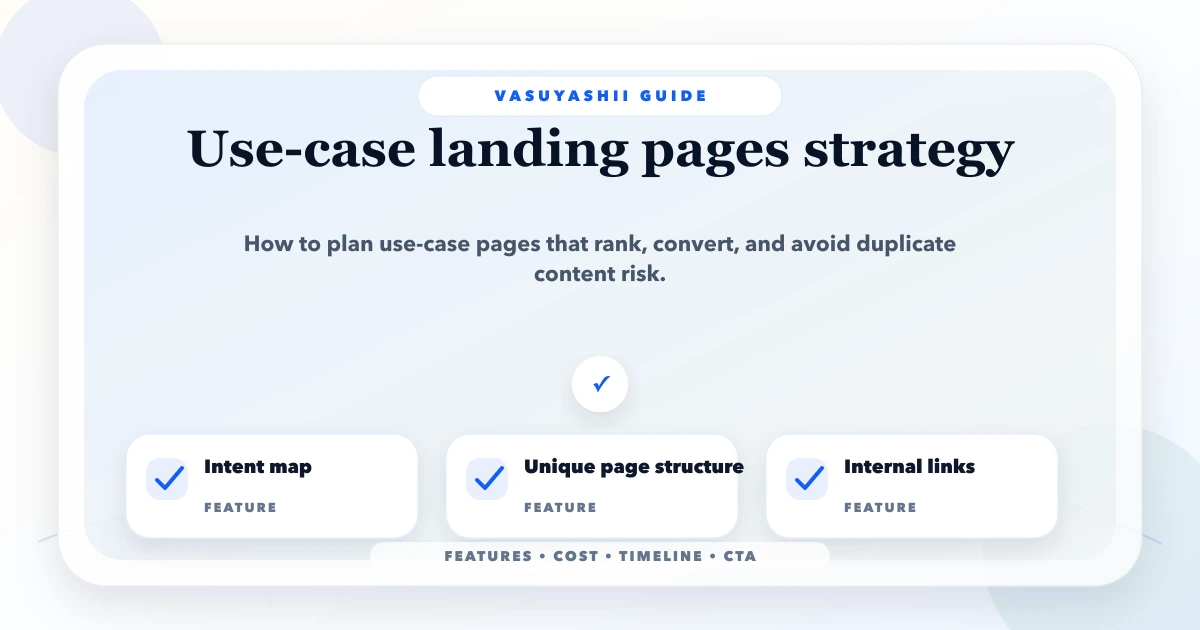
May 15, 2026
use-case landing pages strategy: practical 2026 guide with features, cost, timeline, tech stack, mistakes, FAQs, proof, and next steps for Indian SMBs.
Read article