

May 20, 2026
Portfolio Page Best Practices for More Leads
Build a portfolio page that helps buyers compare work. Plan project cards, filters, role disclosure, proof, mobile UX, CTAs and maintenance.
Read articlePublished Updated
Build software-company authority with honest authorship, useful proof, technical depth, transparent service boundaries, case evidence, and consistent entities.
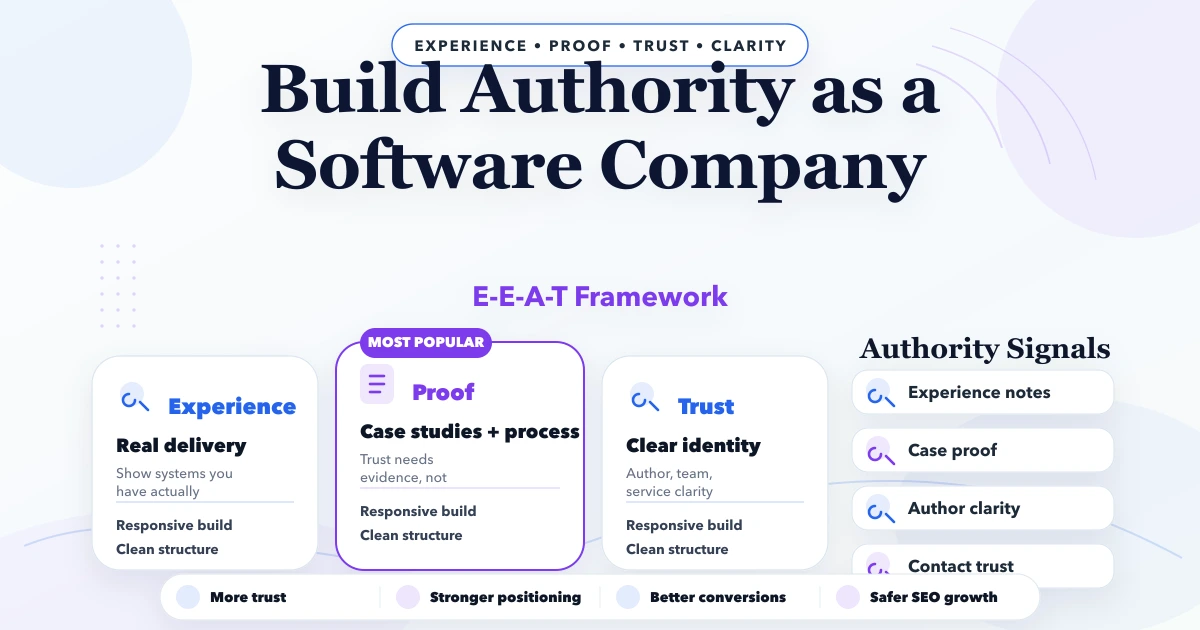
A software company builds authority when prospects can verify who is behind the business, what the team actually knows, what it has built, how it works, and where its claims stop. E-E-A-T is a useful quality lens for that work: experience, expertise, authoritativeness, and trustworthiness.
It is not a badge to place in a footer or a keyword to repeat in articles. Google explains that E-E-A-T is not one specific ranking factor and that trust is the most important part of the concept. Its people-first content guidance recommends clear authorship, first-hand depth, original information, and content created to help an intended audience.
For a small software company, this means replacing broad claims such as “best company,” “expert team,” or “100% guaranteed results” with evidence a buyer can inspect.
By Tushar C. (Founder, VASUYASHII). This article documents the authority controls used across VASUYASHII service, product, demo, author, support, and editorial surfaces. It does not claim that adding E-E-A-T wording guarantees rankings.
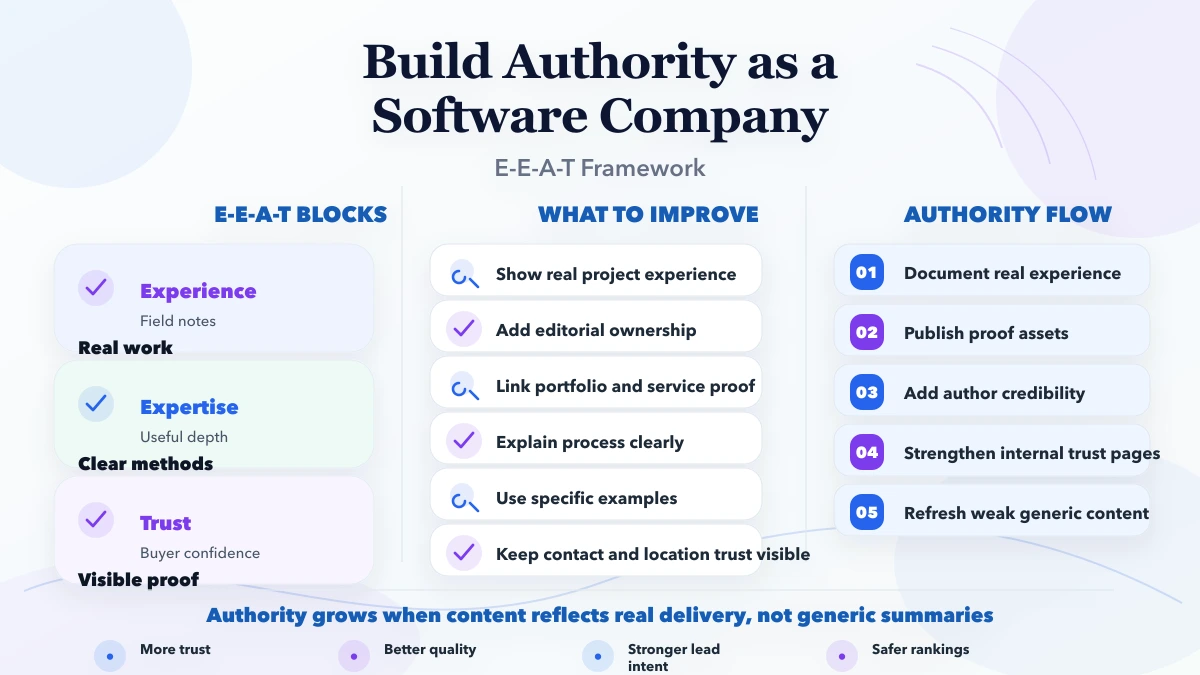
Build authority through six connected evidence systems:
Authority compounds when these signals agree across the website. It weakens when the blog promises capabilities the service or product pages cannot verify.
| Dimension | Useful software-company signal | Weak substitute |
|---|---|---|
| Experience | Screens, workflows, implementation notes, trade-offs, lessons, and current product boundaries | Generic “years of experience” text without context |
| Expertise | Accurate architecture, security, integration, migration, testing, and operational guidance | Technology lists with no decision reasoning |
| Authoritativeness | Relevant mentions, genuine contributions, citations, partnerships, and a coherent topic body | Purchased links or unrelated directory volume |
| Trustworthiness | Named ownership, real contact paths, policies, transparent claims, corrections, and secure pages | Fake reviews, inflated metrics, or hidden limitations |
Trust should govern every other signal. A technically deep article still damages credibility if it invents customer results or presents a roadmap feature as already available.
Search engines and buyers should encounter the same company facts wherever they look. Maintain a controlled source for:
Do not create addresses, branches, awards, certifications, or client counts for SEO. If the business is online-only or does not meet customers in person, do not imply a physical local presence.
On this website, the About page, author profile, services, support, privacy policy, and product page should describe one consistent VASUYASHII entity.
Every substantial guide should answer “Who wrote this, and why should I trust their explanation?” A useful author system includes:
A byline should not be added merely to pass an audit. It should connect to a real person or accountable editorial entity. The author does not need to claim mastery of every subject; scope honesty is stronger than a vague expert label.
Many software-company blogs repeat definitions available on hundreds of sites. Original value comes from showing how decisions work in practice.
Useful first-hand content can include:
The free software-project requirement template is an example of an inspectable planning asset. The VASUYASHII Business Suite page is stronger when it shows current product screens and separates available modules from future additions.
A credible service page should help a buyer decide whether the service fits. Include:
Avoid presenting one generic paragraph under multiple service names. A web application, software-development, and integration engagement should have different inputs, risks, and acceptance criteria.
Proof is useful only when a visitor can understand what it proves.
Show current interfaces, workflows, modules, and limitations. Do not label mockups as production screens.
Clearly label demo data and fictional brands. A demo can prove design and implementation capability, but not customer adoption or business outcomes.
State the problem, scope, contribution, constraints, and current status. Obtain permission before naming a customer or showing confidential data.
Use genuine reviews from real interactions. Do not write the customer’s review, offer incentives for positive wording, or present friend reviews as customer evidence.
Publish a number only when the measurement period, source, and meaning are available. “Faster,” “higher conversion,” and “saved hours” need a baseline and method.
Technical depth should help readers make decisions, not expose secrets or create a wall of jargon. Explain:
Use authoritative sources for changing technical facts. Link to official documentation instead of copying it. Add your own implementation interpretation so the article is not just a summary.
Publishing hundreds of disconnected posts does not automatically create authority. Organize content around the company’s real capabilities.
For VASUYASHII, useful parent topics include:
Each support article should answer a distinct question, link to its parent, and connect to a few relevant sibling guides. If two articles satisfy the same intent, differentiate or consolidate them instead of publishing a third variation.
Audit company facts, authors, contact paths, policies, service boundaries, and unsupported claims. Remove or qualify anything that cannot be verified.
Improve the strongest service and product pages. Publish practical workflows, original checklists, screenshots, and current implementation guidance.
Share useful assets through founder channels, customer conversations, relevant communities, and legitimate editorial contributions. Track genuine mentions and referral traffic rather than raw backlink counts.
Google states that E-E-A-T itself is not one specific ranking factor. It is a framework for understanding qualities that helpful and trustworthy results can demonstrate.
No. It needs useful, accurate, accountable content. A decision table, implementation checklist, tested process, or clearly sourced technical explanation can provide original value.
Yes, when labelled honestly. Demos can show UX, architecture, workflow thinking, and delivery capability. They should not be presented as customer deployments or outcome proof.
Publish accurate, relevant information that the person is comfortable making public. Avoid inflated titles, invented certifications, and unnecessary personal details.
Relevant third-party references can support discovery and reputation, but manufactured links are not a substitute for useful work. Prioritize genuine relationships, resources, and contributions.
Review them whenever services, products, people, contact details, proof, or policies change. Time-sensitive technical and platform guidance should also receive scheduled checks.
Start with a claim-and-evidence audit of the homepage, About page, service pages, product pages, author pages, and ten highest-traffic articles. Keep each claim, add evidence, qualify it, or remove it.
Related Articles
May 20, 2026
Build a portfolio page that helps buyers compare work. Plan project cards, filters, role disclosure, proof, mobile UX, CTAs and maintenance.
Read article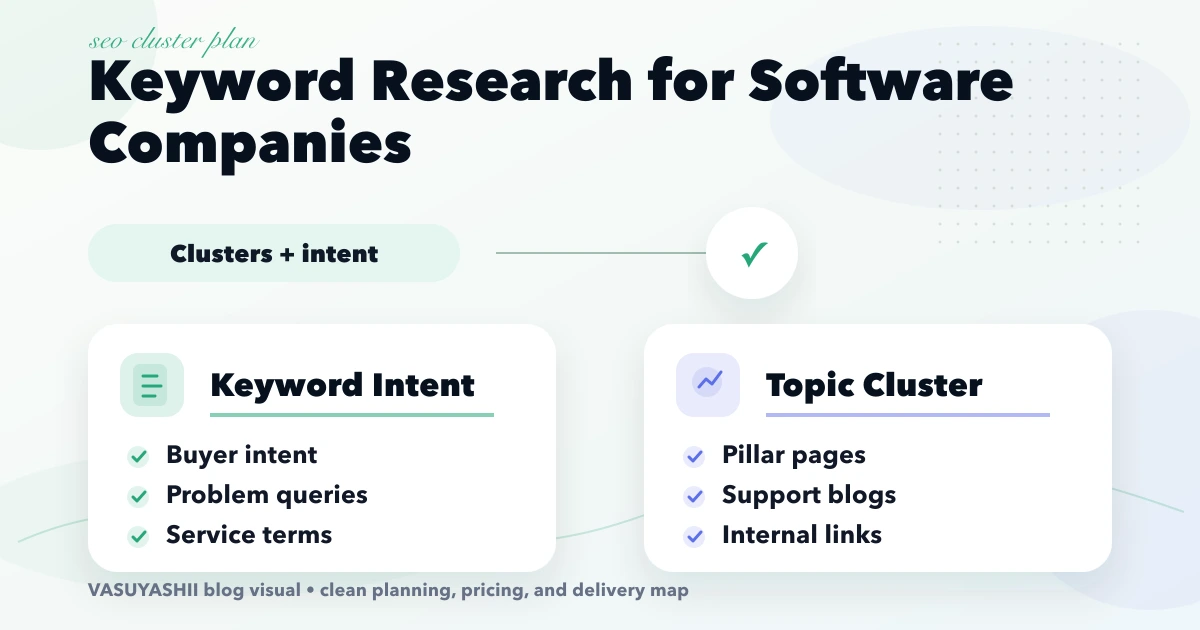
April 20, 2026
Build software keyword clusters by buyer intent, service fit, page type, internal-link role, cannibalization risk, priority, and business value.
Read article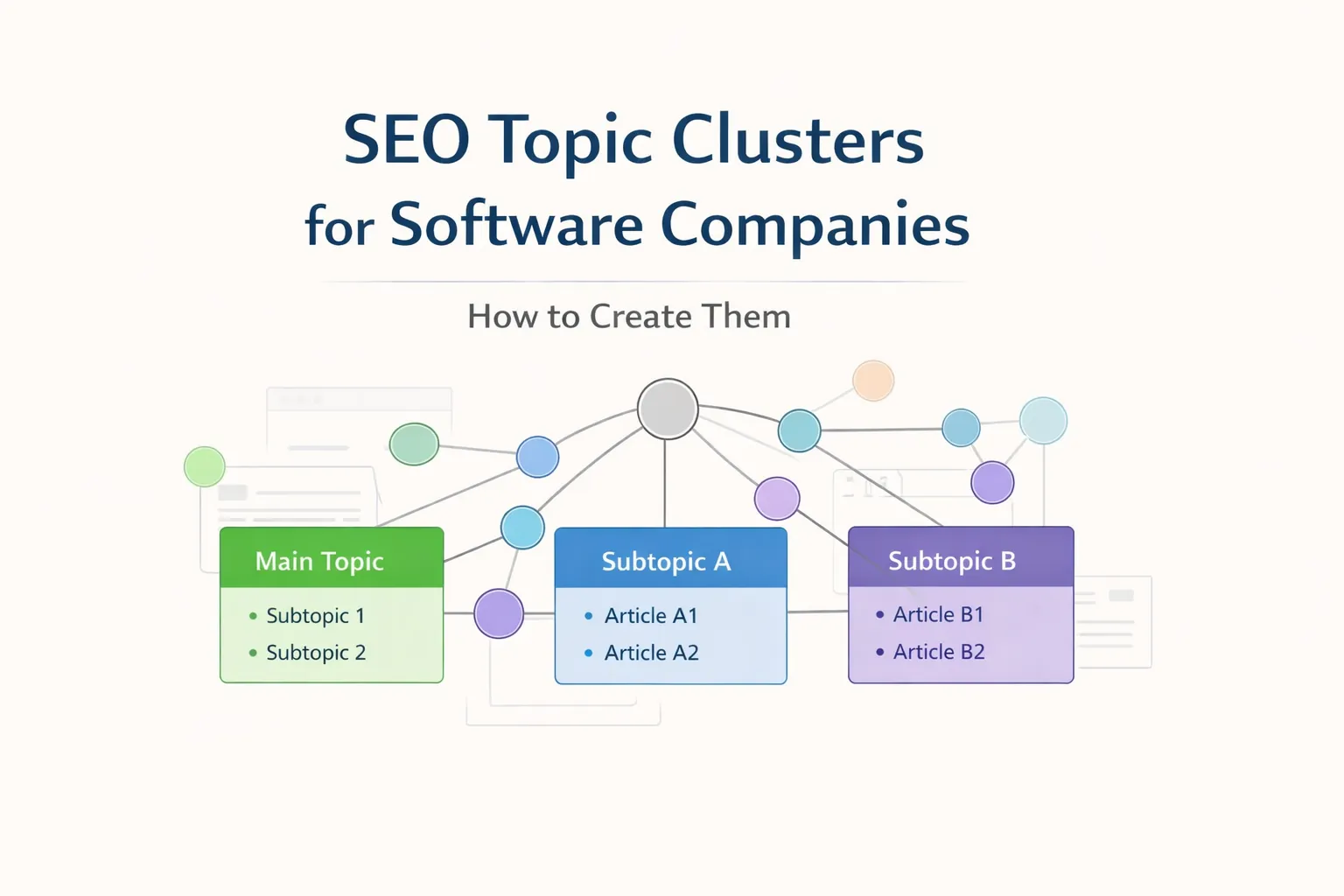
March 29, 2026
How to create SEO topic clusters for software companies: keyword mapping, cluster structure, internal links, publishing plan, and examples.
Read article
May 14, 2026
portfolio SEO plan case studies: practical 2026 SEO plan with cluster map, pricing, roadmap, mistakes, FAQs, proof, and next steps for Indian SMBs today.
Read article