
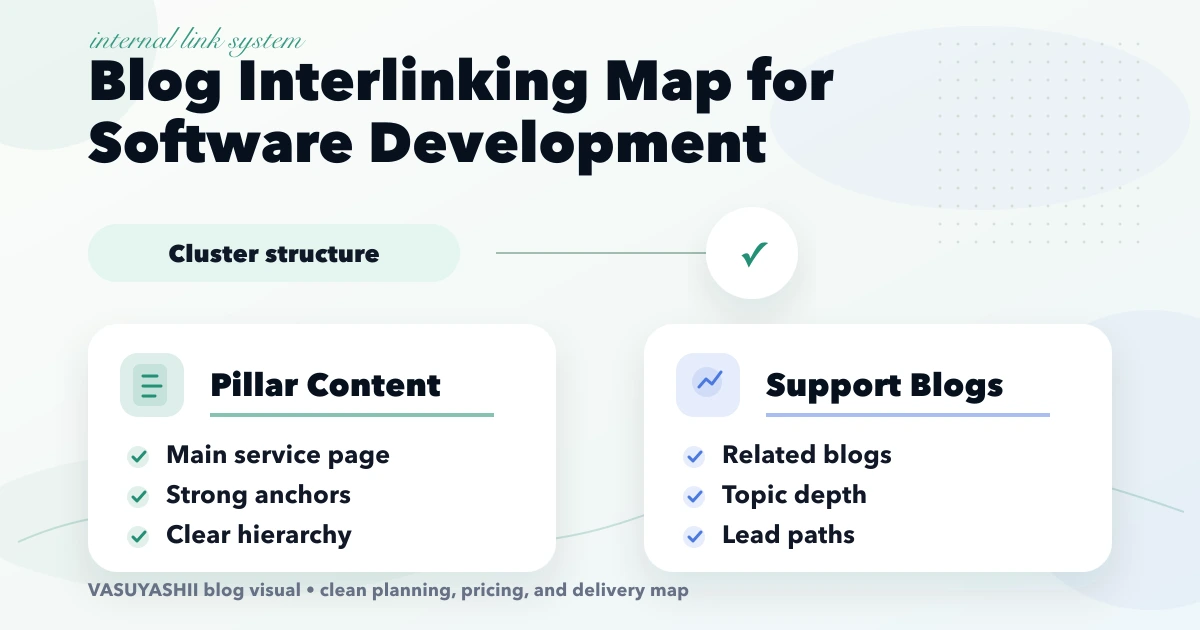
April 20, 2026
Internal Linking Map for Software Development Blogs
Create an internal-link map for software blogs using parent hubs, intent-based support pages, proof links, anchor rules, audits, and rollout checks.
Read articlePublished Updated
Build crawlable latest-blog links with stable dates, relevance, pagination, deduplication, meaningful anchors, hub support, and automated validation.
Latest blogs internal links help visitors and crawlers discover recently published articles, but recency alone is not a content architecture. A block that changes every day can quickly remove links to older posts, repeat the same cards across hundreds of pages, or surface unrelated topics.
The correct system combines a crawlable blog archive, stable pagination, topic hubs, contextual links, and a limited latest section. This guide covers the data rules, UI decisions, and automated checks needed to keep that system reliable.
Sort published indexable posts by a valid publication date, exclude the current post and non-content routes, deduplicate slugs, render descriptive HTML links, cap the list, and provide a stable /blog archive with crawlable pagination. On article pages, prefer relevant related links over a sitewide latest-only block.
Use the internal linking plan for service pages for hub-to-spoke architecture beyond latest content.
Latest links can:
They cannot:
Each post should have:
Do not sort by filesystem modified time or build time. Deploying an old file should not make it a new article. Decide how scheduled and future-dated posts are handled.
Pseudocode:
const latest = posts
  .filter((post) => post.published && !post.noindex)
  .filter((post) => new Date(post.date) <= now)
  .filter((post) => post.slug !== currentSlug)
  .sort((a, b) => new Date(b.date) - new Date(a.date))
  .filter(uniqueBySlug)
  .slice(0, limit);
Validate invalid dates explicitly. Silent Invalid Date ordering can produce unstable builds.
If two posts share the same date, use a stable tie-breaker such as slug or a real publication timestamp. Stability prevents cards from changing randomly between builds.
The homepage can show a small set of recent or priority articles, but it should not dominate the business offer. A practical section includes 4-8 items and one clear link to the full archive.
Choose the mode deliberately:
| Mode | Best for | Risk |
|---|---|---|
| Pure latest | News-like publishing | Commercial content disappears quickly |
| Editorial priority | Business/service site | Requires maintained selection |
| Latest by topic | Multiple audiences | Needs reliable taxonomy |
| Hybrid | Recent plus evergreen priority | Requires deduplication and clear ordering |
For VASUYASHII-like service sites, a hybrid can connect recent support posts with stable service/hub paths.
On a blog article, relationship is usually more useful than recency. Select links using:
Avoid selecting only by shared words in a title. "Cost," "guide," and "2026" can connect unrelated posts.
Use human-curated overrides for important clusters and an automatic fallback for general coverage. Keep curated and organic blocks visually/semantically distinct when both are shown.
Google's crawlable links guidance should be checked for current implementation details. As a practical baseline, render real anchor elements with valid href routes rather than click handlers that do not expose navigation.
<Link href={`/blog/${post.slug}`}>
  {post.title}
</Link>
Use descriptive visible anchors. Card links can wrap the title or a clear action, but avoid several identical links to the same destination inside one card unless required for accessibility/design.
A latest section links only the newest items. The archive must expose older posts through stable pagination or another crawlable structure.
Pagination should:
/blog/page/2;A topic hub can shorten the path to deep posts better than adding hundreds of pagination links to the homepage.
Every new post pushes an older item out of the latest list. That is expected, but critical pages need stable links from hubs, service pages, navigation, or contextual body content.
Track incoming links after each batch. A post should not depend on a temporary homepage card for long-term discovery.
Our implementation review treats latest links as a launch layer and topic links as the durable layer. We verify that a post still receives meaningful incoming paths after it leaves the homepage list. This first-party process prevents recency churn from creating hidden orphan risk.
Showing the same latest 10 posts in every footer can create hundreds of repeated links, distract users, and crowd out contextual relationships. Use global navigation for stable business paths and keep latest content on the homepage, blog index, or a limited content surface.
If a footer includes a blog link, link to the archive or a small editorial set rather than automatically injecting a large changing list.
Exclude:
Do not expose non-www or HTTP absolute URLs when the canonical domain is final HTTPS www.
Latest cards should not load full-size images. Use responsive images with dimensions/aspect ratio, meaningful alt text, and lazy loading below the fold. Avoid a heavy client-side carousel for simple links.
Server-render or statically generate the list where possible so useful links exist in initial HTML. Do not make card height shift when images load.
For file-based content, calculate post metadata during build/server rendering rather than fetching every body in the browser. Keep sorting/filtering in a shared helper so homepage, archive, sitemap, and related systems do not invent conflicting publish rules.
Test static export output because a component can look correct in development but miss paths during generation.
Possible helper responsibilities:
After build, check:
| Check | Failure caught |
|---|---|
| Every card href resolves | Guessed or renamed slug |
| Latest dates are descending | Invalid sort/date |
| No duplicate destination | Current/curated overlap |
| Current post excluded | Self-recommendation |
| Every published post in archive | Discovery gap |
| Sitemap and archive agree | Indexability mismatch |
| Only final canonical domain | Redirect noise |
| Generated HTML contains anchors | Client-only link failure |
| Images exist and have dimensions | Broken/unstable cards |
The automatic sitemap update guide covers sitemap generation checks.
Track latest/related link clicks with position and source component, but do not send personal data. Useful analysis includes:
Do not optimise only for clicks. A related link should help the reader complete a decision journey.
lastUpdated and presenting old posts as newly published.Enough to expose recent work without diluting the primary business path. Four to eight is a practical starting range, then use behaviour and layout evidence.
Usually not. Prefer topic-relevant related links on articles. A sitewide repeated block can create noise and weak relationships.
lastUpdated?Use original publication date for a latest list unless the interface explicitly labels recently updated content. Do not rewrite publication history.
No. They support discovery and context; content quality, technical indexability, duplication, site signals, and Google's systems also matter.
Use the actual descriptive article title or a clear contextual phrase. Do not rewrite every anchor to force the same keyword.
Contact VASUYASHII with the framework, content source, post count, archive/pagination routes, sitemap logic, and current discovery problem. A focused audit can verify generated output before changing UI.
Use latest links to introduce new content, topic links to explain relationships, hubs to organise authority, and crawlable archives to preserve complete discovery. No single link block should carry the whole architecture.
For the broader architecture behind those paths, use the internal-linking strategy for a large blog to define hubs, support pages, and priority destinations.
Related Articles
April 20, 2026
Create an internal-link map for software blogs using parent hubs, intent-based support pages, proof links, anchor rules, audits, and rollout checks.
Read article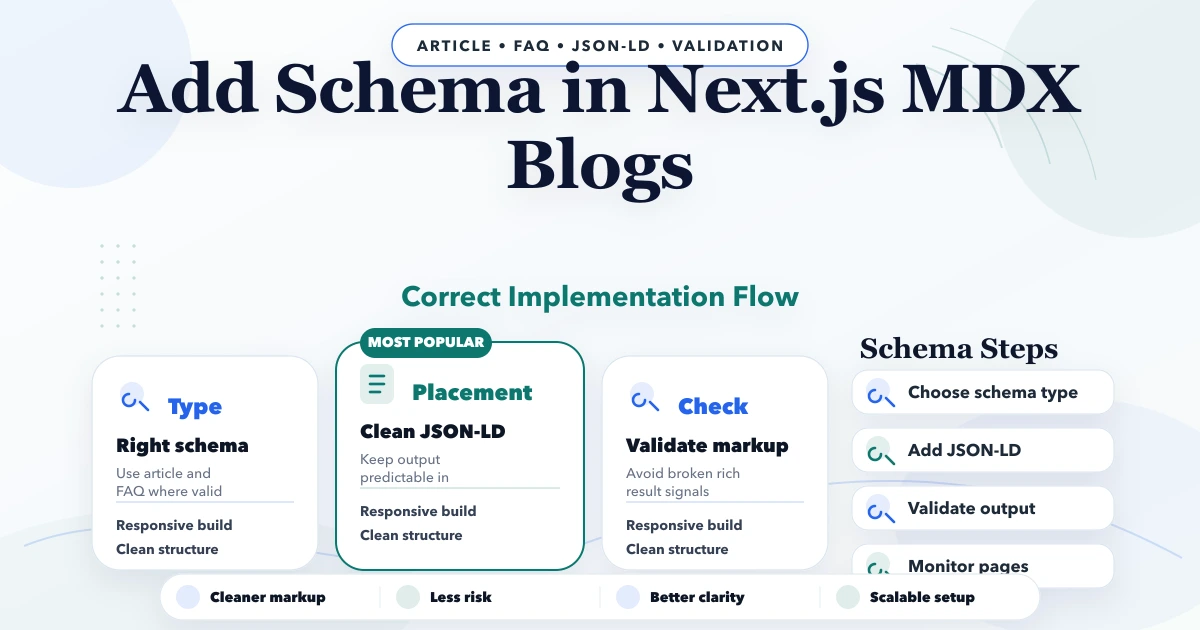
April 22, 2026
Learn how to add safe JSON-LD schema to Next.js MDX blogs with matching canonicals, authors, dates, images, escaping, validation, and build checks.
Read article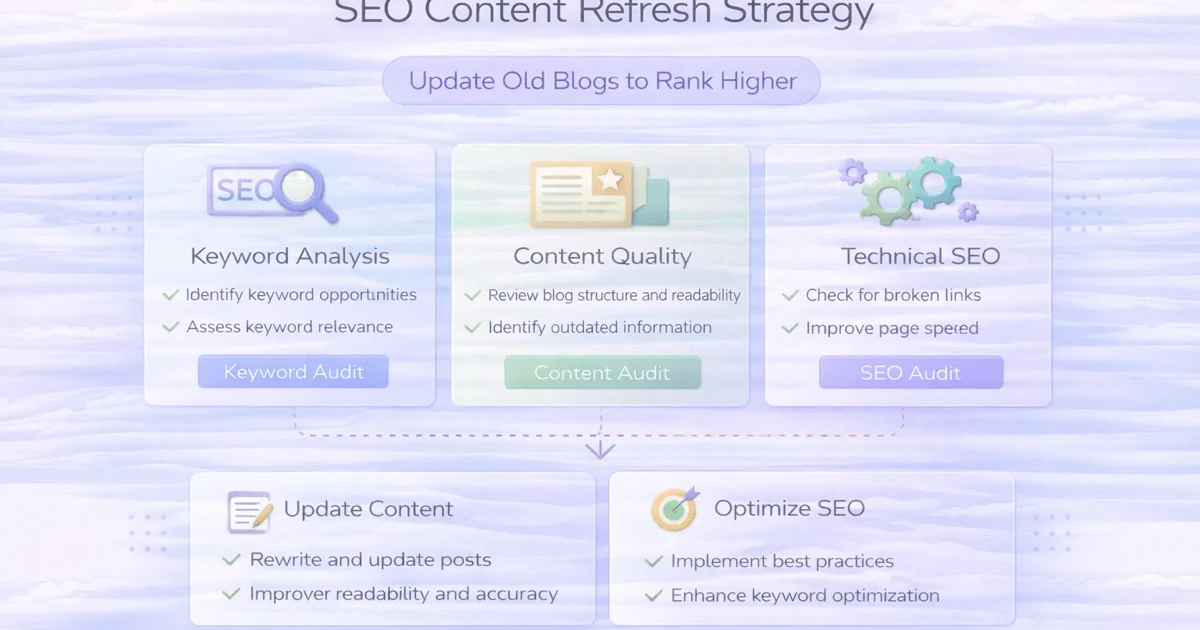
April 4, 2026
Refresh existing blog content using search intent, source evidence, internal links, metadata, consolidation checks and measured post-update review.
Read article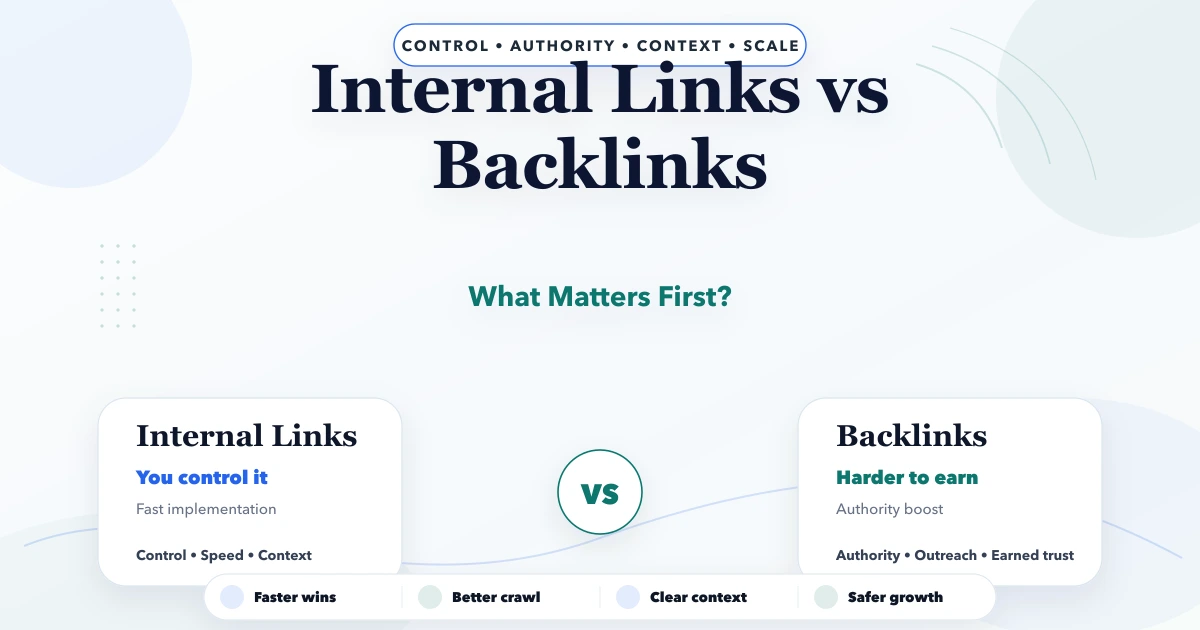
April 21, 2026
Compare internal links and backlinks, diagnose what to fix first, build topic hierarchy, strengthen discovery, earn authority, and measure SEO results.
Read article