
April 29, 2026
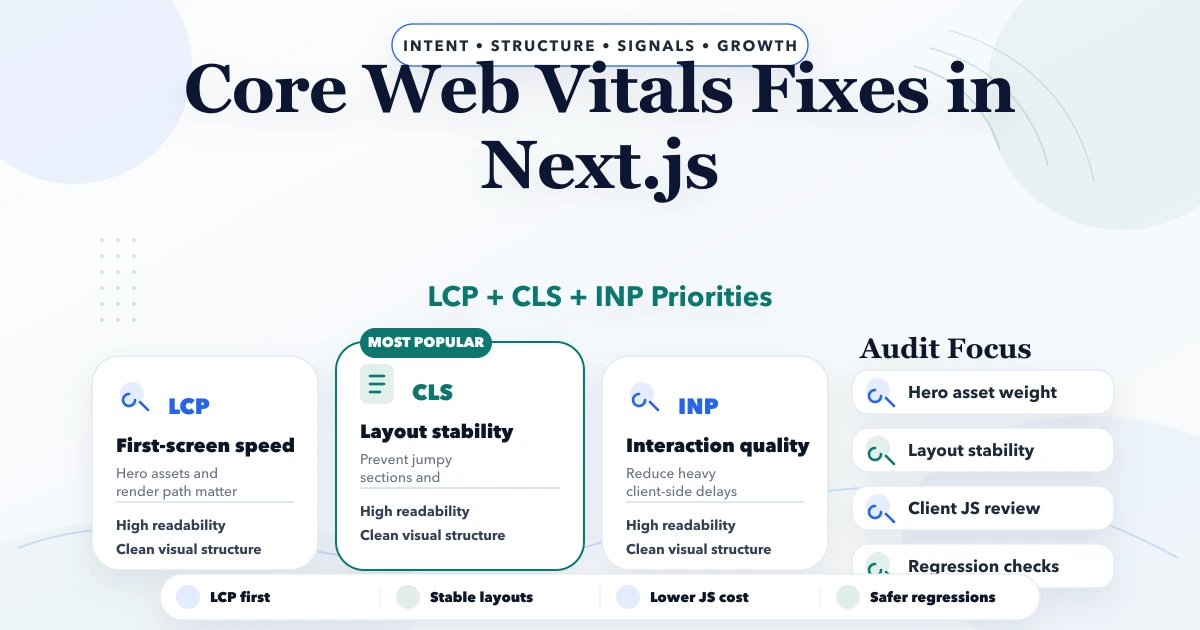
Core Web Vitals Fixes in Next.js
Core Web Vitals fixes in Next.js with LCP, CLS, INP, image, script, and layout guidance plus pricing and rollout advice for 2026.
Read articlePublished Updated
Build an SEO-friendly website with crawlable architecture, clean canonicals, fast mobile pages, structured data, internal links, and conversion tracking.
A website can look beautiful and still fail to rank on Google. In 2026, ranking is not only about writing blogs. It also depends on how your website is built: structure, speed, mobile experience, technical SEO, internal linking, and how clearly Google can understand your pages.
That’s what “SEO friendly website development” means. It’s the process of building a website in a way that makes it easy for Google to:
If you want organic traffic and leads, SEO must be part of development—not an afterthought.
This guide explains SEO friendly website development step-by-step with practical rules you can apply to any business website, corporate site, or web application.
An SEO-friendly website is:
It’s not about “SEO tricks.” It’s about building a website the right way.
If you build websites and web applications that are SEO-ready, see: Web Applications Services
Many people start blogging daily but don’t see results because the website foundation is weak.
Common issues:
A strong foundation makes SEO growth much faster. Without it, you waste effort.
Google ranks websites that have clear structure. The best SEO structure looks like this:
If you have one “Services” page with everything, it’s harder to rank for each service.
Better approach:
Each page can target its own keyword cluster.
URL structure should be:
/services/web-applications/blog/seo-friendly-website-development/portfolio/page?id=123/services-2026-final-new-2/blog/how-to-build-a-website-in-india-very-fast-bestRule: One URL should represent one topic clearly.
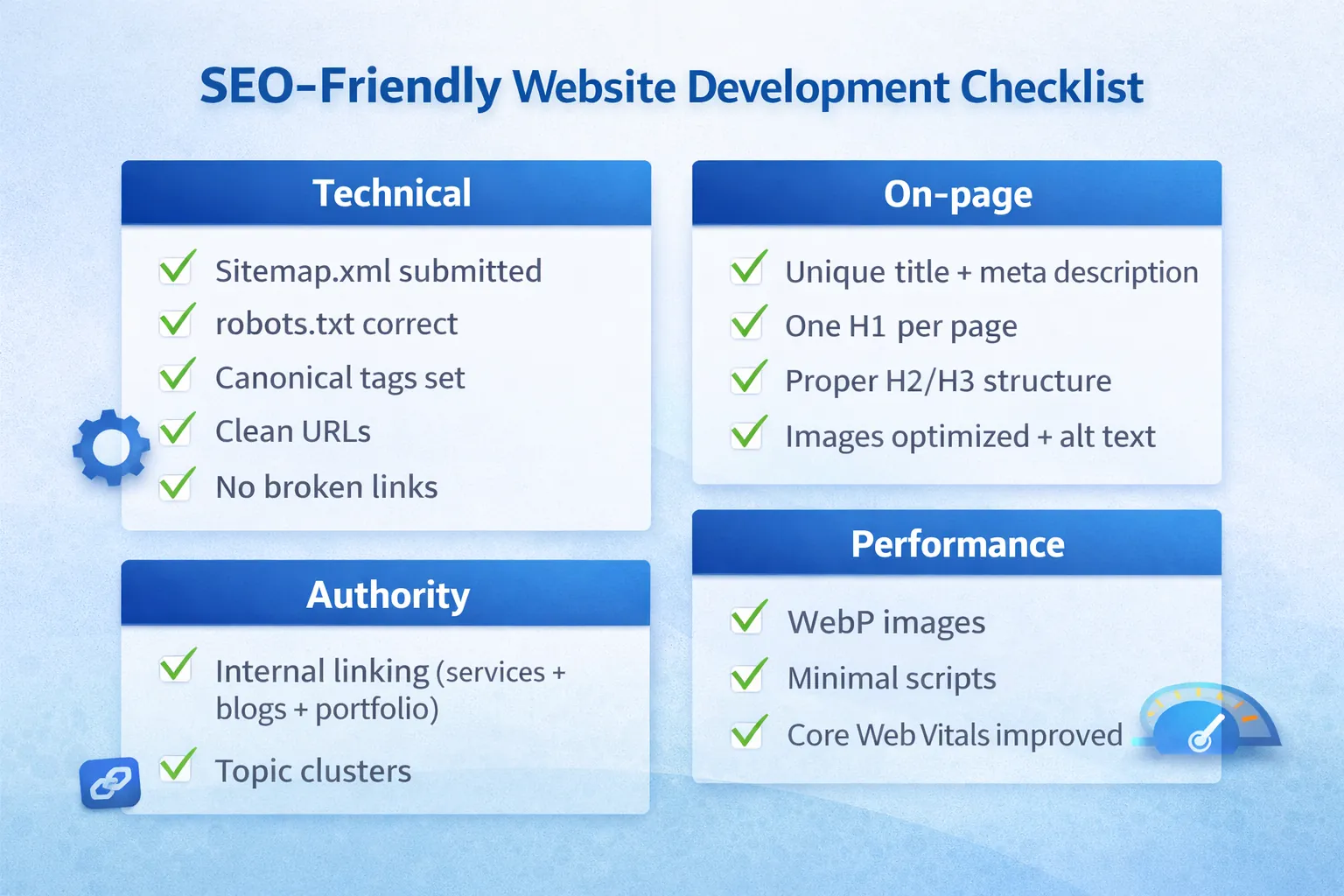
These technical elements are non-negotiable:
sitemap.xml must exist and be submitted in Search ConsoleCanonical tells Google the “main version” of a page, preventing duplicates.
Example:
https://www.vasuyashii.com/blog/seo-friendly-website-developmentEvery page needs:
Headings help Google understand content hierarchy.
Rules:
Bad heading structure:
Good heading structure:
This improves SEO and readability.
Google evaluates your site primarily on mobile experience.
Mobile-first checklist:
A responsive website supports:
Speed is one of the biggest ranking and conversion factors.
Core Web Vitals goals:
If you want detailed speed optimization steps: Website Speed Optimization Guide
Images can bring traffic from Google Images and improve UX, but only if done correctly:
Rules:
Example file name:
seo-website-checklist.webp (good)IMG_8273_final.png (bad)Internal links are one of the strongest SEO levers because they:
Each blog should link to:
Example internal links:
This builds topical authority and improves crawl paths.
Topic clusters mean:
Example cluster: “Website Development”
When Google sees many connected blogs around one topic, it trusts your site more.
Schema helps Google understand content type.
For blogs, use:
For services, you can add:
Schema can improve:
You already use JSON-LD in your blog template—great.
Duplicate content happens when:
Fix:
Ranking is useless if it doesn’t convert.
SEO-friendly website development must include conversion structure:
Example WhatsApp CTA: 👉 WhatsApp: Chat on WhatsApp
Day 1: Sitemap + robots + indexing check Day 2: Fix URLs + headings Day 3: Speed improvements (images, scripts) Day 4: Internal linking setup Day 5: Create 1 pillar page + 3 supporting blogs Day 6: Add schema + finalize metadata Day 7: Publish + request indexing + monitor Search Console
If you want a website that is built for Google rankings and lead generation (not just design), we can build it with a professional SEO-ready structure.
👉 WhatsApp: Chat on WhatsApp 👉 Services: Web Applications Services 👉 Projects: View our services 👉 Contact: Contact page
SEO-friendly development means search structure is built into the website from the start. It is not only adding keywords after design is complete.
Before launch, confirm:
Useful next links: web application services, software development, and contact.
Suppose a service company works across Delhi, Noida, and Ghaziabad. The SEO-safe structure is not three copies of the same page. Begin with one strong parent service route, useful service-detail pages, project proof, a contact path, and a truthful service-area explanation. Add a city page only when the business can provide distinct local context, demand, delivery information, FAQs, or evidence.
Use these relationships:
The development checklist should include static or server-rendered page content, final-www self canonicals, unique metadata, crawlable links, useful image dimensions and alt text, valid structured data, redirects without chains, and a sitemap containing only indexable final URLs. After launch, use Search Console to find pages receiving impressions and strengthen those before adding more content.
SEO and conversion should stay connected. Website UI/UX best practices help users scan the page, while website conversion optimization connects proof and CTAs to measurable leads. A technically clean page that never answers buyer objections is incomplete; a persuasive page that Google cannot crawl reliably is also incomplete. Discuss the website architecture when both need to be planned together.
Clean structure + internal linking + speed. Without these, blogs alone won’t rank well.
For long-term growth, yes. Blogs help you target many long-tail keywords and build authority.
Yes. Speed affects Core Web Vitals and user engagement signals.
At least 3–5: service page, portfolio, contact, and 1–2 related blogs.
Yes, but it needs clean structure, minimal plugins, good hosting, and proper internal linking.
Related Articles
April 29, 2026
Core Web Vitals fixes in Next.js with LCP, CLS, INP, image, script, and layout guidance plus pricing and rollout advice for 2026.
Read article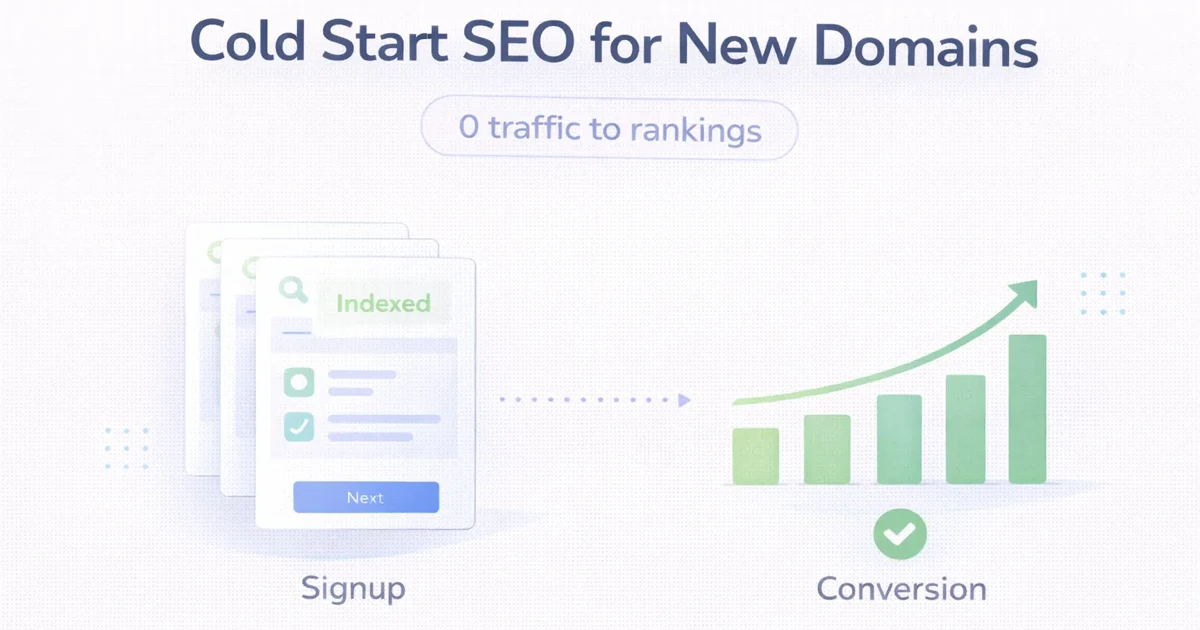
March 31, 2026
Launch SEO for a new domain with a crawlable base, focused money pages, useful clusters, internal links, Search Console evidence and safe iteration.
Read article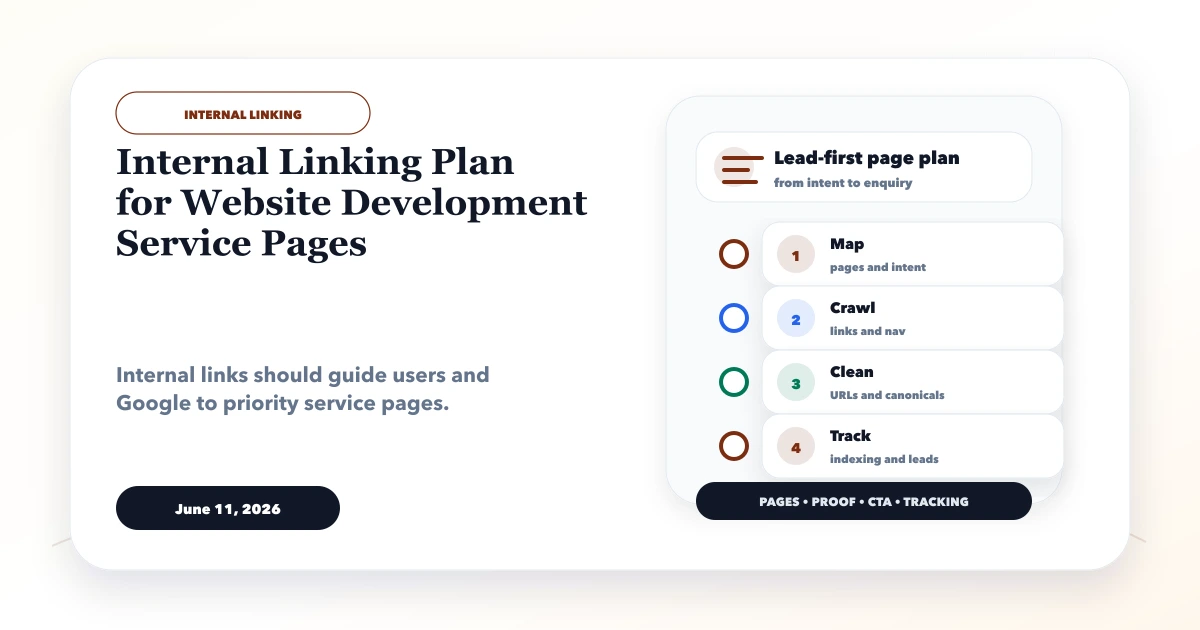
June 11, 2026
Build an internal linking plan for web development services using hubs, support posts, natural anchors, crawl-depth checks, link reports, and update rules.
Read article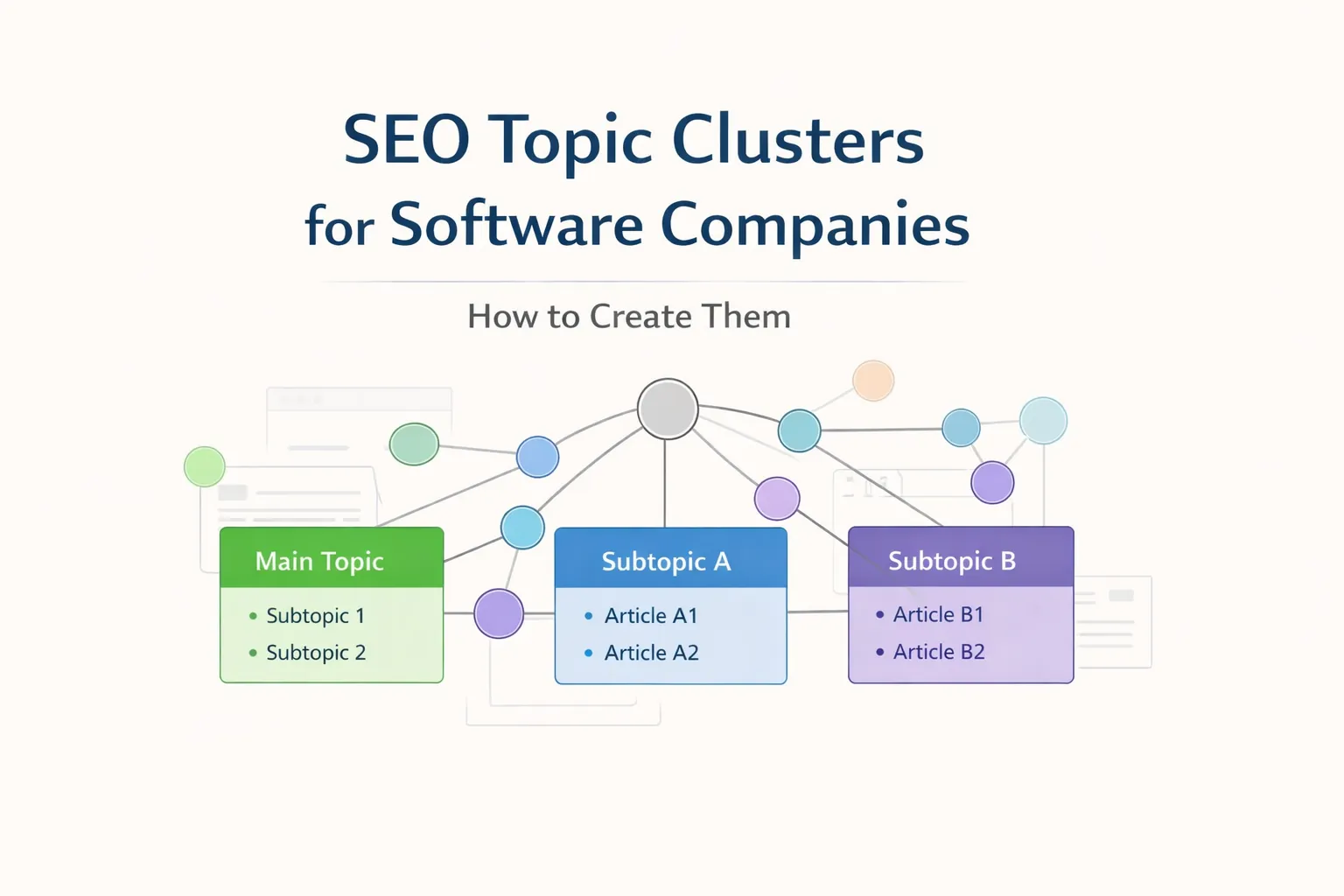
March 29, 2026
How to create SEO topic clusters for software companies: keyword mapping, cluster structure, internal links, publishing plan, and examples.
Read article