
March 31, 2026
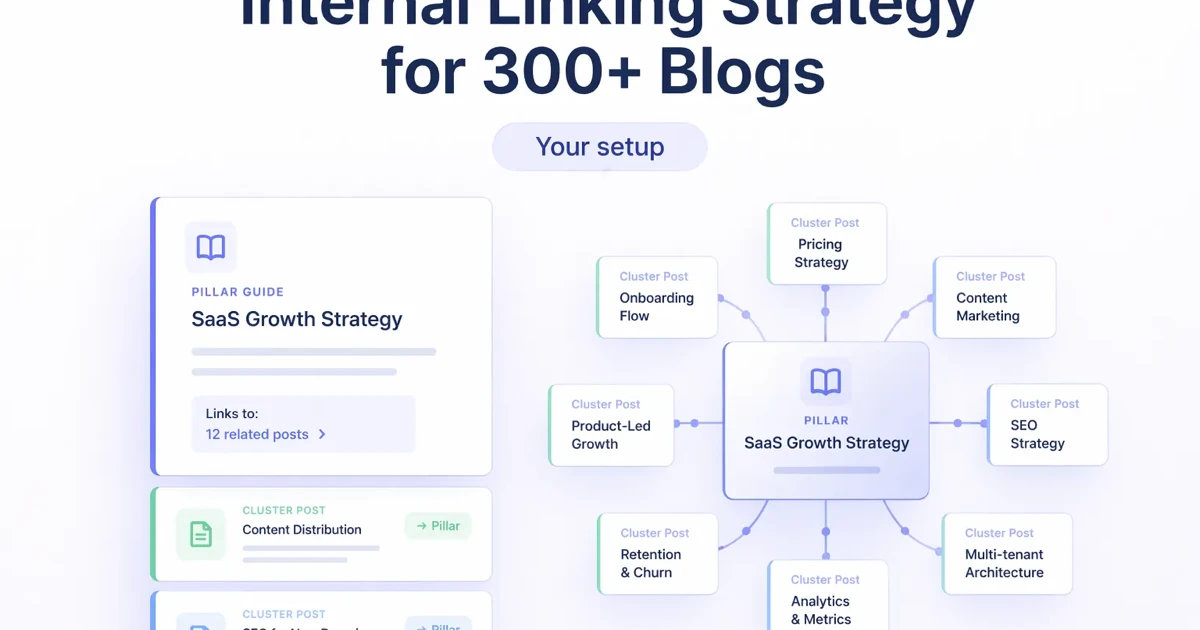
Internal Linking Strategy for 300+ Blog Libraries
Build an internal linking system for 300+ blogs using hubs, page roles, contextual anchors, crawl-depth checks, incoming-link targets and refresh queues.
Read articlePublished Updated
Launch SEO for a new domain with a crawlable base, focused money pages, useful clusters, internal links, Search Console evidence and safe iteration.
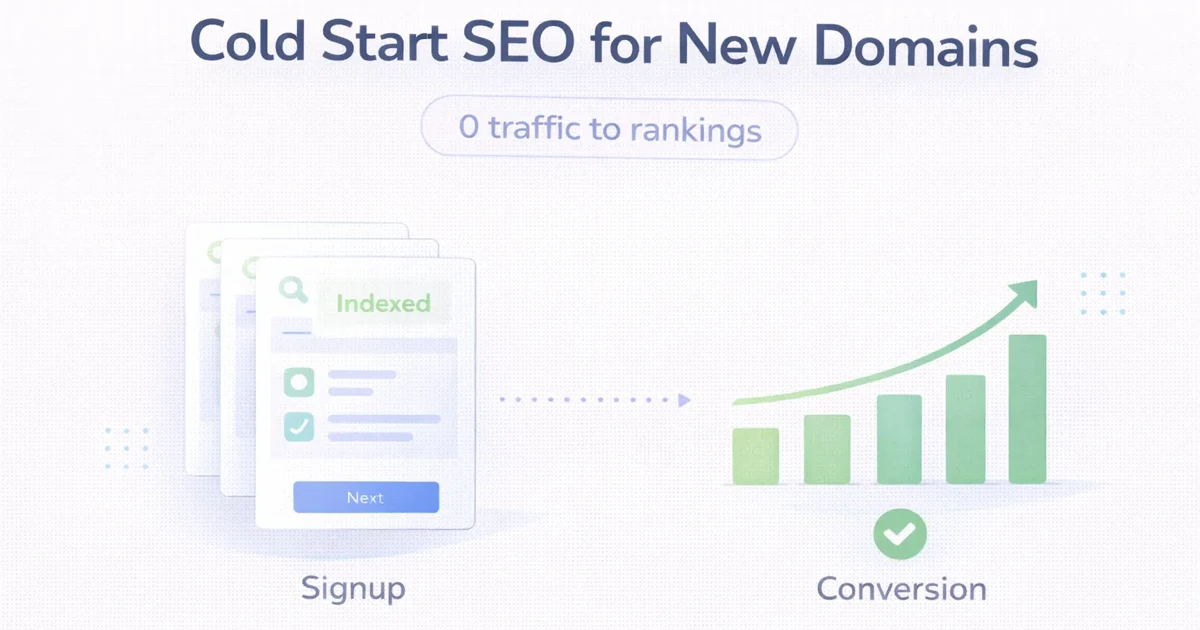
A new domain has no search history, few external references, and often very little content. The answer is not to publish hundreds of generic articles or repeatedly request indexing. The answer is to launch a small, coherent website that explains the business, answers real buyer questions, and gives search engines reliable crawl paths.
Cold-start SEO is a sequence of evidence: pages become crawlable, Google discovers them, selected URLs are indexed, impressions begin for relevant queries, and the team improves pages based on actual search behavior. Rankings are an outcome, not the first task.
For the first 90 days:
Google's SEO Starter Guide explicitly frames SEO around helping search engines understand content and helping users decide whether to visit. It does not promise that technical compliance automatically produces ranking.
Write:
If the company cannot explain these, keyword tools will produce a large but unfocused list.
Choose HTTPS and the preferred hostname. Redirect alternatives directly. Use the same final domain in:
Important headings, body content, links, and calls to action should appear in the rendered page. Link core pages from visible navigation and relevant page content.
noindex when a public utility page should not appear;robots.txt as a substitute for removing a URL from search;Generate an XML sitemap containing final canonical URLs intended for indexing. Google's sitemap documentation recommends fully qualified URLs and states that sitemaps should contain the canonical URLs you want shown in search.
Give each important page:
Schema is machine-readable context, not a ranking shortcut.
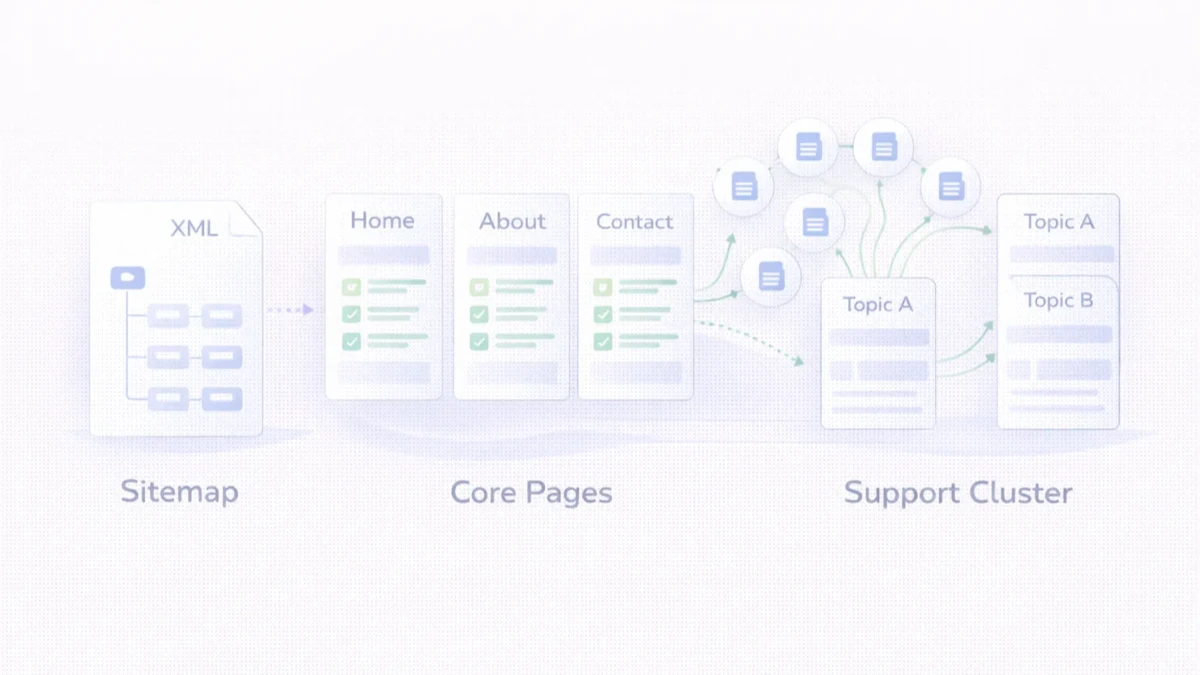
State the brand, offer, customer, proof, service area, and next step. The homepage should link to all primary money pages.
Create one page per materially different buyer intent. Do not create separate pages for synonyms that promise the same outcome.
A strong page includes:
Publish About, Contact, Privacy, Terms, support details, author/profile, and genuine evidence where appropriate.
Select a commercial parent and 5-10 distinct support questions.
Example:
Custom CRM service page
  -> CRM cost
  -> build vs buy
  -> role and permission design
  -> data migration
  -> lead pipeline stages
  -> CRM implementation checklist
Every spoke should satisfy a different search intent and link back to the parent.
Prioritise:
Avoid five versions of the same article with a city or keyword replaced.
Useful evidence includes:
Do not invent client results, reviews, office locations, awards, or rankings.
Each new article should link to:
The parent should also link back to its strongest support guides. A page in the sitemap but absent from the content graph has weaker discovery and context.
Search Console becomes more useful after impressions appear.
Review:
| Signal | Interpretation | Action |
|---|---|---|
| No discovery | Crawl path or sitemap issue | Verify links, sitemap, status, canonical |
| Crawled, not indexed | Quality/duplication/priority question | Compare intent and content value |
| Impressions, position 20+ | Relevance exists but page is weak | Improve coverage and links |
| Position 4-15, low CTR | Snippet opportunity | Improve title/description and intent match |
| Queries differ from page intent | Search engine sees another topic | Clarify scope or create a distinct page |
| Several pages rank for same query | Cannibalisation risk | Differentiate or review consolidation |
Do not judge SEO from a few days or one manual search.
Refresh pages already earning relevant impressions:
Publish the next cluster only after the first has a clear parent, unique spokes, and incoming links.
URL Inspection is a diagnostic tool, not a daily publishing workflow. Sitemap and internal links should handle discovery at scale.
Start with legitimate relationships:
Avoid purchased link packages, automated comments, low-quality directories, and excessive exchanges. Google's spam policies identify scaled low-value content and manipulative link practices as abuse.
Track weekly:
Traffic without qualified actions is not the final objective.
VASUYASHII uses a final-www canonical domain, generated sitemap, crawlable blog pagination, parent topic hubs, author/entity pages, llms.txt, structured data, and internal-link audits. The site also paused indiscriminate city-page publishing after large location clusters created similarity risk.
That experience supports this guide's sequence: improve architecture and existing content before adding more URLs. It does not guarantee a new domain will reproduce the same impressions or timeline.
Volume cannot compensate for missing commercial and trust foundations.
Fix discovery and quality rather than using the request button as a publishing system.
Cover the buyer's real decision with original evidence and business boundaries.
Only publish where the business genuinely serves and can provide differentiated value.
Track contact and lead quality alongside impressions and clicks.
Enough to explain the business, key offers, trust, contact, and one coherent topic cluster. Quality and architecture matter more than a fixed count.
There is no guaranteed timeline. Competition, demand, content quality, crawl/index processing, links, and business authority all affect progress.
Usually yes for a service business. Support content needs a strong commercial parent and conversion path.
No. It helps discovery and communicates preferred canonical URLs; Google still evaluates and processes each page.
Relevant mentions help establish discovery and authority, but they should come from genuine relationships and useful work rather than spam.
Only for genuine service areas with unique proof, customer needs, and content. Replacing the city name in one template creates weak differentiation.
Cold-start SEO works when a new domain earns clarity before scale. Build the technical base, publish money pages, connect one useful cluster, measure Search Console evidence, and improve pages that begin earning demand.
For a new-domain architecture and first content cluster, review local SEO and web-development guidance or contact VASUYASHII.
Related Articles
March 31, 2026
Build an internal linking system for 300+ blogs using hubs, page roles, contextual anchors, crawl-depth checks, incoming-link targets and refresh queues.
Read article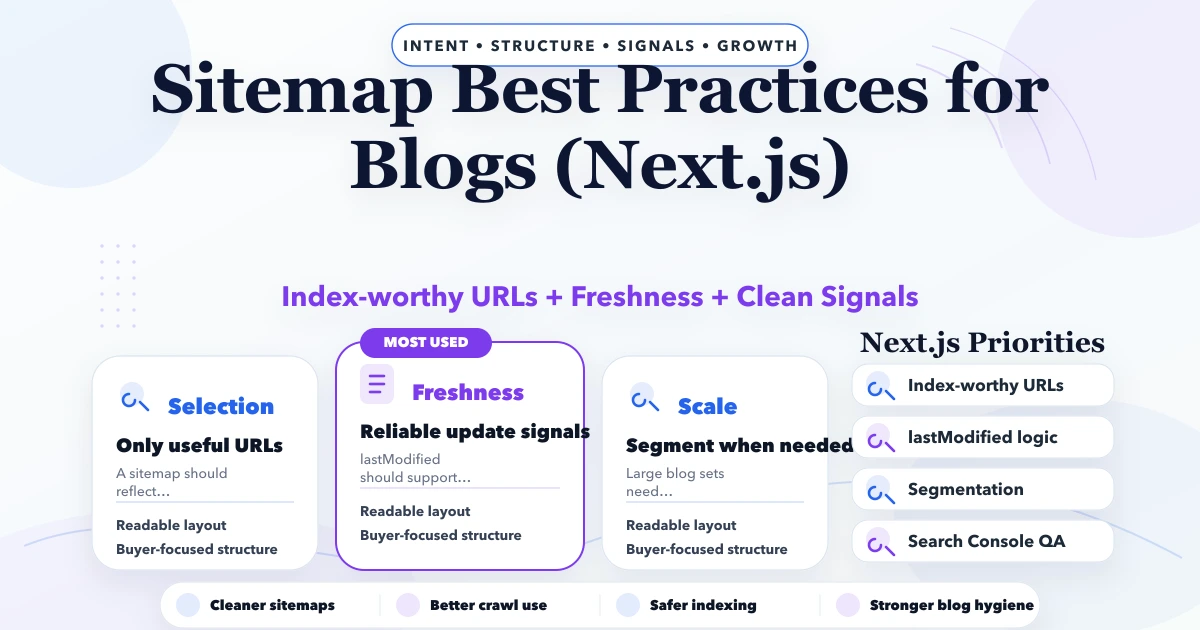
May 3, 2026
Sitemap best practices for blogs in Next.js: URL selection, freshness, segmentation, metadata, and technical SEO guidance for 2026.
Read article
May 12, 2026
Avoid scaled content, weak city pages, canonical noise, sitemap clutter, spam links, poor intent matching, and measurement gaps with this practical SEO review.
Read article
March 18, 2026
Build an SEO-friendly website with crawlable architecture, clean canonicals, fast mobile pages, structured data, internal links, and conversion tracking.
Read article