
May 13, 2026
How to update sitemap automatically
update sitemap automatically: practical 2026 audit guide with checklist, pricing, roadmap, mistakes, FAQs, tools, and next steps for Indian SMBs today.
Read articlePublished Updated
Sitemap best practices for blogs in Next.js: URL selection, freshness, segmentation, metadata, and technical SEO guidance for 2026.
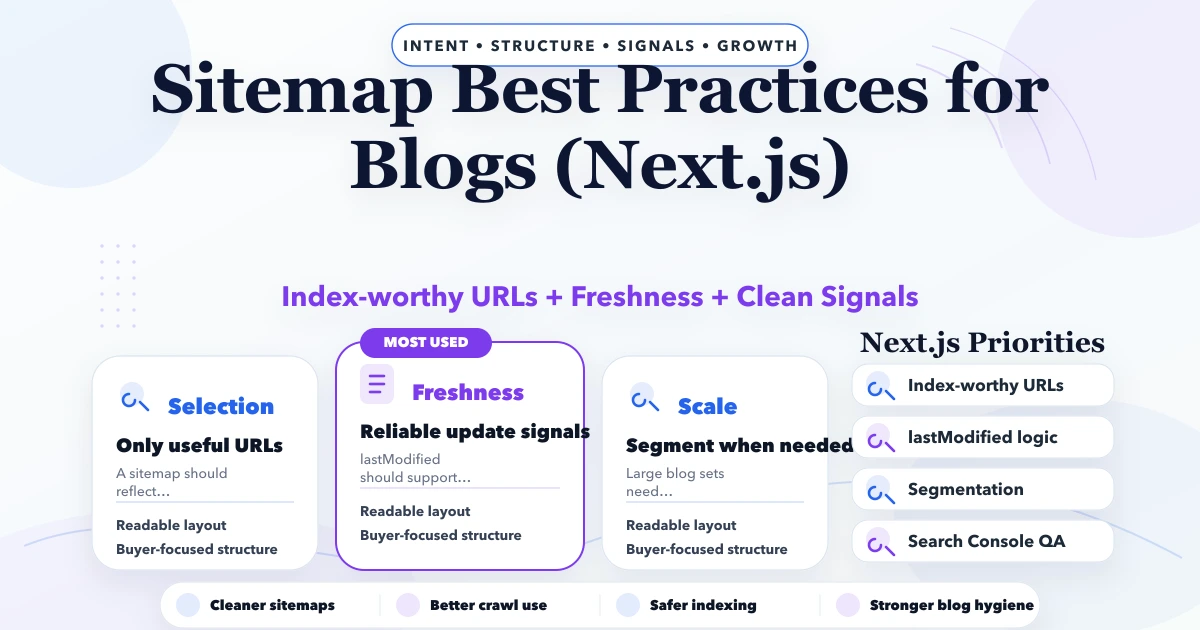
The topic sitemap best practices for blogs in Next.js matters for publishers, software company websites, SEO teams, and content-heavy businesses that want Google to crawl the right pages and ignore the wrong ones. A sitemap is not a ranking trick. It is a quality and clarity signal. It helps search engines understand which URLs you actually care about.
In many Next.js websites, sitemaps are generated once and then forgotten. As the blog grows, the sitemap can silently become noisy, outdated, or full of URLs that should not be pushed for indexing. That creates technical clutter and weaker crawl focus over time.
By Tushar C. (Founder, VASUYASHII). Reviewed by VASUYASHII Editorial for practical scope, pricing, implementation clarity, and local business relevance.
For most businesses, the right approach is not to overbuild the first release. The stronger move is to define a clear first phase, remove the biggest friction points, and launch with proof, structure, and tracking in place. That keeps scope realistic, improves adoption, and makes later SEO or conversion work far easier.
| Scope | Price range | Timeline |
|---|---|---|
| Sitemap review | ₹12,000 to ₹35,000 | 2 to 5 days |
| Next.js sitemap cleanup | ₹35,000 to ₹90,000 | 1 to 3 weeks |
| Large blog SEO infrastructure | ₹90,000 to ₹2 lakh+ | 3 to 6 weeks |
A clean sitemap supports crawl efficiency. It helps Google find the most important posts, understand freshness better, and avoid unnecessary confusion from duplicate or low-value URLs. For blog-heavy sites, this matters because page volume grows faster than quality control if the technical layer is ignored.
On Next.js projects, sitemap quality also depends on route handling, metadata flow, and deployment hygiene. The framework makes it easy to generate output, but not every generated URL belongs in the sitemap.
Good execution here usually improves both SEO and conversion because the website stops behaving like a brochure and starts behaving like a serious business asset. The biggest improvement usually comes from clarity: clear messaging, clear proof, clear routing, and clear review discipline.
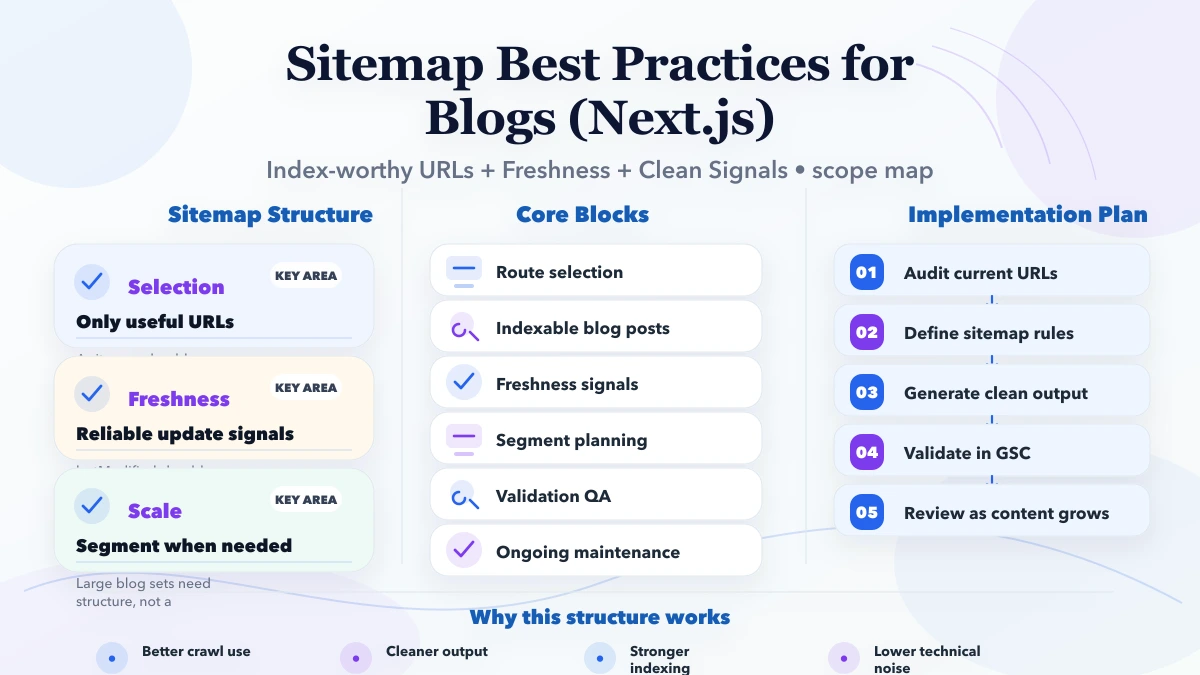
Pricing changes based on how much structure, proof, tracking, content work, and post-launch refinement the business actually needs. Two websites or SEO projects can sound similar at the title level but involve very different effort once page quality, stakeholder review, tracking, and content depth are included.
| Scope | Price range | Timeline |
|---|---|---|
| Sitemap review | ₹12,000 to ₹35,000 | 2 to 5 days |
| Next.js sitemap cleanup | ₹35,000 to ₹90,000 | 1 to 3 weeks |
| Large blog SEO infrastructure | ₹90,000 to ₹2 lakh+ | 3 to 6 weeks |
The practical way to budget is phase-wise. Define what must go live first, what supports SEO later, and what should only be built once real user behaviour gives better input.
A rollout becomes smoother when every phase has one owner, one measurable output, and one review point. When implementation runs without those anchors, even good design or development work starts feeling slow and expensive because the real issue is scope drift.
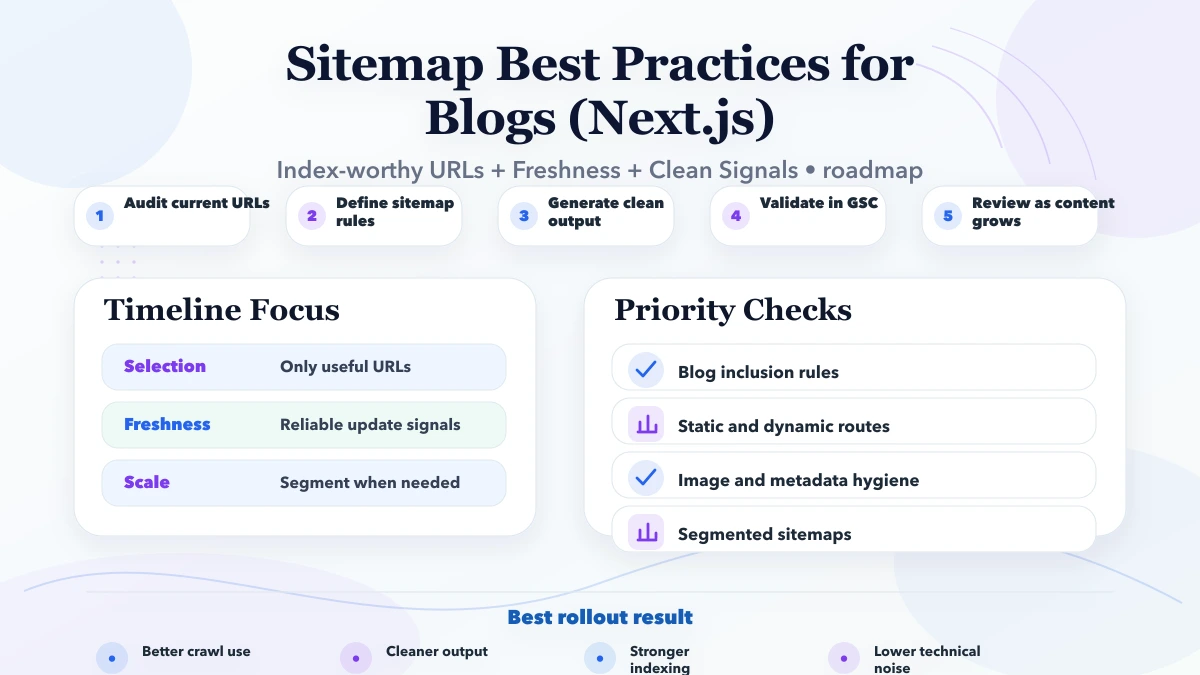
The stack should serve clarity, measurement, and future scale. In most business projects, data structure, content structure, and event visibility matter more than chasing a fashionable tool choice.
If these drivers are defined early, quoting becomes more honest and launch risk drops. If they are ignored, the project usually becomes cheap only on paper and expensive in revision cycles, weak results, or later cleanup.
A sitemap should not become a dump of every technically reachable route. Preview pages, low-value archives, duplicate variants, parameter URLs, or thin utility pages usually do not belong there.
Every unnecessary URL added to a sitemap makes the file noisier and the site’s indexing intent less clear.
As content volume grows, revisit segmentation, freshness logic, and post-quality inclusion rules. Do not assume the same sitemap pattern that worked for 30 posts will still be ideal for 300.
This is especially important when the blog covers multiple topic clusters and some older posts have become outdated or thin.
We serve businesses across India from our Delhi NCR base and plan, build, and refine websites with a practical focus on clarity, trust, SEO structure, and lead quality.
If you are comparing vendors or deciding whether this scope is worth doing now, compare the real structure: page quality, proof depth, CTA logic, tracking, and how the plan expands later without rebuilding from scratch.
These mistakes usually hurt twice. They reduce user trust in the short term and weaken SEO or lead quality over time. Avoiding them is often more valuable than adding one more shiny section or feature.
Only if it is index-worthy, canonical, and genuinely useful. Thin or duplicate posts should not be pushed aggressively.
Not directly. It helps communicate freshness and update behaviour, but it should reflect real content changes.
Segmentation becomes useful as the site grows in page count, topic complexity, or route variety.
Yes. A technically valid sitemap can still include poor URLs or conflict with broader indexing signals.
Review after route changes, major content migrations, and periodically as the blog library expands.
No. Small and medium blogs also benefit from clean URL selection and reliable freshness logic.
Yes. Next.js provides a solid base, but the sitemap still needs good SEO rules, not just working code.
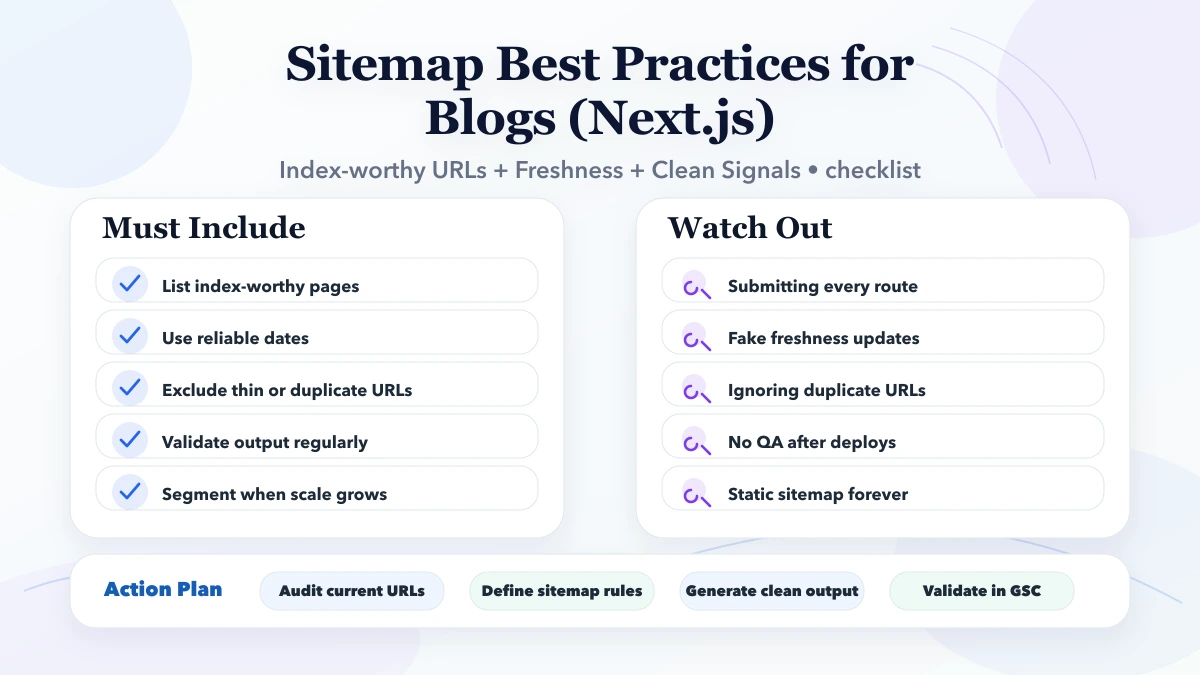
VASUYASHII currently generates its sitemap from indexable static routes and 616 MDX posts, uses only final https://www.vasuyashii.com URLs, and excludes routes marked noindex. Canonical, Open Graph and structured-data URLs are aligned to the same public slug. This is direct implementation evidence, not a guarantee that Google will index every listed page.
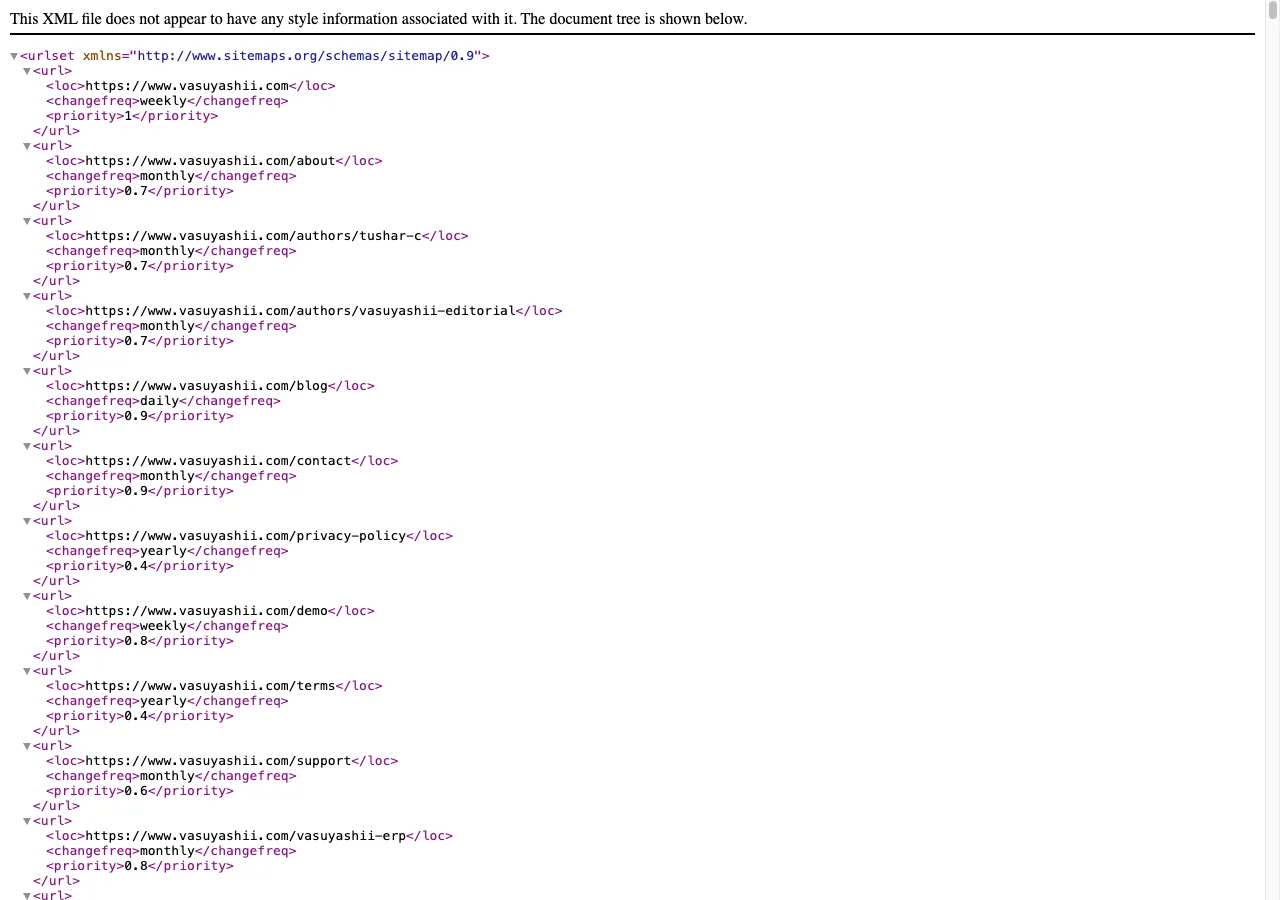
The screenshot confirms the generated output format and final-domain pattern at capture time. Automated checks remain necessary because route inventory can change after future builds.
| Route change | Sitemap action | Validation |
|---|---|---|
| new indexable blog | include final canonical URL | generated XML contains one entry |
| redirected/retired route | remove old URL | old route redirects directly to final target |
| noindex utility/demo detail | exclude | HTML robots and XML agree |
| slug or domain change | update canonical and internal links together | no mixed host/slug signals |
| meaningful content refresh | update date only when accurate | rendered page visibly changed |
Decision example: paginated blog archives can remain crawlable through links without occupying sitemap slots if individual posts are already listed. A service hub intended to rank should be in the sitemap and receive internal links. A private-like demo detail page should not be included just because Next.js generated HTML for it.
Limitations: a sitemap is a discovery and canonicalisation signal, not an indexing command. lastmod should not be changed mechanically. VASUYASHII does not submit non-www URLs or list redirected pages as indexable targets.
Google's official sitemap guide says to use fully qualified canonical URLs and include URLs intended for search results. It also states that sitemap submission is only a hint. Use URL Inspection and the live generated XML to verify deployment rather than trusting source code alone.
If you want a practical plan instead of vague website promises, share your requirement and we will map the first version, realistic pricing, timeline, and the sections needed to support SEO plus qualified enquiries.
Related Articles
May 13, 2026
update sitemap automatically: practical 2026 audit guide with checklist, pricing, roadmap, mistakes, FAQs, tools, and next steps for Indian SMBs today.
Read article
April 22, 2026
Learn how to add safe JSON-LD schema to Next.js MDX blogs with matching canonicals, authors, dates, images, escaping, validation, and build checks.
Read article
March 31, 2026
Launch SEO for a new domain with a crawlable base, focused money pages, useful clusters, internal links, Search Console evidence and safe iteration.
Read article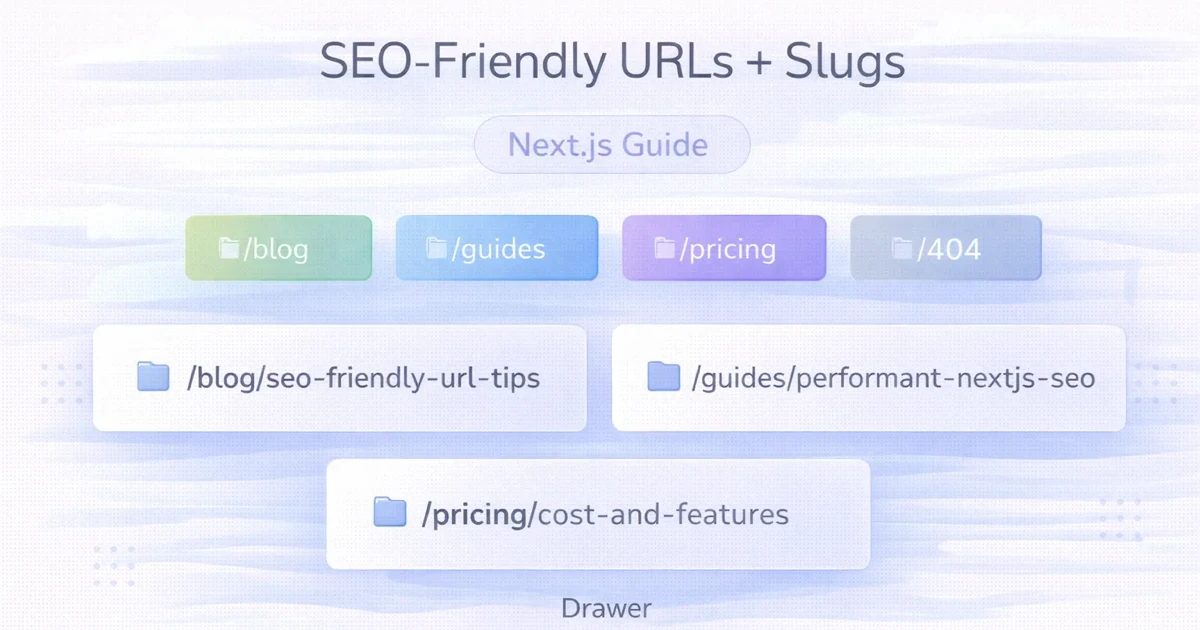
April 2, 2026
Create durable SEO-friendly URLs in Next.js with readable slugs, stable route rules, canonical metadata, redirects, parameter control and build validation.
Read article