
April 2, 2026
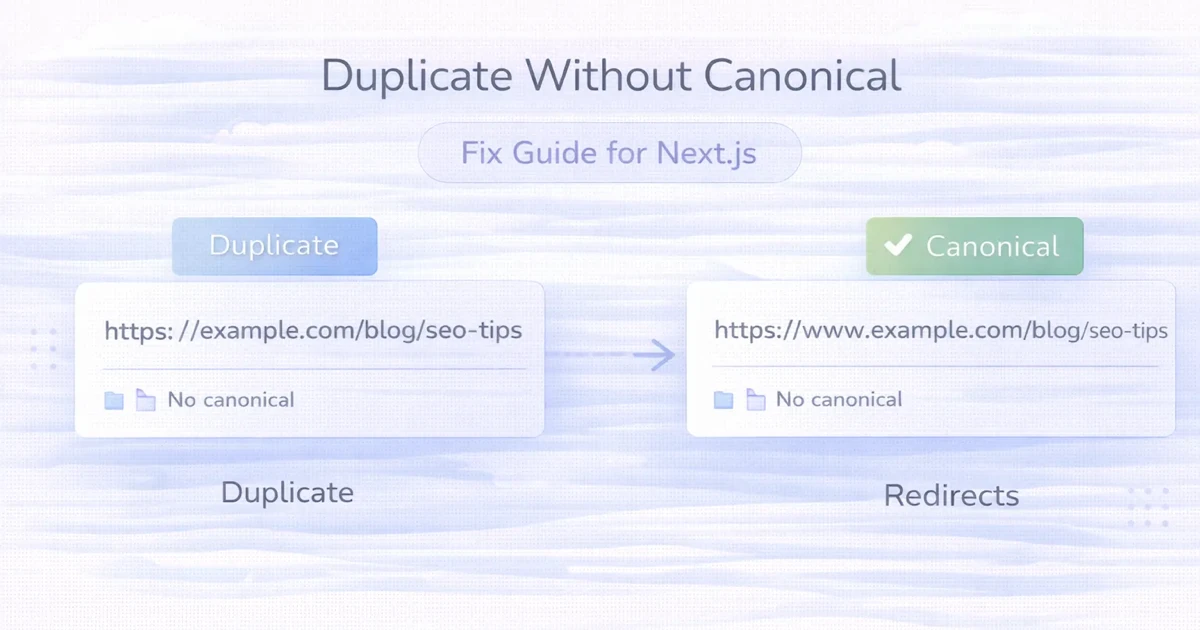
Fix Duplicate Without User-Selected Canonical in Next.js
Fix Duplicate without user-selected canonical in Next.js by aligning rendered canonicals, redirects, sitemap URLs, internal links, parameters, and final HTML.
Read articlePublished Updated
Duplicate content on ecommerce fix guide with canonicals, filters, product variants, timelines, pricing, and cleanup strategy for stores.
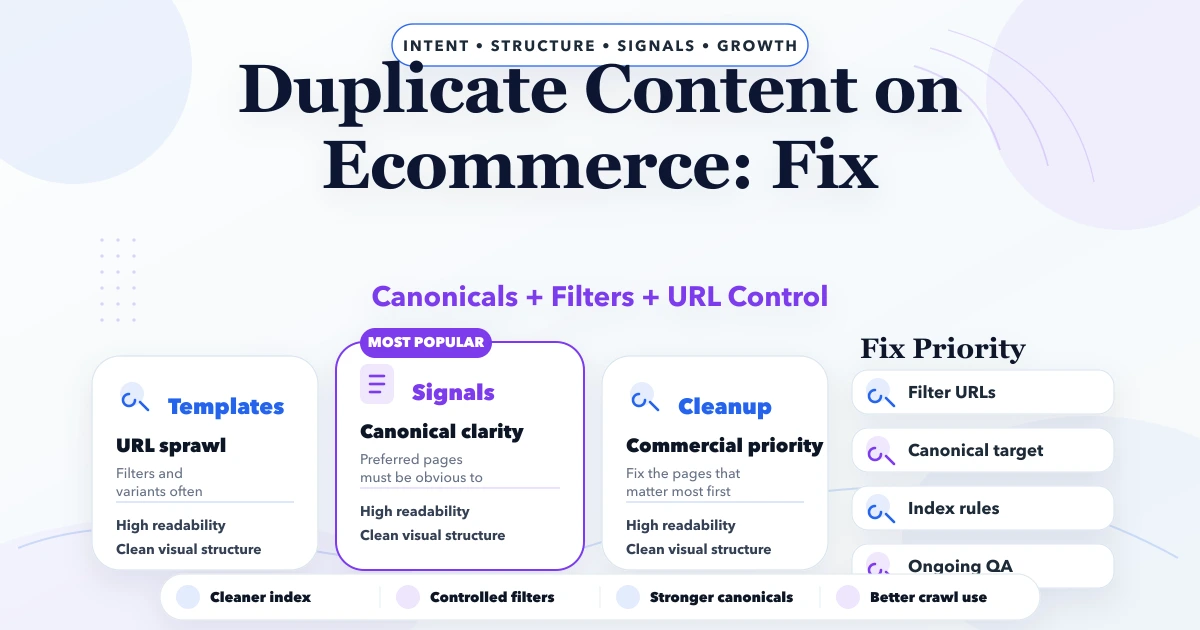
A strong guide on duplicate content on ecommerce fix should help ecommerce teams dealing with filter URLs, copied descriptions, near-duplicate category pages, and indexing confusion make better decisions with less guesswork. This is not just about theory. It is about how the SEO affects enquiries, conversions, trust, and long-term website performance when implemented on a real business website.
The fastest way to waste time is to copy generic best practices without checking intent, analytics, and buyer behaviour. The better approach is to understand where friction appears, what users need to see next, and which technical or content changes actually improve the outcome.
By Tushar C. (Founder, VASUYASHII). Reviewed by VASUYASHII Editorial for practical scope, pricing, implementation clarity, and local business relevance.
Duplicate content on ecommerce usually comes from uncontrolled filters, copied supplier content, multiple URL paths to the same products, and weak category planning. The fix is not one tag or one plugin. It is structural cleanup.
| Scope | Price range | Timeline |
|---|---|---|
| Duplicate-content audit | ₹20,000 to ₹60,000 | 3 to 7 days |
| Canonical and template cleanup | ₹60,000 to ₹1.6 lakh | 2 to 5 weeks |
| Store-wide structural SEO cleanup | ₹1.6 lakh to ₹4 lakh+ | 1 to 3 months |
The important point is that this topic becomes more valuable when it is implemented with tracking and real business intent in mind. Otherwise it stays as content theory with little operational impact.
This topic matters because website performance is not only about ranking. It is about whether the right user sees the page, trusts the page, understands the page, and takes the next step. If one of those steps breaks, traffic alone does not create business value.
In practice, the page or SEO problem usually connects to other systems too. Contact flow, tracking, content structure, internal links, and owner reporting often influence whether the fix improves actual enquiries or just makes a dashboard look cleaner.
Once these basics are clear, improvement becomes more repeatable. You stop treating every issue like a random tactic and start treating the page or SEO setup like an operational system with inputs, outputs, and measurable quality.
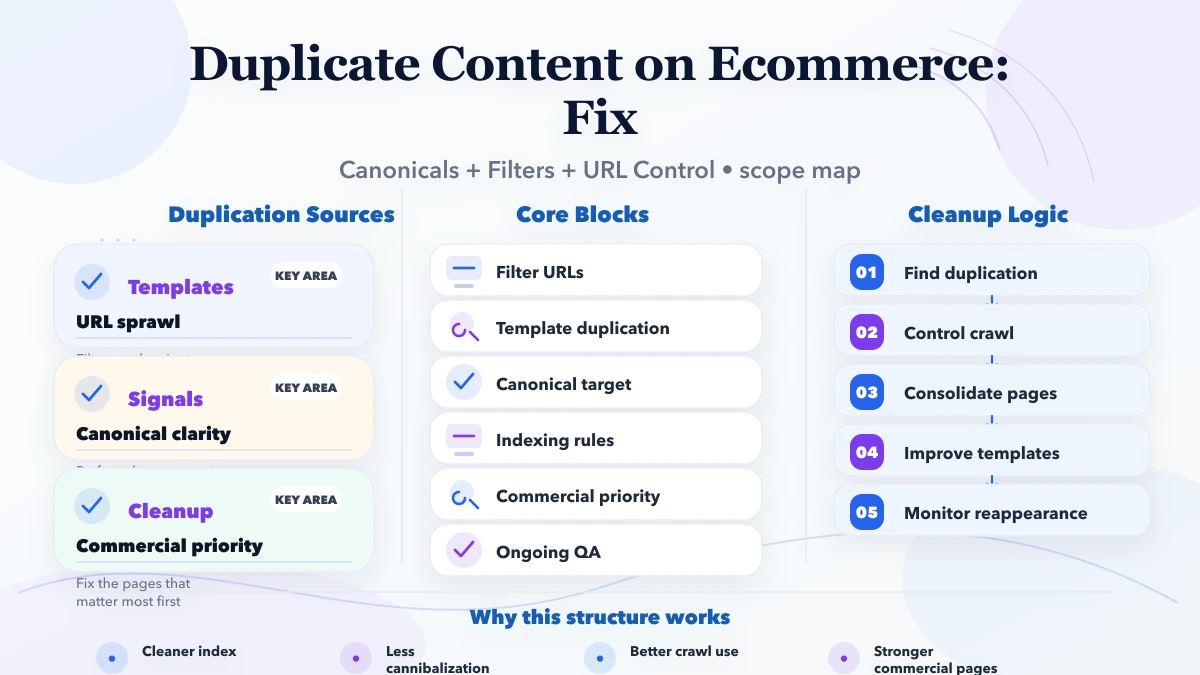
Pricing depends on whether the need is audit-only, implementation-only, or a wider content plus technical fix. Many teams underestimate the effort because the visible change looks small while the real work sits in structure, testing, copy, analytics, and technical cleanup.
| Scope | Price range | Timeline |
|---|---|---|
| Duplicate-content audit | ₹20,000 to ₹60,000 | 3 to 7 days |
| Canonical and template cleanup | ₹60,000 to ₹1.6 lakh | 2 to 5 weeks |
| Store-wide structural SEO cleanup | ₹1.6 lakh to ₹4 lakh+ | 1 to 3 months |
If the page is business-critical, it is usually smarter to scope the implementation properly than to keep making tiny isolated changes without a clear framework.
A good timeline keeps diagnosis, implementation, and validation separate. That matters because many websites “change” often but do not really “improve” because the team never checks whether the change solved the actual bottleneck.
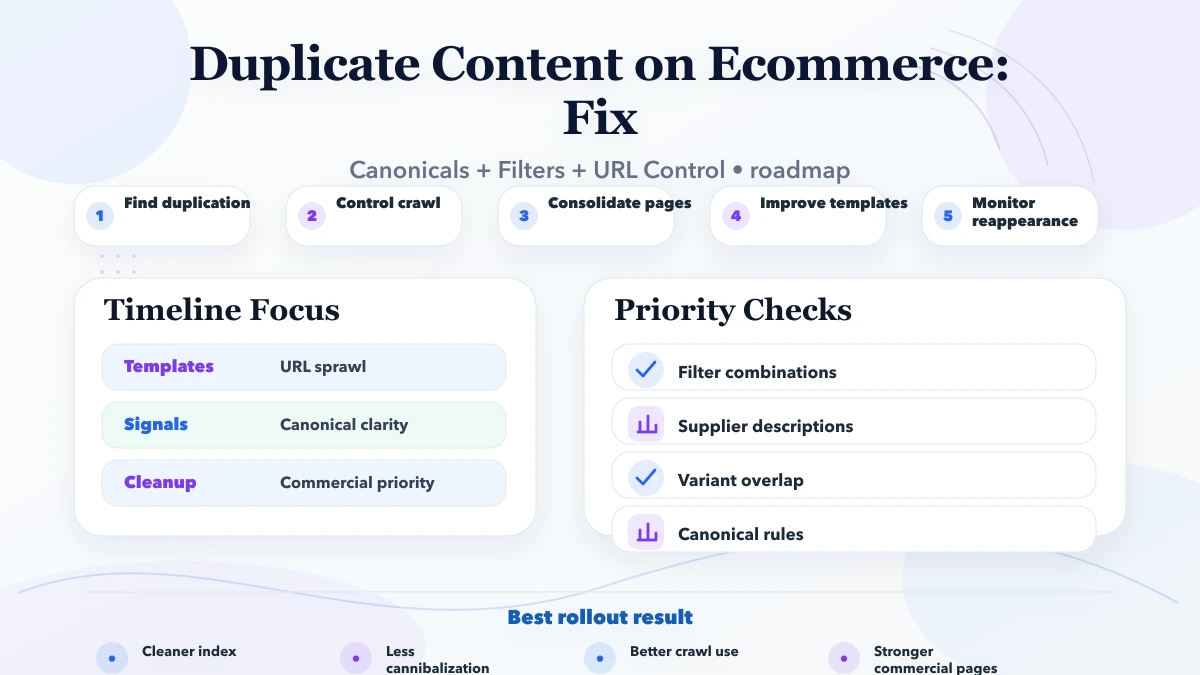
The right tools do not replace thinking. They help teams see what is happening faster, fix it more safely, and measure whether the result actually improved conversion or visibility.
When these drivers are acknowledged early, implementation decisions become much more rational. The team can then prioritise based on business impact rather than chasing every idea at once.
Duplicate content in ecommerce often starts from system behaviour, not from writer behaviour. Faceted URLs, printer versions, tracking parameters, similar products with near-identical descriptions, and multi-category placement can all create duplication without the team noticing immediately. Platform defaults sometimes make this worse by exposing many URL versions of what is effectively the same content.
This is why duplication should be audited at the template and URL-rule level, not only at the text level. If every page uses the same structure but the crawl rules are controlled well, duplication risk drops significantly. If the text is unique but the URL logic is chaotic, the site can still waste crawl budget and dilute ranking signals.
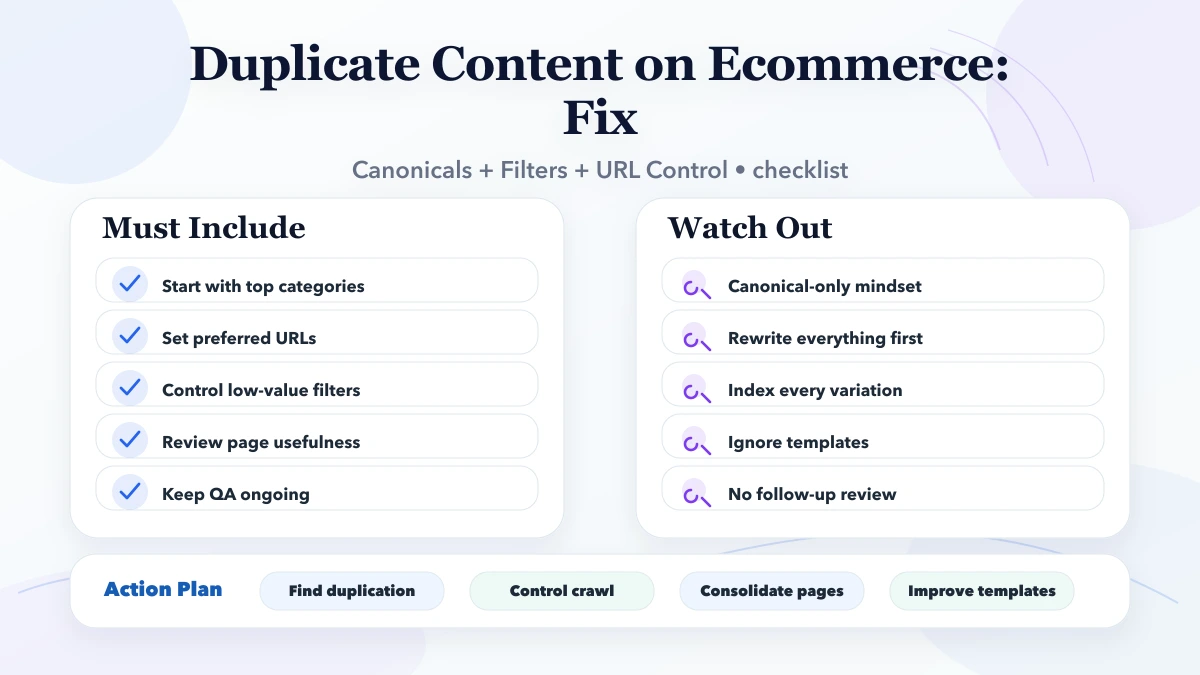
A practical fix usually combines canonical tags, parameter control, selective noindex rules, and better internal linking discipline. Canonicals should point clearly to the preferred commercial page. Unhelpful filtered combinations should not be left open for indexing by default. Discontinued products should either redirect properly or explain the transition to the closest valid alternative.
The goal is not to force every page into the index. The goal is to make sure the pages that deserve visibility are the ones search engines can understand and prioritise.
When a store already has a large catalog, duplication cleanup should happen in order of business impact. Start with the highest-value categories, the most visible product lines, and the URL patterns that create the biggest index clutter. Do not begin by rewriting every page blindly. That wastes time and usually misses the real structural issue.
A better order is: identify the biggest duplication sources, set crawl and canonical rules, consolidate the most important templates, then improve content quality for the pages that truly deserve visibility. This keeps the cleanup commercially useful instead of turning it into a never-ending content rewrite exercise.
Most underperformance comes from fragmented execution. The page, tracking, copy, technical layer, and user path must support each other.
Duplicate ecommerce content is usually not about one repeated sentence. It happens when product, category, filter, and pagination URLs all look useful to the CMS but not unique enough for Google. A Delhi NCR store with the same product in multiple collections can easily create several near-identical URLs.
Before changing canonicals, check:
For an ecommerce build, this should be planned with web application services, integrations, and product-data cleanup before launch.
If you want better results, do not start with a redesign or a tool purchase blindly. Start by documenting the current path: where the visitor lands, what they see, what they do next, and where the drop happens.
Filters, variant URLs, copied descriptions, and overlapping category architecture cause the most duplication. Large stores often create these issues accidentally while trying to improve navigation.
Canonical is useful but not enough by itself. If the pages are thin, low-value, or poorly differentiated, structural improvement is still needed for long-term SEO quality.
Not always. Some should be consolidated, some canonicalised, some blocked from indexing, and some improved. The right action depends on intent, value, and business need.
Yes. It can dilute authority, confuse indexing, waste crawl budget, and make the site feel low-value in aggregate. The impact compounds as the catalog grows.
Audits can happen quickly, but real cleanup often takes weeks or months because it touches URL logic, templates, internal links, and content quality.
Revenue-driving category pages, top product lines, and key product pages should be protected carefully so cleanup does not accidentally reduce their visibility.
Yes. That is why ongoing SEO QA matters. New filters, imports, and merchandising changes can reintroduce duplication even after a strong initial fix.
If you want this implemented properly instead of as another generic checklist, share the current website, traffic source mix, and business goal. We can then map the right fix, timeline, and rollout clearly.
Related Articles
April 2, 2026
Fix Duplicate without user-selected canonical in Next.js by aligning rendered canonicals, redirects, sitemap URLs, internal links, parameters, and final HTML.
Read article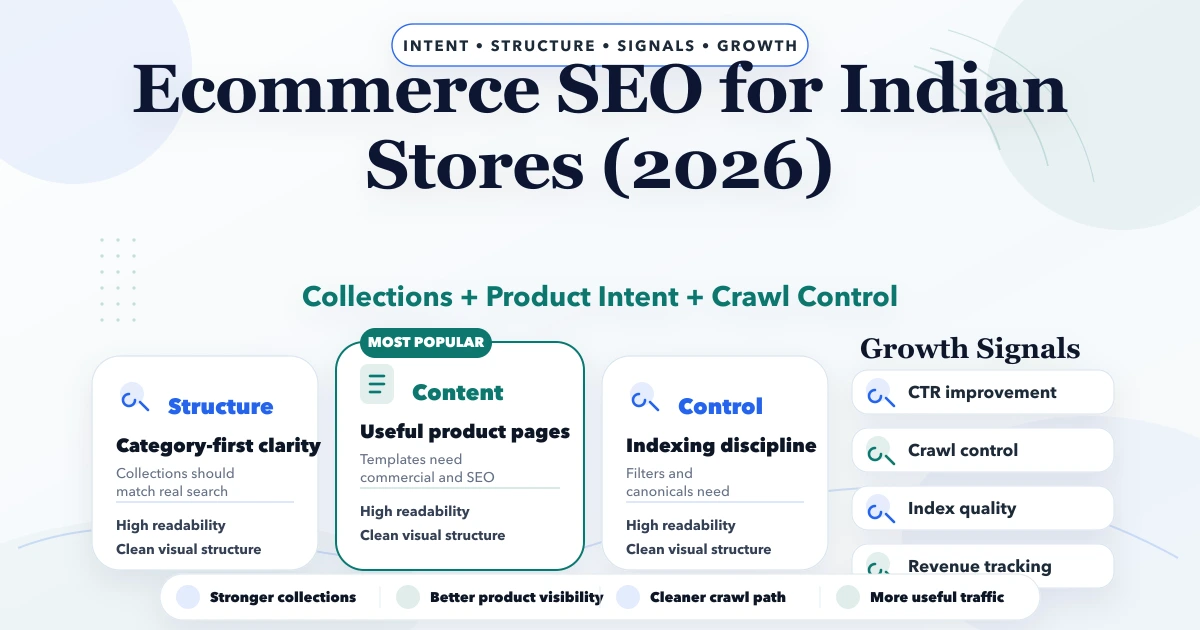
April 28, 2026
Ecommerce SEO for Indian stores in 2026: structure, pricing, timelines, product/category strategy, technical fixes, and practical growth plan.
Read article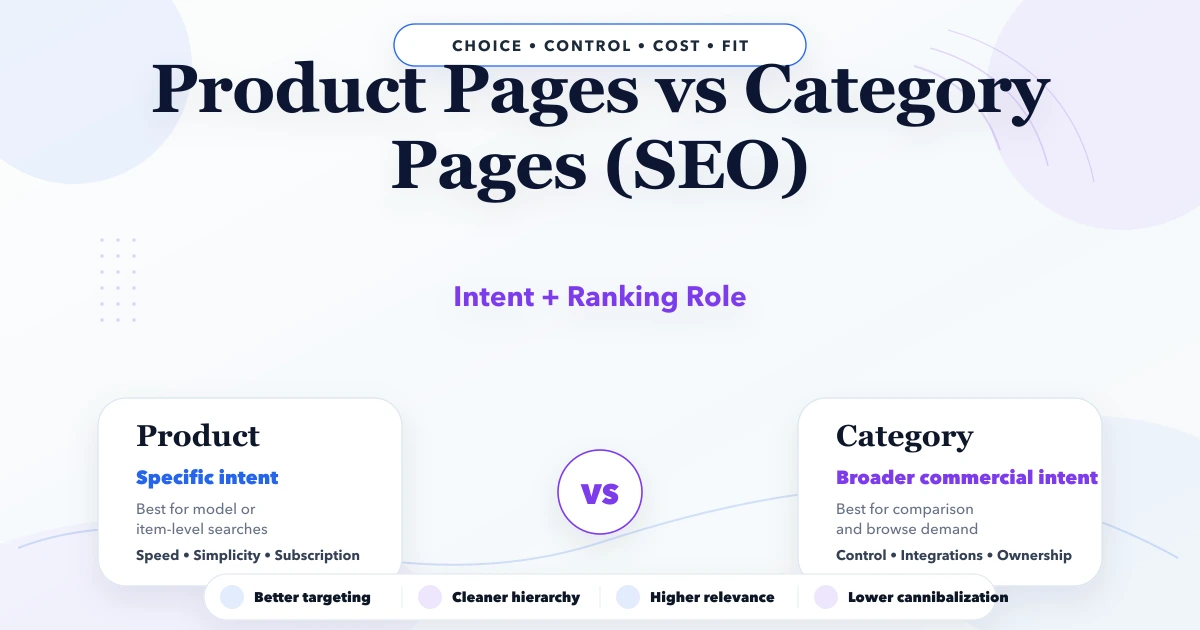
April 28, 2026
Product pages vs category pages SEO: intent, internal linking, pricing, structure, and practical decision framework for ecommerce growth.
Read article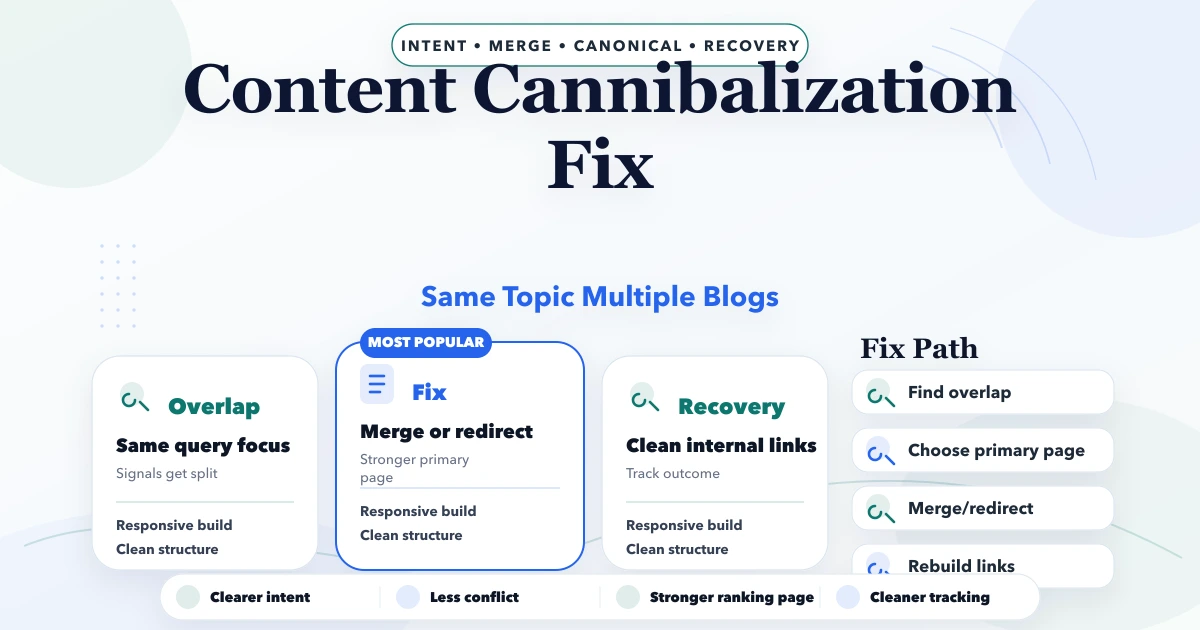
April 21, 2026
Diagnose content cannibalization with query and page evidence, then differentiate, consolidate, redirect, canonicalize, or de-prioritize overlapping URLs.
Read article