
May 29, 2026
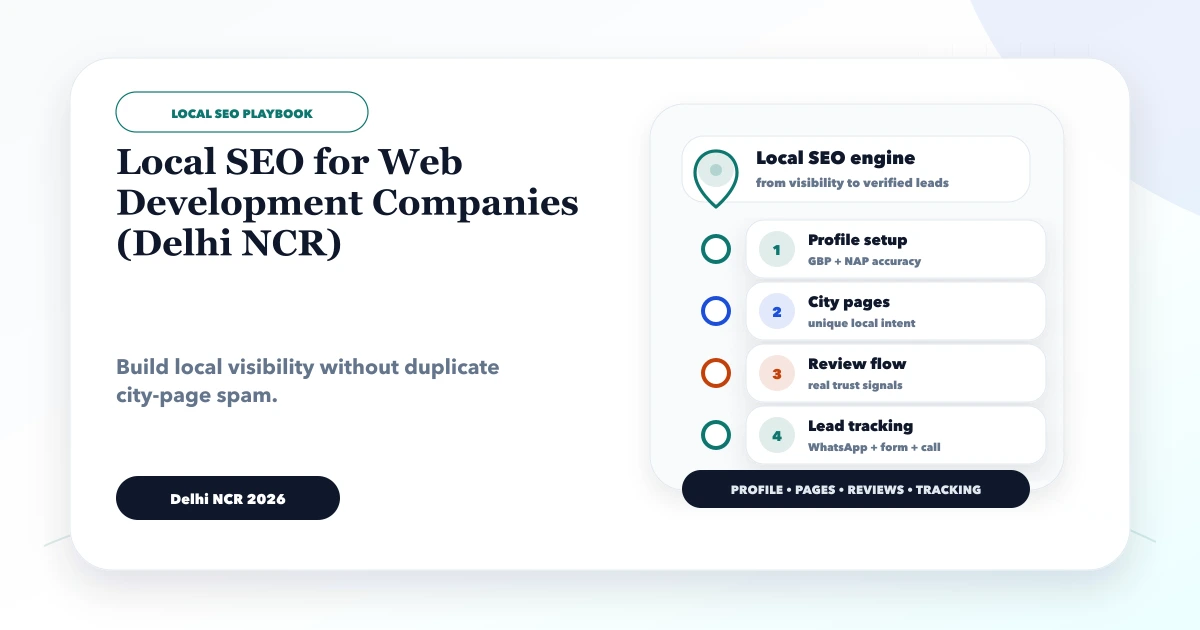
Local SEO for Web Development Companies
Build local SEO for a web development company with clear service architecture, genuine area evidence, eligible profiles, reviews, citations and lead tracking.
Read articlePublished Updated
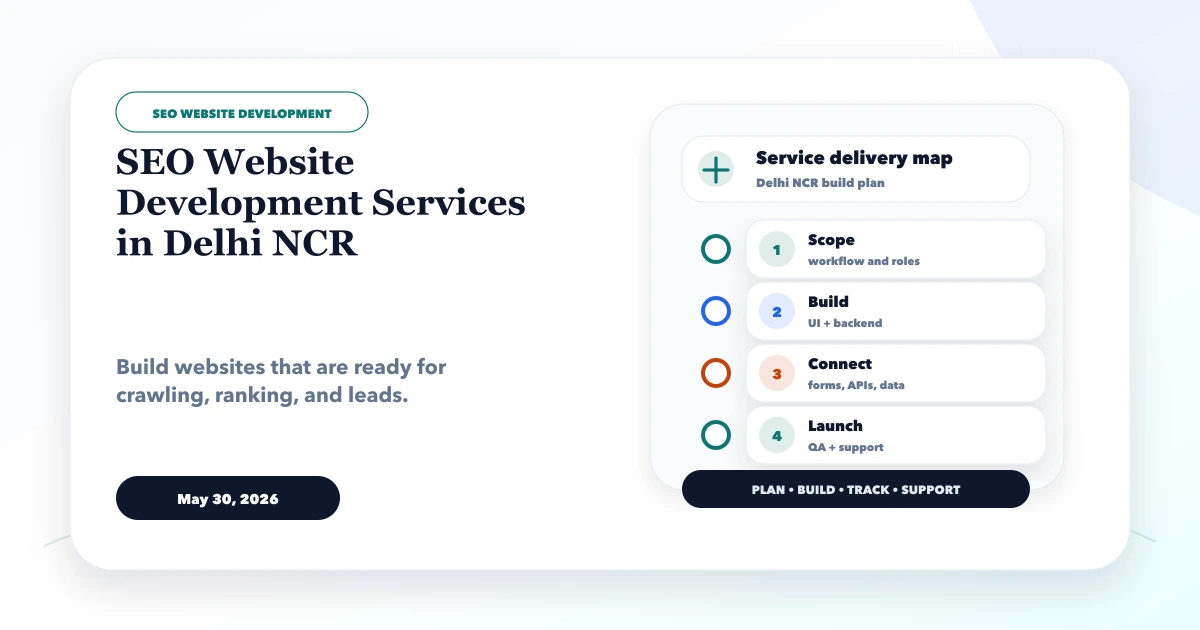
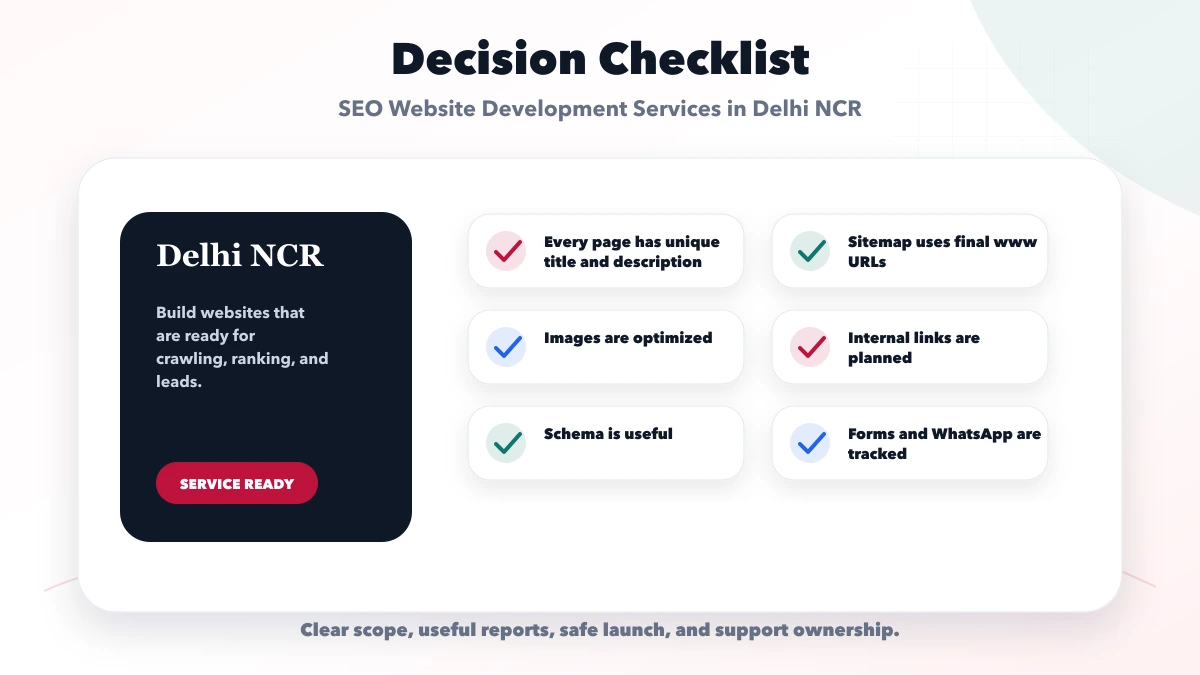
Scope SEO website development in Delhi NCR across architecture, rendering, metadata, structured data, performance, internal links and launch QA.
Service-area note: VASUYASHII is based in Delhi NCR and supports businesses remotely across India. A city-focused guide describes service and planning context; it does not claim a physical office in every location mentioned.
Explore the parent topic: Local SEO for Web Development Companies →SEO website development means search requirements are built into architecture, content models, rendering, links, metadata, performance and launch checks. It does not mean adding a plugin after the website is complete.
This guide helps Delhi NCR businesses scope an SEO-ready build and compare development proposals. It separates developer responsibilities from editorial, local SEO and ongoing growth work. No technical checklist can guarantee ranking.
An SEO-ready website build should provide:
Content quality, proof and authority still require ongoing work.
| Area | Development responsibility | Business/editorial responsibility |
|---|---|---|
| Architecture | routes, navigation and templates | services and page ownership |
| Metadata | reliable generation and validation | accurate title and description |
| Content | readable rendering and components | expertise, proof and usefulness |
| Schema | correct technical output | truthful visible facts |
| Performance | efficient code and assets | appropriate media and third parties |
| Tracking | privacy-safe event implementation | lead definitions and reporting |
| Local SEO | location-capable templates | genuine presence and business data |
| Growth | stable publishing system | research, updates and promotion |
This prevents “SEO included” from becoming an undefined line item.
Create a page map:
Assign one main search and buyer job to each important page. Avoid several URLs targeting the same service with minor wording changes.
The local SEO landing-page guide adds evidence gates for location content.
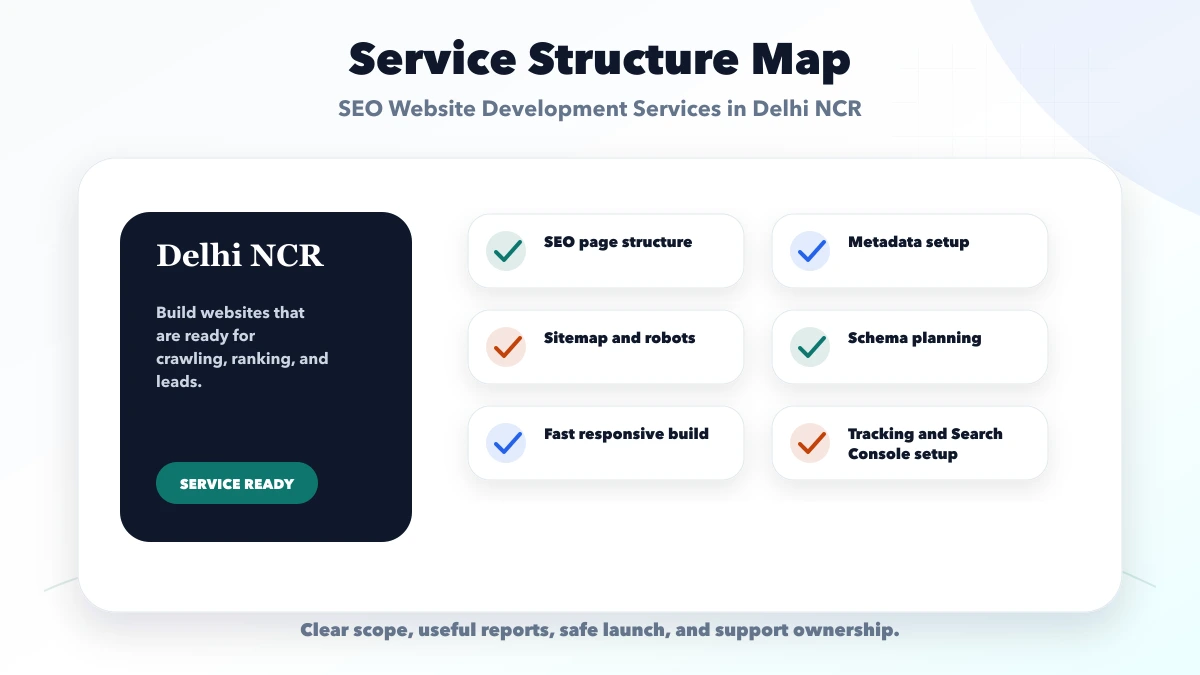
Google's developer SEO guide recommends search-friendly pages that are secure, fast, accessible and usable across devices.
Important content should exist in HTML that can be discovered and interpreted reliably. Check:
Test generated production output, not only the development source.
Choose one final host and path convention.
Each indexable page should align:
Redirect old or alternate hosts directly to the final URL. Do not place redirecting URLs in the sitemap.
For Next.js-specific implementation, use the SEO-friendly URL and slug guide.
Every important template needs:
The CMS or MDX model should validate required fields and duplicate slugs before build.
Do not fabricate “best,” “number one,” reviews or location proof in metadata.
Use schema types that match visible content and page purpose, such as:
JSON-LD must parse and use final URLs. Structured data does not guarantee a rich result.
Create:
Use descriptive anchors naturally. Do not hide hundreds of city links in footers.
Current site-scale linking should be validated from rendered HTML because generated cards and navigation may not be visible in source searches.
Current Core Web Vitals focus on LCP, INP and CLS. Lab tools are useful for diagnosis, while field data requires sufficient real-user data.
Build requirements may include:
Do not promise a permanent Lighthouse score. Content, analytics, devices and hosting conditions change results.
The publishing system should support:
Validation should prevent broken links, missing assets and duplicate slugs.
For Delhi NCR location content:
Use service-area page strategy before scaling location pages.
Google Analytics documents generate_lead as a recommended event when a user submits a form or information request.
An SEO website can track:
Do not send names, phone numbers, emails or message content to analytics.
| Scope | Existing planning band | Typical delivery window |
|---|---|---|
| SEO-ready business website | Rs. 45,000 to Rs. 1.2 lakh | 2 to 4 weeks |
| Service website with SEO structure | Rs. 1.2 lakh to Rs. 3 lakh | 4 to 8 weeks |
| Advanced SEO website system | Rs. 3 lakh to Rs. 8 lakh+ | 2 to 4 months |
These retained bands are not fixed VASUYASHII prices or verified Delhi NCR market averages.
Cost depends on:
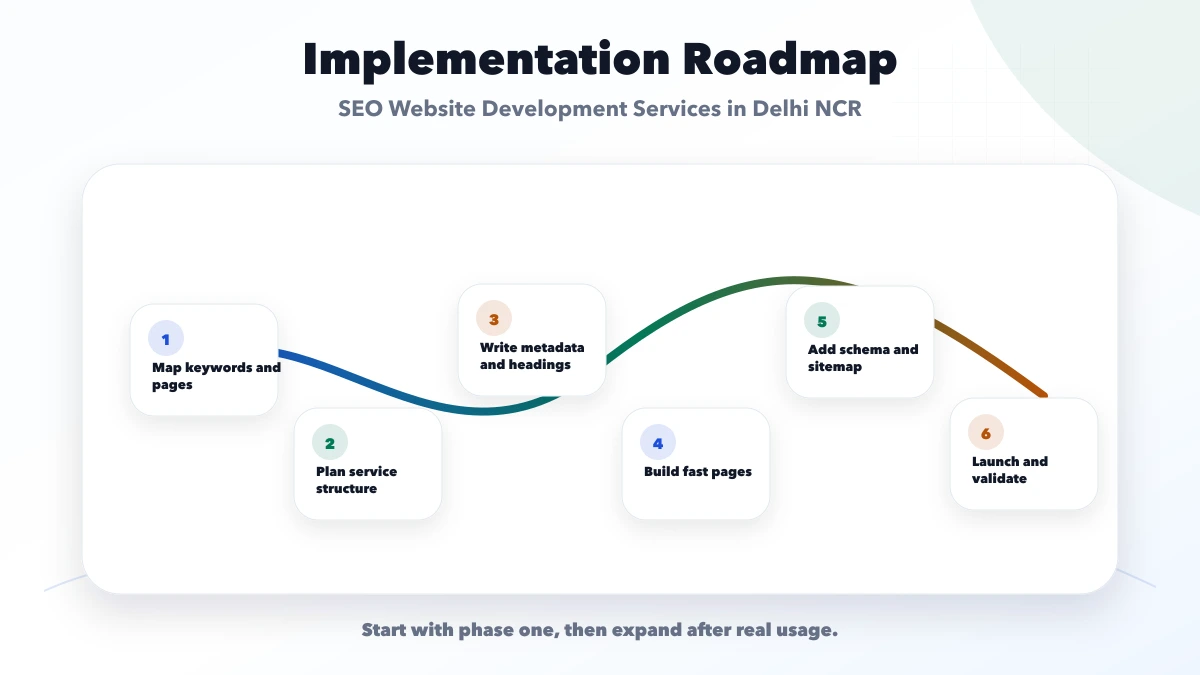
Business goals, audience, existing URLs, analytics and content inventory.
Page ownership, navigation, route model, content schema and internal links.
Responsive templates, components, states, accessibility and conversion path.
Rendering, metadata, schema, forms, analytics, performance and publishing.
Approved copy, images, redirects, imports and link updates.
Build, crawl, sitemap, canonical, structured data, forms, performance and device tests.
Run editorial QA before publication as well: verify claims, sources, contact details, headings, image context and internal links. Technical validity cannot compensate for vague or unsupported page copy.
Production crawl, Search Console, analytics, form routing and issue monitoring.
Request:
This evidence is stronger than a checkbox saying “basic SEO.”
Current VASUYASHII website evidence includes:
robots.txt and llms.txt;This demonstrates work on the VASUYASHII website. It does not guarantee rankings or prove outcomes for an external client.
Review website redesign planning, maintenance planning, landing page cost planning, website-development hub and contact.
Both. Developers create reliable technical foundations; the business and editors provide useful, accurate content and proof.
No ranking or indexing timeline can be guaranteed. Technical correctness enables discovery but does not replace relevance, quality and authority.
No. Use schema only where an appropriate type matches visible content and adds clear machine-readable context.
Only with strong governance and genuine distinct value. Scaled city-name substitution creates quality and doorway risk.
No. Focus on real user experience and Core Web Vitals, while using lab scores to diagnose issues.
Crawlability, status codes, canonicals, sitemap, redirects, structured data, assets, forms, analytics and key mobile flows.
Create a page-and-intent map before selecting design templates. Include migration, metadata, links, performance and lead measurement in the written development scope. Contact VASUYASHII for implementation planning.
Related Articles
May 29, 2026
Build local SEO for a web development company with clear service architecture, genuine area evidence, eligible profiles, reviews, citations and lead tracking.
Read article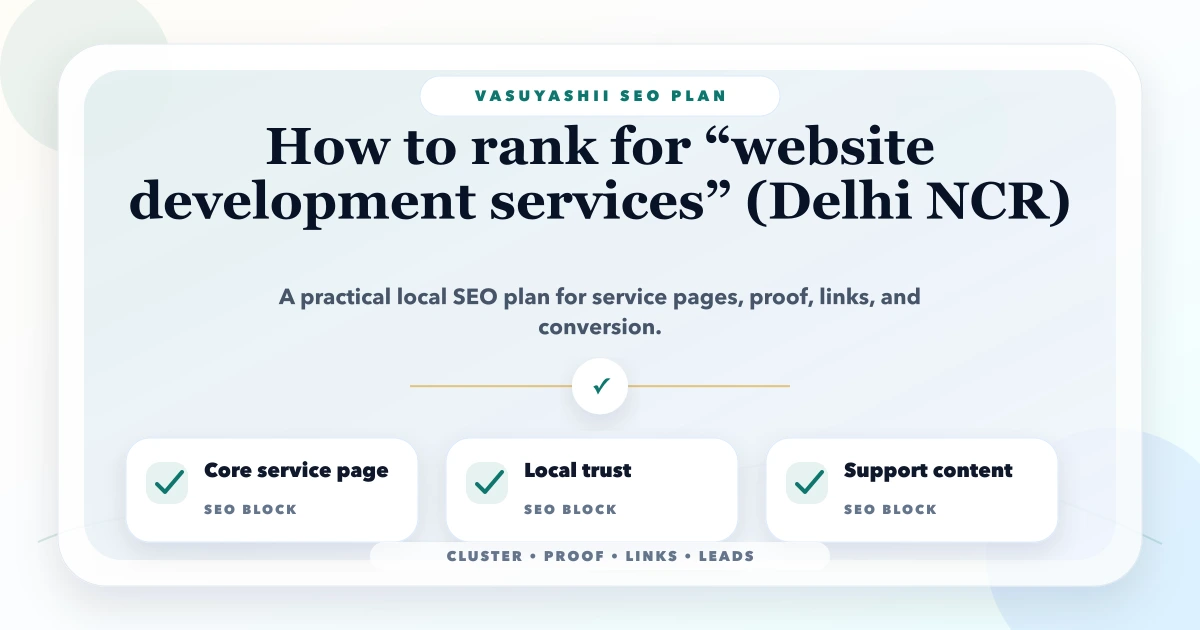
May 14, 2026
rank for website development services Delhi NCR: practical 2026 SEO plan with cluster map, pricing, roadmap, mistakes, FAQs, proof, and next steps today.
Read article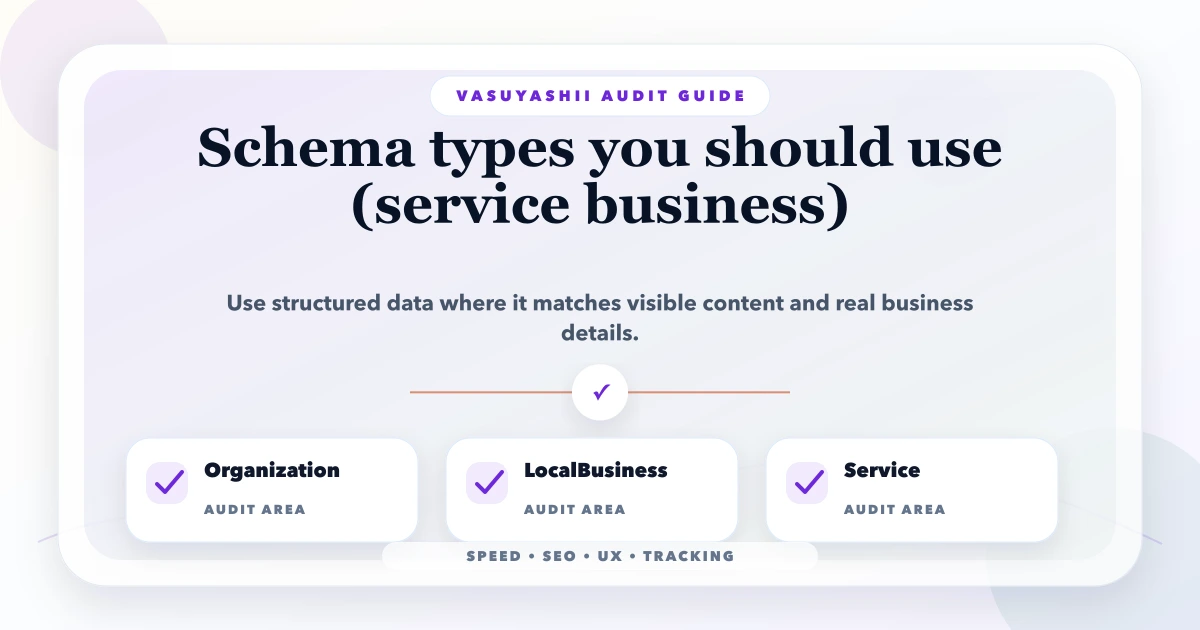
May 13, 2026
Choose accurate service-business schema: Organization, LocalBusiness, BreadcrumbList, Article and Service, with eligibility, testing, and audit rules.
Read article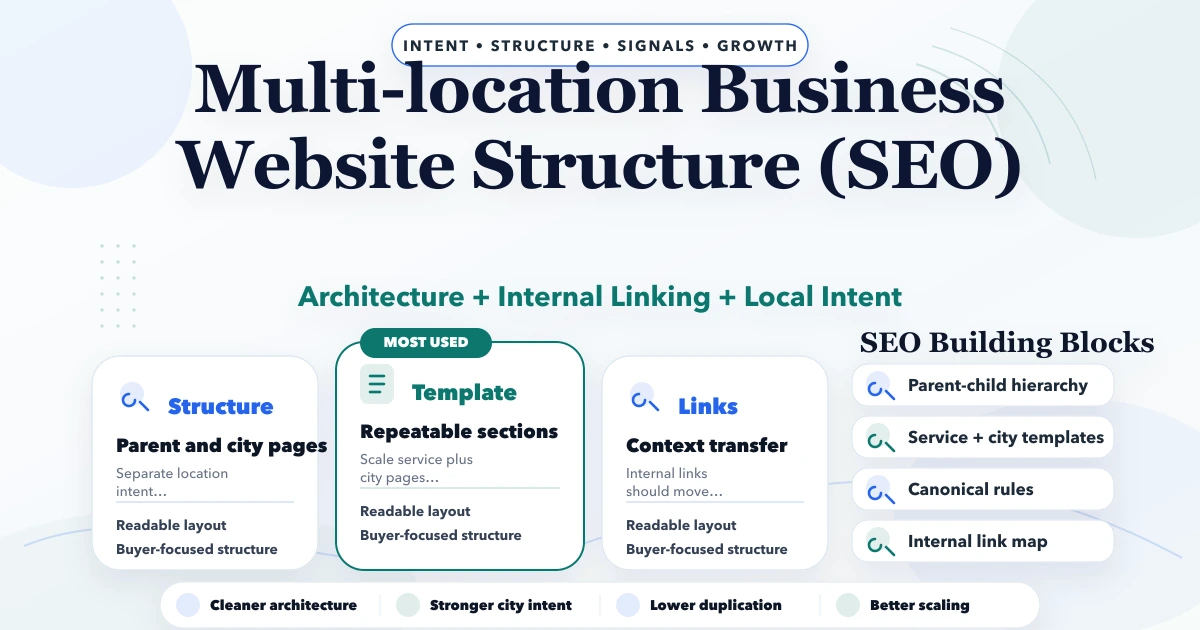
May 1, 2026
Multi-location business website structure for SEO: city-page architecture, internal links, canonicals, content rules, and rollout plan for 2026.
Read article