
April 22, 2026
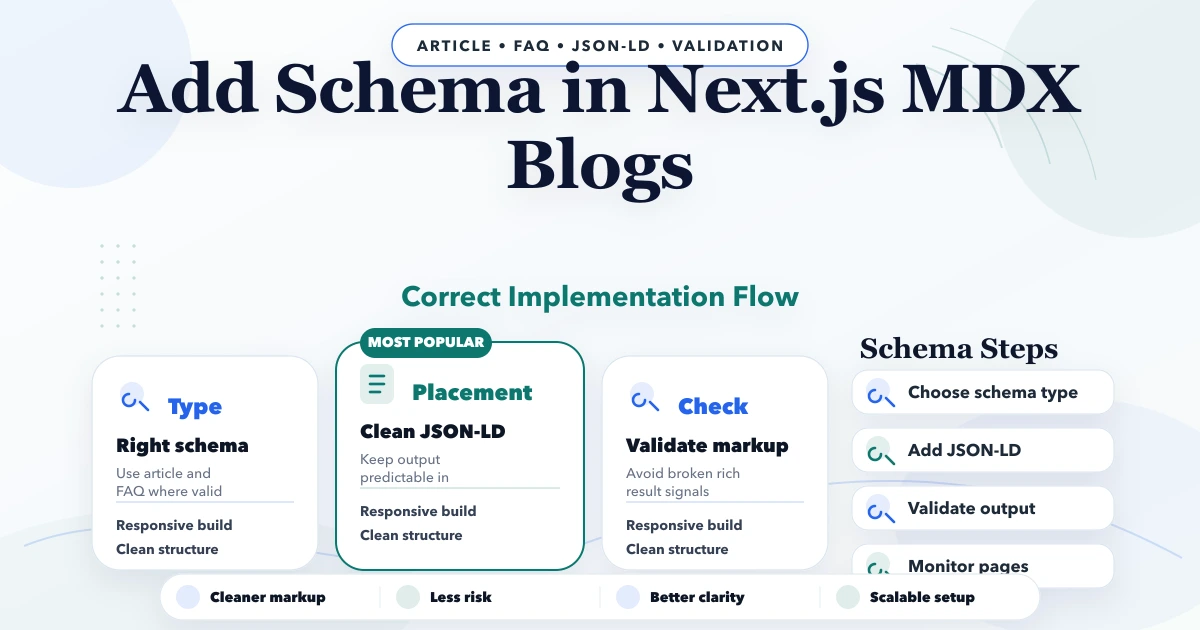
How to Add JSON-LD Schema in Next.js MDX Blogs
Learn how to add safe JSON-LD schema to Next.js MDX blogs with matching canonicals, authors, dates, images, escaping, validation, and build checks.
Read articlePublished Updated
Choose valid schema for service websites using Organization, LocalBusiness, Service, Breadcrumb, Article and page-specific structured data without spam.
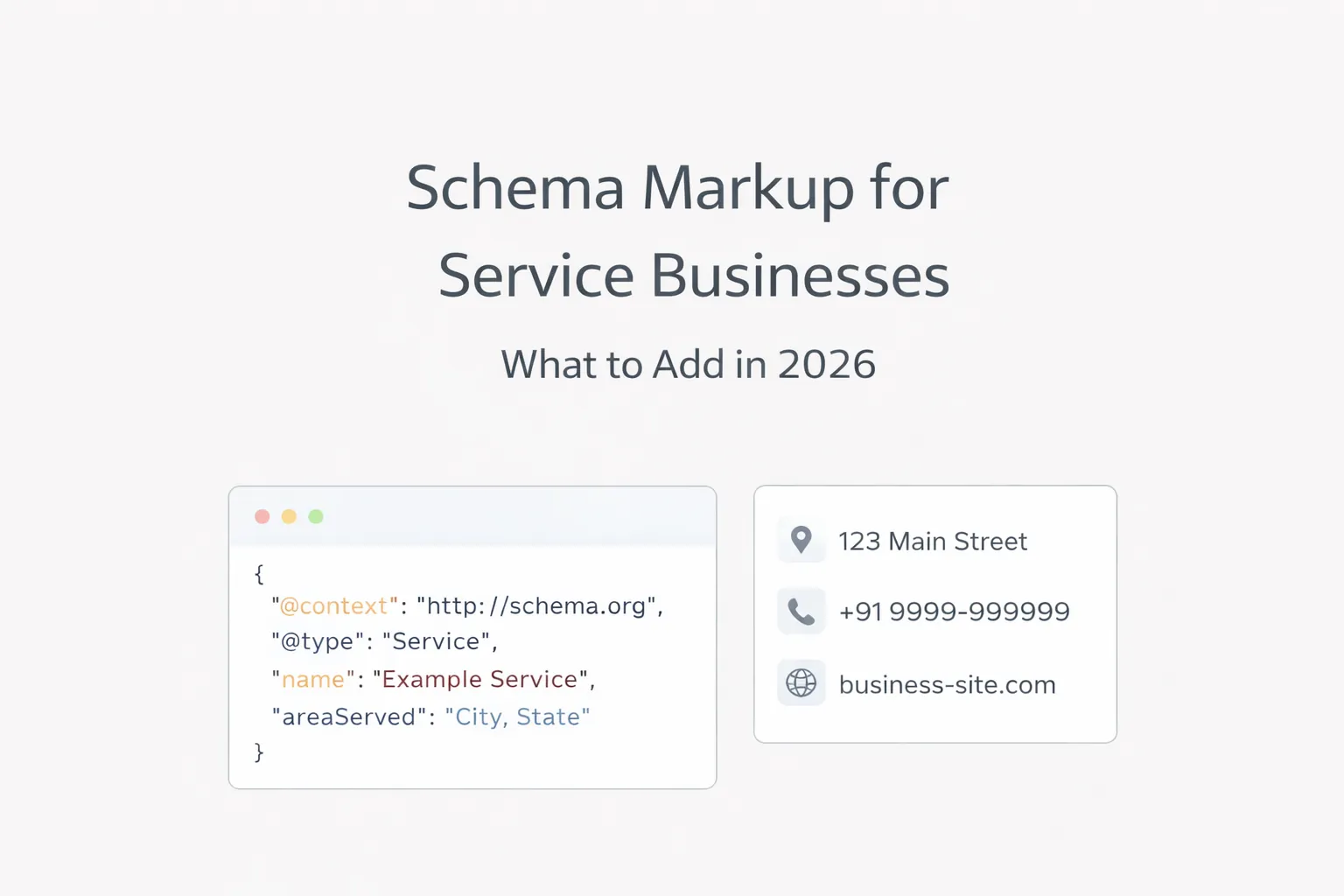
Schema markup should describe what a page visibly contains. It is not a hidden place to add extra cities, services, reviews or claims. A small set of accurate, connected JSON-LD entities is more useful than dozens of plugin-generated blocks that disagree about the business.
For a service website, the practical job is to establish identity, page type, hierarchy, authorship and genuine service or product context. Rich-result eligibility is separate: valid schema does not guarantee a special search appearance or ranking improvement.
| Page | Primary useful type | Supporting types |
|---|---|---|
| Homepage | Organization or appropriate LocalBusiness | WebSite |
| About | AboutPage | Organization/person references |
| Contact | ContactPage | Organization/local business reference |
| Service page | Service where accurately implemented | Breadcrumb, provider reference |
| Blog article | BlogPosting or Article | Author, Breadcrumb |
| Author profile | ProfilePage and Person | Organization relationship |
| Software product | SoftwareApplication when visible facts support it | Offer only when current and visible |
| Collection/archive | CollectionPage where useful | Breadcrumb |
Not every page needs every entity. Site-wide identity can be referenced by stable @id values instead of duplicating conflicting business data.
Use Organization for company identity when it accurately represents the entity. Consider LocalBusiness or a more specific subtype when the business genuinely operates as a local business and the visible page provides applicable details.
Potential fields include:
Google's current LocalBusiness structured data documentation lists supported properties and eligibility guidance. Do not invent a public office, opening hours or geo point to target a city.
A business serving a region should explain the service area visibly. Schema must not imply a branch in every city. If the company does not maintain public customer-facing premises, avoid copying addresses from virtual-office listings without a genuine business basis.
Use canonical, final-www IDs such as:
{
  "@type": "Organization",
  "@id": "https://www.example.com/#organization",
  "name": "Example Company",
  "url": "https://www.example.com/"
}
An article can then reference the same publisher ID. A service can reference the same provider. This reduces duplicate identity objects and keeps name, logo and URL consistent.
Do not use non-www and www identities together. Do not create a different Organization for every page.
Service can describe a real offering when:
Service schema does not replace a strong service page and may not produce a dedicated Google rich result. The page still needs useful deliverables, process, boundaries, proof, FAQs and contact path.
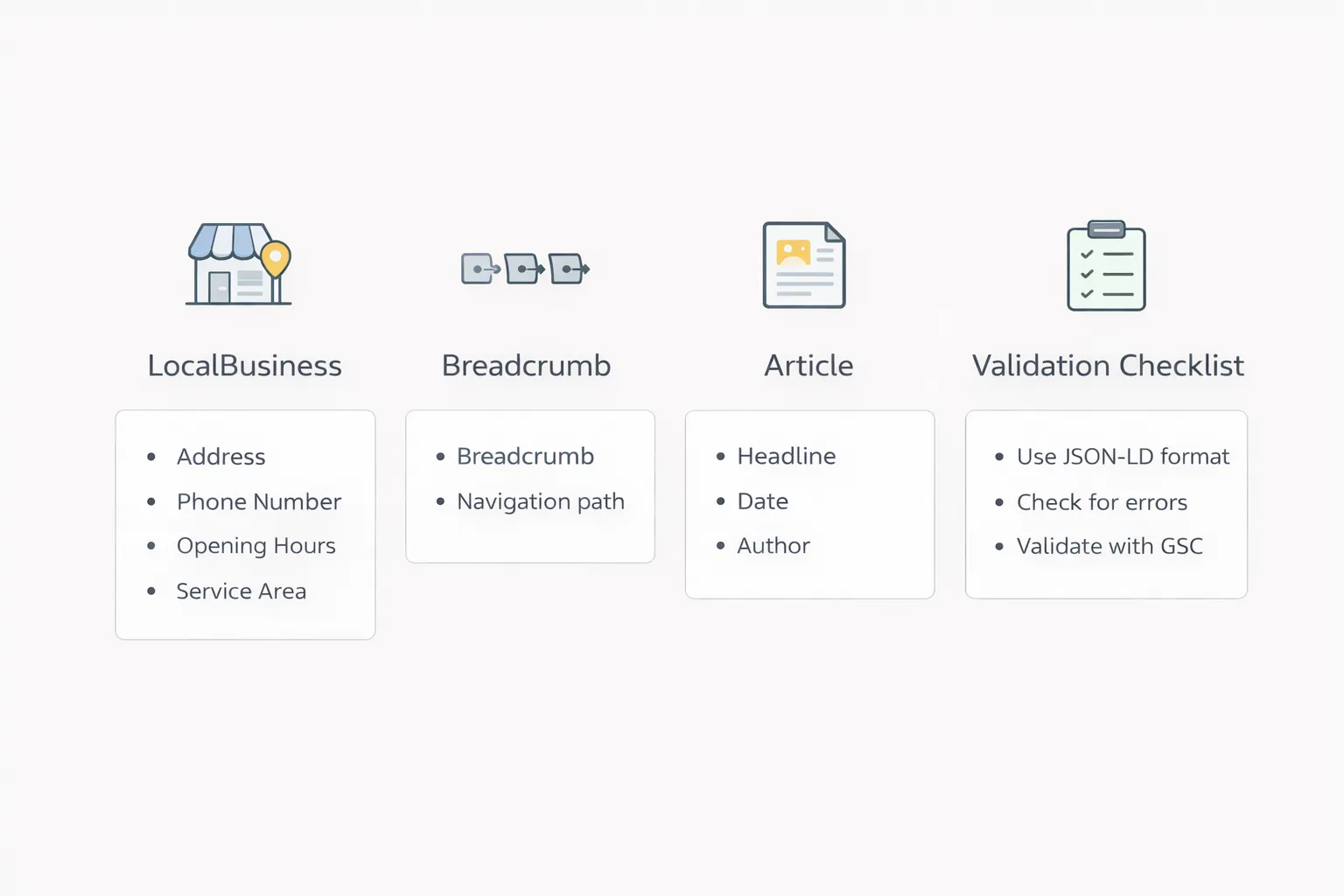
Breadcrumb markup should reflect a path users can understand, for example:
Use canonical URLs and visible or logically represented hierarchy. A breadcrumb is not a keyword list. Follow Google's current breadcrumb structured data documentation.
An article should include:
mainEntityOfPage.Link the author to a genuine author page where possible. Do not set dateModified every time the site builds. Update it when the content changes materially.
Google's Article structured data documentation explains supported properties and author guidance.
Review markup is a high-risk area because visible evidence, entity type and self-serving review rules matter. Do not:
Publish genuine reviews for users first. Structured data should be added only after current Google eligibility and source evidence are confirmed.
FAQ content can still help users, but schema and rich-result eligibility are separate. Google currently limits FAQ rich results mainly to well-known authoritative government and health sites. A normal service business should not add FAQ markup expecting a guaranteed expanded search result.
Keep visible FAQs specific and useful. If FAQ schema is implemented, every marked question and answer must be present on the page and follow current FAQ structured data guidance.
A genuine software page may use SoftwareApplication when the markup matches visible:
Do not mark a consulting service as software. Do not publish a roadmap feature as a current application capability.
Google recommends JSON-LD for many structured-data implementations because it can be maintained separately from visible markup while still matching it. In a Next.js application:
Avoid string concatenation for complex objects. Use structured data and a serializer.
Themes, SEO plugins, review widgets and page builders may each output schema. Audit generated HTML for:
Disable or configure the redundant source rather than layering another “correct” block over it.
Google's structured data general guidelines remain the policy baseline. A tool reporting “valid” does not prove eligibility or quality.
The current VASUYASHII static output includes connected Organization, WebSite, Person, BlogPosting, BreadcrumbList, Service, SoftwareApplication and page-specific schema where applicable. Its rendered audit parses all JSON-LD blocks and checks canonical/OG consistency, missing metadata, image alt text and internal links.
The VASUYASHII Business Suite uses software-specific markup tied to visible product positioning. Blog articles use final-www mainEntityOfPage, publication/modification dates and the responsible author profile. These are implementation examples, not a claim that schema itself creates rankings.
Treat structured data as part of the page contract. When a route, author format, business phone, product status or review block changes, identify the schema properties that depend on it. Add one rendered-page schema check to the release checklist so stale IDs and copied values do not survive a redesign.
For shared templates, test at least one service page, one article and one product page. Page-type sampling catches template errors without assuming that one valid URL proves every schema branch is correct.
Schema helps machines understand page entities and can support eligible search features. It does not guarantee rankings or rich results.
No. Keep business identity coherent and use page-specific schema only when it accurately describes visible content.
Service schema useful?It can clarify the offering, provider and area, but page quality and supported search features remain separate.
Only when the visible reviews, entity type and current Google rules support it. Do not mark up fabricated or ineligible self-serving ratings.
Yes, from trusted structured page data. Generated output still needs page-type tests and rendered validation.
Correct canonical URLs, organization identity, visible content and duplicate output before adding more schema types.
Inventory every rendered JSON-LD type and map it to a visible page purpose. Remove conflicts, then validate representative templates. For implementation support, review SEO website development or contact VASUYASHII.
Related Articles
April 22, 2026
Learn how to add safe JSON-LD schema to Next.js MDX blogs with matching canonicals, authors, dates, images, escaping, validation, and build checks.
Read article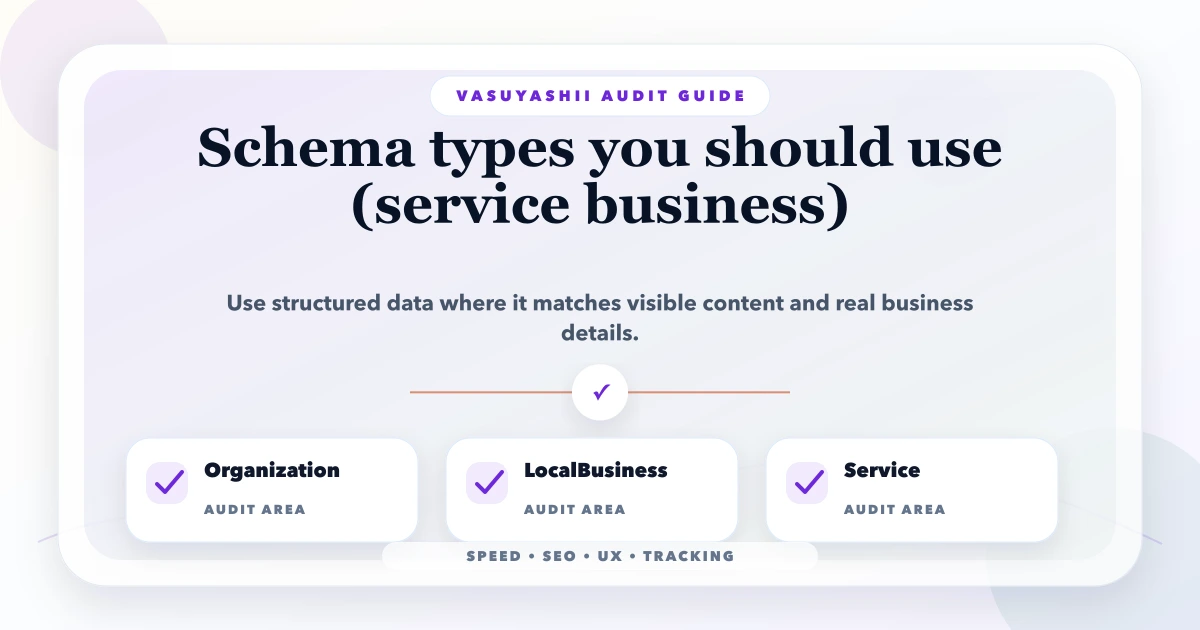
May 13, 2026
Choose accurate service-business schema: Organization, LocalBusiness, BreadcrumbList, Article and Service, with eligibility, testing, and audit rules.
Read article
May 11, 2026
Compare service pages and landing pages for SEO, paid campaigns, conversions, indexing, content reuse, tracking, canonicals, and a practical hybrid strategy.
Read article
May 10, 2026
Evaluate SEO proposals using deliverables, access control, baseline data, reporting, link transparency and red flags before approving payment or long contracts.
Read article