
May 21, 2026
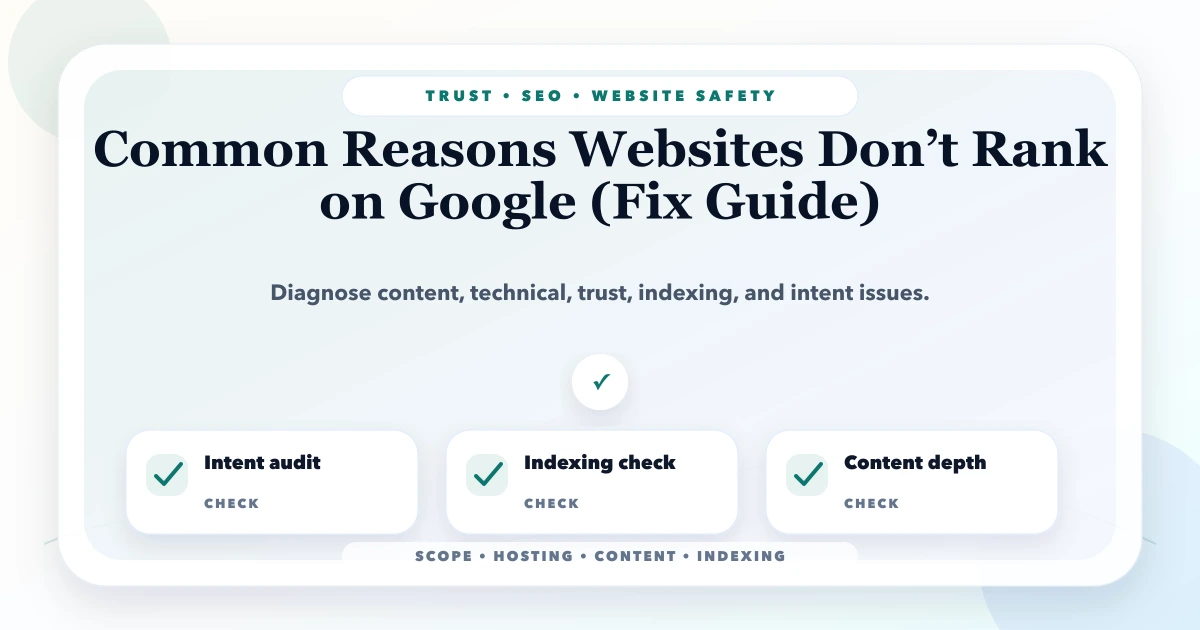
Why Websites Do Not Rank on Google: Fix Guide
Diagnose why a website does not rank on Google using index status, query intent, content quality, duplication, internal links, authority, and performance.
Read articlePublished Updated
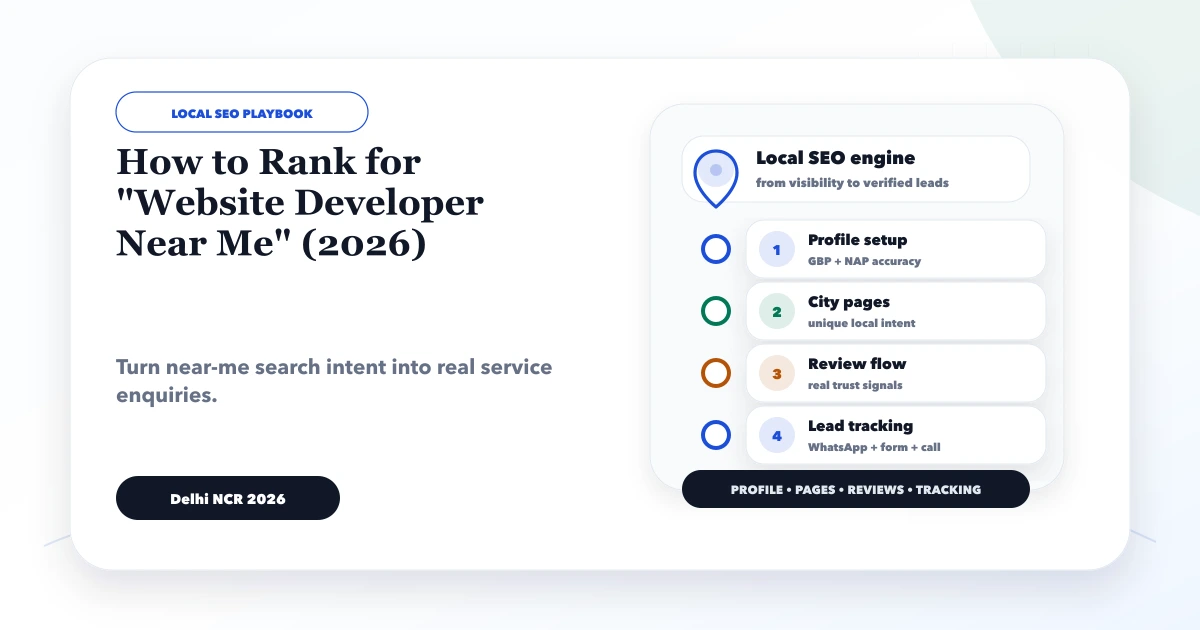
A safe near-me SEO framework for website developers using eligibility, relevance, verified business data, service evidence, reviews, links, and measurement.
Service-area note: VASUYASHII is based in Delhi NCR and supports businesses remotely across India. A city-focused guide describes service and planning context; it does not claim a physical office in every location mentioned.
Explore the parent topic: Website Development Delhi NCR Hub →You do not rank for “website developer near me” by repeating “near me” across every page. Search engines interpret the phrase relative to the searcher's location and evaluate whether a business is relevant, geographically eligible, and prominent enough to trust.
This guide separates eligibility, relevance, and prominence so a web development company can improve local visibility without fake addresses, review manipulation, copied city pages, or keyword stuffing.
First establish what the business can truthfully claim.
Publish the real customer-facing address, hours, phone, and visit policy. Keep details consistent across the website and owned profiles.
Describe genuine service areas and how work is delivered. Do not create a fake office or use a virtual address solely to influence rankings. Remote service does not make every city a physical location.
Target service and industry intent nationally or regionally, then use local content only where there is real operational relevance.
The objective is not to look local everywhere. It is to make genuine business eligibility unambiguous.
The website must explain what kind of development work is performed:
Create focused service pages with scope, buyer fit, process, exclusions, evidence, and a clear next step. A strong website development service hub is more useful than dozens of city pages with the same generic paragraph.
Prominence can come from:
There is no safe shortcut that replaces reputation. Comment spam and self-created low-quality sites may be ignored or create risk.
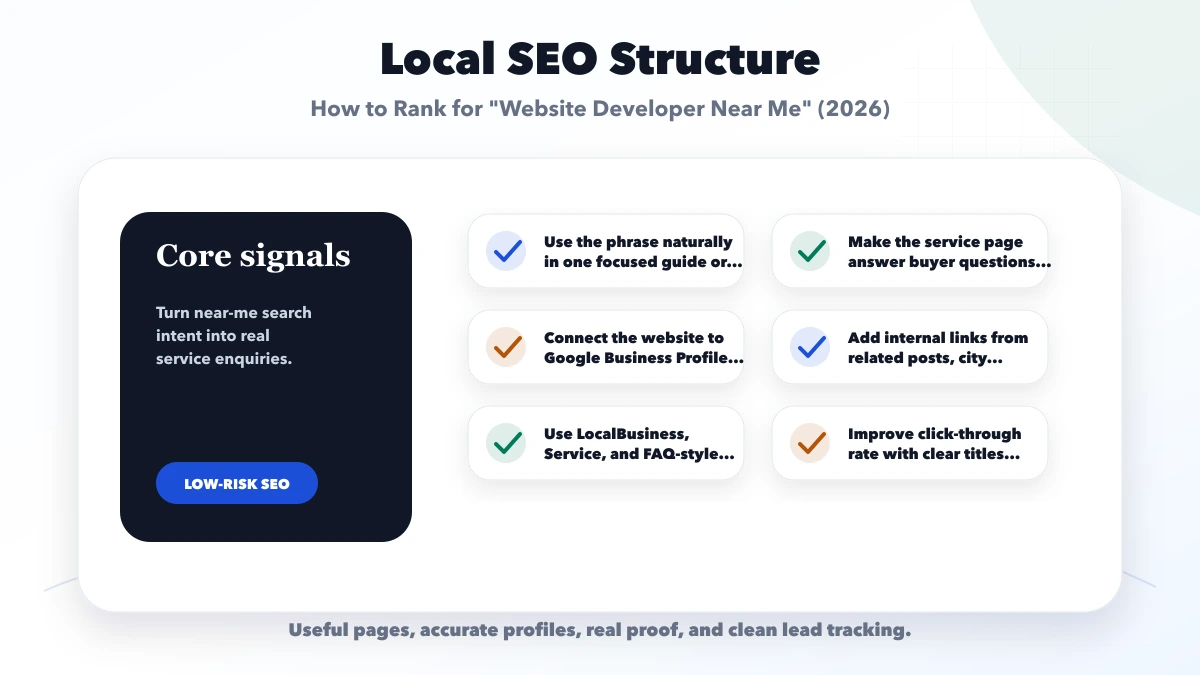
If the business is eligible:
Do not add keywords to the business name unless they are part of the real-world name. Do not create duplicate profiles for the same business.
The website should contain a clear organisation identity:
Structured data is a machine-readable description, not permission to invent information.
Create a location page only if you can answer:
If the only unique element is the city name, do not publish the page. Use a broader service-area section instead. Read how to create service city pages without spam before expanding.
Useful content can address:
Support articles should link to the relevant service and location parent. Parent pages should link back to the strongest guides. This creates an understandable hierarchy instead of a flat archive.
Ask real customers for honest feedback after a meaningful milestone. Make the process easy, but:
Review velocity should follow real business activity, not an artificial campaign spike.
Prioritise:
Maintain the same core details. Do not submit to hundreds of unrelated directories merely to create backlinks.
Use:
Anchor text should describe the destination naturally. Avoid repeating the exact target keyword in every link.
Create a query-to-page map before adding content. When two URLs target the same service, location, and buyer decision:
Do not solve duplication by pointing every weak page's canonical to a broad service page while leaving both in navigation and sitemap. The site architecture should communicate the same preferred destination consistently.
When pages have different decisions, make that distinction obvious in title, introduction, headings, proof, and calls to action. For example, a cost guide, migration guide, and local service page can coexist if each serves an independent need and links to the correct parent.
Use manual searches as a diagnostic sample, not a ranking report. Record the device, approximate location, query, date, map-pack visibility, organic landing page, and visible competitors. Repeat the same small query set periodically instead of checking random phrases every day.
Compare what the result page rewards: verified local profiles, service relevance, review depth, directories, strong brand pages, or useful guides. Then improve the weakest legitimate signal. Do not copy competitor spam or change the business name to imitate a ranking result.
Search Console and lead data remain more reliable for identifying which landing pages receive impressions and qualified actions. Manual checks add context; they do not replace trend measurement.
noindex;Technical cleanliness enables crawling but does not create local prominence by itself.
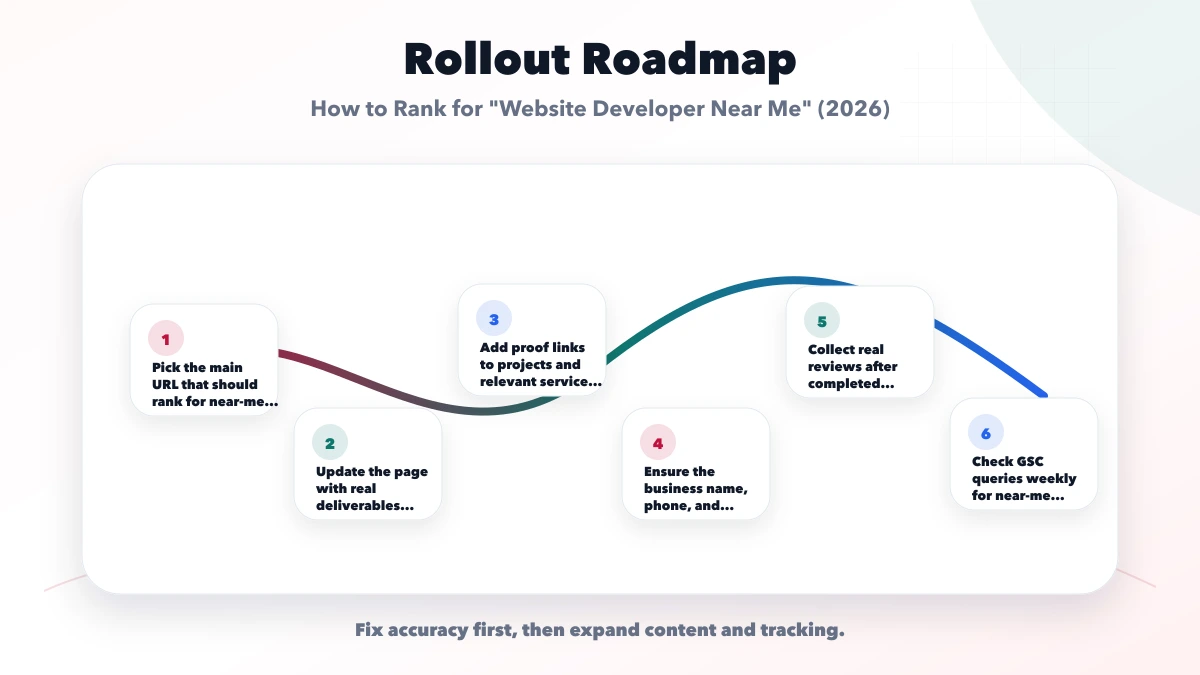
Audit business identity, profile eligibility, contact details, service model, and duplicate profiles.
Strengthen commercial service pages and connect them from navigation and homepage.
Improve the real service-area page, add approved evidence, and remove unsupported local claims.
Build a genuine review process and seek relevant partnerships, contributions, or directory listings.
Review queries, calls, forms, profile actions, and landing pages. Improve pages that receive qualified impressions.
Rankings may take longer than 12 weeks and are not guaranteed. Competition, proximity, reputation, and market demand affect outcomes.
Track:
Do not judge the campaign from one manual search. Personalisation and location can change results.
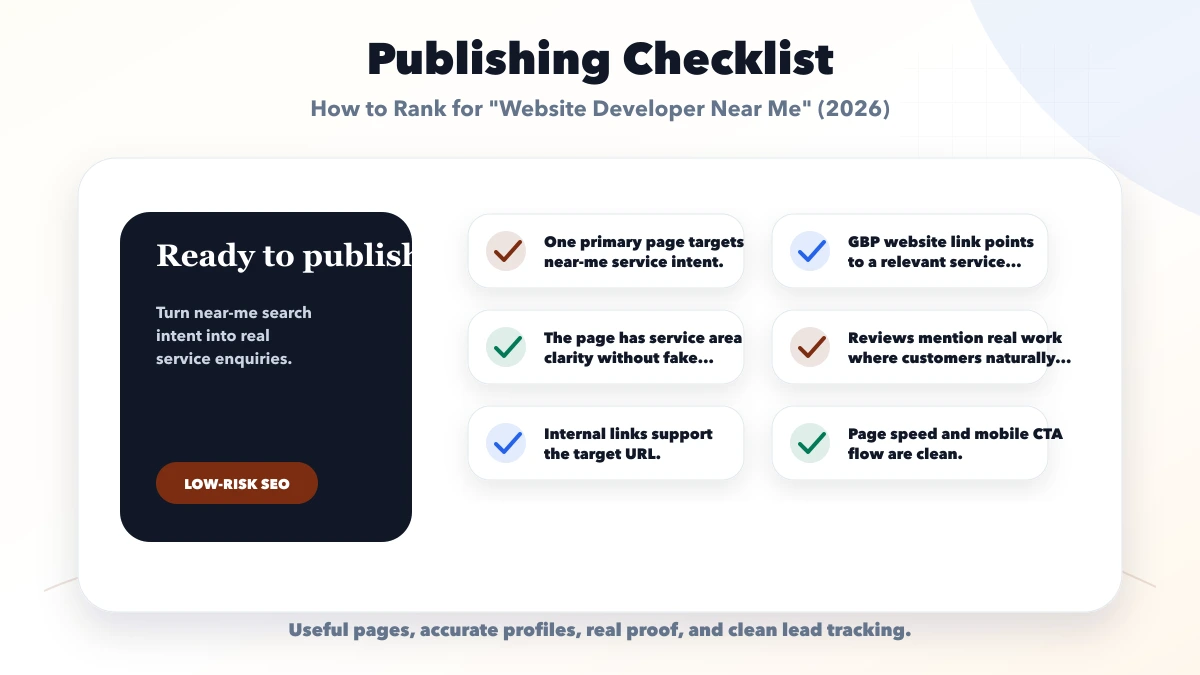
Current VASUYASHII service scope is documented through web applications, software development, and integrations, supported by accurate company context on about. Local claims should remain evidence-based. This guide does not claim a physical office in every target city or guaranteed near-me ranking.
It can when the page genuinely explains the topic, but it is not required for every commercial page. Search engines understand local intent from broader signals.
It may be eligible depending on platform rules and business operations. Use accurate service areas and follow current profile guidelines rather than displaying a fake address.
Only as many as can provide unique, maintained value. A strong regional hub can be better than many thin pages.
No. Genuine reviews support trust and prominence, but relevance, proximity, competition, and other signals also matter.
Accurate, relevant listings can reinforce business information and discovery. Mass submissions to weak directories are not a strategy.
There is no fixed timeline. Existing authority, competition, profile eligibility, website quality, reviews, and proximity all influence progress.
Audit eligibility before publishing more local pages. If you want a review of your service architecture and local claims, share the current site and genuine service areas through contact.
Related Articles
May 21, 2026
Diagnose why a website does not rank on Google using index status, query intent, content quality, duplication, internal links, authority, and performance.
Read article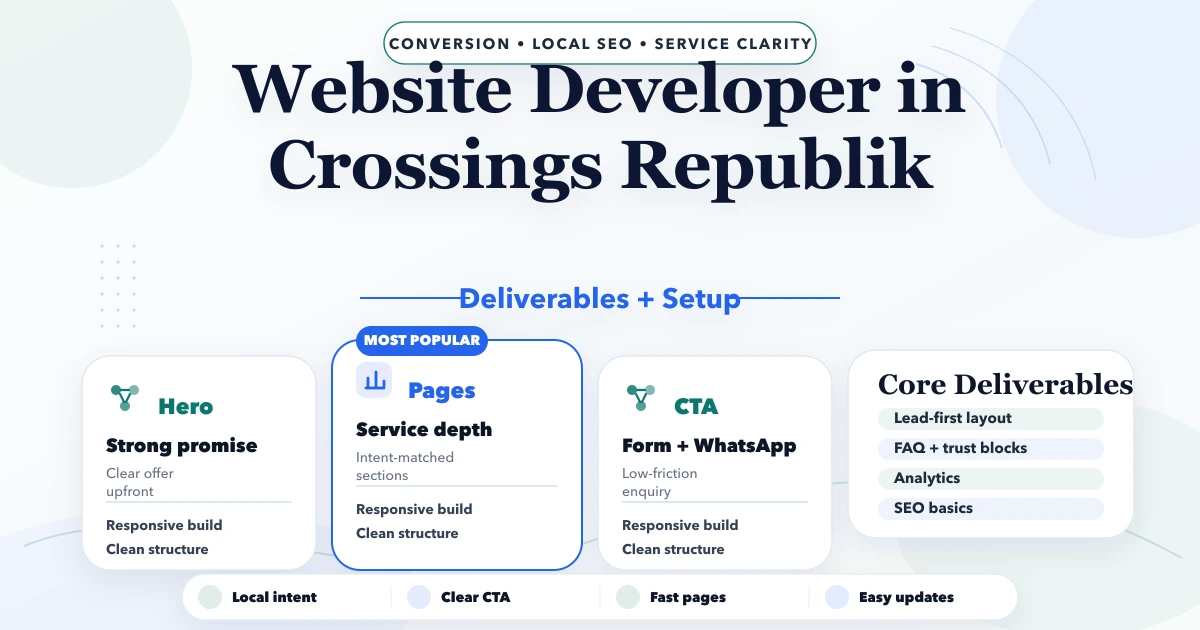
April 22, 2026
Plan a Crossings Republik local-service website with trust evidence, appointment requests, review governance, mobile UX and lead ownership.
Read article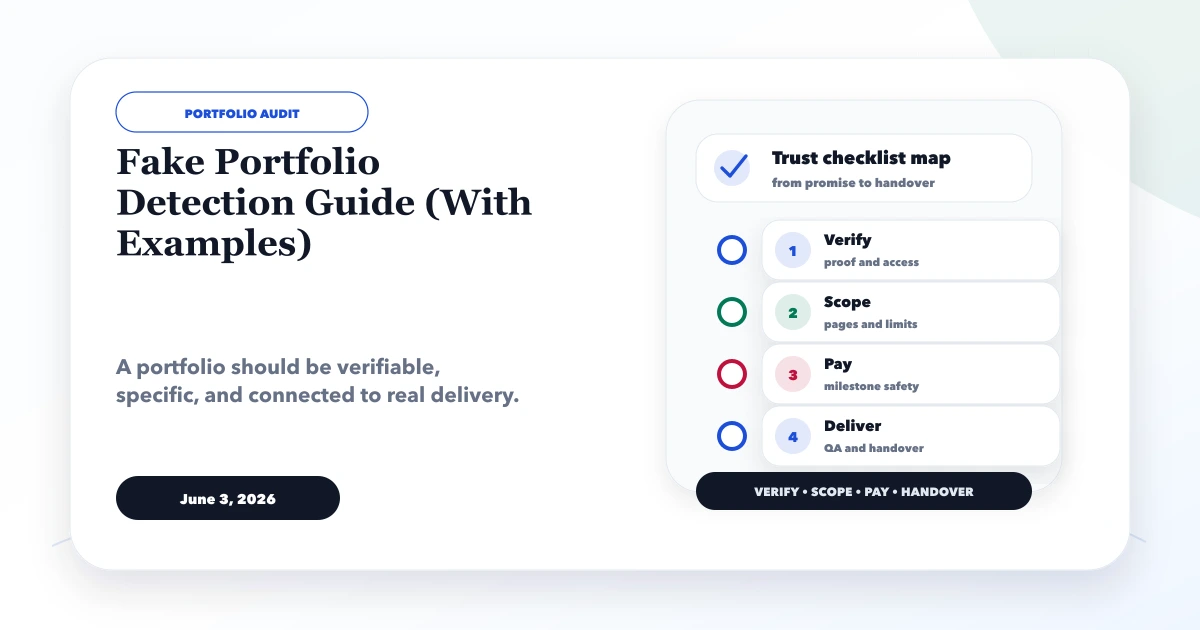
June 3, 2026
Detect a fake developer portfolio using live URL checks, role evidence, screenshot matching, copied case-study searches, references, and paid trial work.
Read article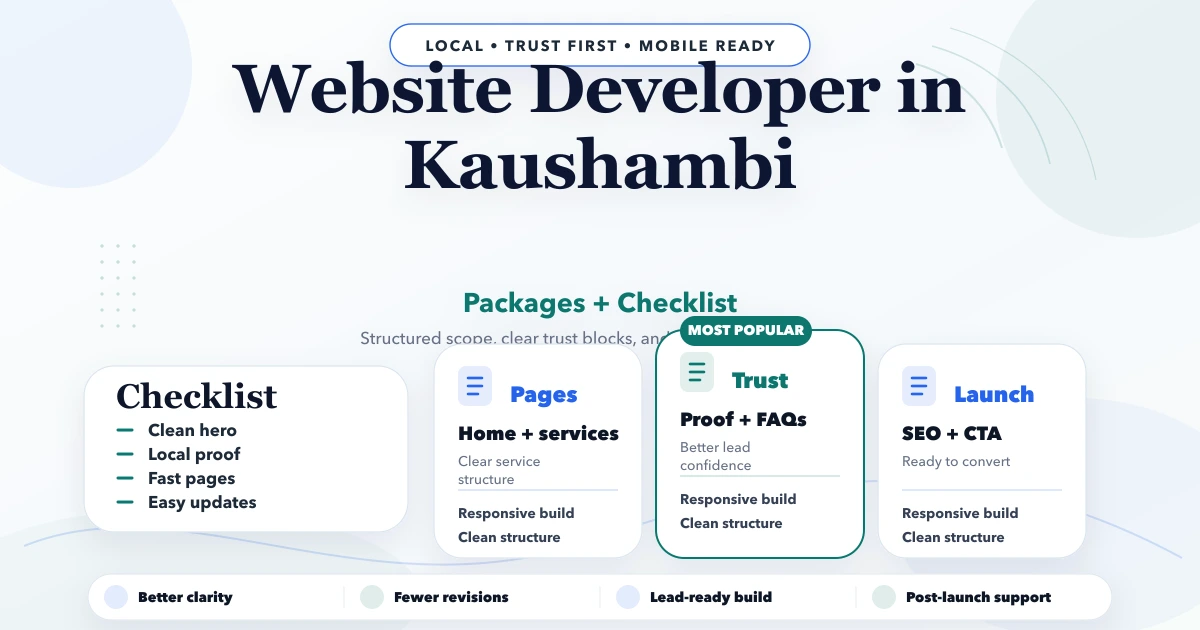
April 22, 2026
Plan a Kaushambi professional website with appointment requests, office directions, visitor routing, service qualification, accessibility, and analytics.
Read article