
May 21, 2026
How to Verify a Web Development Company
Verify a web development company through portfolio proof, domain ownership, contracts, payment milestones, source-code access, testing, and handover checks.
Read articlePublished Updated
Detect a fake developer portfolio using live URL checks, role evidence, screenshot matching, copied case-study searches, references, and paid trial work.
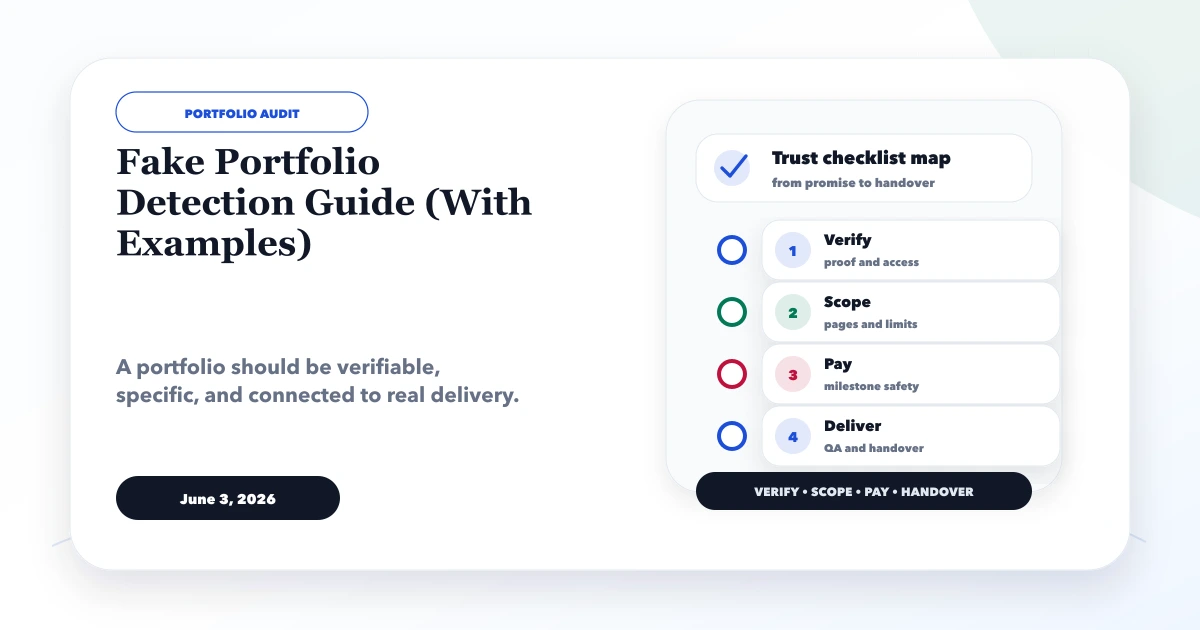
Do not treat a polished screenshot as proof that a developer designed, built or delivered the project. A reliable portfolio check connects the live or archived result with a clear role, dated delivery evidence, client context and a person or record that can verify the claim.
This guide gives business owners a fair verification process before hiring. It also explains why templates, changed live websites and confidential projects are not automatically evidence of fraud.
By Tushar C. (Founder, VASUYASHII). Reviewed by VASUYASHII Editorial for practical website development, vendor verification, project scope, payment safety, launch QA, security, maintenance, and technical SEO.
Fake portfolio detection starts with live URL checks, project context, ownership proof, matching design details, public client references, and realistic case notes. Screenshots alone are not enough.
A vendor may show beautiful website screenshots but fail to share live URLs, explain their role, or prove the project still exists. Sometimes the work is copied from templates, Dribbble shots, or another agency portfolio.
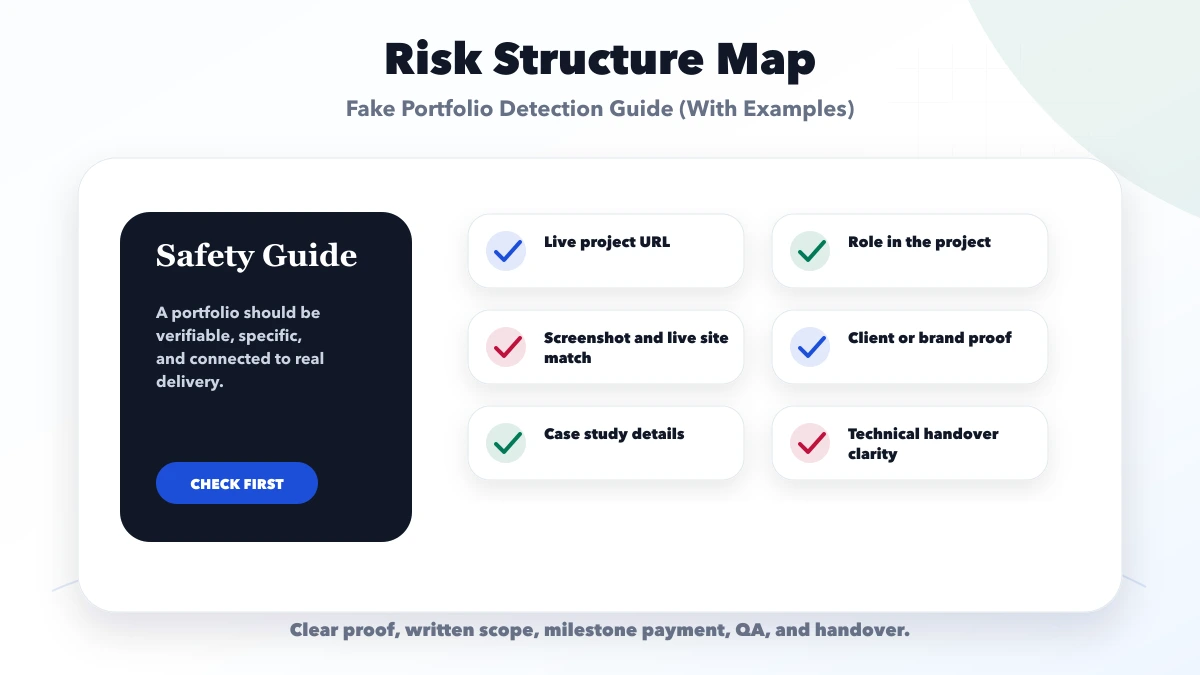
A portfolio entry is credible when several pieces agree: the claimed scope, live or archived result, provider's role, delivery date, client identity or an explained confidentiality boundary, and a person who can verify the engagement.
Do not expect every project to remain unchanged forever. Clients redesign websites, move hosting, replace vendors, or close businesses. The provider should still be able to explain what was delivered and show dated evidence without exposing confidential information.
| Claim | Evidence to request | What it proves |
|---|---|---|
| "We designed and built this site" | Proposal scope, dated handover, client confirmation | Role and delivery relationship |
| "We improved performance" | Before/after test with dates, URLs, and conditions | Measurement rather than an unsupported claim |
| "We built the dashboard" | Redacted workflow, demo, acceptance note | Product scope without revealing live data |
| "We handled SEO" | Search Console comparison with query/date boundaries | Access and measured work, not guaranteed rankings |
| "We created the brand" | Source-file history and approved assets | Authorship and handover |
One screenshot proves only that someone captured a screen. It does not prove authorship, scope, or client approval.
The goal is not forensic certainty. It is enough evidence to make the commercial risk reasonable.
Many legitimate websites use themes, UI libraries, design systems, stock images, or licensed templates. The issue is how the work is represented.
A provider can truthfully say, "We configured and customized a licensed template, prepared the content, integrated the form, and launched the site." It is misleading to claim a completely original design system or custom application when only text and colors were changed.
Ask which parts were custom, licensed, client-supplied, open source, or handled by another subcontractor. Honest attribution is more valuable than a dramatic "100% custom" claim.
| Area | What to verify | Safe action |
|---|---|---|
| Screenshot-only work | No live URL or client context | Treat as weak proof |
| Template-heavy work | Same layout across many clients | Ask what was customized |
| Real case study | Problem, scope, delivery, result | Use as stronger evidence |
Example 1: copied case study. An agency page uses the same results, screenshots, and testimonial as another provider. A reverse image or distinctive-sentence search finds the earlier source. Ask for the client's independent confirmation before accepting the claim.
Example 2: unrelated role. The provider lists a famous website but later explains that they uploaded two blog posts. That may be real work, but it does not demonstrate full website strategy, design, and development.
Example 3: demo presented as client work. A polished restaurant demo uses fictional data. Demos are valid evidence of design ability when clearly labelled. They become misleading when a fictional brand is described as a paying client with invented results.
Example 4: inaccessible private product. A provider cannot publicly show an internal tool because of confidentiality. This is not automatically suspicious. Ask for a controlled demo with dummy data, redacted screens, architecture explanation, or client-authorized reference.
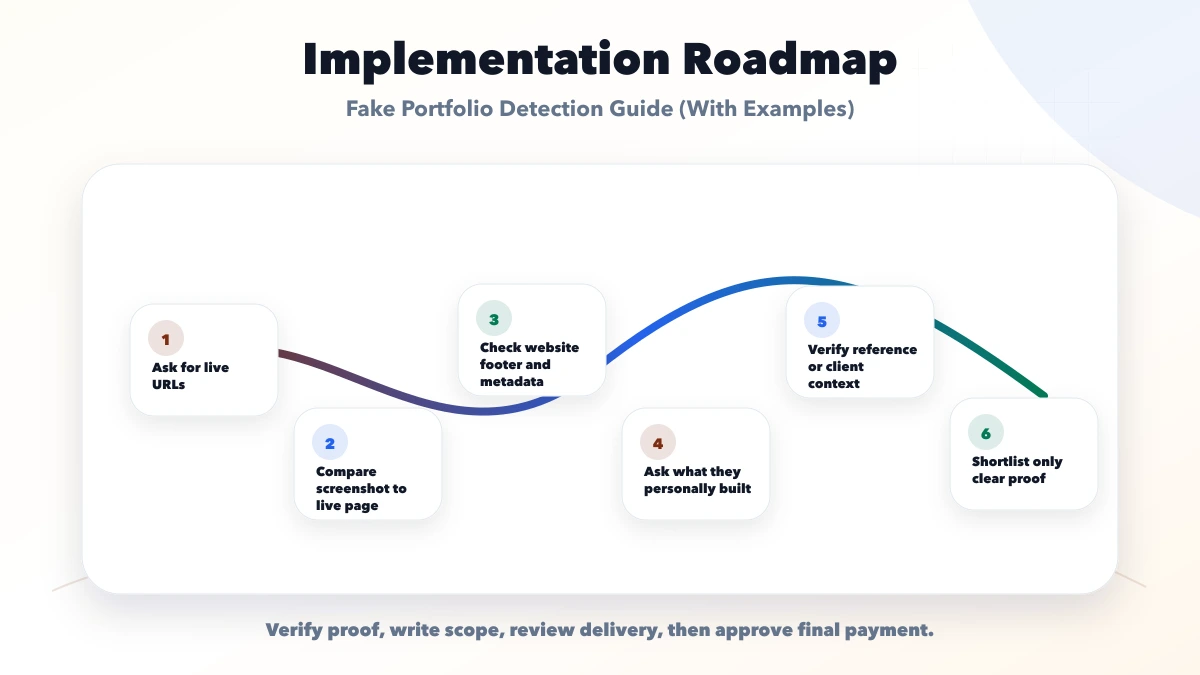
With permission, ask a past client:
Do not ask the client to disclose confidential commercial terms. Verify the identity of the person answering instead of relying on a forwarded chat screenshot.
A fair review process also protects legitimate providers. Do not publish accusations based on a design similarity alone. Ask for clarification, document discrepancies, and distinguish poor evidence from proven deception.
For a new engagement, write ownership, subcontracting, portfolio permission, confidentiality, acceptance, and handover terms into the agreement. Milestone payments tied to observable deliverables reduce reliance on reputation alone.
Score each shortlisted provider on the same evidence, not on presentation quality:
| Area | 0 points | 1 point | 2 points |
|---|---|---|---|
| Relevant live work | None | Indirect or old | Relevant and verifiable |
| Role clarity | Vague | Partial explanation | Named responsibilities |
| Delivery evidence | Screenshot only | Redacted document | Dated acceptance or reference |
| Handover | Not discussed | General promise | Written access and document list |
| Reference | Unverifiable | Limited context | Authorized independent confirmation |
The score is a comparison aid, not a fraud verdict. A new provider may have limited public work but strong technical evidence and a transparent paid discovery process. A large portfolio may still be weak when roles cannot be verified.
After scoring, write the unresolved questions and attach them to the proposal. If a provider answers clearly and updates the scope, the concern may be solved. If answers keep changing, reduce the milestone size or do not proceed.
For higher-value work, repeat verification immediately before contract signature. Ownership, team availability, reference contacts, and live URLs can change between the first sales call and project start.
Save the approved evidence with the contract record so future team members understand why the provider was selected and which claims were independently checked.
VASUYASHII's public demo websites are illustrative concepts and must not be presented as paying-client case studies. Where a live customer project, testimonial, or measured result is shown, its scope and evidence boundary should be explicit. VASUYASHII can help review technical scope and handover readiness, but cannot certify a third party's identity or legal ownership without independent evidence.
Useful links: web application services, software development, integrations, services, and contact.
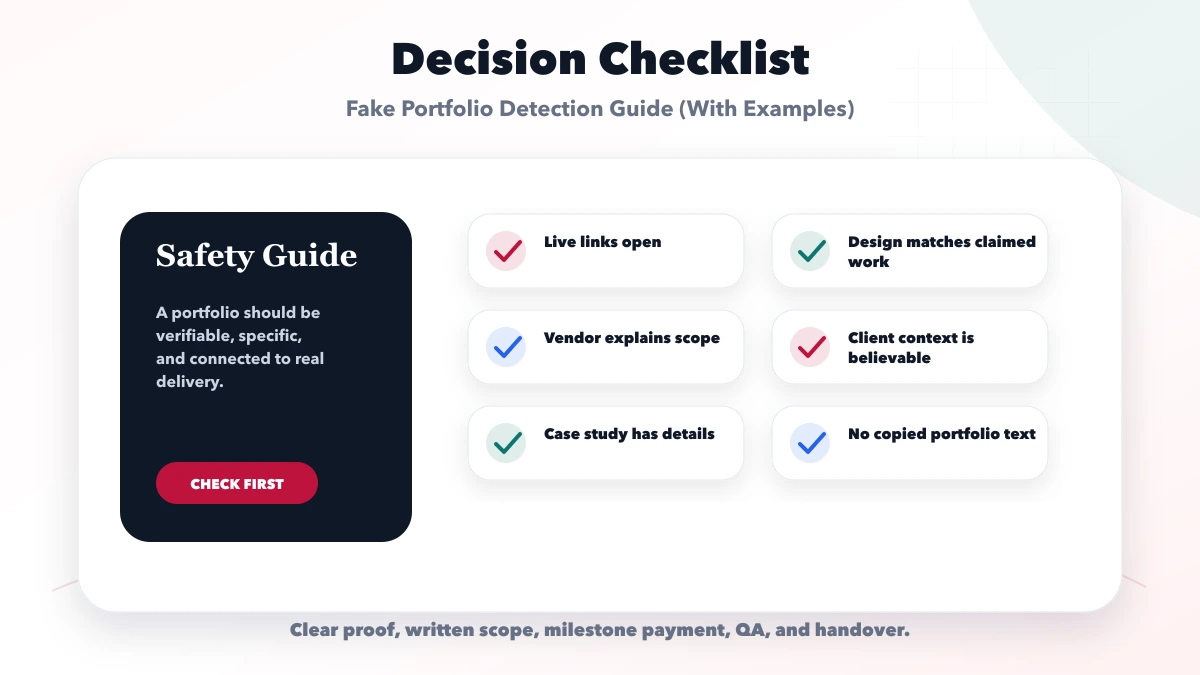
Ask for live URLs, role details, client context, screenshots that match the live site, and references for larger projects.
Templates are not always bad, but the vendor should be honest about what was customized and what is original.
Ask for archive proof, staging backup, client reference, or clear project context.
For larger projects, yes. A short reference check can prevent expensive mistakes.
Yes. We can help review portfolio proof, scope, and red flags before hiring.
Shortlist providers with verifiable relevant work, clear role boundaries and a reviewable first milestone. For larger projects, combine portfolio evidence with a written scope, ownership terms, milestone acceptance and an authorised reference check.
Related Articles
May 21, 2026
Verify a web development company through portfolio proof, domain ownership, contracts, payment milestones, source-code access, testing, and handover checks.
Read article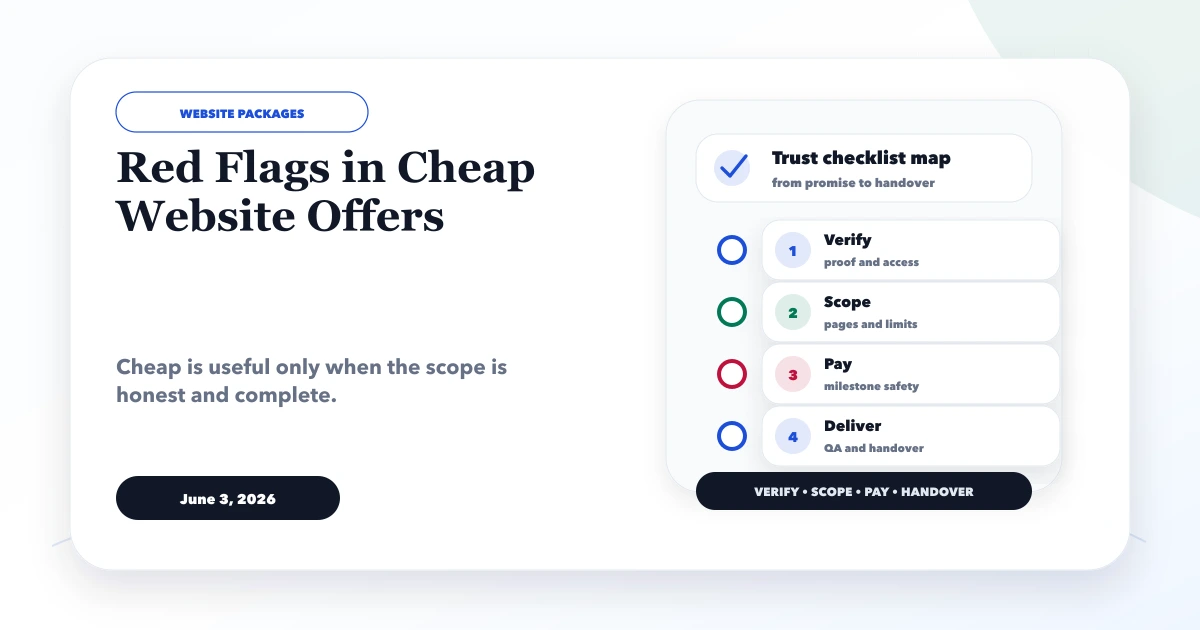
June 3, 2026
Spot risky cheap website offers before paying. Check scope, ownership, content, SEO, hosting, security, support, payment terms and proof with this checklist.
Read article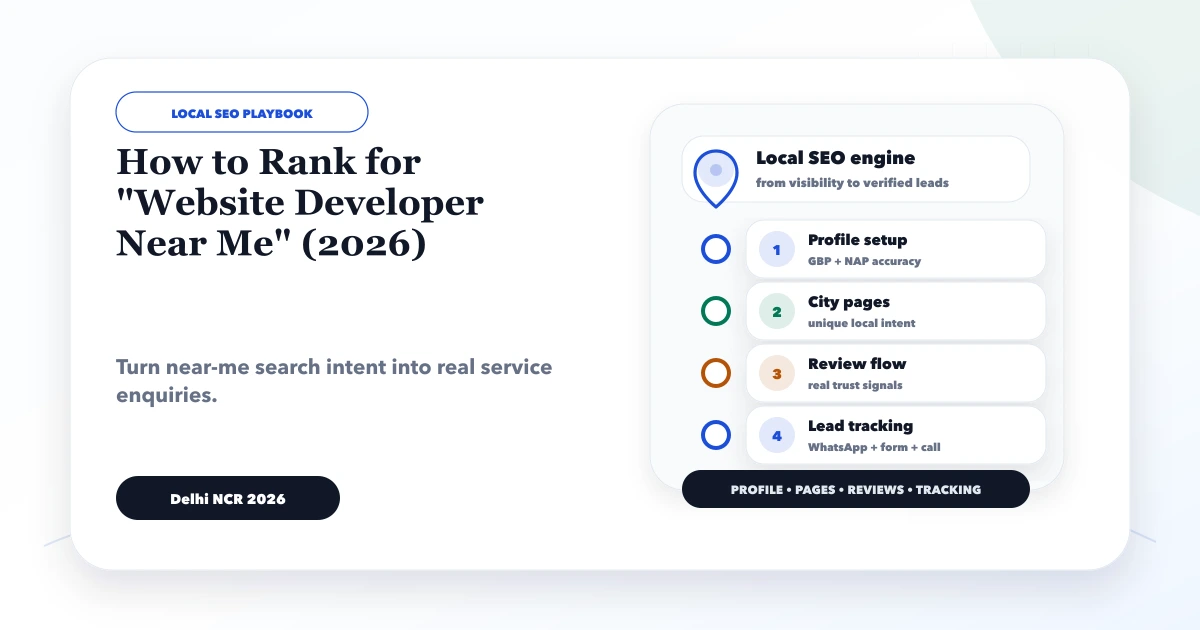
May 29, 2026
A safe near-me SEO framework for website developers using eligibility, relevance, verified business data, service evidence, reviews, links, and measurement.
Read article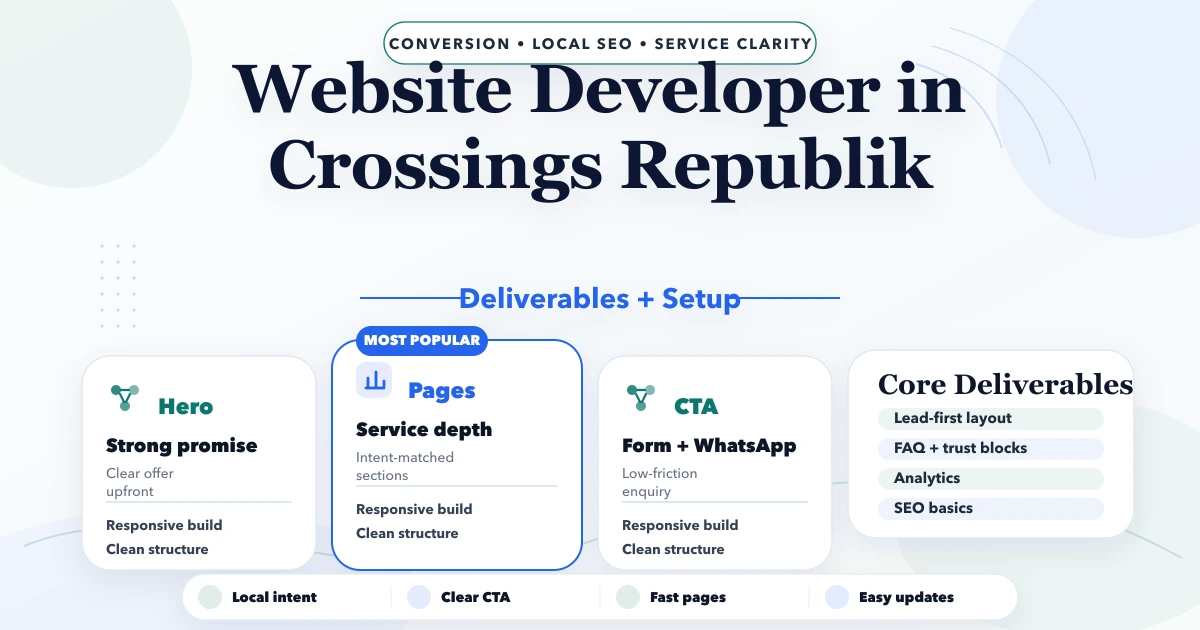
April 22, 2026
Plan a Crossings Republik local-service website with trust evidence, appointment requests, review governance, mobile UX and lead ownership.
Read article