
March 28, 2026
Local SEO for Delhi NCR Service Businesses
Local SEO for service businesses in Delhi NCR: step-by-step process, pricing, tools, and how to rank for city-based searches in 2026.
Read articlePublished Updated
Compare local SEO and blogging for service businesses using search intent, GBP eligibility, service pages, local proof, content clusters, and lead tracking.
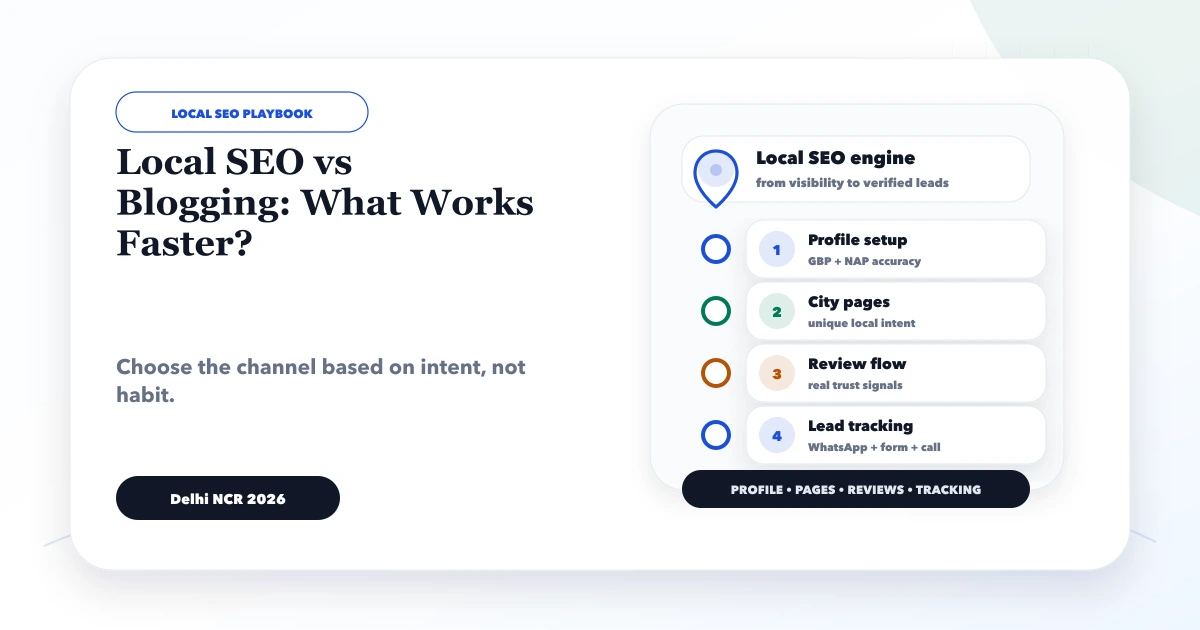
Local SEO and blogging solve different discovery problems. Local SEO helps a nearby buyer evaluate a real business that serves their area. Blogging answers questions before that buyer is ready to contact a provider. Neither channel is automatically faster; the result depends on search intent, business eligibility, local evidence, competition, and the strength of the destination page.
For an Indian service company, the safest strategy is usually to establish business identity and core service pages first, then publish a focused article cluster that supports those pages. Publishing daily blogs while the phone, service area, reviews, and offer remain unclear creates traffic without trust.
Prioritise local SEO when people search for a nearby provider and your business can accurately represent its location or service area. Prioritise blogging when buyers need education, comparison, pricing context, troubleshooting, or implementation guidance before choosing a service.
Use both when the core foundation is ready:
Local SEO is broader than putting a city name in a title. It connects:
Google explains that local results are mainly influenced by relevance, distance, and prominence. Complete business information can improve relevance, but there is no legitimate way to pay Google for better organic local ranking. Review the current Google Business Profile local ranking guidance before changing a profile.
Blogging works best for questions that need explanation. Examples for a software or website company include:
A blog should not be a disguised city doorway page. It should satisfy a distinct informational or commercial-investigation intent and guide the reader toward a related service, product, template, or contact action.
| Starting condition | Likely first priority | Reason |
|---|---|---|
| Verified local business, weak profile, strong service | Local SEO | Existing local demand can evaluate the business more easily |
| No eligible profile yet, strong specialist expertise | Service pages + blogging | Build web relevance and useful demand capture first |
| New website with no clear offer | Core pages | Neither channel works well without a clear destination |
| Strong local visibility, few informational queries | Blogging | Extend reach into earlier research stages |
| Many blogs, no calls or qualified leads | Local/service conversion audit | More publishing may repeat the same weakness |
| Multiple genuinely served locations | Local architecture | Build evidence-backed pages and profile/location rules |
“Faster” should mean qualified enquiries or meaningful search visibility, not a post being crawled in two days.
Use one approved business name, phone, website, email, and address/service-area representation. Document who owns the domain, profile, analytics, and Search Console accounts.
Create pages that explain audience, problem, scope, process, proof, limitations, FAQs, and next step. VASUYASHII uses parent hubs such as website development in Delhi NCR, web application development, and custom software, CRM and ERP.
Provide a working form, phone/WhatsApp path, legal pages, real product or demo evidence, and a clear response expectation.
Add genuine service-area information, business hours, local proof, reviews, and profile links. Avoid addresses, offices, or customer counts that do not exist.
Publish articles around the service's buyer journey. Each article should support one parent page rather than compete with it.
Do not create a fake storefront, virtual-office listing, or borrowed address only to enter Maps. Check current eligibility and representation policies. A service-area business may hide its address when it travels to customers, but it still needs to meet the platform's rules.
If the business cannot verify a profile yet, continue improving the website, content, real business evidence, and customer acquisition. Profile absence does not justify inaccurate information.
Current VASUYASHII website work uses final-www service hubs, blog clusters, Search Console evidence, conversion events, product pages, and demos. A Business Profile should be added only when the business can meet and maintain the eligibility and representation requirements; this guide does not claim an existing verified profile.
These page types should remain distinct:
| Page type | Primary job | Unique content needed |
|---|---|---|
| Service page | Explain and sell one capability | Scope, process, proof, fit, FAQs |
| Location/service-area page | Explain delivery in a genuine market | Local operations, examples, travel/support limits, contact context |
| Blog | Answer a specific question | Decision framework, steps, examples, sources |
| Product page | Help evaluate a product | Features, screenshots, boundaries, pricing/trial |
Do not publish “best developer in 50 neighbourhoods” pages with the same text. Consolidate the parent topic, then create a local page only when the service, proof, or operating detail is meaningfully different.
This is a sequencing framework, not a ranking promise. Competitive markets can take longer.
Use four content groups:
Map each article to a parent hub and a reader action. The local SEO hub can parent local-search guidance, while technical development articles should link to the service they support.
Measure local and blog traffic separately but use the same qualification standard:
Do not treat a WhatsApp click as a closed lead. Use events for intent and CRM status for outcome. Compare blog-assisted leads with direct service-page leads over a useful period.
Score each opportunity:
| Factor | Question |
|---|---|
| Intent | Is the search local-provider, service, or informational? |
| Evidence | Can we prove the location/service statement? |
| Demand | Do GSC, sales calls, or profile data show interest? |
| Destination | Is there a strong page to receive the visitor? |
| Competition | Can the page add information missing from current results? |
| Measurement | Can we connect visibility to qualified leads? |
Choose the highest-value gap, not the easiest article to generate.
The site repeats a weak offer across many URLs. Build the parent service first.
Frequency cannot compensate for thin, overlapping content. Refresh existing opportunities and link them into a cluster.
This creates policy, trust, and account-suspension risk. Use only genuine business evidence.
Search position is useful, but the business also needs calls, forms, qualification, and revenue-stage evidence.
A local provider query and a national educational query need different pages and proof.
Search results fluctuate. Evaluate trends and business outcomes rather than daily positions.
It can be when a verified, relevant local business already has demand and good service pages. Blogging may create earlier visibility for specific low-competition questions.
Yes. Accurate profile information, strong service pages, reviews, citations, links, and local relevance can work without frequent blogging.
Yes, when articles answer real customer questions, earn useful links, and support service/local pages without duplicating them.
Only as many as the business can support with genuine service coverage and unique useful information. There is no safe quota.
No. Add location only when it changes the answer or reflects the intended audience naturally.
Confirm eligibility, collect accurate business information, and create it through the owner account when permitted. Meanwhile strengthen the website and real business evidence.
Use the Google Business Profile setup guide and non-spam city-page guide before expanding local URLs. For a focused audit, review local SEO services or contact VASUYASHII.
Related Articles
March 28, 2026
Local SEO for service businesses in Delhi NCR: step-by-step process, pricing, tools, and how to rank for city-based searches in 2026.
Read article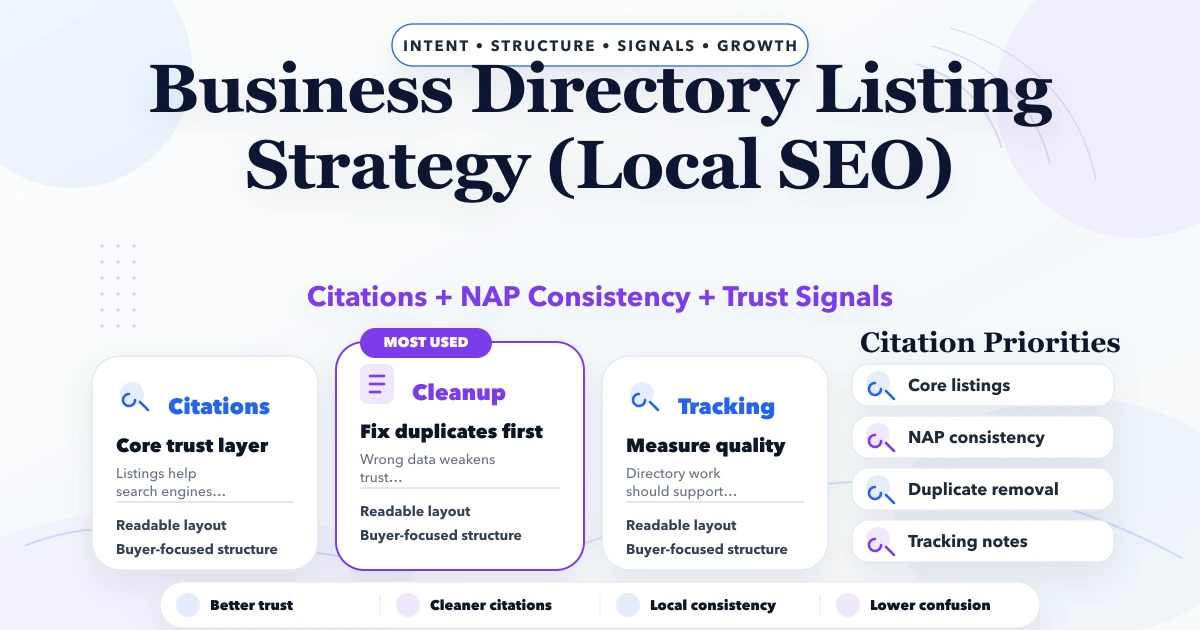
May 2, 2026
Business directory listing strategy for local SEO: citations, NAP consistency, duplicate cleanup, tracking, and rollout priorities for 2026.
Read article
May 12, 2026
Avoid scaled content, weak city pages, canonical noise, sitemap clutter, spam links, poor intent matching, and measurement gaps with this practical SEO review.
Read article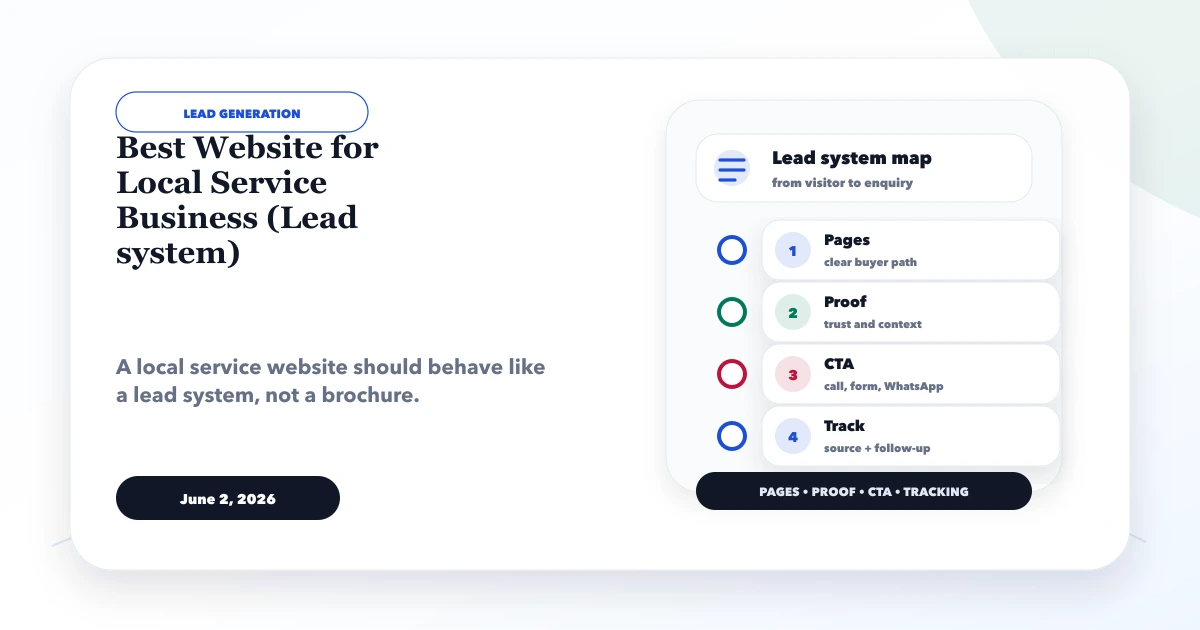
June 2, 2026
Plan a local service business website with focused service pages, genuine area proof, calls, WhatsApp, forms, qualification, tracking, and follow-up ownership.
Read article