
May 10, 2026
SEO Audit Checklist for Service Websites
Audit a service website across indexing, intent, content, internal links, local signals, performance, schema, lead tracking, and evidence-based priorities.
Read articlePublished Updated
Evaluate SEO proposals using deliverables, access control, baseline data, reporting, link transparency and red flags before approving payment or long contracts.
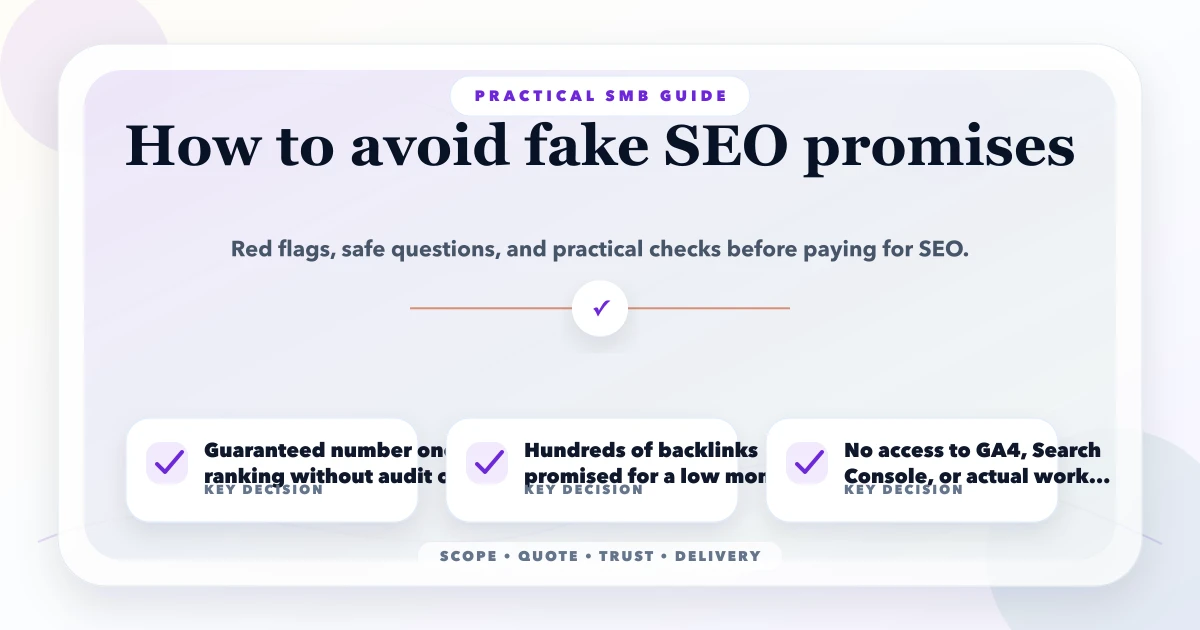
Fake SEO promises sell certainty where no honest provider can control the final outcome.
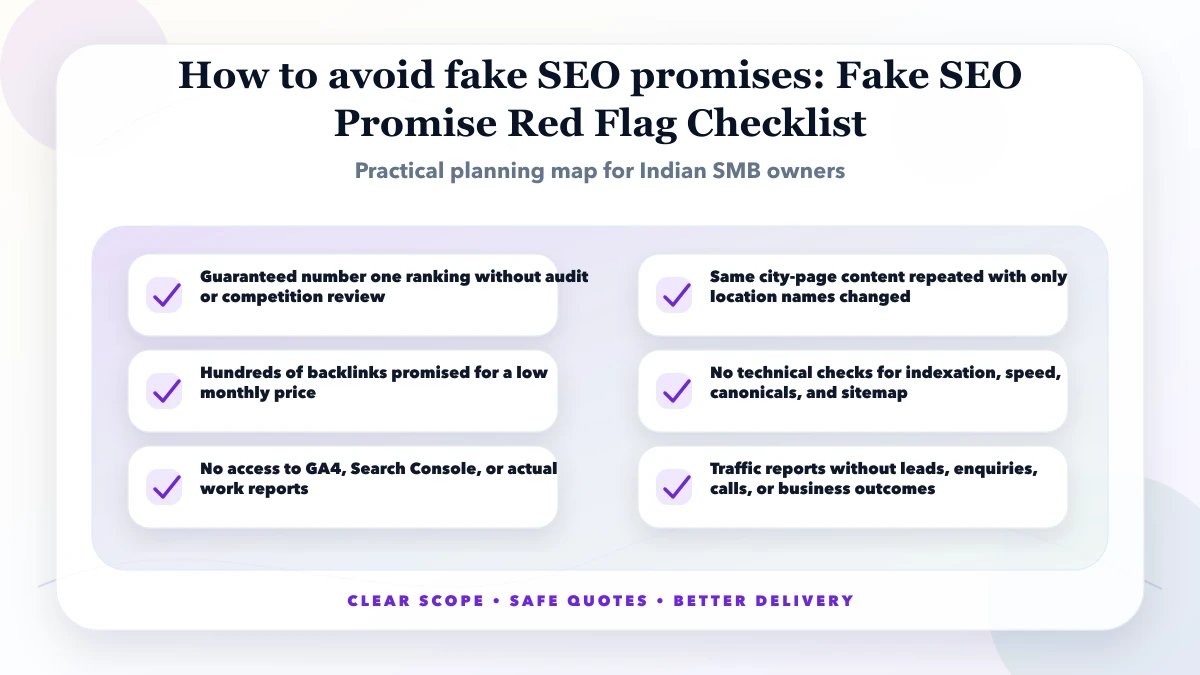
Examples include “guaranteed number-one ranking,” “instant indexing,” “secret Google partnership,” “thousands of authority backlinks,” or “traffic growth in seven days.” A proposal may look detailed while hiding the actual pages, queries, changes, links and business outcomes it will work on.
This guide gives Indian business owners a due-diligence process for reviewing an SEO proposal before granting access or approving a long contract.
Do not buy a ranking guarantee. Buy a transparent scope.
A credible SEO proposal should state:
Google's current guidance for hiring an SEO explicitly warns that no one can guarantee a number-one ranking and advises caution when a provider is secretive about its work.
A promise describes an outcome the agency cannot fully control. A deliverable describes work that can be inspected.
| Weak promise | Inspectable deliverable |
|---|---|
| Rank first for every keyword | Query and page baseline with prioritized opportunities |
| Get indexed instantly | Sitemap, crawlability, canonical and page-quality checks |
| Build 5,000 backlinks | Approved placement plan with source, context and final URLs |
| Double traffic | Forecast assumptions plus page and query targets |
| Fix all technical SEO | Named audit scope, findings and acceptance checks |
| Improve conversions | Event plan, lead baseline and page experiments |
A provider may set performance goals, but those goals should be framed as targets with assumptions, not guarantees.
Search results depend on competition, user intent, page quality, technical accessibility, location, link context and changing systems. The provider controls its work, not Google's final ranking.
Ask:
If the answer remains “trust our secret method,” do not approve it.
Submitting a sitemap or requesting indexing helps discovery; it does not guarantee selection for the index.
An indexing scope should review:
noindex;Use the technical SEO audit checklist to separate submission work from page-quality work.
A number alone says nothing about relevance, placement, ownership or risk.
Before approval, ask for:
Do not accept automated comments, profile spam, private networks or mass directories as “authority building.” The safe local backlink guide explains relationship-led alternatives.
Traffic can grow through irrelevant queries, bots, international audiences or informational topics that never support the business.
A useful report should separate:
The provider should not claim revenue from a click without a trustworthy lead or CRM connection.
Google warns businesses to be cautious when an SEO will not explain its work. The owner remains responsible for deceptive changes made on the site.
Require a change log:
| Date | URL/account | Change | Reason | Approved by | Validation |
|---|---|---|---|---|---|
| 25 Jul | Service page | Rewrote title and intro | Intent mismatch | Owner | Rendered metadata checked |
For code changes, keep source control and review. For Business Profile changes, record old and new values.
An agency may publish dozens of articles without deciding which page owns each query.
Before a content batch, require:
Pause new city or “near me” pages when existing location pages are repeated. Google's spam policies include doorway and scaled-content practices designed to manipulate visibility.
The business should have direct access to:
Screenshots alone are not enough. They can omit filters, date ranges and failed actions.
Before the first month, record:
Do not compare one seven-day period with a seasonal high and call the difference growth.
A sensible first phase may contain:
The first month should create a reliable baseline and complete inspectable improvements. It should not promise mature authority or competitive rankings immediately.
SEO pricing should reflect the work, site size and competition. Avoid evaluating vendors only by monthly fee.
A transparent quote may separate:
Do not prepay a long non-cancellable contract before ownership, deliverables and exit terms are clear.
Questions for the agreement:
SEO changes are not a single queue with one guaranteed completion date.
Different work has different timelines:
The SEO Starter Guide states there are no secrets that automatically rank a site first. Use staged reviews rather than fixed ranking promises.
Use owner-controlled accounts and add the provider as a user or manager.
The owner should retain:
Remove access after the contract ends. Rotate shared credentials and avoid sending passwords in chat.
VASUYASHII can improve technical SEO, website architecture, content quality, internal linking and measurement. It does not guarantee ranking position, index acceptance, traffic volume or lead revenue.
SEO recommendations may require owner evidence, developer changes, external platform access and Google recrawl. Those dependencies should remain visible in the scope.
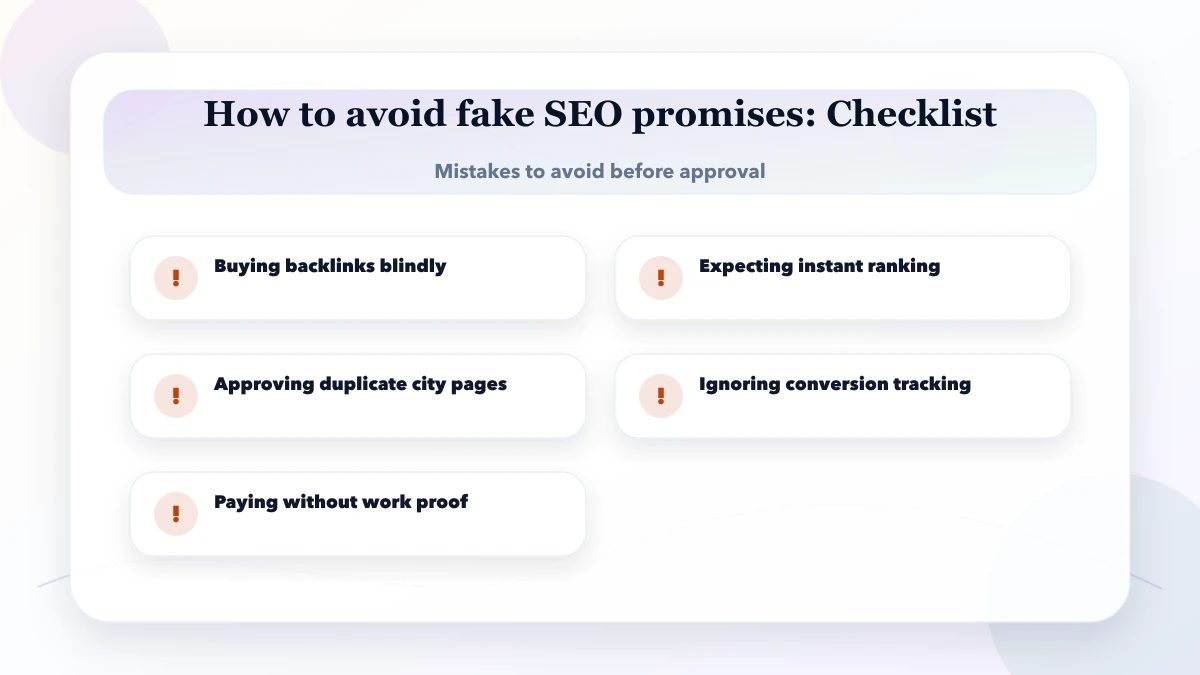
No credible provider controls Google's final ranking. A provider can commit to transparent work, deadlines and validation.
Yes, when it is a target with baseline, assumptions, dependencies and review timing rather than a guaranteed result.
The issue depends on purpose, disclosure and search manipulation. Require full transparency and do not buy placements presented as secret ranking shortcuts.
Use owner access, change logs, final URLs, source diffs, Search Console data and analytics events. Do not rely only on a monthly PDF.
Baseline measurement, technical/content inventory, priority selection and a focused implementation batch are reasonable. Guaranteed rankings are not.
Provide the minimum role needed, use named accounts, keep owner control and remove access at the end.
Normalize deliverables, page counts, technical scope, content depth, link methods, reporting, ownership and exclusions before comparing price.
Ask the provider to rewrite every promise as a deliverable, dependency and validation method. Then use the critical SEO mistakes guide and contact VASUYASHII for a website-focused second opinion.
Related Articles
May 10, 2026
Audit a service website across indexing, intent, content, internal links, local signals, performance, schema, lead tracking, and evidence-based priorities.
Read article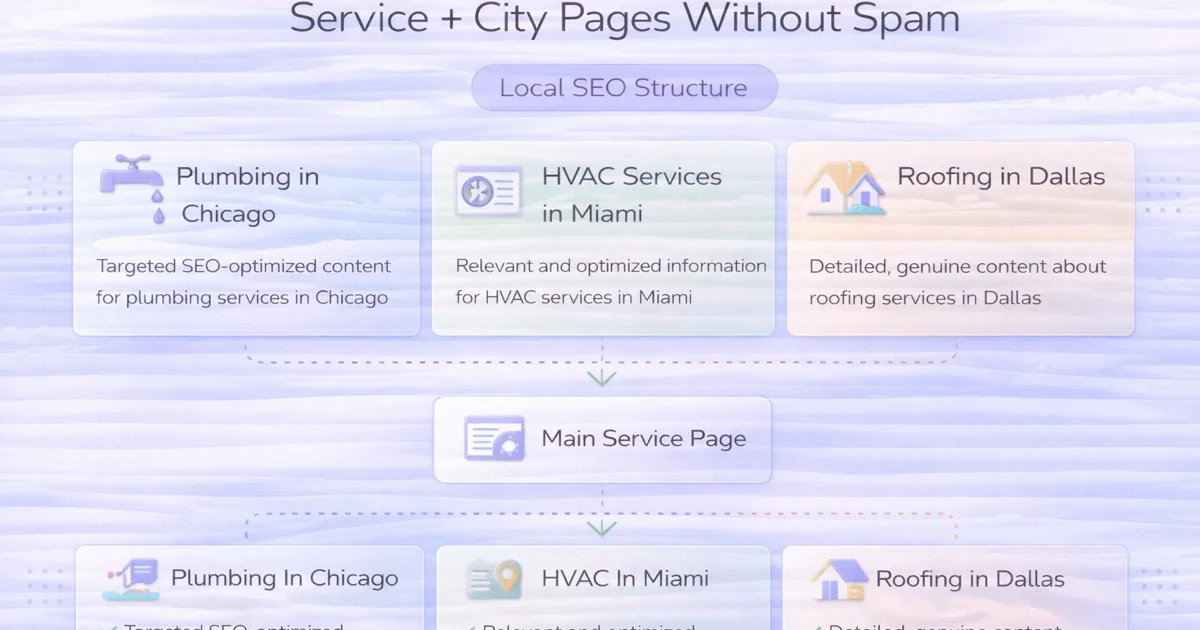
April 4, 2026
How to create service plus city pages without spam: avoid doorway abuse, build real local value, and structure pages safely in 2026.
Read article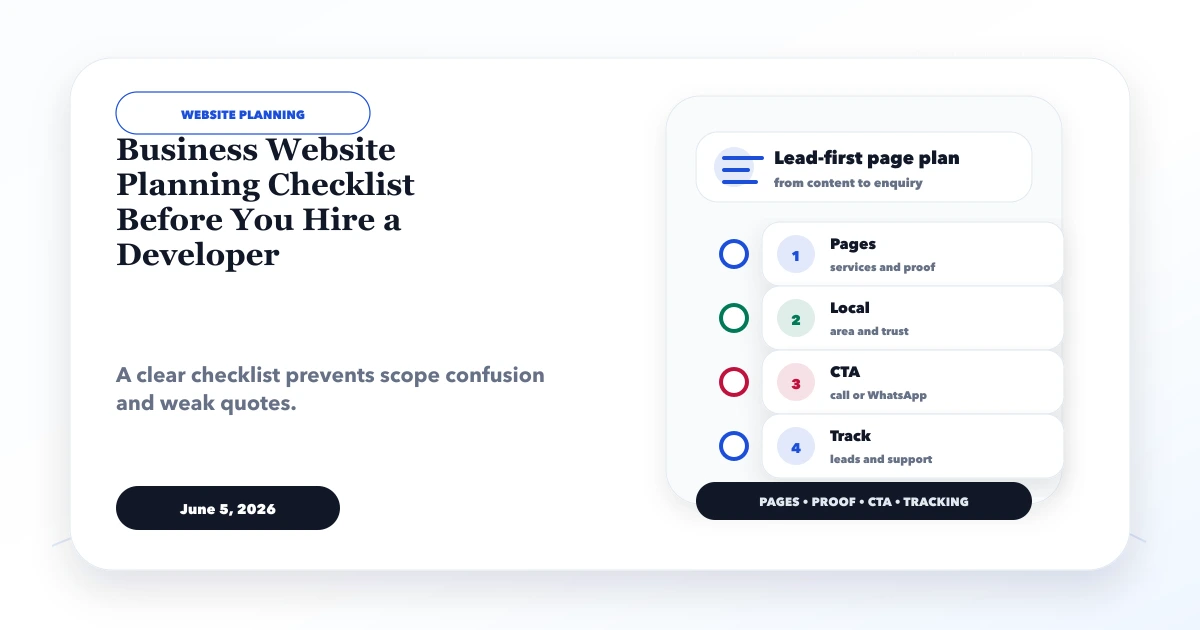
June 5, 2026
Use this website planning checklist to define goals, pages, content, ownership, SEO, integrations, acceptance tests, and handover before hiring.
Read article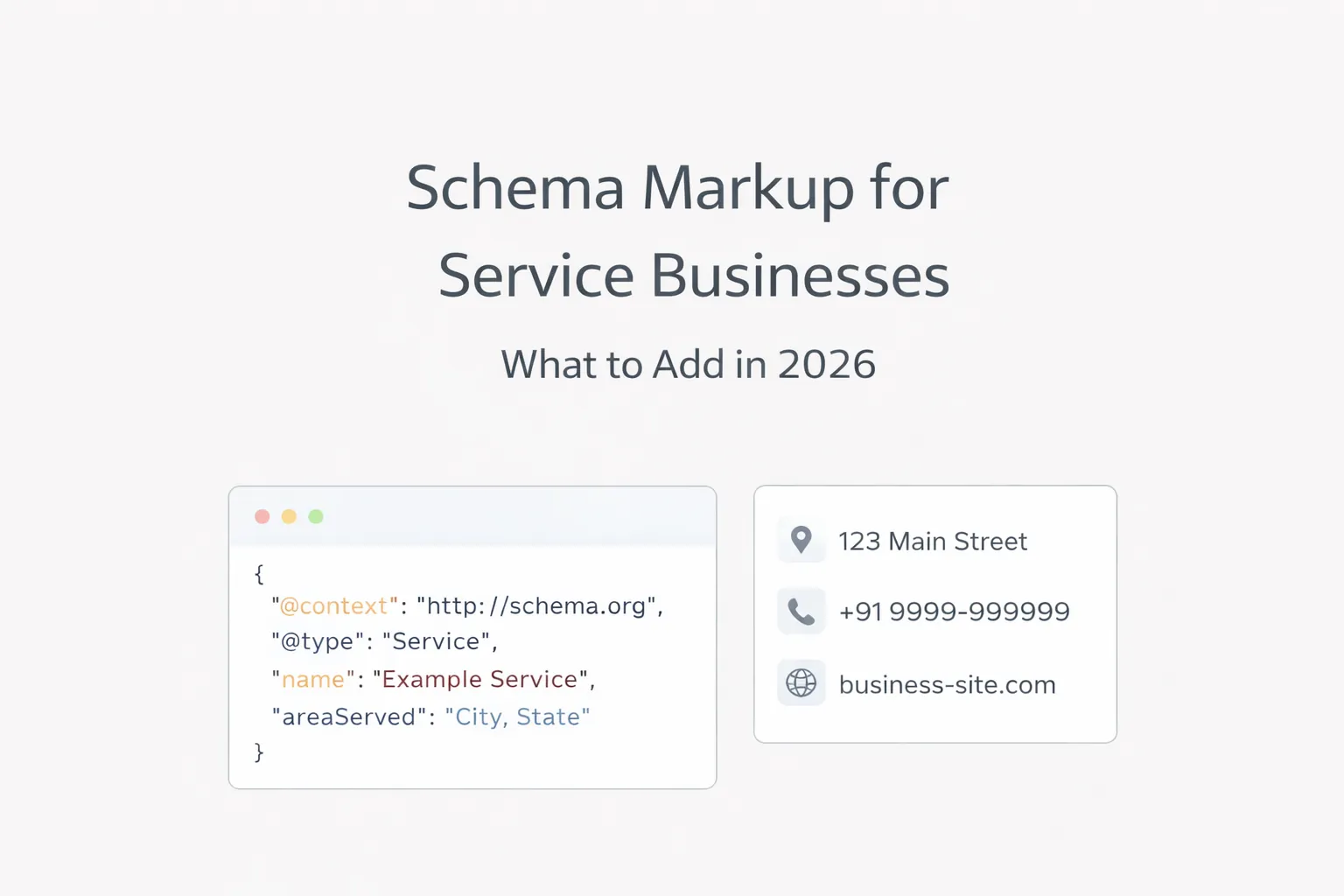
March 30, 2026
Choose valid schema for service websites using Organization, LocalBusiness, Service, Breadcrumb, Article and page-specific structured data without spam.
Read article