
April 4, 2026
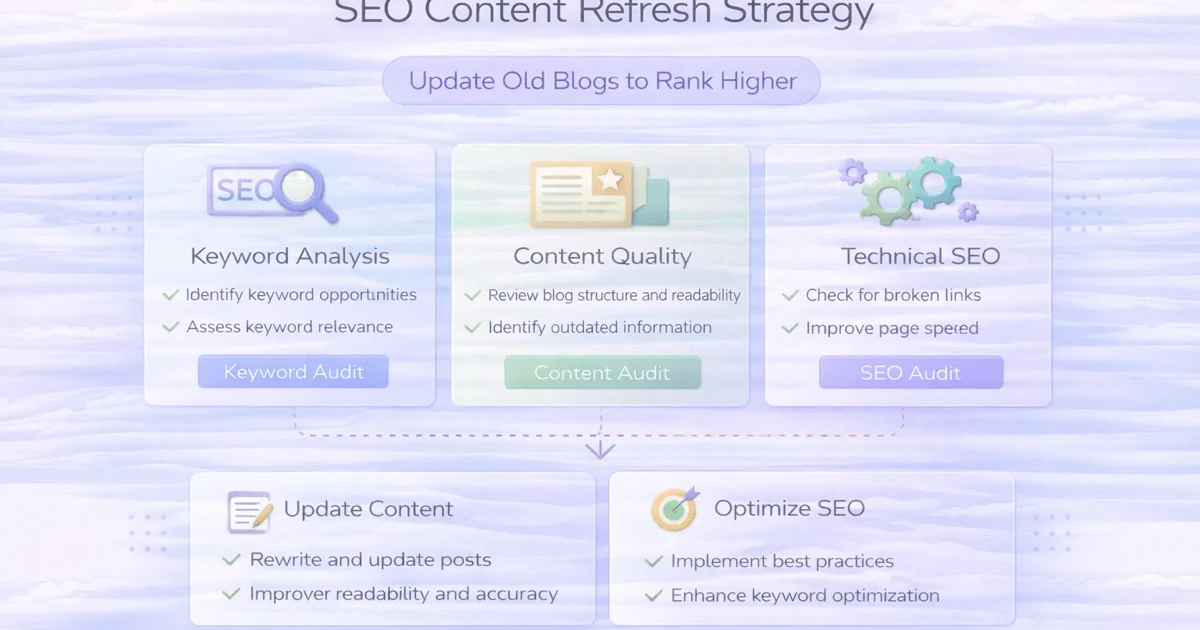
SEO Content Refresh Strategy for Existing Blogs
Refresh existing blog content using search intent, source evidence, internal links, metadata, consolidation checks and measured post-update review.
Read articlePublished Updated
Diagnose content cannibalization with query and page evidence, then differentiate, consolidate, redirect, canonicalize, or de-prioritize overlapping URLs.
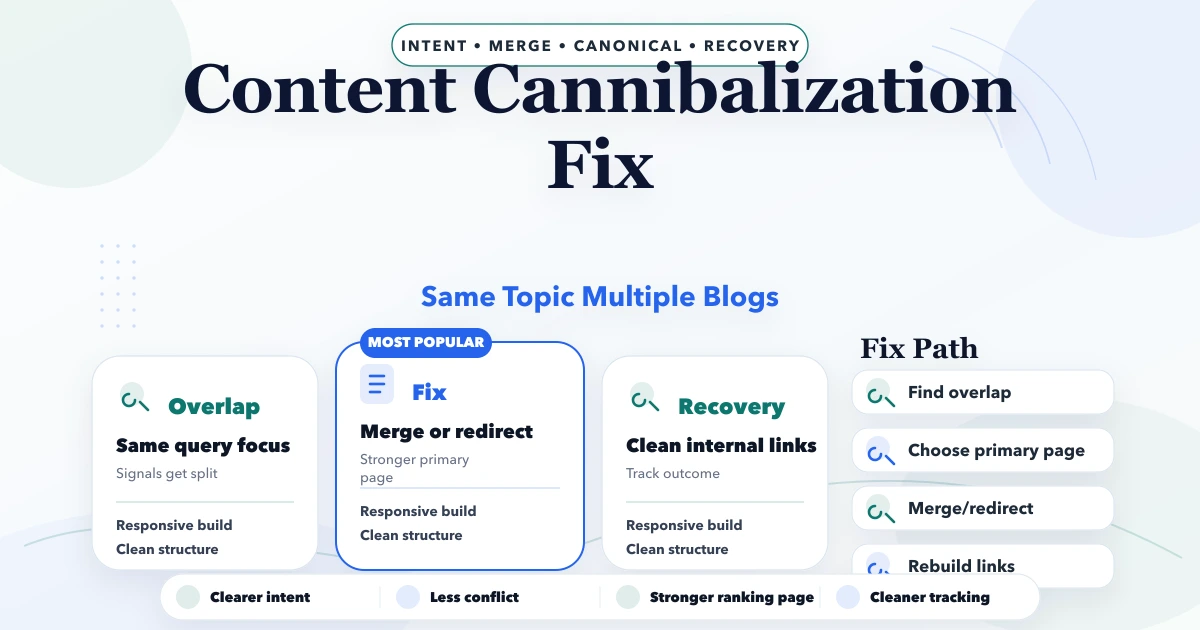
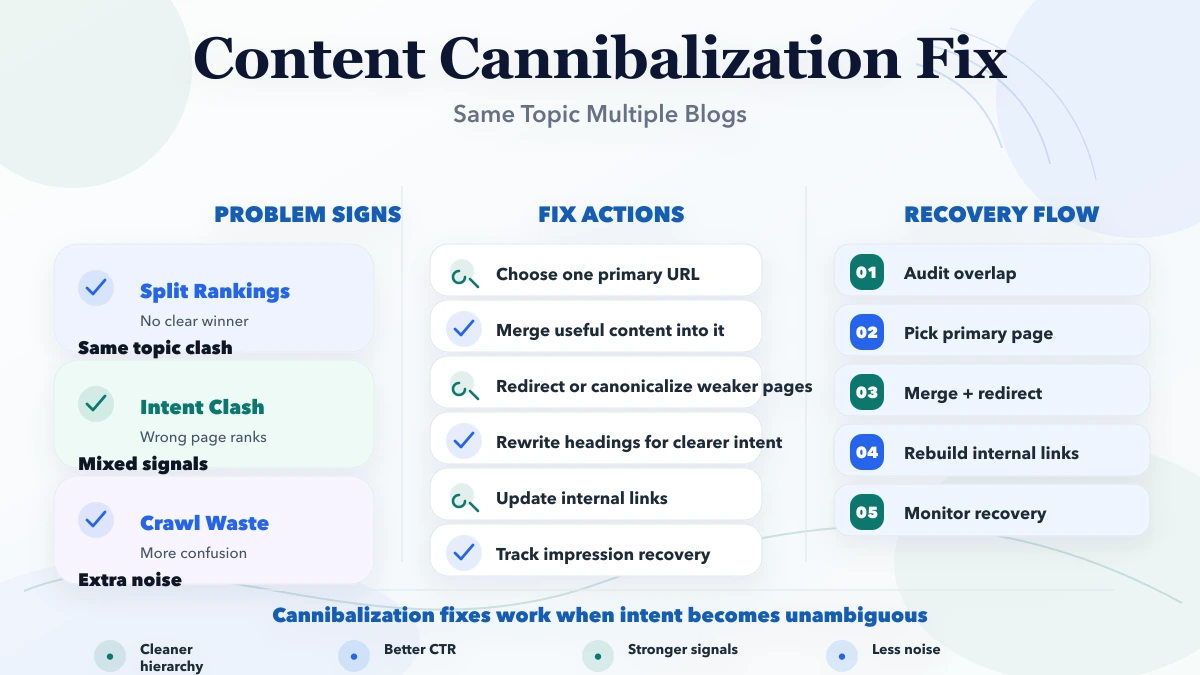
Content cannibalization is not simply "two pages mention the same keyword." Related pages can rank successfully when they solve different tasks. The problem appears when multiple URLs compete for the same search intent, Google switches between them, internal links send mixed signals, and none becomes the clear primary result.
This guide explains a safe content cannibalization fix for blogs, service pages, and location clusters. It uses page/query evidence before recommending differentiation, consolidation, redirect, canonical, noindex review, or no action.
By Tushar C. (Founder, VASUYASHII). Do not mass-delete or redirect URLs based only on title similarity. Check index status, query/page data, backlinks, conversions, internal links, and genuine business intent first.
Use this workflow:
If the evidence does not show competition or harm, leave the pages alone.
Useful warning patterns include:
These are clues, not automatic proof. A parent hub and a detailed support article may share vocabulary while serving different intent.
Create one row per URL with:
Use Search Console exports over a meaningful period and compare page/query combinations. A site search and crawler help discover overlaps, but GSC shows whether Google actually associates both URLs with the same searches.
| Relationship | Example | Normal action |
|---|---|---|
| Parent and support | Web app service + cost guide | Keep both and link clearly |
| Commercial and informational | CRM service + build-vs-buy article | Differentiate intent |
| Distinct subtopics | Inventory retail + warehouse guide | Keep if content is genuinely distinct |
| Duplicate variants | Two posts answering the same question | Consolidate or select a primary |
| Expired/current | Old annual guide + current version | Update/redirect based on continuing value |
| Genuine locations | Delhi office + Noida office | Keep with unique local evidence |
| Thin city variants | City name changed, content repeated | Evidence review; consolidate/de-prioritize |
| Tracking/parameter URLs | Same page with query parameters | Technical canonical/URL control |
This classification prevents destructive fixes based on keyword overlap alone.
Keep both pages when they serve different tasks. Make the distinction explicit in title, H1, introduction, examples, CTA, internal links, and schema.
For example:
The hub should link to each decision guide. Each guide should link back to the hub with natural anchors and to relevant siblings only where useful. Avoid giving every page the same broad title and CTA.
If two important pages are useful but similar, assign each a unique question. Rewrite repeated sections rather than adding synonyms to the same template.
Differentiate using:
Update metadata and internal anchors after the body has a real distinction. A new title alone does not solve duplicate intent.
Consolidate when two pages answer essentially the same question and one stronger page can preserve the useful information. Choose the destination using evidence:
Move unique valuable material into the destination. Update the destination's structure and last-updated date. Change internal links to point directly to it. Then use a permanent redirect from the retired URL when the pages are genuinely equivalent and the public URL is no longer needed.
Do not redirect every weak page to the homepage or an unrelated category.
A canonical is a hint for duplicate or near-duplicate URLs that must remain accessible, such as controlled variants. It is not a substitute for weak content or confused architecture.
Indexable original articles should usually self-canonical. Do not point every similar post to one page while keeping all in the sitemap and internal navigation. That sends mixed signals and wastes crawl effort.
Check that canonical, Open Graph URL, structured-data URL, sitemap URL, and internal links use the same final HTTPS/www form. Avoid chains through non-www or HTTP versions.
Noindex can be appropriate for low-value utility, internal search, duplicate filter, or demo-detail pages that users need but search engines should not index. It should not be the first response to a weak article that could support a buyer journey.
For thin location pages, first confirm whether the business genuinely serves the location, whether the page has local proof, and whether it produces search or lead value. A review classification is not permission to apply noindex automatically.
If a page remains indexable, keep it useful, internally linked, and in the sitemap. If it is intentionally noindexed, remove it from the sitemap while preserving crawl paths where appropriate.
After the content decision, update:
Link to the page that best answers the next question. Do not use identical exact-match anchors across hundreds of posts. Review the internal linking plan for service pages for a practical architecture.
Imagine a software company publishes 40 pages named "website development company in [city]." Each repeats the same service list, timeline, and FAQ. Only five cities have genuine project, office, or service evidence. Google indexes some, alternates canonicals on others, and performance is spread across several URLs.
A safe process would:
This is an architecture example, not a claim about ranking improvement.
Run a production build and check:
200;For Next.js static output, inspect generated HTML and sitemap rather than assuming source metadata rendered correctly.
Record a before snapshot. After deployment and recrawl, compare:
SEO changes can take time to recrawl and re-evaluate. Do not repeatedly change canonicals or request indexing every day. Annotate the deployment date and review over a suitable period.
No. They may serve different intent. Check actual query/page performance, purpose, hierarchy, and ranking behavior before deciding.
Only when they are duplicate or near-duplicate URLs that must remain accessible. Distinct indexable articles normally need self-canonicals and clearer intent.
No. Use a redirect when a retired URL has a relevant replacement. Use noindex for pages that should remain accessible but are not intended for search. Base both on evidence.
Choose the page with the best combination of intent fit, useful content, backlinks, performance, conversions, URL clarity, and future maintainability.
It depends on recrawl, site authority, query competition, and the scale of change. Record the deployment and compare stable periods instead of promising a fixed timeline.
Yes. VASUYASHII can classify page intent, inspect technical signals and internal links, and implement approved content or redirect decisions. Index-control actions should be based on site evidence.
Start with one cluster, export its evidence, and write the intended task for every URL. Preserve useful pages, differentiate genuine intent, and consolidate only confirmed duplicates. Avoid mass deletion.
Review the Local SEO hub, website development hub, services, or contact VASUYASHII for a focused audit.
Related Articles
April 4, 2026
Refresh existing blog content using search intent, source evidence, internal links, metadata, consolidation checks and measured post-update review.
Read article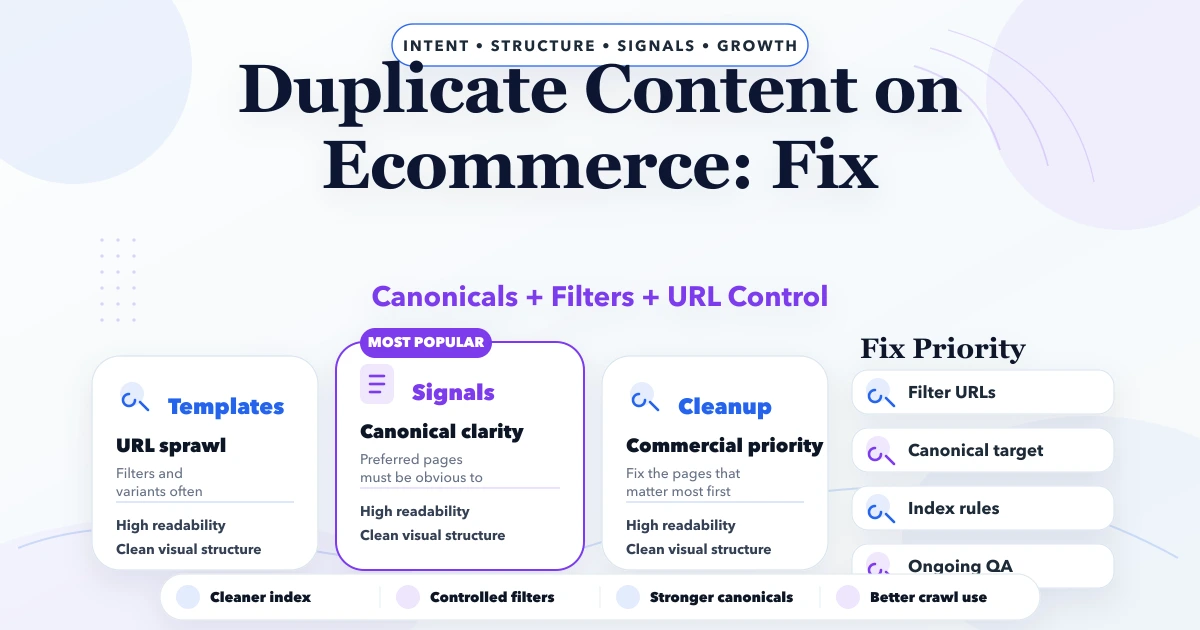
April 30, 2026
Duplicate content on ecommerce fix guide with canonicals, filters, product variants, timelines, pricing, and cleanup strategy for stores.
Read article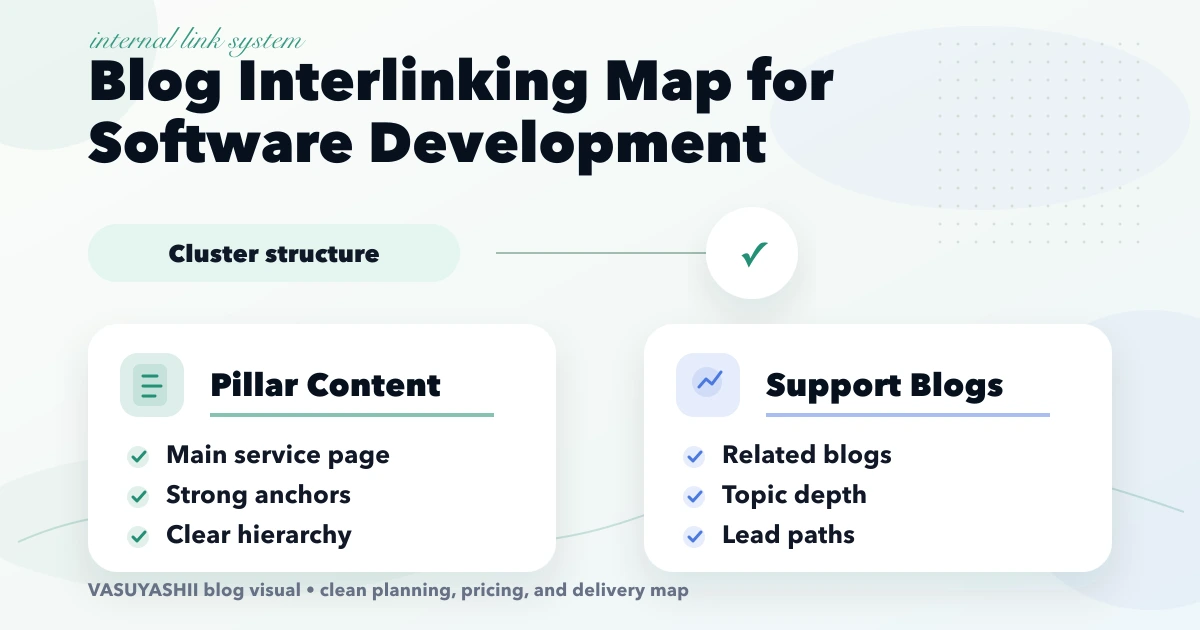
April 20, 2026
Create an internal-link map for software blogs using parent hubs, intent-based support pages, proof links, anchor rules, audits, and rollout checks.
Read article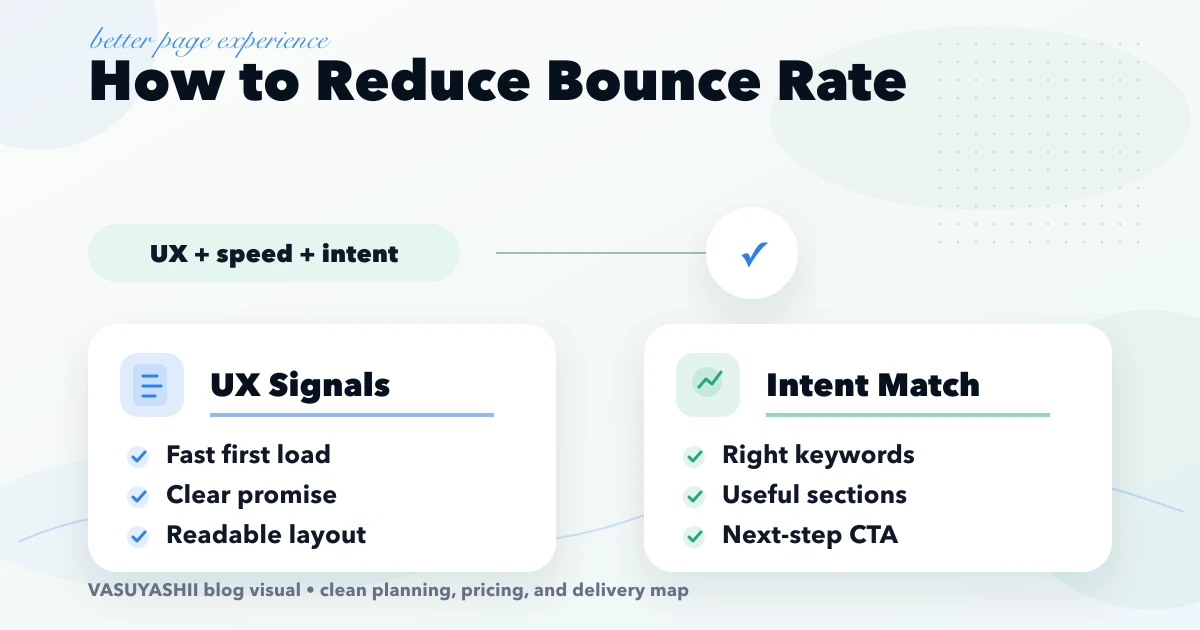
April 18, 2026
Diagnose weak engagement by query, device, and page type; then improve intent match, first-screen clarity, speed, proof, navigation, and CTA tracking.
Read article