
April 23, 2026
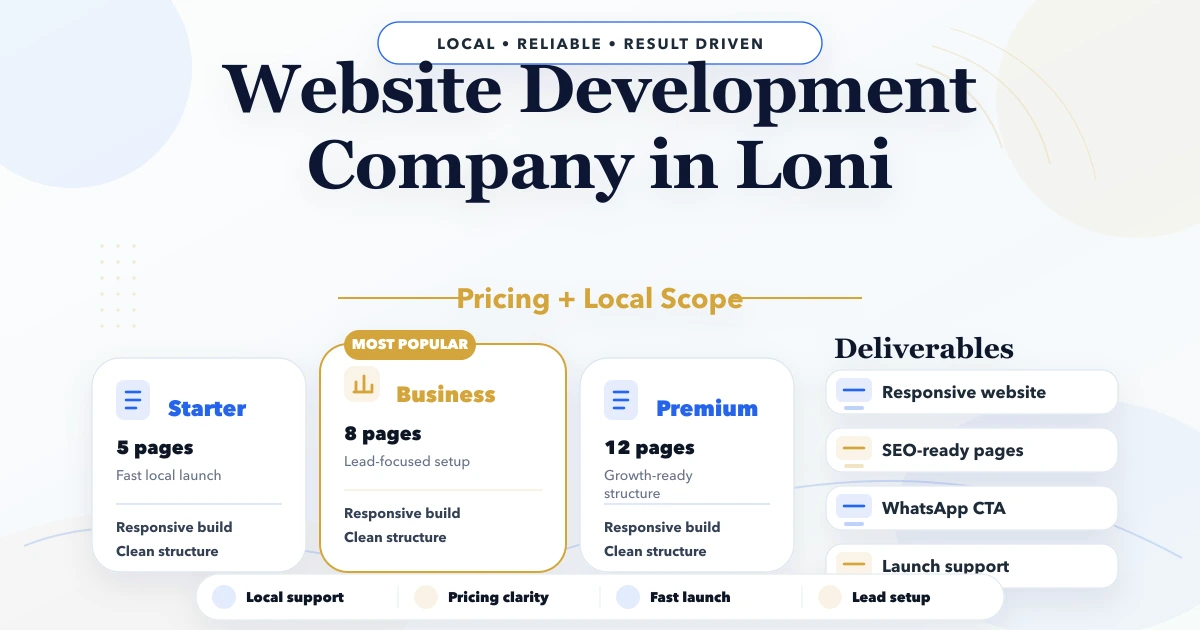
Website Development in Loni: Quote-Ready Lead Plan
Plan a Loni quote-ready website with service packages, qualification fields, WhatsApp and form routing, follow-up metrics and ownership.
Read articlePublished Updated
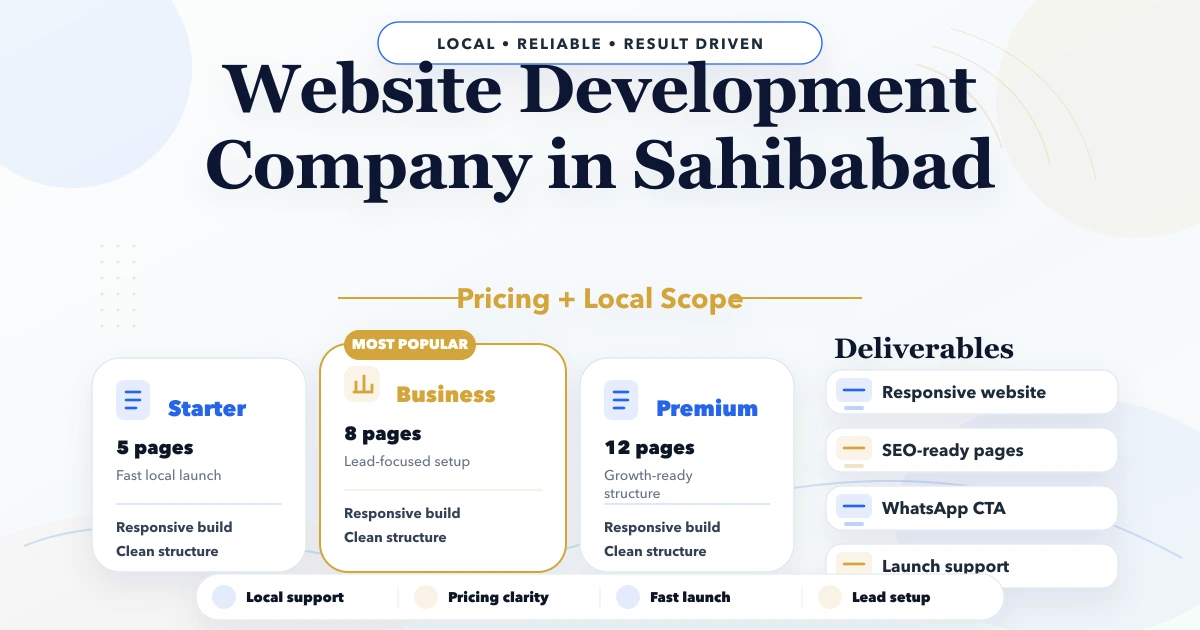
Plan a Sahibabad industrial website with capability pages, product documents, RFQ qualification, sales routing, proof and account ownership.
Service-area note: VASUYASHII is based in Delhi NCR and supports businesses remotely across India. A city-focused guide describes service and planning context; it does not claim a physical office in every location mentioned.
Explore the parent topic: Website Development Delhi NCR Hub →An industrial supplier website must help a technical or procurement buyer verify capability before requesting a quote. A generic homepage, stock machinery photo and contact number do not provide enough information for a serious B2B decision.
This guide uses Sahibabad as the context for an industrial website plan. It does not claim that VASUYASHII operates a Sahibabad office, serves a named industrial customer or has delivered a measured local result. Capability statements and proof must come from the business and be approved before publication.
The website may serve:
Each role asks different questions. A purchase manager may need commercial availability, while an engineer needs specifications and an approved drawing.
Create structured fields:
| Capability area | Example information |
|---|---|
| Product/service category | what is supplied, manufactured or serviced |
| Material/process | supported materials, methods or technologies |
| Size/capacity range | approved operating limits |
| Standards | applicable, current certifications or test methods |
| Customisation | what can and cannot be changed |
| Quantity | prototype, batch or volume capability |
| Geography | real delivery or service boundary |
| Documents | datasheet, drawing, certificate or manual |
| Commercial step | RFQ, call, sample or technical discussion |
Avoid vague claims such as “all types,” “unlimited capacity” or “best quality.”
Explain the business model, categories, process boundaries and commercial route.
Help the buyer narrow the requirement using application and technical differences.
Show fields, options, documents, original media and related services.
Publish only current, approved certificates and explain what they cover.
Create these pages when use cases are genuinely different. Do not repeat one capability paragraph under many sector names.
Collect specification, quantity, destination, deadline and attachment securely.
Provide separate routes for sales, support, vendor and careers where needed.
Public documents may include brochures, standard datasheets and approved certificates. Private drawings, customer specifications or commercial documents need controlled storage.
The file upload and document portal guide explains when authenticated access is appropriate.
For high volume, connect the website to a CRM or quotation system. For low volume, a monitored inbox and structured register may be enough.
Use transparent operational rules:
| Signal | Possible routing |
|---|---|
| known product + standard quantity | commercial review |
| custom drawing | technical review |
| urgent breakdown | service escalation |
| dealer request | channel owner |
| incomplete requirement | clarification queue |
| outside capability | respectful decline |
Do not automatically reject a lead using unclear scoring. Keep manual review for high-value or ambiguous requests.
Industrial proof can include:
Do not publish borrowed factory images, unauthorised customer logos, expired certificates or fabricated export markets.
Industrial websites often carry high-resolution media and PDFs. Control delivery:
A procurement buyer should not need to download a 20 MB brochure to learn the basic specification.
Create stable routes for important categories and capabilities. Use one canonical page for each product family. Prevent filters, sort parameters and duplicate paths from creating index noise.
Internal links should connect capabilities, applications and relevant documents. Add structured data only when it accurately describes the public entity or product information. Use the business website architecture guide for crawlable navigation.
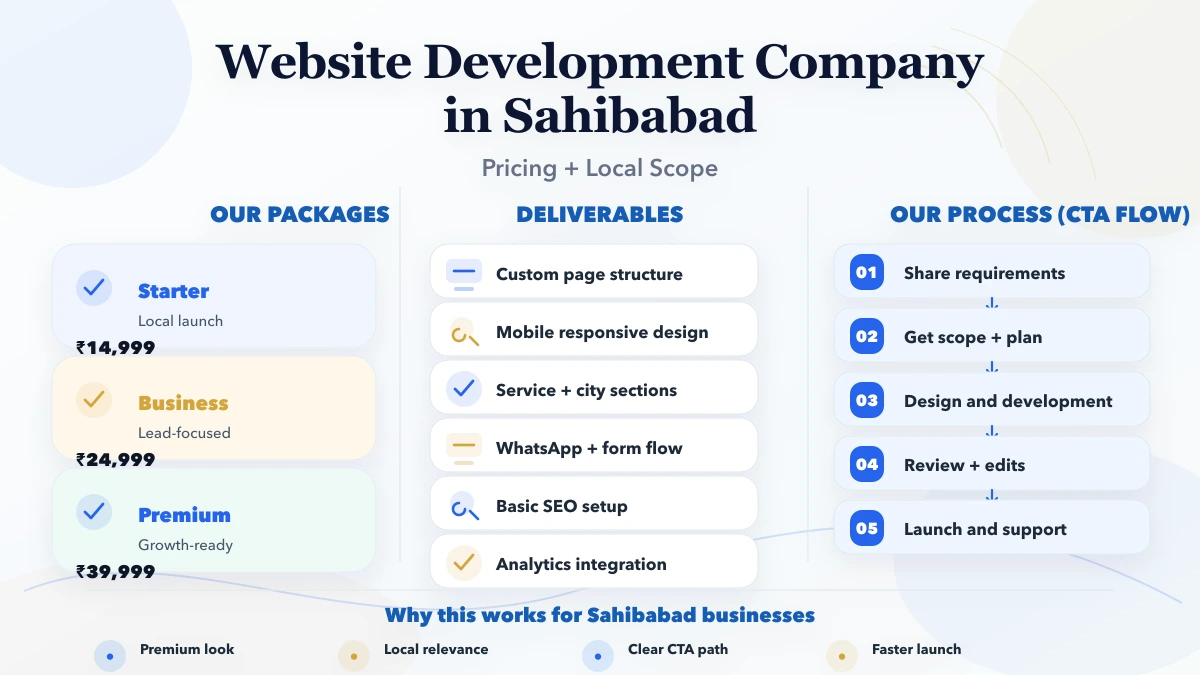
The bands below are planning references, not fixed VASUYASHII prices or verified Sahibabad market averages.
| Scope | Typical inclusion | Illustrative band |
|---|---|---|
| Industrial capability site | 6-10 pages, categories, RFQ, documents, metadata | Rs. 50,000-Rs. 1,20,000 |
| Structured product catalogue | CMS, filters, product model, RFQ basket, analytics | Rs. 1,20,000-Rs. 3,50,000 |
| Dealer/quotation portal | login, pricing, approvals, documents and integrations | discovery-based |
Product data cleanup, photography, technical writing, document migration, permissions and ERP integration may exceed the visual design effort.
If connecting ERP, inventory or CRM:
Use the inventory integration guide for stock and business-system boundaries.
Industrial content can create commercial or compliance risk. Use a simple approval state:
Store the source document and approver. When a certificate expires or a capability changes, identify every affected page and download. Do not rely on memory to remove an obsolete claim.
If internal records publish to the website, create an explicit public-data layer. Internal purchase price, supplier identity, stock location or notes should never appear merely because the fields exist in the ERP.
Test new, updated, disabled and restored products. Failed syncs need alerts and retry limits. Compare source and website counts after bulk changes. Keep a manual override only with clear ownership so an editor does not permanently diverge from the source of truth.
Run a reconciliation sample after every major import or integration change. Compare identifiers, categories, public status, documents and selected specifications. Record mismatches and correction ownership. A green “sync completed” message proves only that a process ended, not that the published catalogue is accurate.
Keep the reconciliation evidence with the release record so later errors can be traced to a specific data change.
Assign each mismatch a correction deadline and accountable owner.
VASUYASHII public evidence includes software and integration service pages, labelled demos and the live VASUYASHII Business Suite. The current product shows product, inventory, vendor, customer, purchase, invoice, payment and report workflows within its published scope.
Inspect software development, integrations and Business Suite. This owned evidence does not prove a Sahibabad industrial implementation, factory project or procurement outcome.
Ask the provider to demonstrate:
Avoid a proposal based only on page count. Industrial data structure and content ownership are central to the project.
Usually not when pricing and delivery require technical or commercial review. A structured RFQ may be more appropriate.
Yes, if source ownership, public fields, API access, sync frequency and failures are designed clearly.
Only approved, non-confidential documents. Sensitive or customer-specific files need controlled access.
Create pages for meaningful product families and searchable variants. Avoid thousands of near-identical pages.
No. It can improve information and routing, but demand, reputation, authority, competition and sales response affect results.
An authorised person who understands the product, standards and commercial boundaries should approve publication.
Prepare five representative product or capability records, two documents and three recent RFQ examples. These samples will expose the required data and workflow. Contact VASUYASHII for an industrial catalogue or RFQ-system scope.
This guide owns the industrial capability, technical document, product-record, and RFQ workflow intent. It supports the broader Ghaziabad website development service and the regional Delhi NCR website development hub. Retail businesses with lighter catalogue needs can use the Ghaziabad shops website guide.
VASUYASHII does not claim a Sahibabad facility or industrial customer outcome on this page. Product specifications, certifications, applications, and compliance statements must be approved by the business. Submit representative records through the business website enquiry form.
Related Articles
April 23, 2026
Plan a Loni quote-ready website with service packages, qualification fields, WhatsApp and form routing, follow-up metrics and ownership.
Read article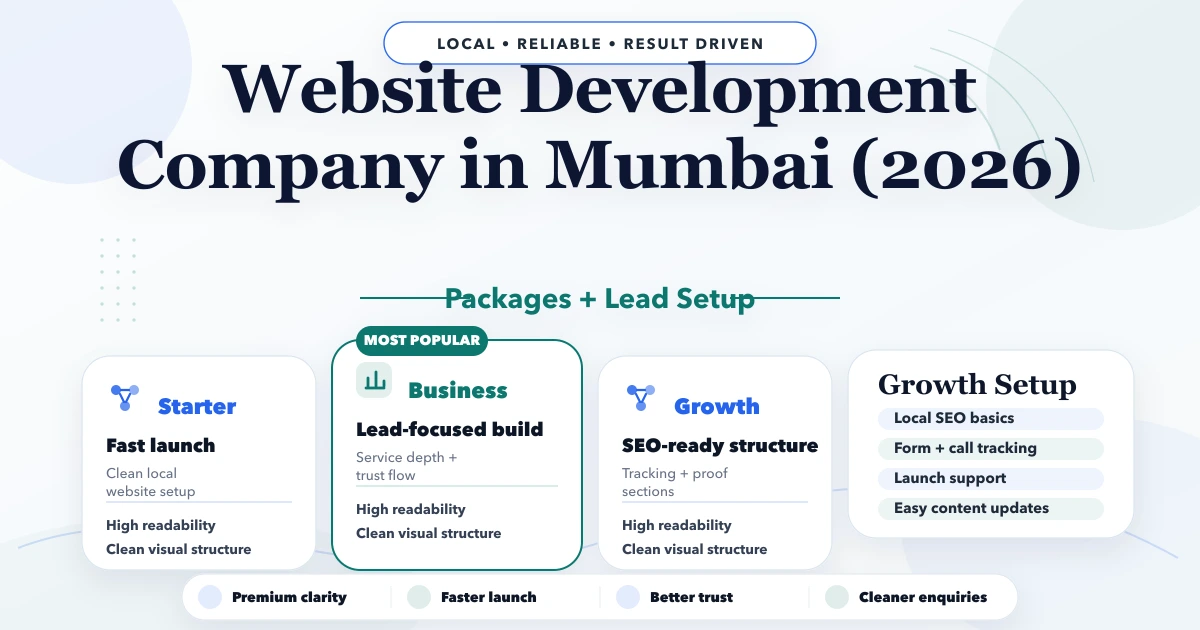
April 24, 2026
Mumbai website development company guide with pricing, scope, timeline, SEO structure, and lead-focused planning for businesses in 2026.
Read article
April 23, 2026
Plan a Baghpat B2B website with product categories, specifications, RFQ routing, dealer enquiries, content ownership and supplier proof.
Read article
June 6, 2026
Compare Wave City Ghaziabad website packages by launch scope, booking or catalogue readiness, ownership, recurring costs, upgrade path, and acceptance.
Read article