
May 31, 2026
Affordable Website Development in Ghaziabad (2026)
Affordable website development in Ghaziabad guide for 2026 with low-budget packages, what to include, pricing, SEO basics, and red flags.
Read articlePublished Updated
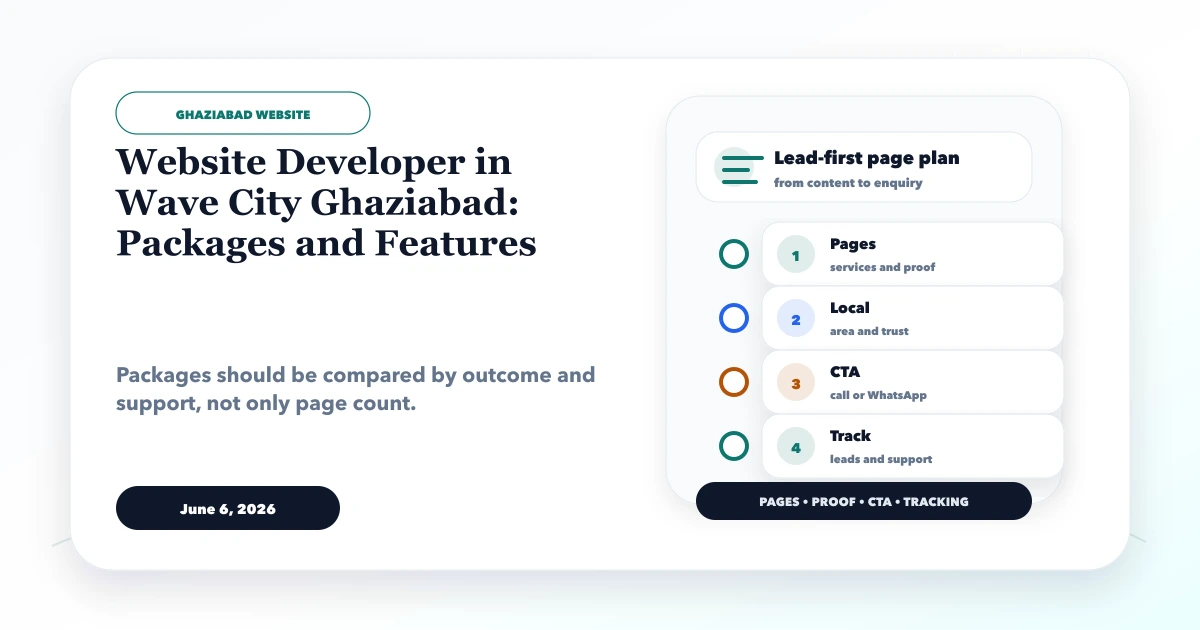
Compare Wave City Ghaziabad website packages by launch scope, booking or catalogue readiness, ownership, recurring costs, upgrade path, and acceptance.
Service-area note: VASUYASHII is based in Delhi NCR and supports businesses remotely across India. A city-focused guide describes service and planning context; it does not claim a physical office in every location mentioned.
Explore the parent topic: Website Development Delhi NCR Hub →When comparing a website developer in Wave City Ghaziabad, package names such as starter, business, and premium can hide the most important question: can the first version grow into the booking, catalogue, location, or lead workflow the business may genuinely need?
This guide helps clinics, home-service teams, tutors, consultants, retailers, food businesses, property services, and other growing businesses compare website packages by operating capability. It does not claim a VASUYASHII Wave City office or local customer result.
Written by Tushar C. (Founder, VASUYASHII) using the current VASUYASHII scoping, integration, and handover process. Prices and timelines should come from a written requirement; package labels in this guide are capability categories, not fixed offers.
| Capability | Presence package | Lead package | Workflow package |
|---|---|---|---|
| Core information | Yes | Yes | Yes |
| Service detail | Limited | Focused pages | Focused pages plus data |
| Contact | Basic | Qualified form and tracking | Routing and system integration |
| Proof | Basic business evidence | Service-specific evidence | Evidence plus managed records |
| Booking/catalogue | No or manual request | Structured request | Managed workflow |
| Admin | Optional simple editing | Content editing | Operational dashboard |
| Integrations | Minimal | Analytics and selected tools | CRM, payments, notifications as scoped |
A package is useful only when each capability has a deliverable, owner, and acceptance test.
Release one may provide service pages and an appointment request form. Later phases can add availability, confirmation, reminders, rescheduling, staff calendars, and payments.
Do not call a request form “live booking” unless the slot is reserved and confirmed by a defined system.
Release one may show categories and accept product-qualified enquiries. Later phases can add managed products, stock confirmation, online orders, payments, fulfilment, and returns.
Do not show false live stock merely to make the page feel advanced.
Release one may explain services and genuine availability across selected areas. Later phases can add route assignment, quotation, job status, team dispatch, and customer notifications.
Do not create a page for every neighbourhood unless the content and service difference are real.
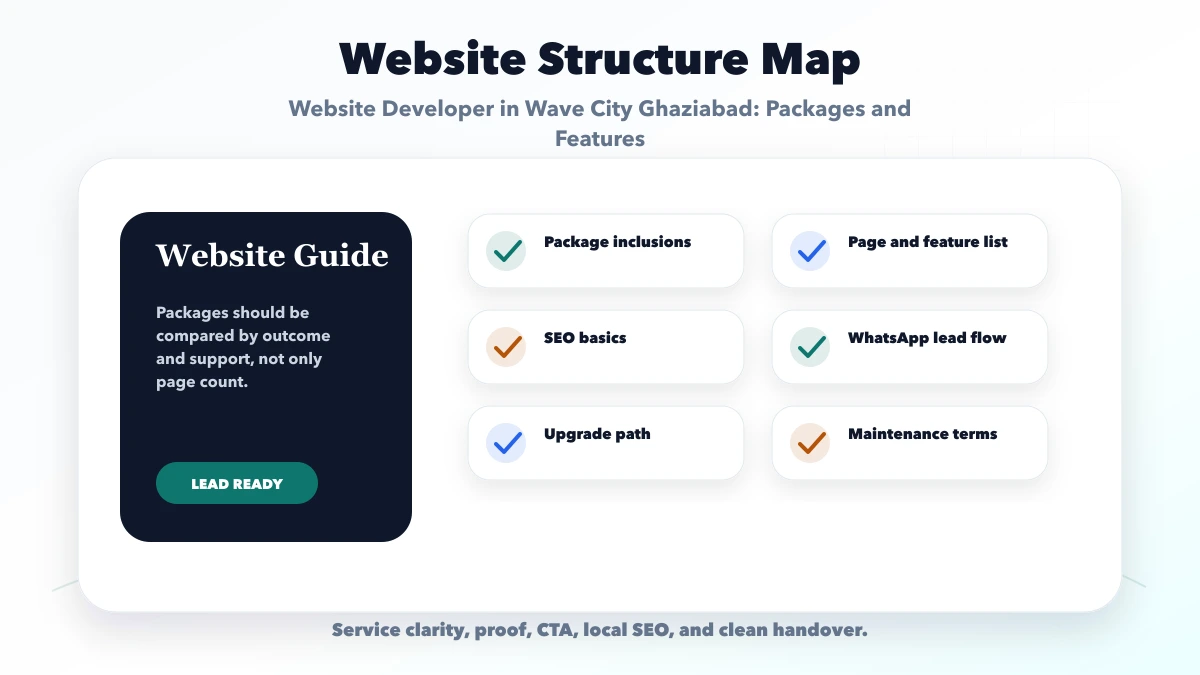
Even the smallest package should be complete:
Removing these controls to reduce price creates a fragile site, not a starter site.
Ask the developer:
An honest answer may include planned replacement. Upgrade-ready does not mean every future feature is prebuilt.
| Component | What changes effort |
|---|---|
| Discovery | Number of services, stakeholders, and unclear processes |
| Content | Interviews, writing, migration, proof review |
| Interface | Unique templates, responsive states, accessibility |
| Data | Product, schedule, or service records and imports |
| Forms | Validation, routing, conditional fields, spam controls |
| Integrations | API quality, accounts, failure states, testing |
| Admin | Roles, editing workflow, audit needs |
| QA | Devices, journeys, performance, accessibility, security |
| Handover | Documentation, training, account transfer |
| Support | Monitoring, updates, response commitments |
Ask for these components in the quote. A low upfront amount can be reasonable, but hidden recurring fees and missing ownership must be visible.
Before adding booking, document:
For implementation planning, review the booking system feature guide. A calendar embed alone may not solve these rules.
Before adding products, prepare product codes, categories, options, images, pricing policy, availability policy, and update ownership. Decide whether the customer will enquire, reserve, or order.
If stock, billing, purchase, and customer records must stay connected, review the VASUYASHII Business Suite or scope custom software rather than duplicating records manually.
Start with a monitored form and clear response owner. Add CRM integration when the team needs assignment, stage, notes, follow-up, reporting, or duplicate management.
Map:
Use integration services for a scoped handoff. Do not send personal data into GA4.
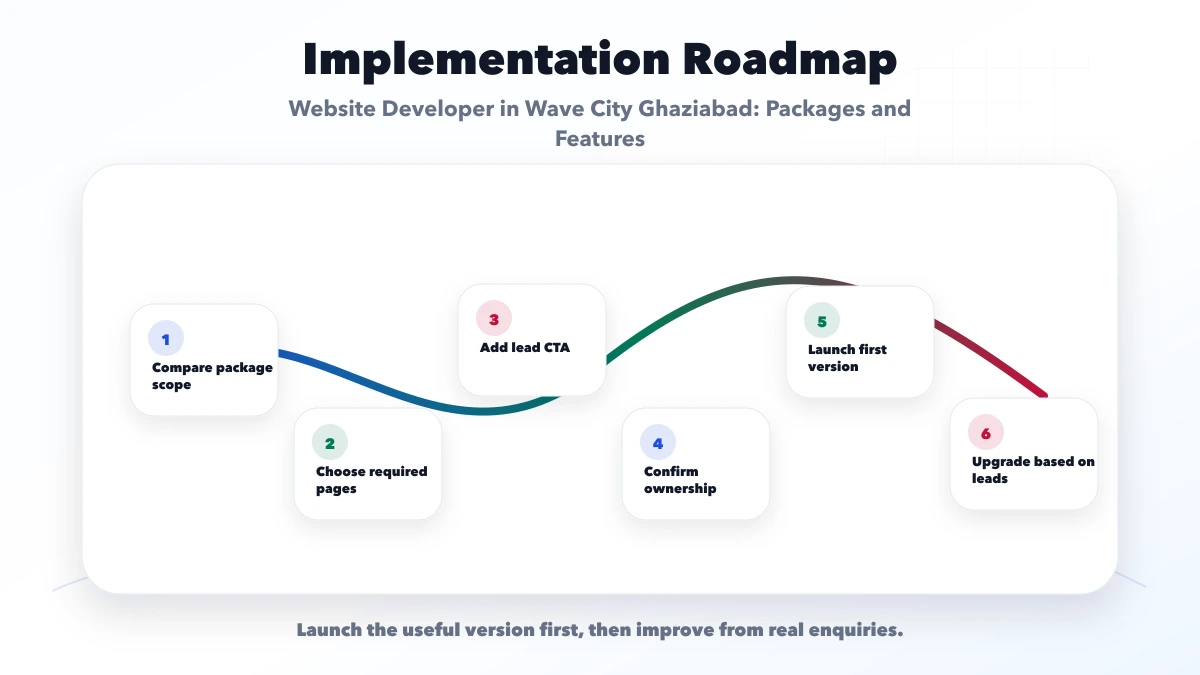
Launch core content, proof, contact, local accuracy, analytics, and ownership.
Add pages based on enquiry questions, meaningful search demand, and distinct services.
Introduce appointment, quotation, catalogue, or service-area fields while keeping manual confirmation clear.
Add database, roles, status, notifications, payments, or CRM after process ownership exists.
Review lead quality, workflow failures, performance, and staff adoption. Improve observed bottlenecks.
VASUYASHII separates the public website from web application development so future operations can be scoped safely. We can plan an upgrade path, but no package should imply guaranteed rankings, leads, bookings, or sales.
For a written proposal, share the current workflow, first-release goal, content readiness, and future needs through contact. The proposal should identify what is included now and what remains a later phase.
Before approving an upgrade, write a one-page decision:
For example, repeated appointment clashes may justify a booking system, while occasional scheduling questions may still be handled through a request form. A large product sheet may justify a managed catalogue, while ten stable products may not need an admin dashboard.
Revisit the decision after launch. Check adoption, failure cases, staff workload, and customer feedback. An unused feature should not remain merely because development was paid for; simplify it, train the owner, or retire it through a controlled change.
Keep the original manual path available during the first production period when practical. If the new integration fails, staff should know how to receive and process a request without losing the customer. Remove the fallback only after the automated route is stable and its owner can support it.
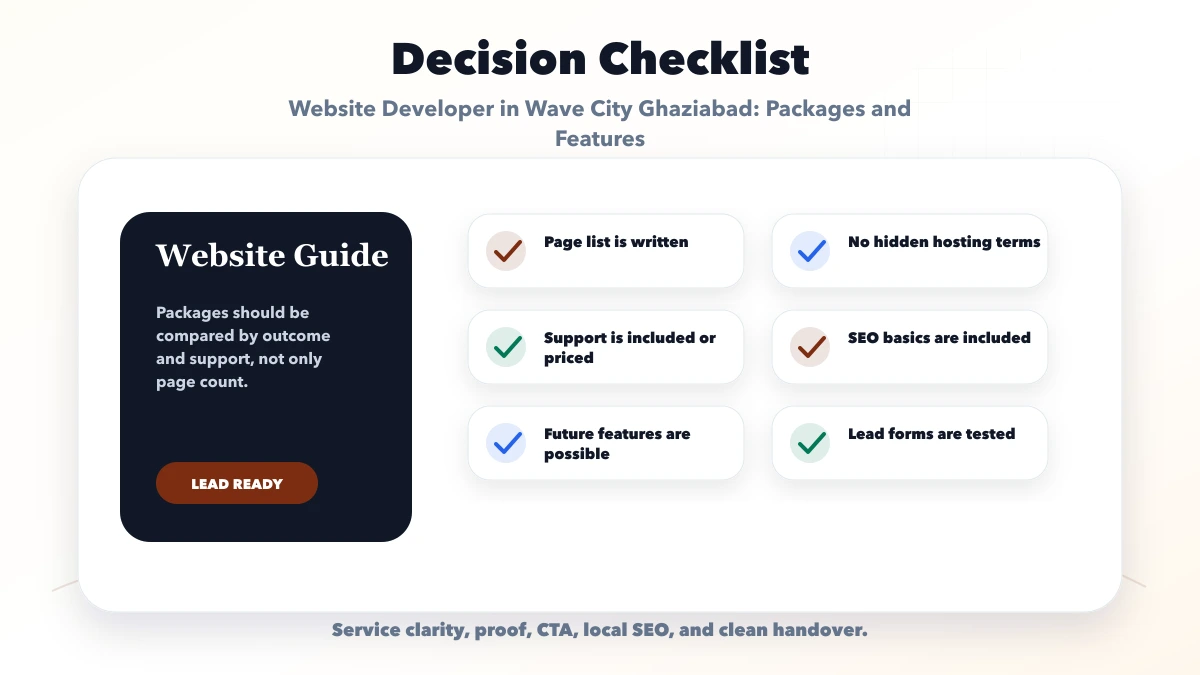
Choose the smallest complete package that supports the first business outcome and preserves ownership. Do not pay for workflows the team cannot operate yet.
Often, but ecommerce may require a new data model, backend, integrations, and policies. Plan the migration path without pretending the first site already contains those systems.
Use one when staff must update content regularly. A simple static site may be easier when changes are infrequent and developer support is defined.
Domain, hosting, email, paid themes or plugins, APIs, messaging, payment charges, maintenance, monitoring, and any licensed media or fonts.
No. Useful, distinct, maintained pages are more valuable than a large number of repeated pages. Build based on customer and search intent.
Owned accounts and data, documented APIs, stable URLs, backups, acceptance tests, and a defined migration or rollback plan.
Compare Wave City website packages by the first complete outcome and the honesty of their upgrade path. Keep accounts and data under business control, label manual workflows clearly, and add operational features only when the team is ready to own them.
This page owns the package upgrade-path intent for businesses that may later add booking, catalogue, CRM, or operational features. The commercial parent remains website development services in Ghaziabad, and the Delhi NCR website development hub provides the regional architecture. Buyers who need a line-by-line proposal comparison should also use the Ghaziabad package acceptance guide.
VASUYASHII does not claim a Wave City office. The upgrade path should be based on owned accounts, maintainable data, documented integrations, and actual staff readiness. Share the first complete outcome through the business website enquiry form.
Related Articles
May 31, 2026
Affordable website development in Ghaziabad guide for 2026 with low-budget packages, what to include, pricing, SEO basics, and red flags.
Read article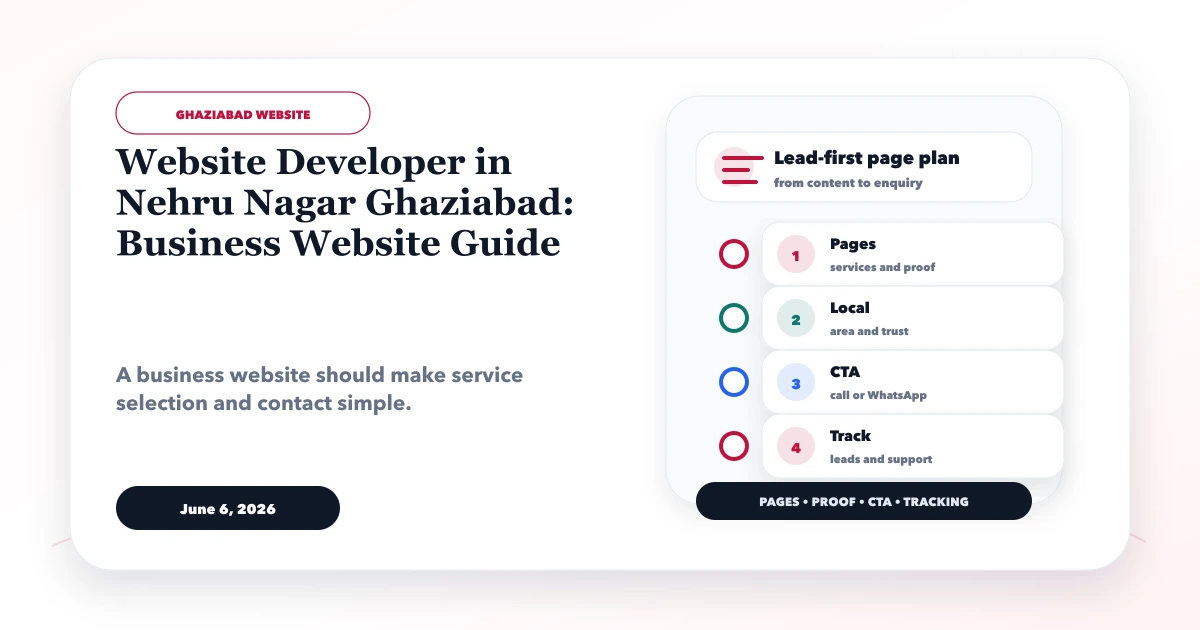
June 6, 2026
Plan a Nehru Nagar Ghaziabad business website with verified identity, consistent local information, lead continuity, ownership, backups, and handover.
Read article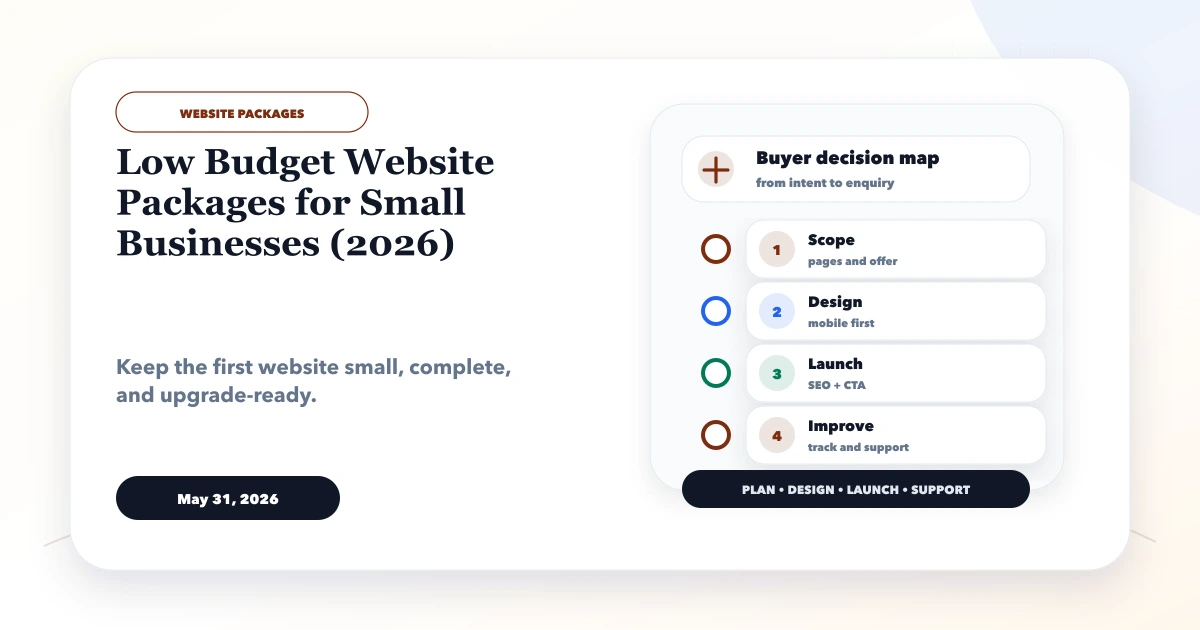
May 31, 2026
Compare low-budget website packages by pages, lead flow, ownership, SEO basics, hidden costs and upgrade readiness before selecting a small-business website.
Read article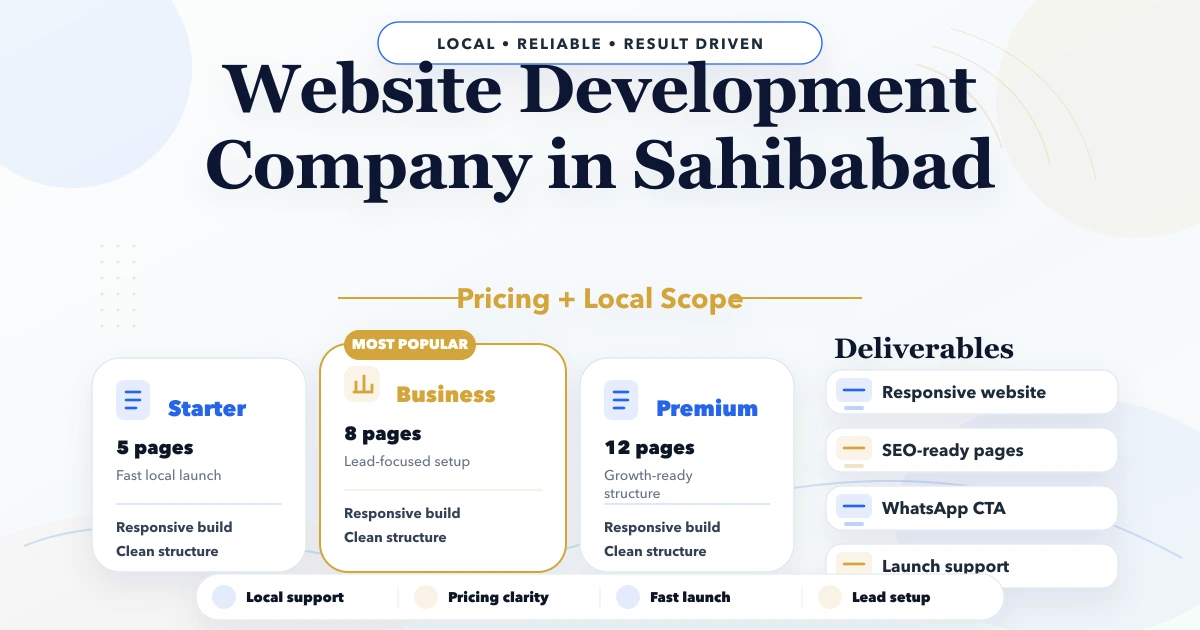
April 22, 2026
Plan a Sahibabad industrial website with capability pages, product documents, RFQ qualification, sales routing, proof and account ownership.
Read article