
April 4, 2026
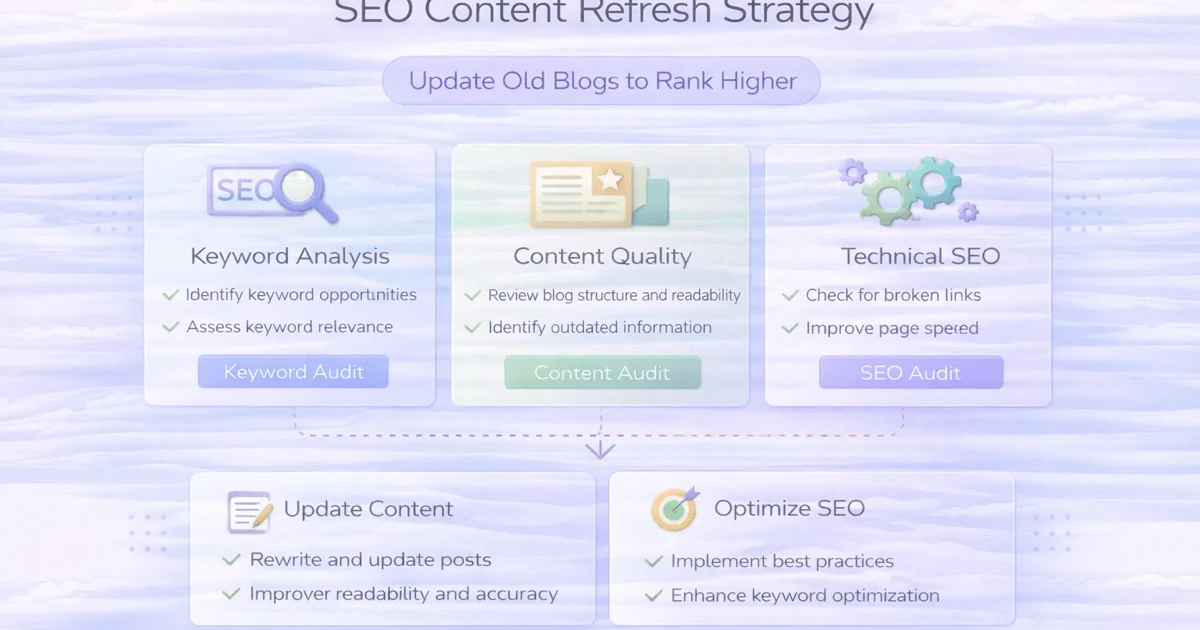
SEO Content Refresh Strategy for Existing Blogs
Refresh existing blog content using search intent, source evidence, internal links, metadata, consolidation checks and measured post-update review.
Read articlePublished Updated
Build useful SEO FAQs from buyer questions, direct answers, internal links and review data. Understand the 2026 status of Google FAQ rich results and schema.
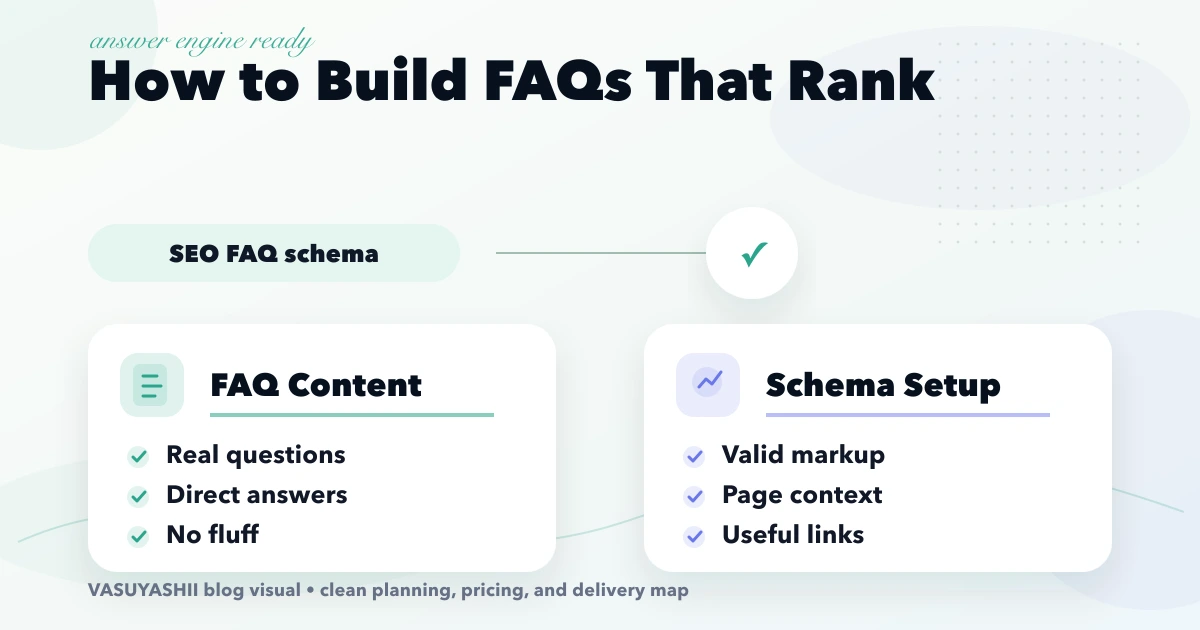
FAQs do not rank because a page repeats a keyword in six question marks. They become useful when they answer genuine pre-purchase, implementation, support, or comparison questions better than the surrounding page could answer in a paragraph.
An important 2026 update: Google removed the FAQ rich-result feature from Search. Adding FAQPage markup is therefore not a way to obtain Google FAQ rich results now. The content can still help users, internal linking, sales conversations, and other systems that understand structured data, but it should be published for usefulness rather than a discontinued search appearance.
Google recorded the removal in its Search documentation updates. Any SEO checklist that still promises expandable Google FAQ results is outdated.
An FAQ section can:
It should not repeat the same paragraph under a question-shaped heading.
| Source | What it reveals | Validation needed |
|---|---|---|
| Sales calls | Purchase objections and unclear scope | Frequency and buyer fit |
| Contact forms | Language buyers naturally use | Remove personal information |
| WhatsApp enquiries | Short mobile questions | Group variants, do not quote private messages |
| Support tickets | Post-purchase confusion | Separate support from sales intent |
| Search Console queries | Search language and page mismatch | Check impressions, position, and page |
| On-site search | Information users could not find | Ensure tracking is consent-safe |
| Competitor pages | Common market questions | Do not copy wording or answers |
| Product documentation | Technical facts and limits | Keep version and ownership current |
Start with first-party sales and support patterns. Search tools can expand the list, but they cannot tell you which questions matter operationally to your business.
The service page may need evaluation and purchase questions. A documentation page may need adoption questions. Do not force every stage into every URL.
The first sentence should answer the question directly. Follow with conditions, examples, or a link.
Weak:
In today's rapidly changing digital landscape, many businesses often wonder whether a custom CRM might be right for them.
Better:
A custom CRM is suitable when your sales stages, permissions, integrations, or reporting cannot be handled reliably by a standard product.
Then explain exceptions. Concise does not mean incomplete; it means the answer is visible before the background.
Avoid questions such as:
What is the cost, timeline, technology, SEO benefit, support, and best company for a website?
Break separate decisions into separate questions. This improves scanning and makes each answer easier to maintain.
Pricing answers should explain cost drivers and assumptions. Timeline answers should identify dependencies. Security answers should name practices without guaranteeing zero risk. SEO answers should avoid guaranteed ranking.
Example:
A focused site can move quickly when content, business details, feedback, and required integrations are ready. Original copy, custom visual direction, migration, multiple languages, booking, or delayed approvals extend the schedule. Ask the provider for milestone dates tied to client inputs and review cycles.
That answer is more useful than “7-10 days guaranteed.”
A single giant FAQ page is not always the best solution. Put service-specific questions on the relevant service page, product questions on the product page, and policy questions in the appropriate policy or help area.
Create a central FAQ page only when it offers a clear taxonomy and helps users navigate. Avoid duplicating the same full answer across many URLs. Link to the authoritative answer instead.
The internal linking guide explains how supporting content can reinforce service pages without copying them.
Schema.org still defines FAQPage, Question, and Answer types, and some non-Google consumers may understand them. However, Google Search no longer shows its FAQ rich-result feature. This changes the implementation decision.
Use structured data only when:
Do not add hidden FAQs only in JSON-LD. Do not mark up user-generated forum discussions as a business FAQ. Do not keep obsolete schema only because an SEO plugin enables it by default.
Before adding FAQPage markup, ask:
If there is no clear benefit or owner, publish excellent visible FAQs and skip the extra markup.
Export queries for the relevant page and look for patterns:
Do not create one FAQ for every low-volume phrase. Cluster variants around the underlying decision.
The GSC performance report guide explains query and page analysis.
Use a small review table:
| Question | Stage | Frequency | Current answer | Owner | Action |
|---|---|---|---|---|---|
| Who owns the domain? | Purchase | High | Proposal only | Sales | Add to service FAQ |
| Can invoices be shared on WhatsApp? | Evaluation | High | Product demo | Product | Add answer and demo link |
| Is payroll included? | Evaluation | Medium | Unclear | Product | State current exclusion |
| How are changes priced? | Purchase | High | Verbal | Delivery | Add scope/change answer |
This creates original, business-specific content and reduces generic writing.
An FAQ answer should link only when the destination provides the next level of detail.
Example:
The right website structure depends on service count, search intent, proof, and maintenance capacity. Use the one-page versus multi-page comparison before deciding.
Avoid “click here” and avoid placing five links in one short answer. The question should still be answered on the current page.
FAQs age quickly when they mention prices, timelines, platform features, search appearance, service areas, or support terms.
Assign an owner and review trigger:
Show a meaningful last-updated date only when the content was actually reviewed.
Question-and-answer structure can be easy for AI systems to extract, but extraction is not guaranteed. Improve usefulness with:
Do not create hundreds of generated Q&As for AI visibility. Commodity answers with no experience or ownership weaken the site.
A generic software page asks, “Why choose the best software company?” A better set for an inventory product might be:
These questions reveal product scope and risk. Answers must match the current product and should not overclaim roadmap features. This is an illustrative content exercise.
VASUYASHII builds FAQ sections from requirement discussions, sales objections, product boundaries, support questions, and Search Console evidence. We keep answers visible, link to a deeper source where needed, and avoid marking future features as current.
For website and service content, our SEO website development hub connects FAQs to page intent and internal links. For product or integration questions, the software development service documents states, permissions, limitations, and dependencies before writing claims.
They can improve topic coverage, usability, internal linking, and satisfaction of relevant questions. They do not guarantee ranking and should not exist only to add keywords.
No. Google removed the FAQ rich-result feature from Search in May 2026 and removed its documentation in June 2026. Do not sell FAQ schema as a route to that appearance.
Not automatically. Other consumers or internal systems may use schema.org markup. Keep it only when it matches visible content, remains valid, and has a clear purpose.
Use the number needed to resolve important objections without repeating the main content. Five strong questions can be more valuable than twenty generic ones.
They can help brainstorm, but validate them against sales, support, product, and search evidence. Human review must remove inaccurate, duplicated, and irrelevant questions.
Include stable public prices when applicable. For custom work, explain cost drivers, assumptions, and the information needed for a quote.
Ask the sales and support team for the ten questions they answer repeatedly. Group them by buyer stage, publish each answer on the most relevant page, and remove any old claim that FAQ schema guarantees Google visibility. Contact VASUYASHII for a content and structured-data review.
Related Articles
April 4, 2026
Refresh existing blog content using search intent, source evidence, internal links, metadata, consolidation checks and measured post-update review.
Read article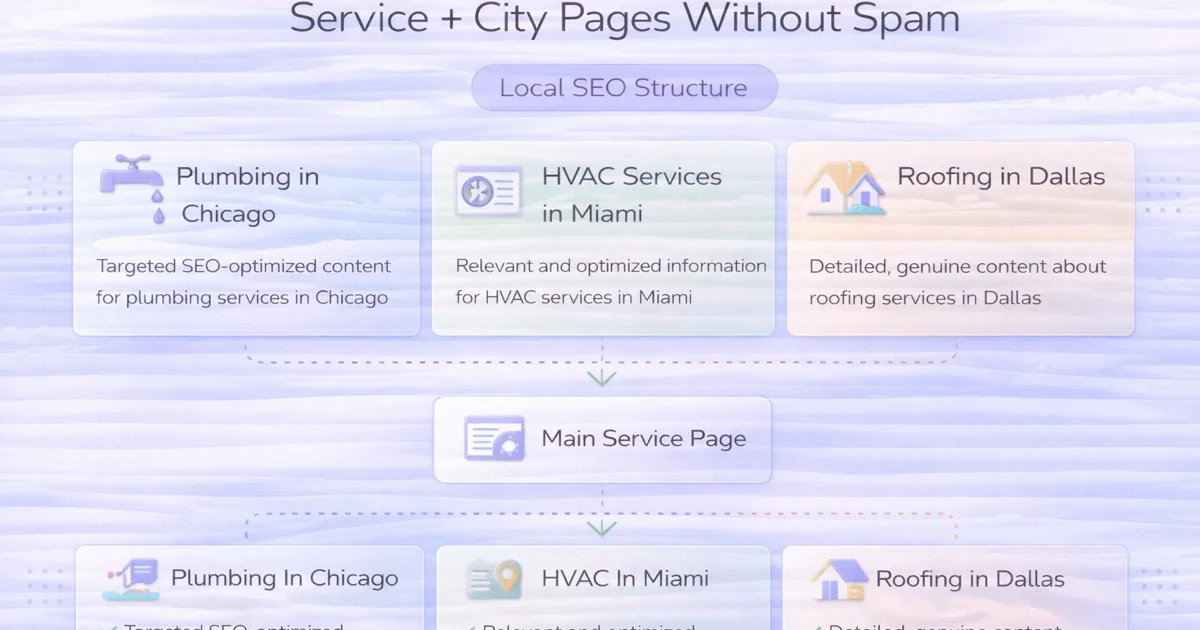
April 4, 2026
How to create service plus city pages without spam: avoid doorway abuse, build real local value, and structure pages safely in 2026.
Read article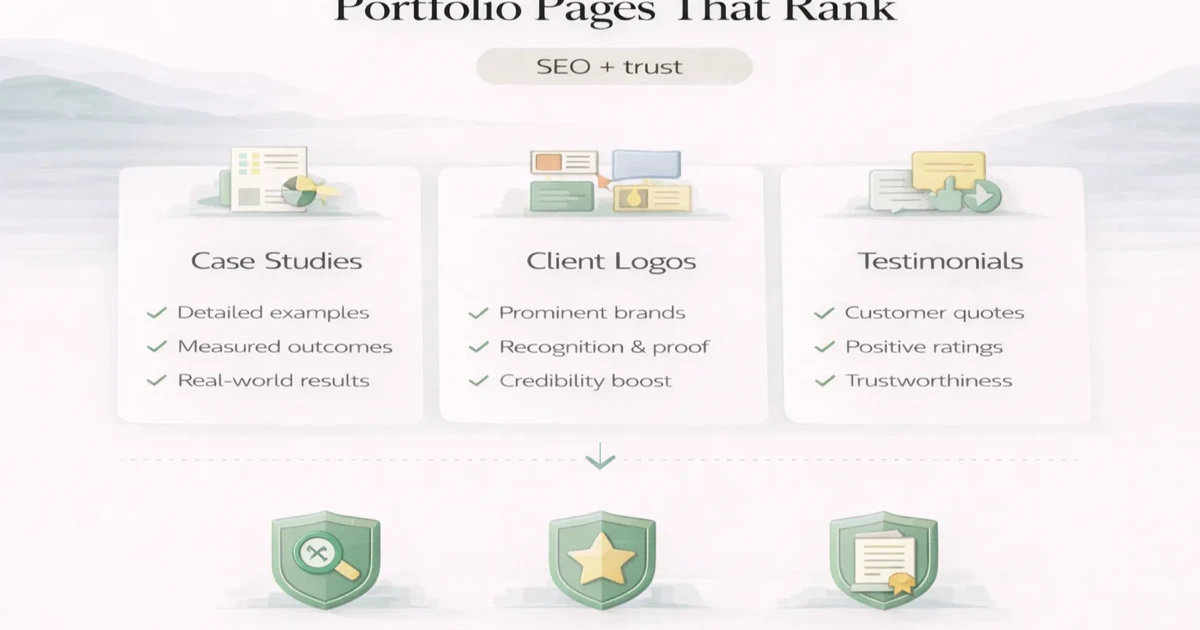
April 6, 2026
Plan portfolio pages that support SEO and buyer trust with verified evidence, clear indexing rules, useful project detail and honest lifecycle management.
Read article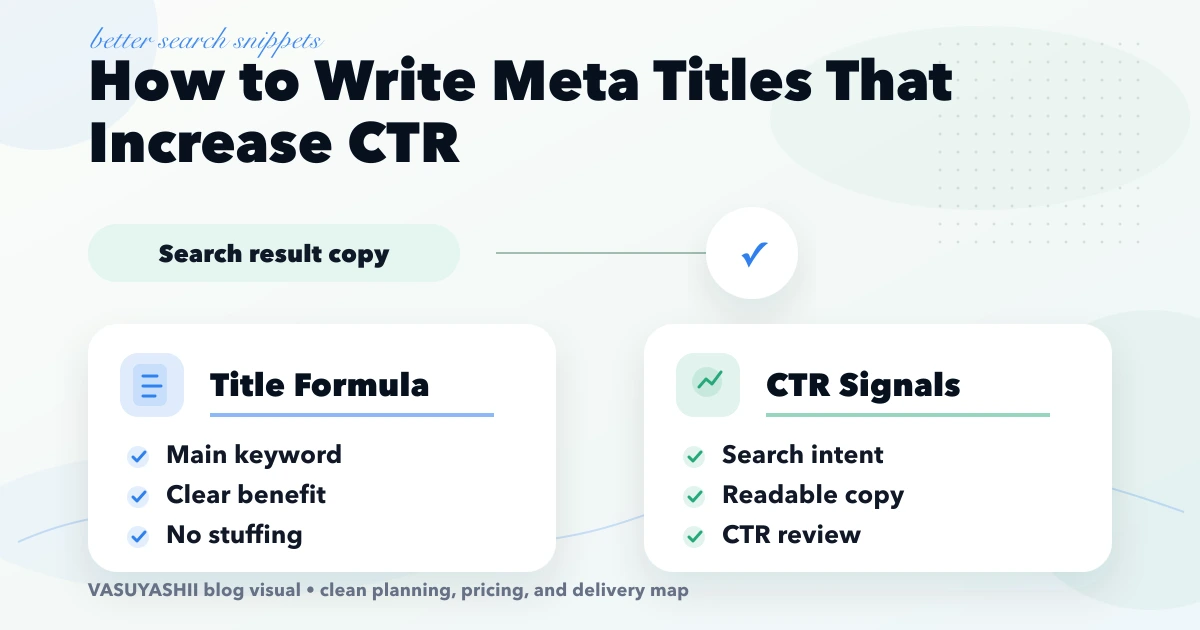
April 20, 2026
Improve organic CTR with query-matched meta titles, honest modifiers, readable length, Search Console selection, controlled testing, and conversion checks.
Read article