

March 21, 2026
Business Website Redesign Guide for 2026
Business website redesign guide for 2026 with SEO migration, speed, UX, trust signals, conversion upgrades, tracking, and launch checklist.
Read articlePublished Updated
Plan website redesign cost in India by auditing pages, content, templates, SEO migration, performance, integrations, accessibility, QA, and launch.

Website redesign cost in India is shaped by what must be preserved, rewritten, rebuilt, migrated, and verified. A visual refresh of five stable pages is not the same project as moving a 200-page website to a new framework while protecting search visibility, forms, analytics, integrations, and conversion paths.
This guide provides planning bands, not fixed quotations. It shows how to create a redesign scope that vendors can estimate consistently and how to avoid losing useful URLs, tracking, or leads during launch.
Indicative Indian-market planning bands are:
| Redesign type | Typical scope | Planning band |
|---|---|---|
| Focused visual refresh | One landing page or a small set of stable sections | ₹15,000-₹50,000 |
| Small business redesign | Roughly 5-12 pages, responsive templates, forms, basic migration | ₹50,000-₹2,00,000 |
| Custom business redesign | Custom UI system, content restructuring, SEO migration, performance and integrations | ₹2,00,000-₹8,00,000 |
| Large or multi-system redesign | Many templates, languages, portals, complex migration, governance and integrations | From ₹8,00,000 after discovery |
These are estimation ranges, not a price list. Content volume, approval cycles, technical debt, accessibility targets, data migration, and third-party systems can move a project outside the band.
Choose the smallest intervention that solves the verified problem.
Use this when the platform is healthy but the offer, proof, service structure, calls to action, or internal links are weak. It may not require a new design system.
Use this when the information architecture mostly works but typography, spacing, responsive behaviour, component consistency, and trust signals need improvement.
Use this when the current platform blocks performance, security, accessibility, content operations, integrations, or maintainability. A rebuild usually requires a formal URL and data migration plan.
High-value templates such as the homepage, service pages, pricing page, and contact flow can be improved first. This approach can reduce risk when analytics identifies a limited set of weak journeys.
Before estimating screens, inventory the system:
A cheap quote prepared without this audit often becomes expensive change requests later. The discovery output should be a scope and risk register, not only a mood board.
Two websites can each have 100 URLs but very different design effort. One may use five repeatable templates; the other may contain dozens of manually composed layouts.
Count both:
Reusable components can reduce future inconsistency, but building a robust component system requires more initial planning than copying each page independently.
Clarify who owns:
Moving weak content into a new layout does not create a stronger website. For commercial pages, the redesign should connect search intent, buyer questions, proof, conversion actions, and the actual service delivery process.
A redesign estimate should name the expected deliverables:
An attractive desktop homepage alone is not a completed website design. Mobile navigation, long headings, tables, forms, validation, keyboard use, focus states, and reduced-motion behaviour all affect delivery effort.
The existing stack may be retained, upgraded, or replaced. Estimate:
Platform choice should follow content, operations, team skills, and integration needs. It should not be based only on a trend or a vendor's preferred framework.
SEO migration is not an optional plugin installed after development. It is a set of controls applied before, during, and after launch.
Create a source-to-destination sheet with one row for each old indexable URL. Mark it as unchanged, redirected, merged, intentionally removed, or under review. Avoid sending unrelated old pages to the homepage.
Google's official guidance for URL-changing site moves recommends server-side permanent redirects and advises redirecting directly to the final destination rather than through chains. See Google Search Central's site-move guidance.
Validate titles, descriptions, headings, canonicals, Open Graph URLs, structured data, internal links, image references, and index controls. The production canonical should identify the real final URL, not staging or an old domain.
Protect staging from accidental indexing, but remove temporary restrictions from the production build. Do not rely on a staging robots.txt rule as the only access control for confidential content.
Keep old URL mappings, DNS records, analytics annotations, backups, and responsible contacts ready. After launch, check redirects, sitemap, Search Console, server errors, forms, events, and high-value pages.
VASUYASHII's own current website architecture uses the final https://www.vasuyashii.com canonical domain and direct internal links. That implementation experience informs the checklist, but it does not guarantee rankings after any client's migration.
Performance work can involve more than compressing images. Inspect:
Set target URLs and acceptance conditions. A single lab score captured once should not be the entire performance contract. Use the website speed optimization guide for the technical workstream.
Budget for testing rather than treating it as a final-hour check. A practical QA matrix can include:
The required level depends on audience and legal obligations, but basic accessible implementation should be defined rather than assumed.
Preserve the measurement plan during redesign. List important events such as:
Record the old baseline before launch. Then compare like-for-like periods while accounting for campaigns, seasonality, tracking changes, and traffic mix. Do not send personal data to analytics tools.
| Workstream | Example deliverable |
|---|---|
| Discovery | URL inventory, goals, audience, risks, integration map |
| Information architecture | Navigation and page hierarchy |
| Content | Ten page briefs, rewrite responsibility, migration decisions |
| Design | Homepage plus reusable service, article, and contact patterns |
| Development | Responsive components, forms, CMS or MDX integration |
| SEO migration | URL mapping, redirects, metadata, sitemap and canonical validation |
| Analytics | Agreed conversion events and deployment annotation |
| QA | Device, browser, accessibility, content and integration checks |
| Launch | Backup, DNS/deploy plan, smoke test, rollback and monitoring |
| Handover | Access, documentation, training and maintenance scope |
Use this as a comparison template. A vendor may combine workstreams, but no critical responsibility should disappear.
A focused visual refresh can take a few weeks. A custom business redesign can require several weeks to a few months, especially when content approvals, integrations, stakeholder reviews, or migration are substantial.
A safer phase sequence is:
The timeline should include client review time. Fast coding cannot compensate for missing content or delayed approvals.
Hours become meaningful only after templates, content, migration, integrations, and approval responsibility are known. The following effort bands are illustrative planning examples, not quotations:
| Scope | Illustrative delivery effort | Typical calendar effect |
|---|---|---|
| one high-value page or focused template refresh | 20-60 hours | roughly 1-3 weeks |
| 5-12 page small-business redesign | 80-240 hours | roughly 4-8 weeks |
| custom redesign with migration and integrations | 250-800+ hours | roughly 2-5 months |
Calendar time is longer than hands-on production time because discovery, content preparation, stakeholder review, revisions, access delays, UAT, and launch monitoring occur between work sessions. Ask each vendor whether quoted hours include project management, copy, migration, QA, SEO checks, deployment, and support.
Small edits may fall inside an active maintenance plan, while new templates, content restructuring, integration changes, performance work, or SEO migration should be scoped separately. The cost depends on access, platform condition, testing risk, and whether the edit changes only content or affects reusable components and production behaviour.
Before approving a redesign quotation, separate routine edits, repair work, visual redesign, and technical rebuild. This prevents a low “editing” estimate from hiding a larger migration or architecture problem. Use the website maintenance cost guide for recurring updates rather than mixing them into one redesign price.
The live result includes responsive behaviour, content, forms, performance, tracking, and accessibility.
Keep useful URLs when possible. If a change is necessary, map and redirect it directly.
Review traffic, links, conversions, and business relevance before merging or removing pages.
Visual QA cannot prove enquiry delivery or event tracking.
Compare deliverables, exclusions, migration controls, evidence, and ownership rather than only total price.
VASUYASHII can help with business websites, web applications, integrations, technical SEO foundations, and migration planning. The starting point is an audit of the existing pages and customer journey, followed by a focused scope rather than an automatic full rebuild.
Review website redesign services, web application services, and software development services. Examples and detailed delivery claims should be validated against the current project before they are presented as proof.
Yes. If the existing URL structure is useful, a new layout and platform can often preserve it. This usually lowers migration risk, though page-level content and metadata still need validation.
Not always. Reusing a healthy structure can reduce work, but undocumented code, plugin conflicts, inaccessible templates, or extensive content debt can make a clean rebuild more efficient.
No. Better content, technical stability, performance, usability, and internal linking can improve the foundation, but rankings also depend on competition, relevance, authority, and how search engines process the changes.
No. Redirect an old URL to the closest relevant destination. If no equivalent exists, decide whether a useful replacement should be created or the URL should be retired appropriately.
Provide the current domain, URL inventory, business goals, target users, required pages, content ownership, examples, integrations, analytics, access constraints, deadline, and post-launch expectations.
Check high-value URLs, redirects, canonicals, sitemap, index controls, forms, tracking, mobile layouts, major integrations, error logs, and Search Console. Continue monitoring instead of considering launch the end of the project.
The proposals may include different template counts, content work, responsive states, migration controls, integrations, accessibility, analytics, QA, ownership, and support. Compare the same written scope and exclusions before comparing totals.
Complete the accurate software quote checklist and create an old-to-new URL inventory. Then request quotes against the same scope. To discuss an audit, contact VASUYASHII.
Related Articles
March 21, 2026
Business website redesign guide for 2026 with SEO migration, speed, UX, trust signals, conversion upgrades, tracking, and launch checklist.
Read article
May 13, 2026
website audit checklist: practical 2026 audit guide with checklist, pricing, roadmap, mistakes, FAQs, tools, and next steps for Indian SMBs today safely.
Read article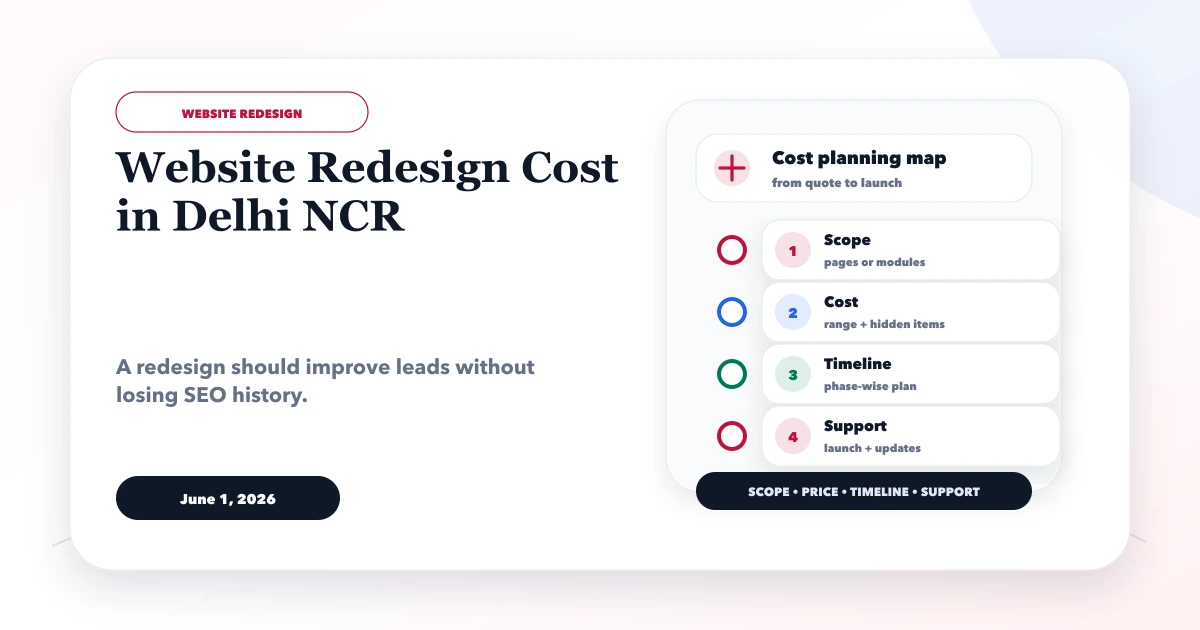
June 1, 2026
Plan a Delhi NCR website redesign with content inventory, SEO migration, UX, performance, analytics, acceptance and practical budget bands.
Read article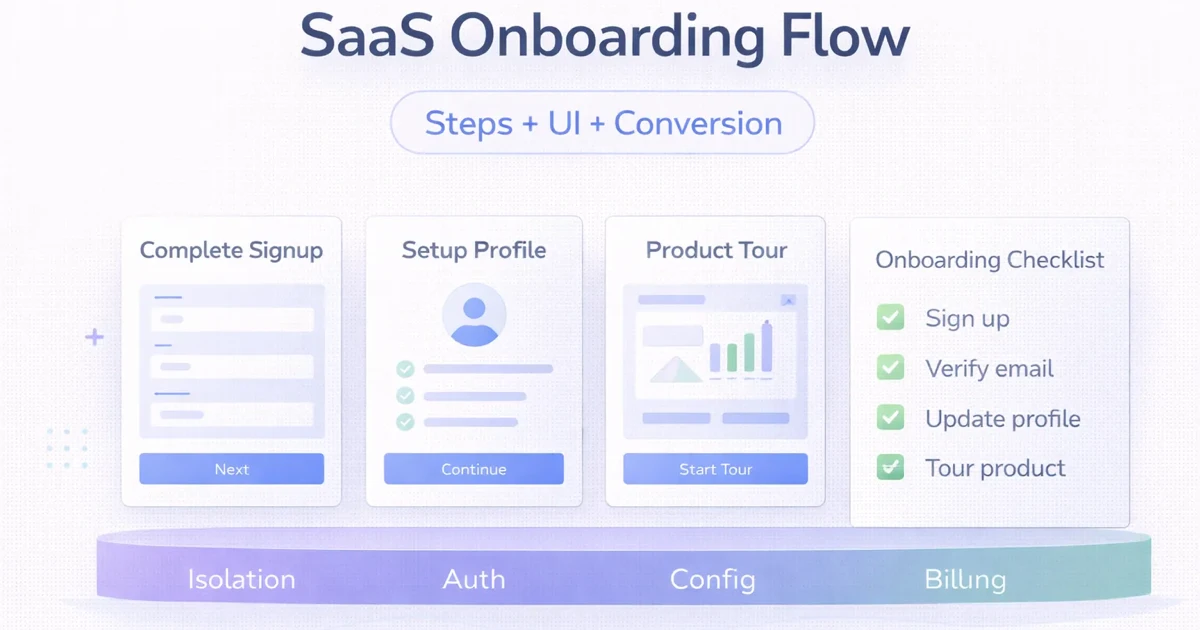
March 31, 2026
Design a SaaS onboarding flow with an activation checklist, setup dependencies, role-specific guidance, useful empty states, recovery, and measurable progress.
Read article