
May 9, 2026
Web developer near me (Delhi NCR): pricing + checklist
web developer near me Delhi NCR: pricing, checklist, FAQs, trust signals, and practical SEO steps for Indian SMB owners.
Read articlePublished Updated
Send developers a complete website brief covering pages, content, features, ownership, SEO, approvals, support, timeline, and acceptance criteria.
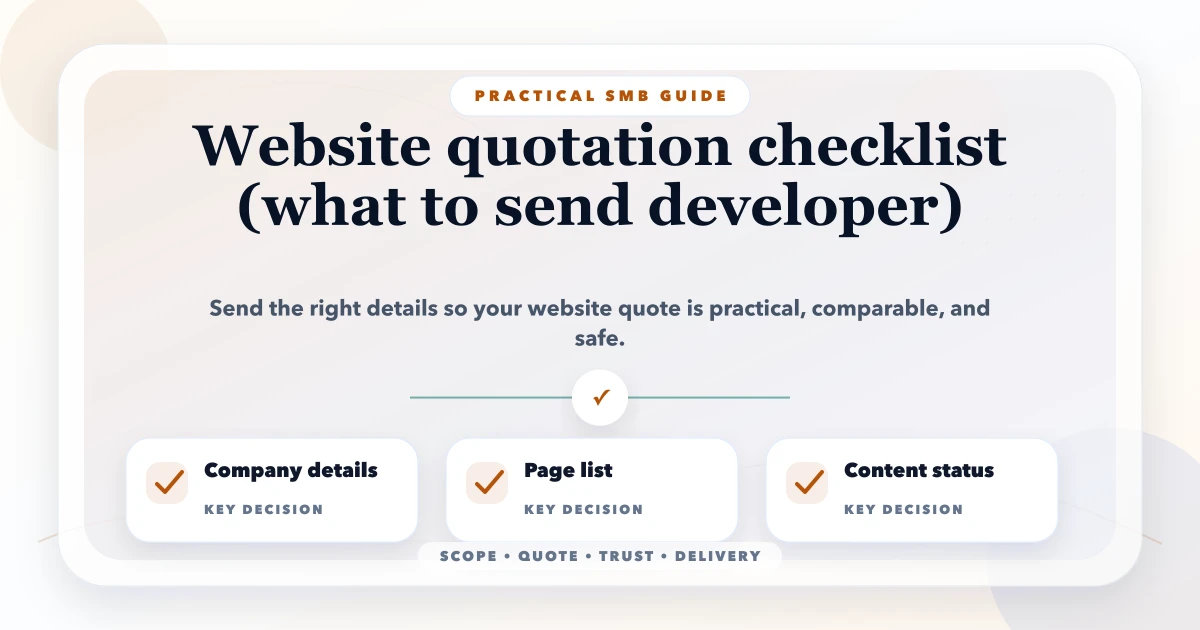
This guide on website quotation checklist is for business owners who want a proper website quote without ten confusing calls and repeated follow-ups. It is written for Indian SMB owners who want practical clarity before they pay, approve a proposal, or start development. It explains what to include, what to ask, how pricing usually works in INR, what mistakes to avoid, and how to make the next conversation with a developer or SEO team more productive.
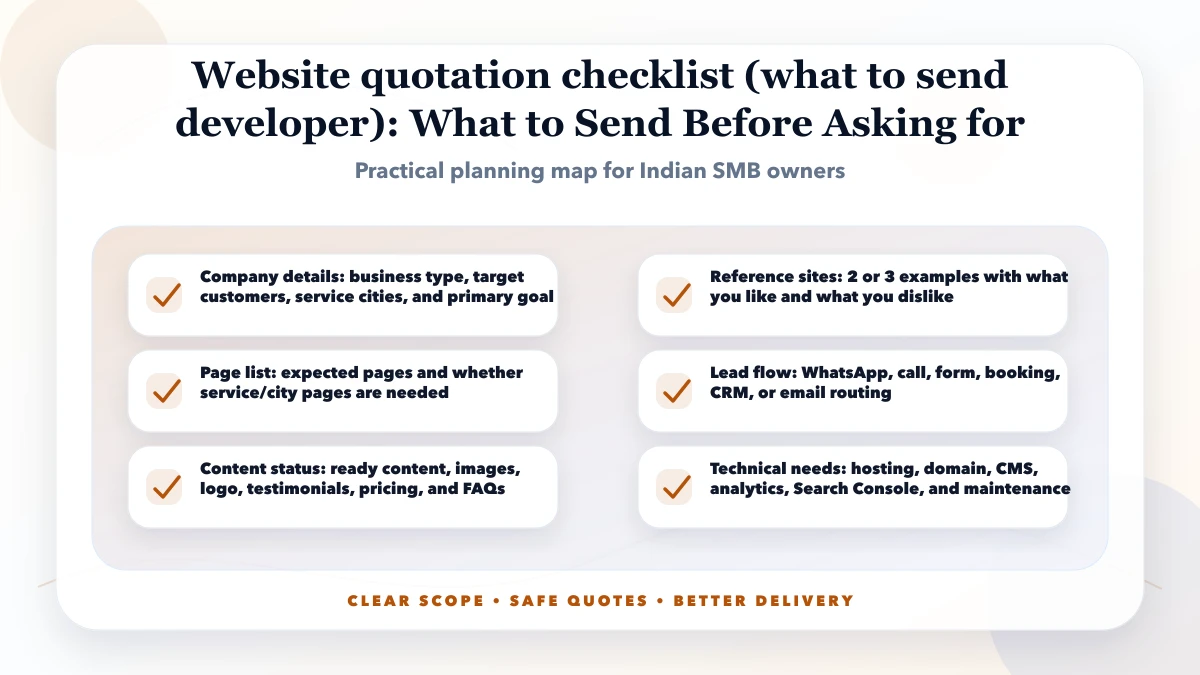
To get a good website quotation, send your business type, page list, reference sites, content readiness, lead flow, SEO expectation, design preference, integrations, timeline, and budget range.
| Scope | Practical price range | Typical timeline |
|---|---|---|
| Basic quote-ready website | ₹18,000 to ₹45,000 | 7 to 14 days |
| Lead-focused website | ₹45,000 to ₹1.2 lakh | 2 to 4 weeks |
| Website + CMS + SEO foundation | ₹1.2 lakh to ₹3 lakh+ | 4 to 8 weeks |
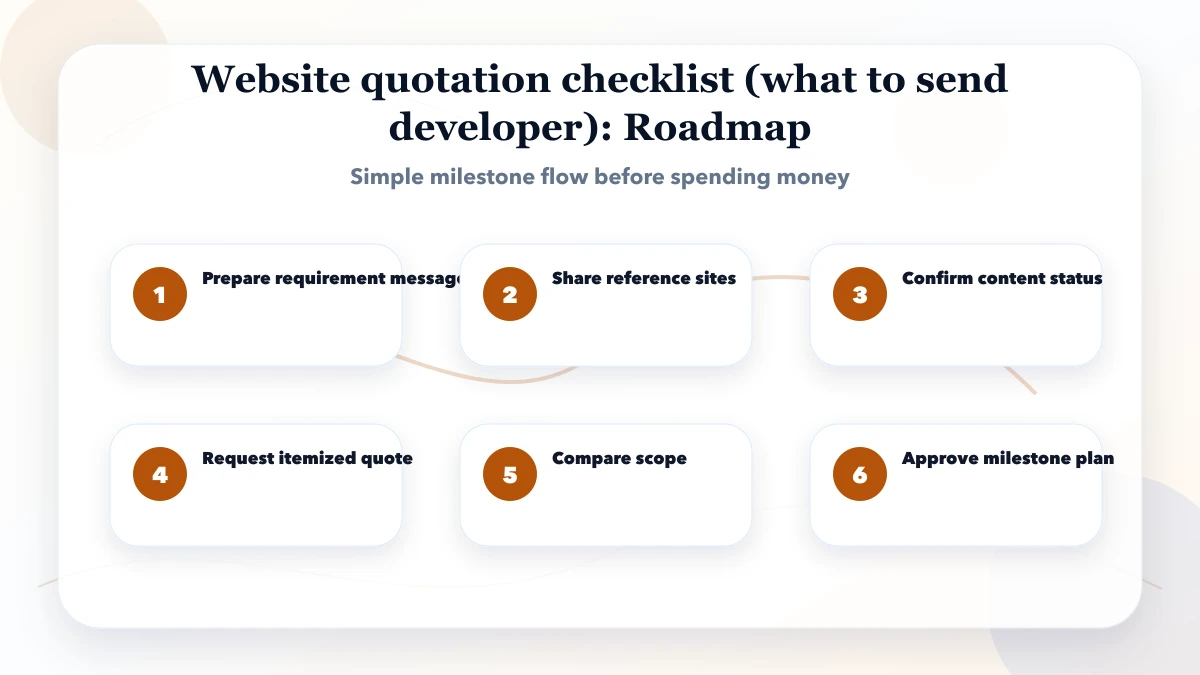
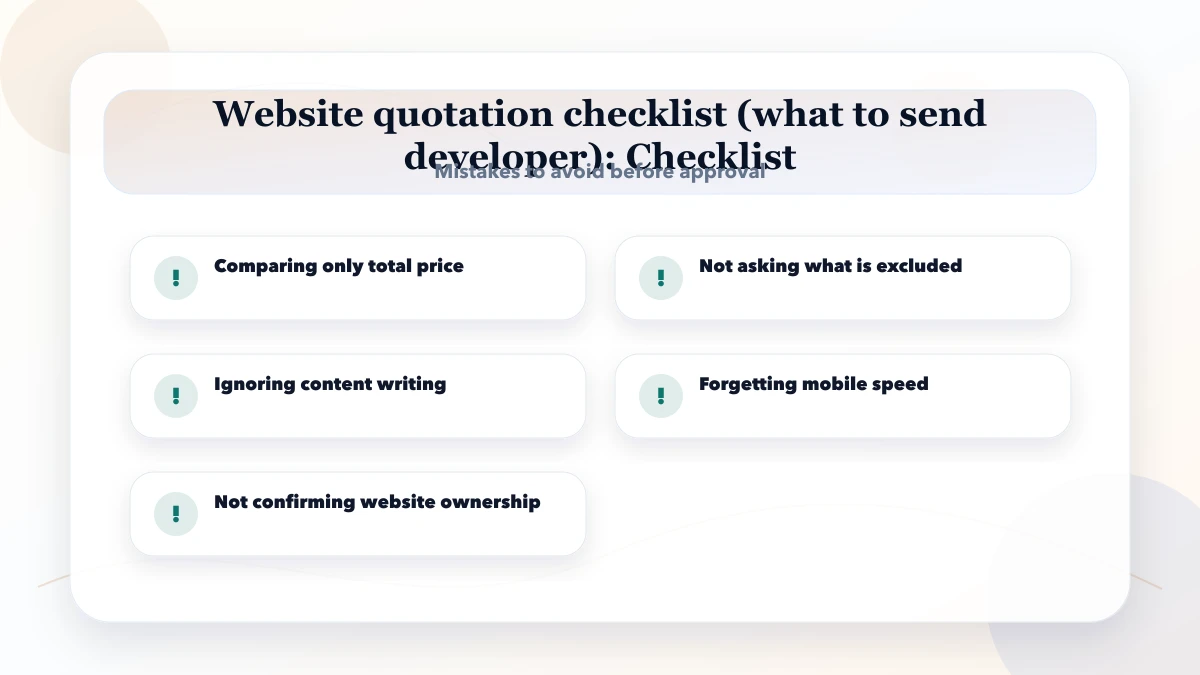
Before you approve the next step, check these points:
If you want to use this web development guide immediately, start with a single shared document. Put the business goal at the top, then add the checklist points, current links or screenshots, and the decision deadline. This avoids scattered WhatsApp messages where important details get lost.
Send your business details, page list, goals, references, content status, lead flow, timeline, and approximate budget.
Yes, a realistic budget range helps the developer suggest the right scope instead of guessing.
Compare deliverables, pages, SEO setup, support, revisions, ownership, and timeline, not only the final amount.
It can be included or separate, but ownership and renewal responsibility should be clear.
If you do not already have good content, include copywriting. Weak content reduces conversion and SEO value.
A quote that says website complete without page list, revisions, SEO setup, ownership, and support details is risky.
A useful quotation starts with one shared source of truth. Include:
| Brief field | What to write |
|---|---|
| Business outcome | The action or problem the website should improve |
| Primary audience | Buyer type, geography genuinely served, and decision concerns |
| Offer | Services or products included in phase one |
| Page inventory | New, retained, merged, redirected, and removed pages |
| Content status | Ready, needs editing, needs writing, or waiting for approval |
| Lead journey | Form, call, WhatsApp, booking, payment, or account creation |
| Functional scope | CMS, search, filters, login, upload, calculator, integration |
| Existing assets | Domain, hosting, analytics, brand files, photos, old URLs |
| Constraints | Deadline, approvals, compliance, languages, internal systems |
| Success check | Launch acceptance and the first 30-day measurement |
"Modern website like competitor X" is not a complete requirement. Explain which parts of the reference matter: information structure, tone, product filtering, proof presentation, or interaction.
Use the website development brief guide to prepare the input and the website content checklist to identify missing copy.
List every page and assign an owner. For each page, record the goal, primary keyword or audience question, source material, approval person, CTA, and migration action. This prevents a common delay where development is ready but legal text, service details, photographs, or leadership approvals are not.
If an old website is being replaced, the quote should include:
noindex.Read the website redesign guide before accepting a redesign quote that treats migration as only a visual change.
"Contact form" should define fields, validation, consent, spam protection, destination, confirmation, failure message, notification, data retention, and tracking event. "Admin panel" should define roles, records, permissions, workflows, reports, audit history, and exports.
For each feature, write:
This level of detail allows two quotations to be compared fairly.
Request a separate schedule for one-time and recurring items:
| Item | Ownership question |
|---|---|
| Domain | Is it registered in the client's account and email? |
| Hosting | Who pays, renews, monitors, and can export the site? |
| Source code | Is repository access and handover included? |
| CMS | Which roles, licenses, updates, and backups are included? |
| Fonts/images | Are commercial licenses transferable or reusable? |
| Email/forms | Who controls sender domains and stored submissions? |
| Analytics | Is the business an administrator of the properties? |
| Maintenance | What work, response time, and exclusions apply monthly? |
Avoid a proposal where "one year free" hides the renewal amount or where the vendor owns the business domain. Compare the maintenance plan checklist and website payment terms guide before signing.
Tie payments to reviewable outputs rather than vague percentages:
Acceptance should name supported browsers and devices, performance method, accessibility checks, form tests, redirects, metadata, analytics events, ownership, and the defect window. A performance target must identify the page, device profile, test method, and acceptable variance; a guaranteed Lighthouse number under every network condition is not realistic.
Use the website project agreement template and delivery checklist before final payment to turn proposal language into testable handover conditions.
Not every new idea is a small revision. Define how requests are classified:
Each change request should show effort, cost, schedule effect, and approval before work begins. Keep approvals in the project system or email rather than scattered chats.
Score each vendor from 0 to 2 on:
The lowest price may be appropriate for a small static scope. It is risky when important work is simply absent. Ask the vendor to mark assumptions and exclusions so price differences become explainable.
VASUYASHII provides website development, web applications, and integration services. Our public pages and demo library show the types of deliverables available for discussion. They do not establish a fixed quote for an unseen requirement.
For a useful estimate, send the completed brief, page inventory, content status, functional states, migration needs, examples, deadline, and budget range through the contact page. A discovery response should identify open questions before presenting a final implementation commitment.
Related Articles
May 9, 2026
web developer near me Delhi NCR: pricing, checklist, FAQs, trust signals, and practical SEO steps for Indian SMB owners.
Read article
March 30, 2026
Compare website development pricing in Bulandshahr, essential deliverables, ownership terms, lead tracking, and questions to ask before hiring.
Read article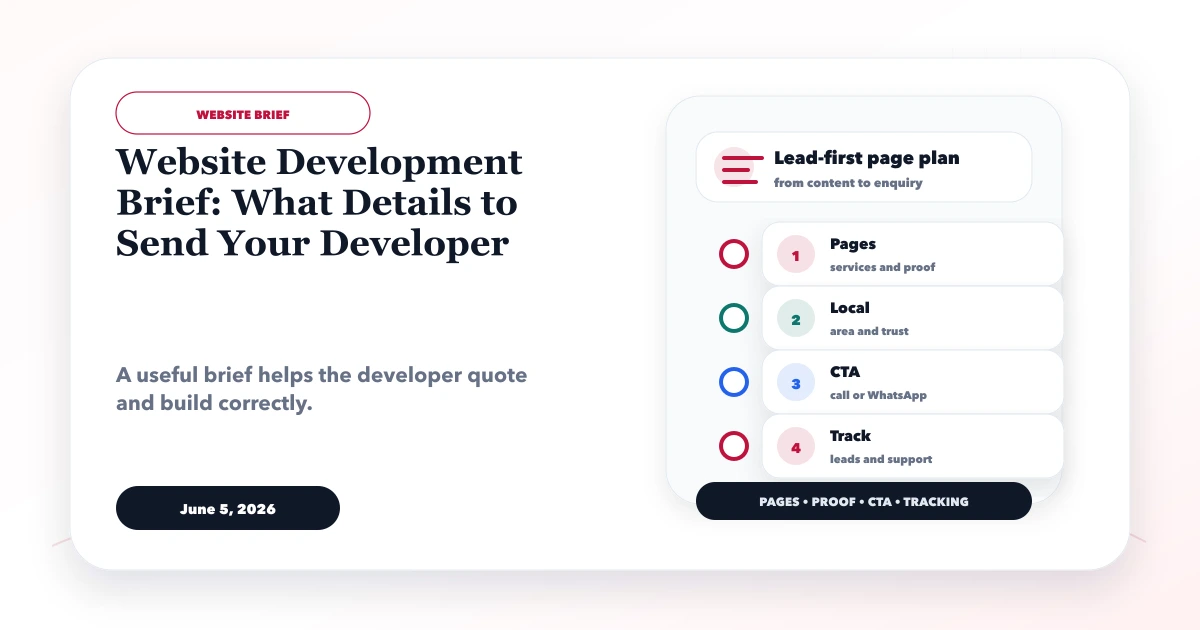
June 5, 2026
Prepare a complete website development brief covering goals, audiences, pages, content, design, lead flow, SEO, access, ownership, and acceptance criteria.
Read article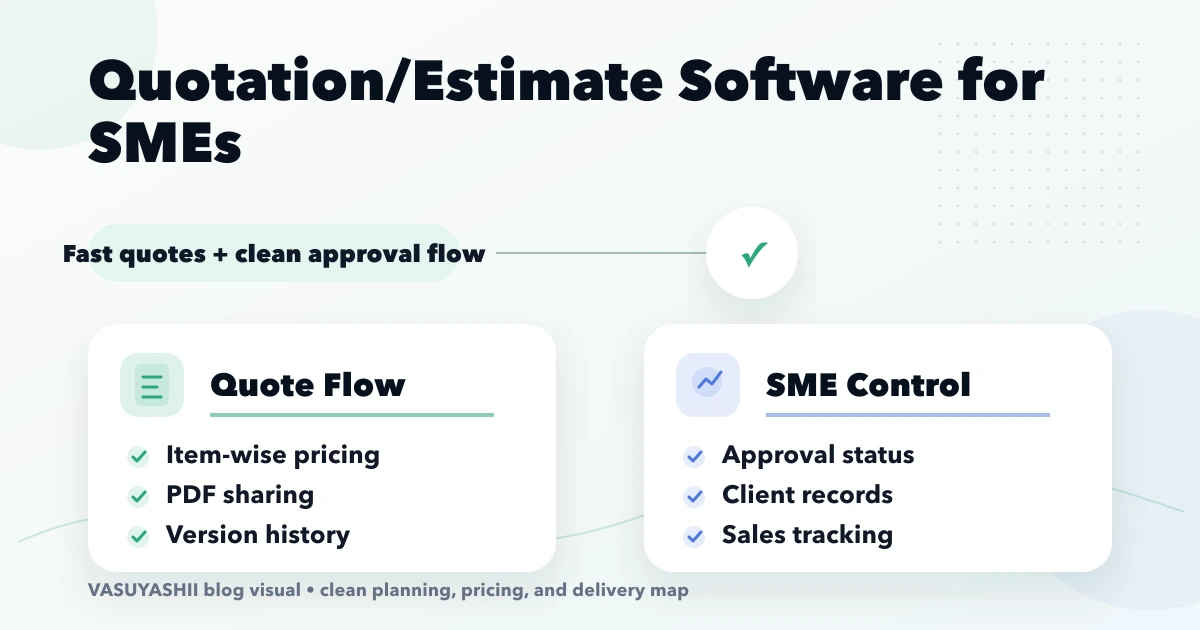
April 16, 2026
Plan quotation and estimate software for SMEs with masters, revisions, approvals, taxes, PDF delivery, acceptance, invoice conversion, reports, and controls.
Read article