
April 6, 2026
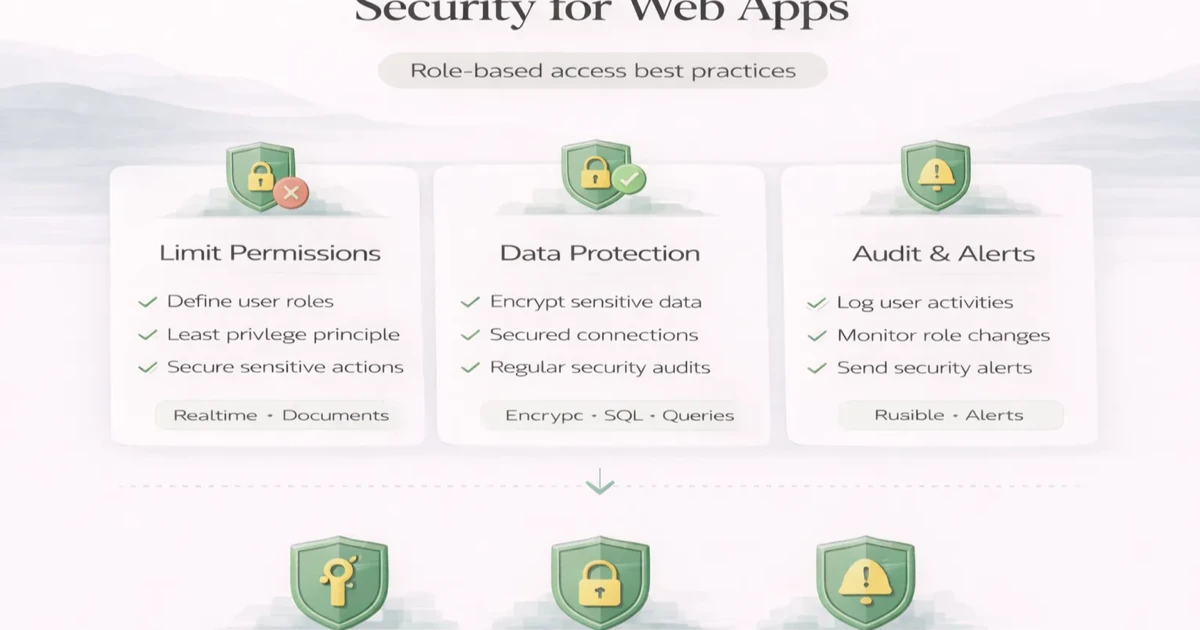
Web App Security: RBAC and Permission Best Practices
Web app security guide to RBAC, least privilege, permission matrices, server-side authorization, audit logs, testing, and safer access reviews.
Read articlePublished
web app security checklist for SMEs: practical 2026 guide with checklist, cost, roadmap, tools, mistakes, FAQs, and next steps for Indian SMBs today safely.
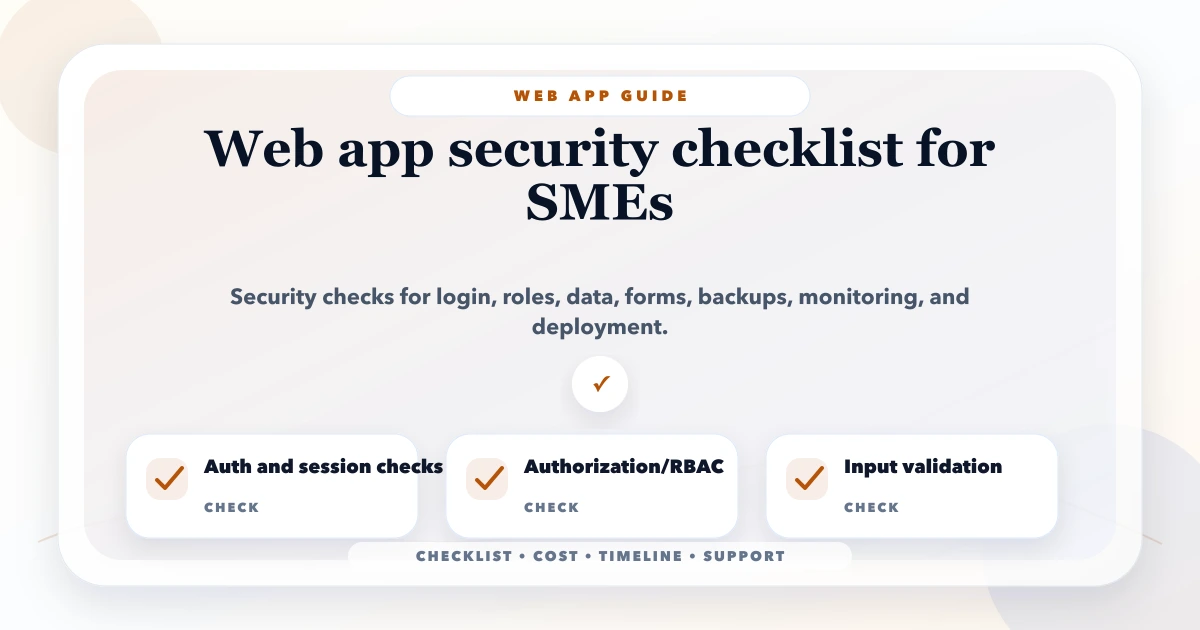
This guide on web app security checklist for SMEs is for SME owners and teams running custom CRM, ERP, inventory, billing, admin dashboards, portals, and internal tools. It is written for Indian SMB owners, founders, and software teams who want practical decisions instead of generic advice. You will learn what to include, what it may cost, how to phase the work, what tools or stack to use, and what mistakes to avoid.
In 2026, buyers expect speed, trust, security, clean UX, and clear follow-up. A page, SaaS flow, web app module, or ecommerce system should not only look good; it should reduce confusion, improve operations, and create measurable business value.
By Tushar C. (Founder, VASUYASHII). Reviewed by VASUYASHII Editorial for field experience, buyer usefulness, SEO clarity, and practical implementation relevance.
Serving Delhi NCR and nearby business markets: Ghaziabad, Noida, Delhi, Gurugram, Faridabad, Meerut, Hapur, and remote clients across India.
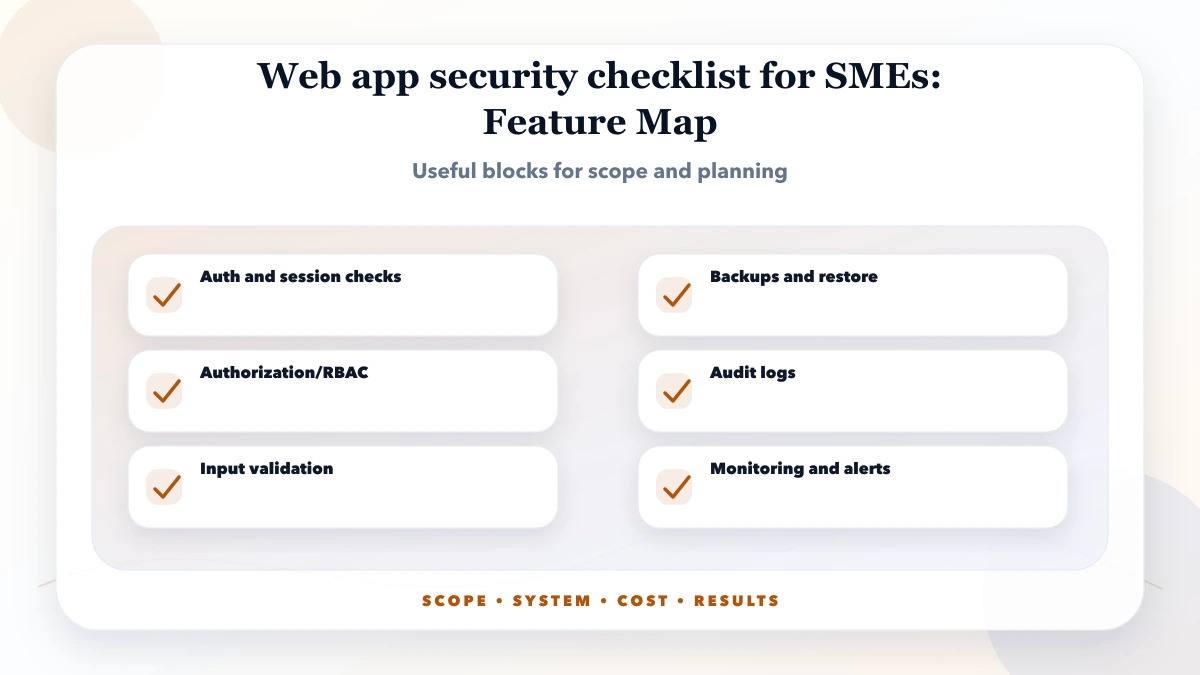
A web app security checklist for SMEs should cover login, strong authorization, role-based access, input validation, secure forms, backups, audit logs, rate limiting, secrets, hosting, and update process.
The practical approach is to define the business goal first, then build the smallest useful version that can be measured. If the goal is conversion, track leads and actions. If the goal is security, test permissions and recovery. If the goal is ecommerce growth, measure product-page, cart, checkout, and repeat-purchase behavior.
For SME web apps, security should be practical: role checks, validation, backups, audit logs, monitoring, and safe admin access. Do not wait for a breach or data loss before adding these controls.
These points should become your working scope. Do not treat them as decoration. Each item should either reduce buyer doubt, improve user activation, protect data, increase speed, improve conversion, or make operations easier.
Start with one clear user journey. For SaaS, that journey may be signup to activation. For web apps, it may be login to task completion. For ecommerce, it may be product discovery to order confirmation. Once the journey is clear, decide the screens, fields, messages, reports, and support actions needed.
The first version should be easy to explain to staff and customers. If a screen needs a long training session, simplify it. If a page gets traffic but no action, improve proof, CTA placement, speed, and trust. If a workflow creates support tickets, add better empty states, validation, help text, or automation.
| Scope | Practical price range | Typical timeline |
|---|---|---|
| Security checklist audit | ₹15,000 to ₹60,000 | 3 to 10 days |
| Security hardening sprint | ₹60,000 to ₹2.5 lakh | 2 to 6 weeks |
| Ongoing security support | ₹20,000 to ₹1 lakh/month | Monthly |
These are planning ranges, not fixed quotes. Final pricing depends on scope, design quality, integrations, data import, analytics, testing, content, custom logic, support, and the number of approval cycles.
Keep the timeline realistic. A rushed launch can create hidden technical debt, poor data quality, weak tracking, and support issues. A phased launch helps the team learn from real usage and invest in the right next improvements.
The stack should match the problem. Do not choose tools only because they are popular. Choose tools that your team can maintain, your developer can support, and your business can afford over the next 12 to 24 months.
The biggest cost drivers are usually hidden in workflows: permissions, reports, edge cases, data cleanup, integrations, and testing. Clear scope reduces cost more than negotiation after the project starts.
Use a simple decision rule before spending money: if the problem is unclear, validate first; if the workflow is clear but manual, build a focused MVP; if users already depend on the system, invest in security, performance, analytics, and maintenance. This prevents overbuilding and also prevents risky underbuilding.
For every requirement, mark it as must-have, should-have, or later. Must-have items should directly affect launch, revenue, security, or core operations. Should-have items can improve user experience but should not block the first release. Later items should wait until real users confirm the need. This discipline keeps the project practical for Indian SMB budgets.
Also decide one owner for every metric and action. Without ownership, even a good checklist becomes a document that nobody uses.
Keep the first version practical. If you sell to Indian SMB users, design for mobile, low training time, WhatsApp or phone support, clean invoices or reports, and fast owner-level visibility. Avoid adding ten dashboards if the owner only checks three numbers.
For public SEO pages, keep content helpful and specific. Do not create thin pages just by swapping keywords. Add real examples, pricing ranges, screenshots, FAQs, and internal links. For software and security topics, avoid overpromising. Mention what the system can do, what needs process discipline, and what should be reviewed by the team.
For ecommerce, test on real mobile devices. Product images, checkout, COD/UPI expectations, returns policy, and support visibility can decide whether a visitor buys or leaves. For SaaS, test whether users reach first value. For web apps, test whether roles and permissions work with real business scenarios.
After launch, review the system monthly. Track the main KPI, support issues, slow screens, failed actions, user confusion, conversion rate, and feedback. Keep a small change log so everyone knows what changed and why.
Maintenance should include backups, security updates, dependency checks, content refreshes, analytics review, and bug triage. For business-critical software, also test restore flow and access control after major changes. A project without maintenance becomes risky even if the first build is good.
OWASP's Top Ten is a useful first security-risk baseline for web applications.
Avoid measuring success only by launch. Measure whether users understand it, use it, trust it, and complete the intended action. If the page or system does not produce business movement, improve scope, UX, proof, speed, tracking, or support.
If you are planning this for your business, start with a focused scope document. Write the goal, users, must-have features, budget range, timeline, and support expectation. VASUYASHII can help convert that into a practical build plan.
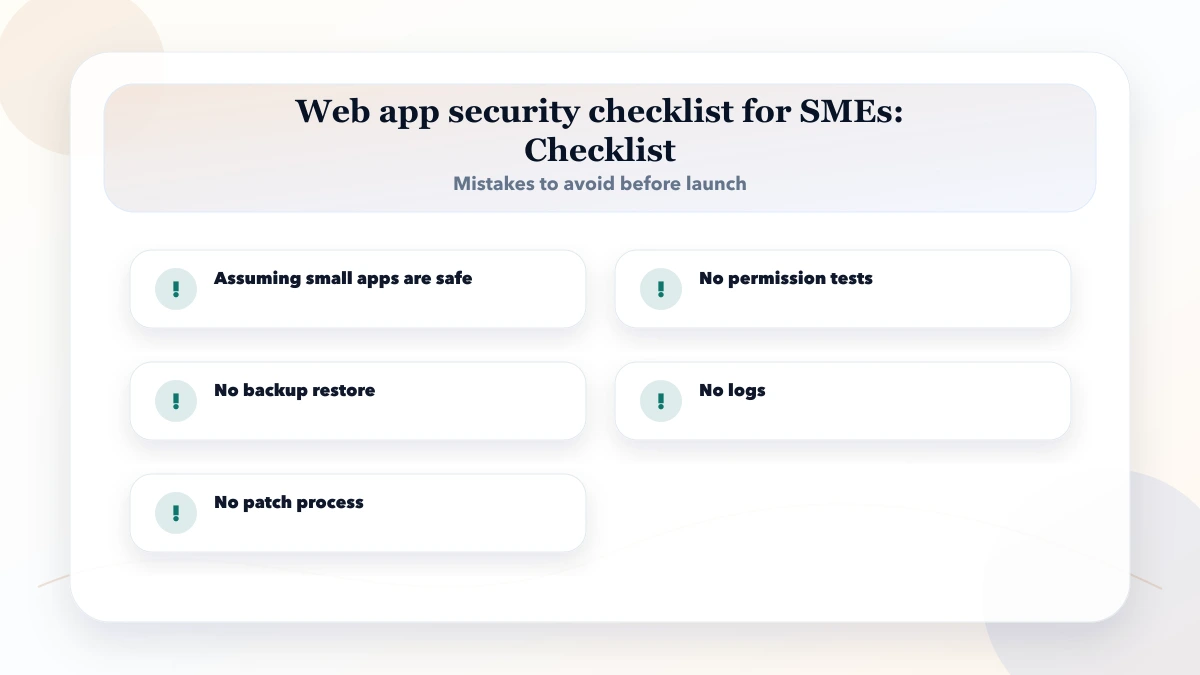
It is for SME owners and teams running custom CRM, ERP, inventory, billing, admin dashboards, portals, and internal tools. The goal is to make planning practical, not theoretical.
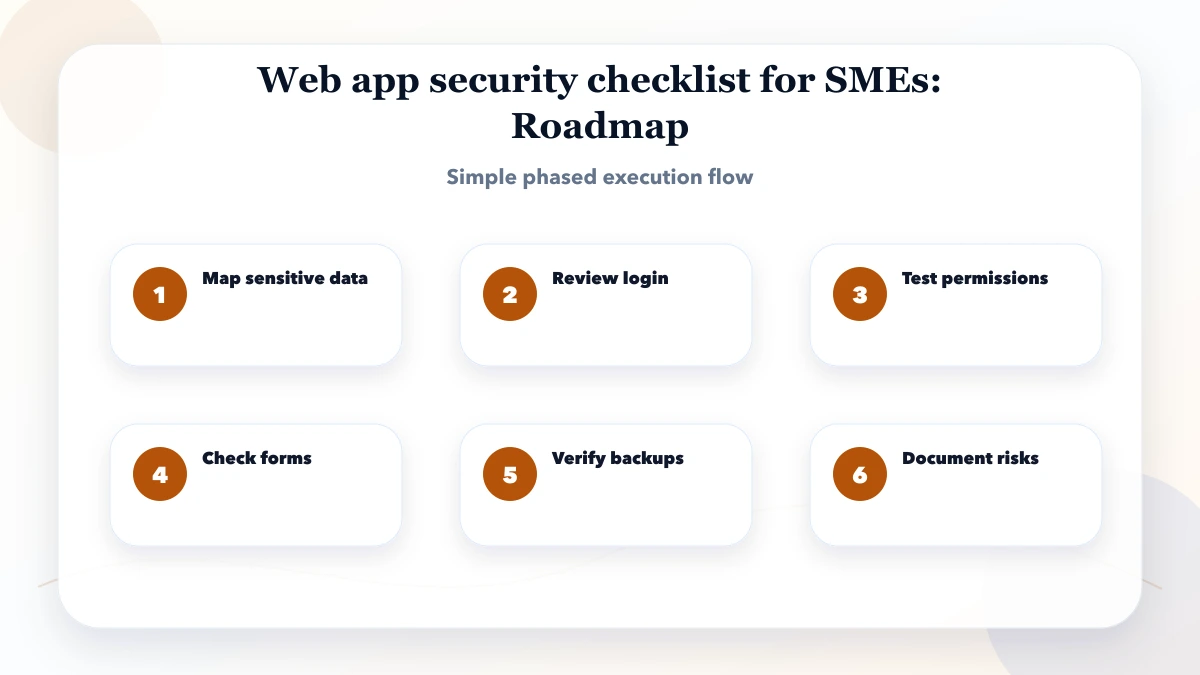
Start with the highest-risk part: map sensitive data. Then move through the roadmap instead of trying to solve everything in one sprint.
Use the pricing table as a planning range. Final cost depends on scope, integrations, data quality, custom UI, testing, support, and how much implementation is included.
Yes. For most Indian SMBs, phased execution works better. Launch the useful first version, collect feedback, then add automation, advanced reporting, and integrations.
Track usage, conversion, support issues, errors, response time, qualified leads, and business outcomes. For web app, measurement is as important as the initial build.
The biggest mistake is treating this as a one-time screen or page task. It needs ownership, updates, measurement, and a clear follow-up process.
Authentication and permissions do not prevent one valid client from exhausting an expensive endpoint. Add layered quotas, concurrency rules, retry behavior, and monitoring from the API rate-limiting guide.
If you want help with SaaS planning, web app security, ecommerce optimization, or a practical maintenance plan, VASUYASHII can help you scope and implement it cleanly.
Related Articles
April 6, 2026
Web app security guide to RBAC, least privilege, permission matrices, server-side authorization, audit logs, testing, and safer access reviews.
Read article
May 16, 2026
Use this SaaS security checklist for tenant isolation, authentication, authorization, secrets, uploads, logging, backups, incident response, and testing.
Read article
April 19, 2026
Plan SaaS authentication, server-side authorization, tenant isolation, role tests, session controls, audit logs, backups, and incident-ready operations.
Read article
May 21, 2026
WordPress security checklist for business websites: practical 2026 guide with checklist, pricing, timeline, risks, tools, FAQs, and Indian business tips.
Read article