
March 22, 2026
SaaS Product Development: From Problem to Operations
Understand SaaS product development from customer problem and MVP scope through tenancy, onboarding, billing, security, metrics, release and ongoing operations.
Read articlePublished Updated
Understand SaaS development services in 2026: MVP scope, multi-tenant architecture, onboarding, billing, scale planning, and the key factors that affect cost.
SaaS products fail less from a lack of engineering and more from lack of focus. Founders often know the industry pain point but still over-scope the first version, mixing core workflow, edge cases, enterprise features, and analytics into one expensive starting point.
In 2026, users expect SaaS tools to feel polished early. They want clean onboarding, permissions that make sense, responsive screens, and integrations with the systems they already use. That raises expectations, but it does not mean the MVP has to become bloated.
This guide covers:
SaaS development services should help you validate a product, not just launch a pile of features. That means scoping the MVP carefully, setting up multi-tenant foundations, and planning what needs to scale only after real usage proves demand.
Start with one buyer, one recurring problem, one activation action, and one retention signal. Architecture should protect tenant data and operations from day one, while feature scale should wait for usage evidence.
The right SaaS development service acts like a product partner as much as a delivery team. It should challenge scope, protect architecture, and help you move from MVP to scale based on actual customer behavior.
A SaaS product gets dramatically easier to scope when the target buyer, user role, and problem statement are narrow. Broad positioning usually leads to broad and expensive feature sets. This changes the outcome because clear positioning keeps both product decisions and engineering effort aligned to a real market need.
Unlike a one-company web app, SaaS products need account separation, tenant-aware data handling, and role logic that works across different customers. This changes the outcome because this is a structural requirement that shapes the backend from day one.
The product has to move new users from signup to first value quickly. That means setup flows, empty states, guided steps, and sensible defaults. This changes the outcome because activation quality affects retention far earlier than many founders expect.
Even if full monetization comes later, the app needs a clear idea of trial states, subscription plans, limits, and upgrade behavior. This changes the outcome because billing readiness prevents painful rewrites once commercial rollout begins.
Usage events, errors, admin insights, and account-level health indicators help you understand whether customers are actually getting value. This changes the outcome because without this visibility, product scaling becomes guesswork.
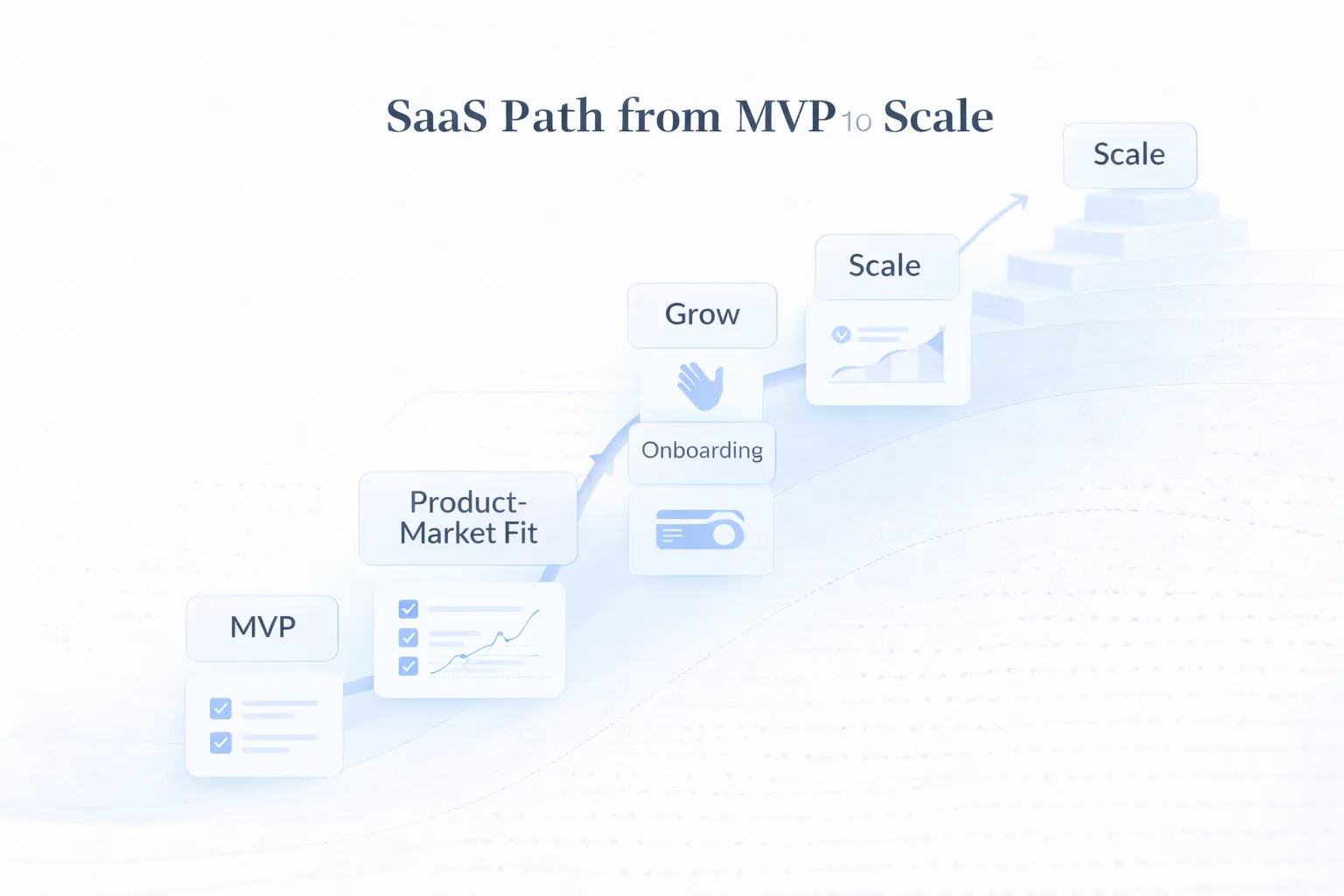
A SaaS roadmap should separate MVP, growth, and scale-stage work instead of pretending everything belongs in the first release. This changes the outcome because phase discipline reduces burn while keeping the product technically prepared for traction.
SaaS implementation quality includes tenant isolation, account lifecycle, roles, onboarding, support inspection, billing-state boundaries, exports, observability, and a controlled release process. A feature demo cannot validate those layers by itself.
The service should help define the smallest workflow that proves the value proposition while leaving non-core features for later releases.
That is how teams protect both time and runway without undermining the product premise. When this layer is done properly, the product becomes easier to onboard, easier to support, and easier to improve later.
Every SaaS build needs secure login, account ownership, user invites, and permissions that reflect how customer teams actually work.
These are foundational layers that determine trust and account usability. When this layer is done properly, the product becomes easier to onboard, easier to support, and easier to improve later.
The main user action, supporting tables, and system responses need to be defined tightly so the first release feels useful, not vague.
A crisp core workflow creates clearer demos, clearer sales messaging, and better feedback. When this layer is done properly, the product becomes easier to onboard, easier to support, and easier to improve later.
Trial logic, plan entitlements, account status, and upgrade messaging should be planned before monetization becomes urgent.
This makes growth-stage commercialization smoother and less risky. When this layer is done properly, the product becomes easier to onboard, easier to support, and easier to improve later.
Support teams need ways to inspect accounts, review errors, and understand customer activity without direct database access.
Operational visibility is what keeps customer support fast as the product grows. When this layer is done properly, the product becomes easier to onboard, easier to support, and easier to improve later.
A SaaS product benefits from steady release cycles, feature flags where needed, and a clear path from customer feedback to roadmap decisions.
That turns development into product improvement instead of endless rebuilding. When this layer is done properly, the product becomes easier to onboard, easier to support, and easier to improve later.
| Product layer | MVP decision | Evidence gate before expansion |
|---|---|---|
| Market | One buyer and painful repeat workflow | Interviews, pilot use, or paid demand evidence |
| Activation | First setup and first valuable action | Funnel showing where invited users succeed or stop |
| Tenancy | Account boundary, ownership, roles, and data scope | Automated cross-tenant authorization tests |
| Billing | Trial, active, overdue, cancelled, and entitlement states | Sandbox lifecycle tests and recovery behavior |
| Operations | Support inspection, logs, alerts, backups, and export | Documented incident, restore, and account-exit procedure |
| Scale | Measured bottleneck and service objective | Field usage, error, latency, and capacity evidence |
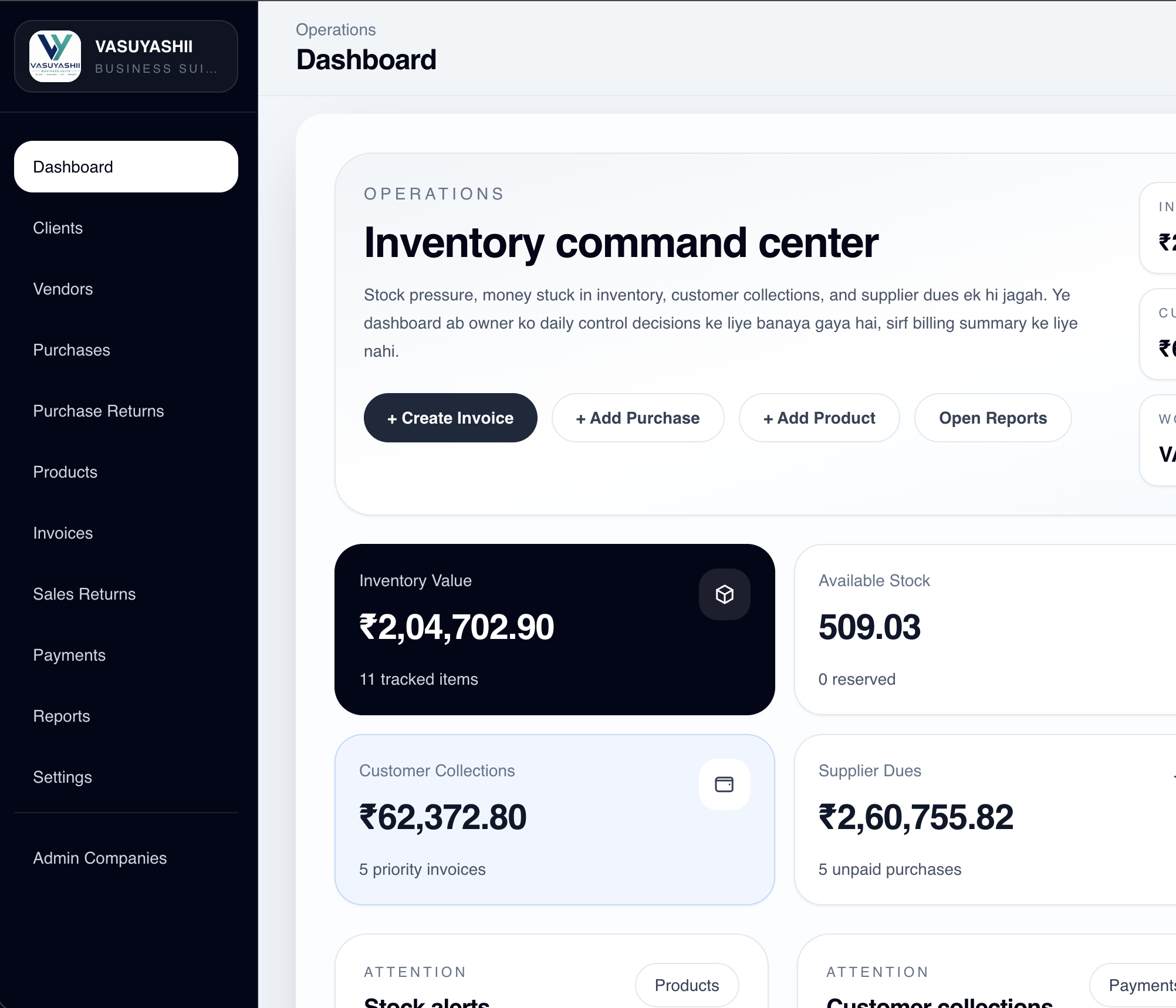
Business Suite is current first-party evidence of a multi-company web product direction with company-scoped operating data. It is not evidence of public SaaS adoption, customer retention, platform scale, certified tenant isolation, subscription billing, or a measured business outcome.
AWS's SaaS Lens explains that isolation is a foundational SaaS concern and is separate from general authentication and authorization. Use the official AWS SaaS isolation guidance alongside NIST's Secure Software Development Framework when defining architecture and delivery controls.
Products that solve one repeated industry task, such as approvals, scheduling, or reporting, can present a clearer value proposition than a broad suite.
Validate demand through interviews, pilots, or paid usage rather than assuming a narrow workflow will create traction.
Companies with branches or field staff may need software that handles updates, job status, files, and manager visibility in one place.
The product becomes repeatable only when configuration, onboarding, support, and tenant boundaries work across customers without custom intervention each time.
Some products provide customers direct access to authorized reports, statuses, or insights that previously required manual support.
Retention improvement must be measured; access alone does not prove recurring value.
Some SaaS ideas begin as internal software and are later evaluated for other companies in the same industry.
Before productizing, separate company-specific rules from repeatable configuration and test whether buyers share the same problem.
Bring buyer interviews, the activation action, roles, account lifecycle, data boundary, support flow, and the metric that would justify phase two. Those inputs create a defensible MVP brief.
Founders who have not yet proved the workflow should begin with the India SaaS idea validation checklist. When the build decision is clear, use the SaaS development-company buyer guide to compare delivery ownership and technical risk.
Enterprise features, complex analytics, and uncommon edge cases can delay learning before the market validates the core need. Tie each MVP feature to activation, delivery, safety, or measurement.
Some tools are better delivered as custom software first. Do not absorb tenant, subscription, support, and onboarding complexity without evidence of a repeatable buyer problem.
A product can be technically sound while new users fail to reach first value. Define and instrument the activation path before expanding the roadmap.
Even when payment collection comes later, define account, entitlement, overdue, cancellation, grace, and recovery states before commercialization.
Do not hire, rebuild, or add modules for hypothetical scale. Use measured capacity, latency, errors, support load, activation, and retention to identify the actual constraint.
Multi-tenant architecture does not make a product commercially validated, and an MVP does not remove security or data-separation responsibilities. Conversely, premature distributed architecture can slow learning without solving a measured bottleneck.
VASUYASHII does not claim public adoption, retention, revenue, scale, or certified isolation for Business Suite from the screenshot above. Those outcomes need production evidence. Keep an account export and deletion path so early users are not trapped if the product direction changes.
SaaS pricing depends heavily on whether you are building a focused MVP or a product that already needs billing, account administration, advanced reporting, and multiple integration points. The jump in effort is often bigger than founders expect because product layers stack quickly.
If you are still planning the first release, SaaS MVP Development Cost in India (2026) is a useful benchmark. It explains why the cheapest quote is often the one that quietly avoids multi-tenant depth, support tooling, or future-ready billing logic.
The most cost-efficient way to scale a SaaS product is usually to keep phase one tight, measure activation and retention, and then expand based on actual usage patterns. That protects both cash flow and product clarity.
Usually the core workflow, account setup, roles, tenant structure, and enough visibility to support early users. Everything else should be tested against whether it helps validate the product.
Often yes, because SaaS introduces multi-tenant architecture, billing readiness, onboarding, and account-level operations that a single-company web app may not need.
Early. Even if payment comes later, plan structures, entitlements, and account states from the start so monetization does not require a structural rewrite.
You can launch without complex dashboards, but you should still track activation, core actions, and major errors so product decisions are not based on guesswork.
If multiple companies share the same pain and you can define a repeatable product workflow, SaaS may fit. If the process is unique to one company, custom software may be the smarter first step.
Broad scope, unclear onboarding, late billing decisions, and trying to satisfy too many user types in the first release are common causes.
Adoption. A small product that users understand and return to is far more valuable than a bigger feature list that no one fully adopts.
Share the buyer evidence, core workflow, activation action, tenant model, support needs, and phase-two evidence gate. We can use those inputs to define a focused SaaS MVP.
Related Articles
March 22, 2026
Understand SaaS product development from customer problem and MVP scope through tenancy, onboarding, billing, security, metrics, release and ongoing operations.
Read article
March 24, 2026
Estimate SaaS MVP development cost in India using validation scope, tenant isolation, roles, billing, onboarding, analytics, integrations and operating risk.
Read article
March 22, 2026
Plan secure SaaS architecture with tenant isolation, authentication, database patterns, billing, jobs, caching, observability, and practical scaling decisions.
Read article
May 31, 2026
Evaluate SaaS development companies in India by product discovery, tenant security, billing, data ownership, testing, operations, handover, and support.
Read article