
May 25, 2026
Lead Management System for Service Businesses
Design a lead management system for service businesses across capture, deduplication, assignment, follow-up, pipeline control, WhatsApp, reporting and privacy.
Read articlePublished Updated
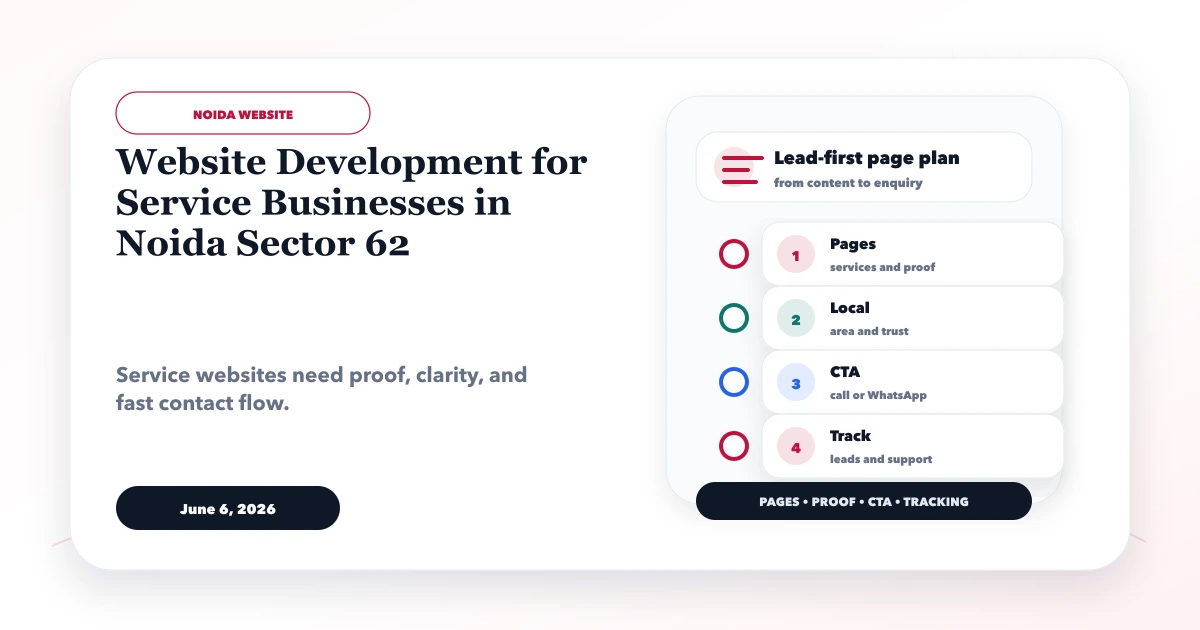
Plan a Noida Sector 62 B2B service website with account-focused pages, proof, lead qualification, sales routing, measurement, and CRM boundaries.
Service-area note: VASUYASHII is based in Delhi NCR and supports businesses remotely across India. A city-focused guide describes service and planning context; it does not claim a physical office in every location mentioned.
Explore the parent topic: Website Development Delhi NCR Hub →Website development for service businesses in Noida Sector 62 should reflect how B2B buyers research. A prospect may compare providers, circulate a link internally, check delivery capability, and return later with a detailed requirement. A generic homepage and “contact us” form do not provide enough information for that process.
This guide is for technology, consulting, staffing, facility, compliance, training, marketing, logistics, and other B2B service teams. It shows how to connect account-focused content, proof, qualification, routing, and measurement without turning the public website into an oversized CRM.
Written by Tushar C. (Founder, VASUYASHII) based on the current VASUYASHII website and lead-flow planning process. No Sector 62 office, local customer, conversion rate, or ranking is claimed here.
Several people may evaluate the same service.
| Role | Main concern | Content required |
|---|---|---|
| Business sponsor | Outcome and urgency | Problem, value, decision path |
| User team | Daily workflow | Process, inputs, support |
| Procurement | Scope and comparability | Deliverables, commercial method |
| Technical reviewer | Fit and risk | Architecture, integration, security boundary |
| Finance | Cost and commitment | Pricing factors, milestones, renewal |
| Leadership | Evidence and accountability | Proof, governance, responsible team |
A page should let each role find relevant detail without forcing everyone through a sales call for basic answers.
Do not create one page per internal department name. Create pages for distinct buyer problems.
A useful service page includes:
Use the service page content guide to review clarity. Avoid claims such as “best,” “leading,” or “guaranteed” unless the page supplies a defensible basis.
B2B visitors often want industry or use-case relevance. Add focused pages only when delivery genuinely differs.
Examples:
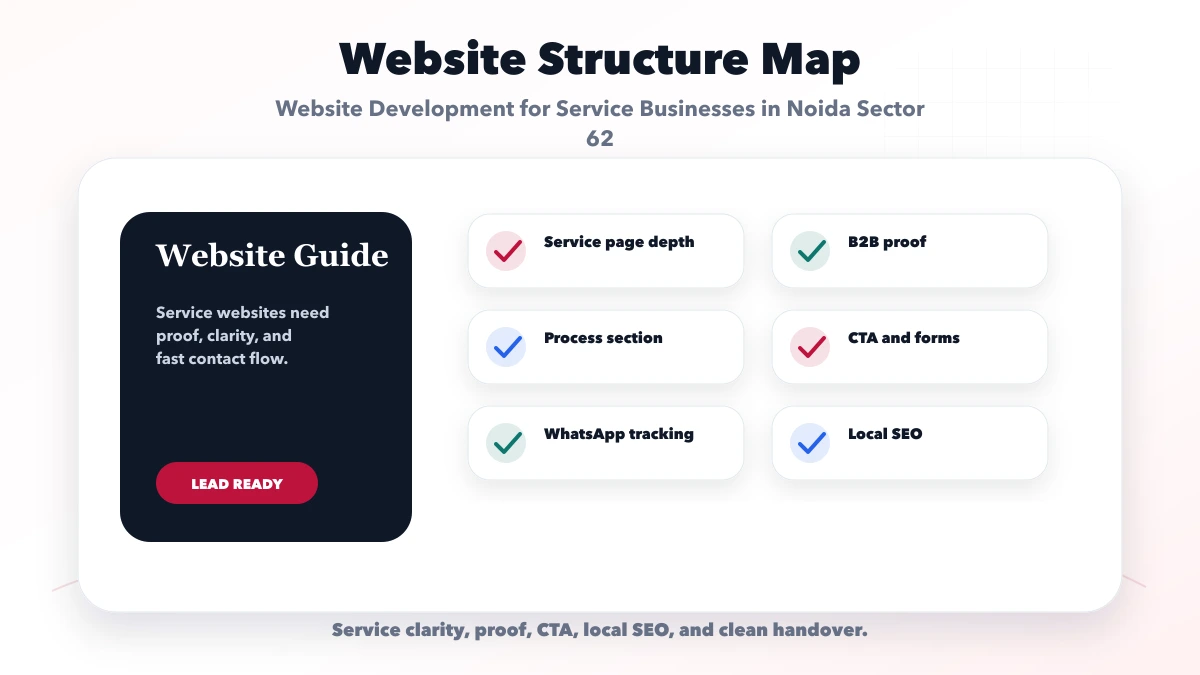
Do not publish dozens of thin industry pages with the company name swapped. A smaller set of deep use cases is easier to trust and maintain.
| Evidence type | Useful format | Required boundary |
|---|---|---|
| Case study | Situation, constraints, work, observed result | Permission and honest attribution |
| Process sample | Checklist, workflow, anonymized screen | Remove confidential information |
| Expertise | Named author and technical explanation | Avoid unsupported credentials |
| Client review | Source and role where permitted | Do not rewrite sentiment |
| Demo | Clearly labelled sample environment | Do not present fake data as a client |
| Security response | Published control boundary | Do not claim certifications not held |
If customer names cannot be disclosed, describe the scenario without implying a named relationship. The B2B case study template explains an evidence-safe format.
A B2B form should provide routing context without becoming a procurement questionnaire.
Detailed technical documents, contracts, identity records, financial data, or credentials should move to a controlled sales or portal process after verification.
Map each service to an owner and backup. Define rules for duplicates, spam, existing customers, careers, and vendor messages.
The public website should:
The CRM should manage assignment, stages, notes, follow-up, and reporting. Marketing automation may manage permitted reminders. A customer portal should protect documents and transactions.
Do not force these responsibilities into frontend form code. Explore integration services when the handoff must connect to CRM, WhatsApp, email, or another system.
Page traffic alone does not show commercial quality.
| Stage | Event or record | Question answered |
|---|---|---|
| Discovery | Service/use-case view | What topics attract relevant visitors? |
| Intent | Proof, pricing, or contact view | Which evidence supports evaluation? |
| Action | Successful qualified submission | Which pages create conversations? |
| Sales acceptance | CRM status | Was the enquiry relevant? |
| Opportunity | Qualified pipeline | Did marketing reach a real account need? |
Use consistent source and landing-page fields in the CRM. Never send names, email addresses, phone numbers, or free-text requirements to GA4.
The SEO lead tracking guide covers safe event design.
Treat the application layer as a web application with authentication, permissions, data, and security scope.
Review current lead sources, common disqualification reasons, response ownership, and buyer questions.
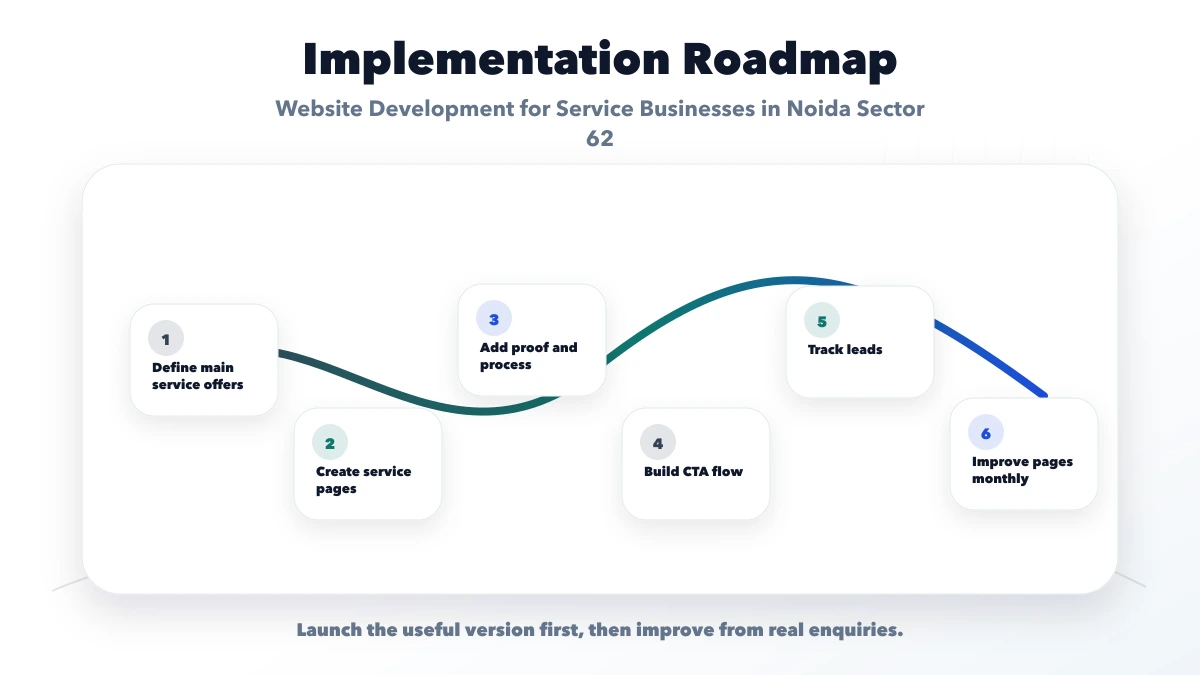
Define customer groups, service pages, use cases, evidence, and primary action. Give every page an internal owner.
Test one service journey from landing page to sales receipt. Confirm that routing context is useful.
Build with approved evidence, responsive layouts, accessible forms, safe validation, metadata, and analytics.
Map fields, consent, assignment, failure handling, and duplicate behaviour. Test production credentials securely.
Review lead relevance, response time, unanswered questions, and search demand. Improve a small set of pages based on evidence.
VASUYASHII scopes public websites separately from software development and operational automation. We can connect a lead website to approved systems, but the business must define sales ownership, data policy, and the production accounts.
The website cannot guarantee pipeline or rankings. Offer quality, demand, authority, response, and sales process also affect results. Use contact to request a written B2B scope.
The marketing team should not wait for a quarterly report to learn that enquiries are irrelevant. Create a small shared classification with agreed meanings:
Sales should update the classification without copying private call notes into analytics. Marketing can then compare service pages, sources, and messages against accepted leads. If one page attracts the wrong requirement, improve its suitability and exclusion content before increasing traffic.
Review the loop monthly at first. Keep a short record of content changes and the reason for each change. This creates an evidence trail and prevents redesign decisions from relying on memory or individual opinion.
When sales rejects a lead, use a controlled reason instead of sharing the prospect's private message. The reason is enough to improve suitability copy, form choices, campaign targeting, and service boundaries.
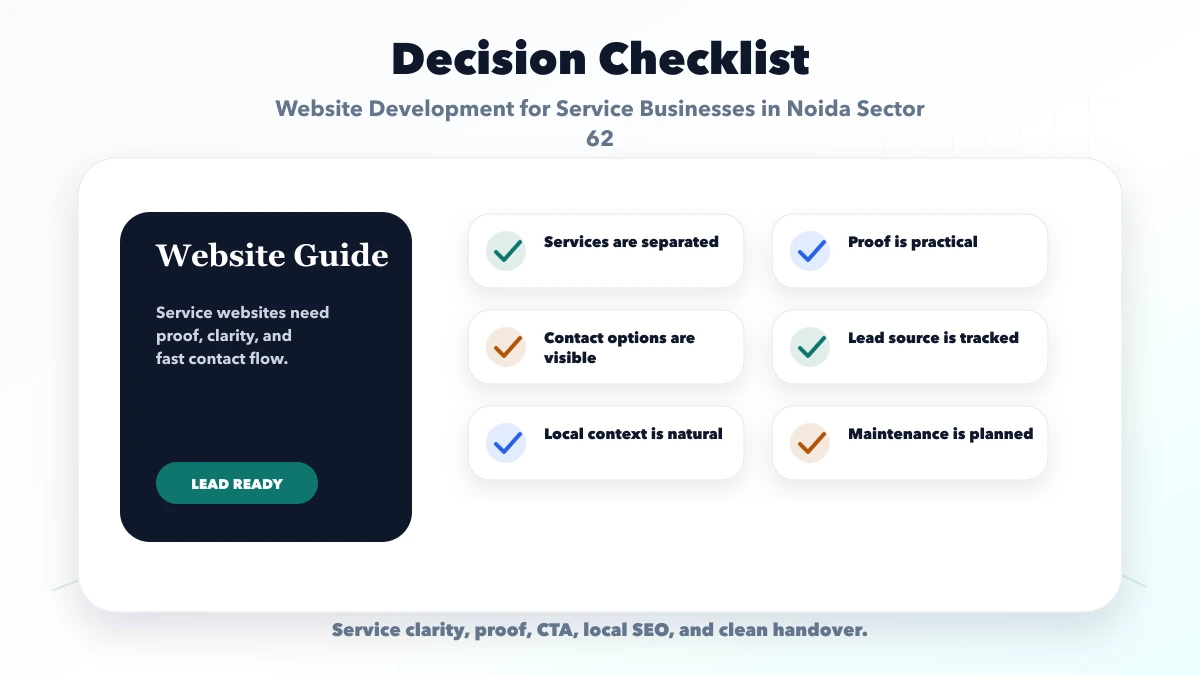
Create a separate page when the buyer problem, process, evidence, or search intent is distinct. Consolidate overlapping services that cannot support unique value.
Long enough to route the first conversation and no longer. Test completion and lead relevance; move sensitive or detailed questions to a controlled later stage.
Not always. Low-volume teams can begin with a reliable monitored destination. Integrate when assignment, status, reporting, or follow-up requires structure.
Yes, when confidentiality requires it. Be transparent about anonymization and retain useful context without implying a false named relationship.
At minimum, whether the lead was relevant, duplicate, spam, existing customer, opportunity, or outside scope. This feedback helps prioritize pages and campaigns.
No page can guarantee a ranking. The content must be useful and reflect genuine availability; authority, competition, technical quality, profiles, and broader relevance also matter.
Build the Noida Sector 62 B2B website as the first stage of a measurable sales system. Give buyers decision-ready content, preserve evidence, qualify only what sales needs, and create a controlled handoff to the CRM or responsible team.
Related Articles
May 25, 2026
Design a lead management system for service businesses across capture, deduplication, assignment, follow-up, pipeline control, WhatsApp, reporting and privacy.
Read article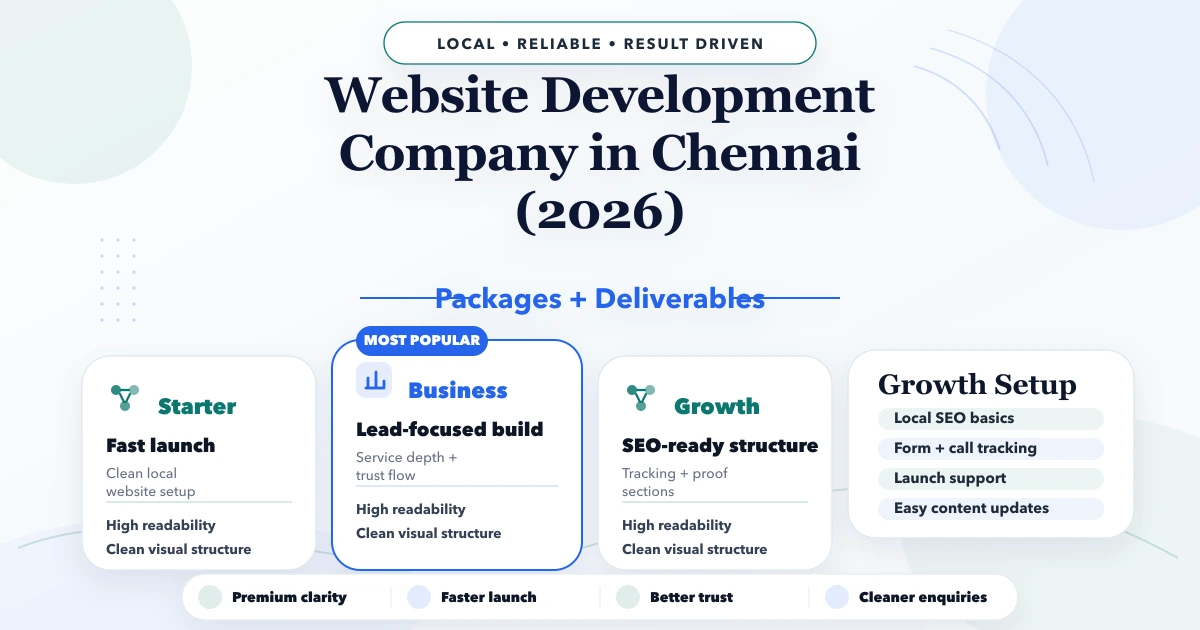
April 27, 2026
Plan a Chennai B2B technical website with capability pages, specifications, RFQ routing, evidence controls, multilingual needs, integrations, and ownership.
Read article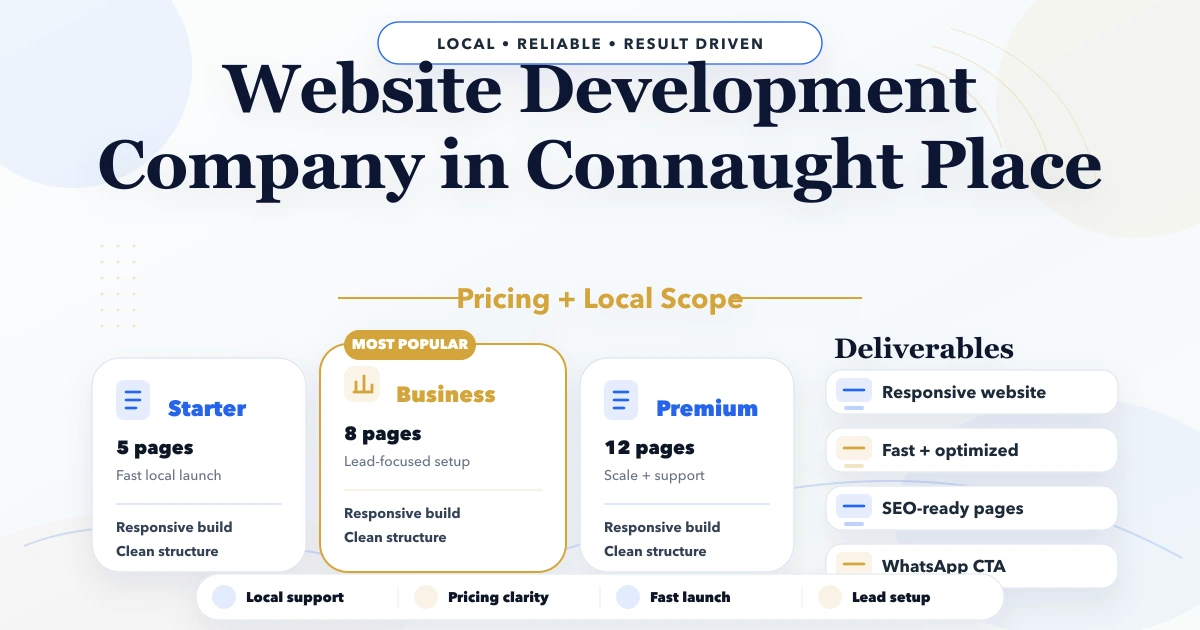
April 21, 2026
Plan a Connaught Place business website for office visitors, multiple teams, appointments, enquiries, location guidance, analytics, and secure ownership.
Read article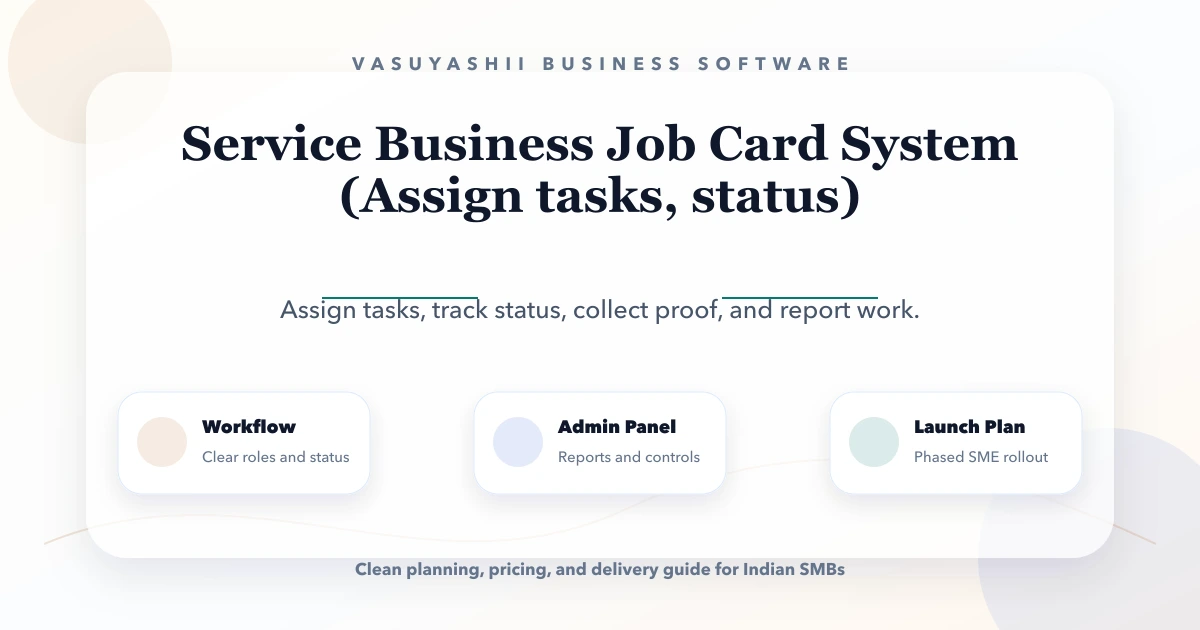
May 26, 2026
Plan a service job card system with intake, assignment, status, schedules, materials, approvals, customer updates, proof, billing, permissions, and reports.
Read article