
May 15, 2026
Best Clinic Website: Features, Booking and Cost
Plan a clinic website with doctor and treatment pages, appointment requests, patient trust, local SEO, privacy safeguards, costs, and launch checks.
Read articlePublished Updated
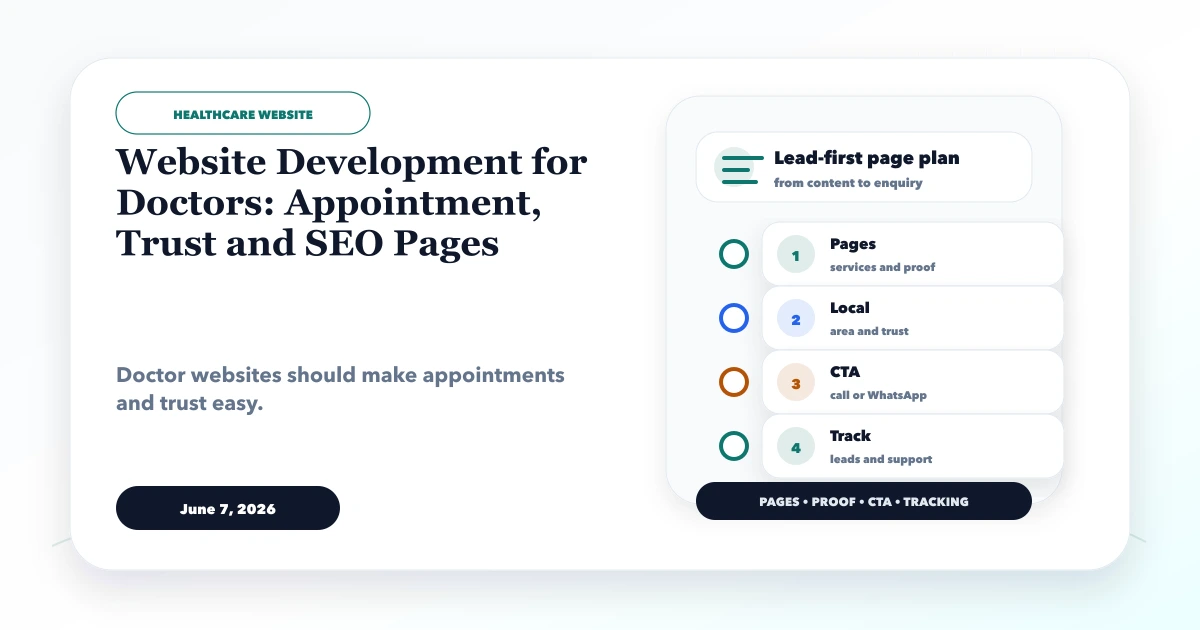
Plan a doctor website with clear profiles, services, appointment requests, patient-safe content, local discovery, privacy controls, and measurable enquiries.
Website development for doctors should help a patient understand who provides care, what the clinic handles, where it is located, when it is available, and how to request an appointment without exposing unnecessary personal information. It should not use fear, guaranteed outcomes, invented reviews, or vague medical claims to create leads.
A useful clinic website connects trust, accurate service information, local discovery, appointment operations, privacy, accessibility, and staff follow-up. This guide focuses on that complete system rather than a decorative homepage.
Build a clear doctor profile, clinic information, service/treatment overview, appointment-request flow, contact/location page, patient preparation information, privacy notice, and urgent-care guidance. Keep medical content reviewed by the qualified practitioner, collect only necessary enquiry data, and define who confirms, reschedules, cancels, and closes appointment requests.
For implementation, review website and web application services. If the clinic needs a logged-in scheduling or patient workflow rather than a public website, scope it separately as custom software.
Choose the primary job before designing pages:
Do not mix a simple appointment-enquiry website with a complete patient portal, electronic medical record, teleconsultation platform, prescription workflow, or payment system without separate security and compliance scope.
| Page | Patient question | Required evidence/control |
|---|---|---|
| Home | Is this the right clinic and next step? | Clear speciality, location, hours, CTA |
| Doctor profile | Who will provide care? | Accurate qualification, registration/professional details where appropriate, experience wording approved by doctor |
| Services | What does the clinic evaluate or provide? | Reviewed scope, no guaranteed outcomes |
| Appointment | How do I request a slot? | Required fields, consent/context, confirmation expectation |
| Clinic/contact | Where and when? | Address, map, phone, accessibility and parking notes if applicable |
| Patient information | How should I prepare? | Practitioner-reviewed administrative guidance |
| Privacy | How is enquiry data handled? | Collection purpose, access, retention/contact path |
| FAQ | What common practical questions exist? | Clear non-diagnostic answers |
Create separate service pages only when each page can genuinely answer a distinct patient intent. Changing only a treatment or city name creates thin, repetitive content.
Trust should come from verifiable information:
Do not display awards, logos, associations, ratings, before/after images, or testimonials without permission and evidence. Avoid statements such as "best doctor," "100% cure," or "guaranteed result."
A form submission is not always a confirmed appointment. Use accurate labels:
request submitted -> staff review -> slot confirmed -> reminder -> attended/rescheduled/cancelled
If the calendar has live capacity and reliable locking, the website can confirm a slot immediately. Otherwise say "Request appointment" and show the expected confirmation method and time.
The form may need name, phone/email, preferred date/time, new/existing patient, service category, and a short non-emergency note. Avoid asking for detailed symptoms, reports, identity documents, or medical history in a general lead form unless the clinic has a justified secure workflow.
Every request needs an owner and status. Define:
The appointment booking system guide explains capacity, reminders, payments, and cancellation rules when a full booking product is needed.
Do not make a website form look like an emergency channel. Place an appropriate notice near appointment and contact controls explaining that urgent or emergency needs require the relevant local emergency service or immediate clinical assistance. The clinic should approve the wording and contact route.
Automated chat should not diagnose or create false reassurance. A bot may help with hours, location, services, or appointment administration when its limits are clear.
Each service page can cover:
Medical claims and advice must be reviewed by an appropriately qualified professional. Developers and SEO writers should not invent clinical guidance to reach a word count.
Appointment information can be sensitive. India has the Digital Personal Data Protection Act, 2023; applicability, current rules, notices, consent, retention, security, and sector obligations should be reviewed with qualified legal/compliance advice for the clinic's actual workflow.
Practical website controls include:
Analytics events should not contain patient names, phone numbers, symptoms, or appointment notes.
A clinic page should use its real name, address, phone, hours, service area, map, and doctor information consistently. Connect the site to the genuine Google Business Profile when available. Use one strong clinic/location page per real location rather than many near-duplicate area pages.
Service pages can naturally mention the clinic location, but should not manufacture city combinations. The NAP consistency guide covers name, address, and phone alignment.
Patients may visit on small screens, older devices, or slower networks. Prioritise:
The appointment button should not cover content or disappear behind a sticky header. Test with long doctor names, multiple locations, and validation errors.
Useful events include:
Measure completed administrative outcomes in the clinic system rather than assuming every click became a patient. Do not upload patient lists or health details to advertising/analytics tools without a lawful, reviewed basis.
| Area | Acceptance evidence |
|---|---|
| Identity | Doctor and clinic details approved in writing |
| Content | Medical pages reviewed by qualified owner |
| Appointment | Request/confirmation wording matches actual workflow |
| Privacy | Form fields, notice, access, retention, processors reviewed |
| Mobile | Call, map, and request flow tested on real devices |
| Accessibility | Labels, keyboard, focus, errors, contrast checked |
| Local | Real NAP and map details consistent |
| Analytics | No personal/medical data in event payloads |
| Operations | Reception owner, response time, backup path documented |
| Handover | Domain, hosting, admin, backups, content-update process transferred |
Our implementation review uses one end-to-end appointment replay: a new patient checks the doctor, reads a service page, submits a request, receives confirmation, reschedules, and asks for help. This first-party process reveals misleading labels and missing staff ownership before launch; it does not claim clinical outcomes.
Cost increases with the number of unique pages, content review, multiple doctors/locations, live scheduling, payment, reminders, patient login, document upload, integrations, multilingual content, accessibility depth, migration, and support requirements.
Ask the provider to separate public website scope from booking software and clinic-system integration. Third-party booking, messaging, maps, payment, hosting, and maintenance fees should be shown separately.
Usually home, doctor profile, services, appointment request, clinic/contact, patient information, privacy, and practical FAQs. Add pages only for real services or locations.
It can support administrative communication when the clinic has consent, approved handling, restricted access, and clear rules about what information should not be shared there.
Only when refund, cancellation, receipt, reconciliation, gateway failure, and confirmation rules are defined. Payment should not create a confirmed slot unless availability is also controlled.
Public content should be general, appropriately reviewed, and clearly limited. Individual diagnosis or treatment requires the clinic's proper professional workflow.
Use the real clinic location, consistent NAP, accurate hours, practitioner/service information, genuine reviews, and useful local directions. Avoid fabricated area pages.
Contact VASUYASHII with the clinic locations, doctors, approved services, appointment process, existing tools, privacy constraints, and content owner. Do not send patient records through the enquiry form.
Approve a doctor website only when public information is verified, medical content has an accountable reviewer, appointment wording matches operations, patient data is minimised and protected, and the clinic can respond reliably to every request.
Related Articles
May 15, 2026
Plan a clinic website with doctor and treatment pages, appointment requests, patient trust, local SEO, privacy safeguards, costs, and launch checks.
Read article
June 7, 2026
Plan a dental clinic website with treatment pages, verified dentist profiles, appointment requests, local SEO, privacy controls, cost and launch checks.
Read article
June 7, 2026
Website development for medical stores with medicine catalog, WhatsApp order flow, prescription upload, local SEO, contact details, and checklist.
Read article
June 7, 2026
Plan a pathology lab website with an accurate test catalog, home collection requests, secure report access, local SEO, privacy, and booking QA.
Read article