
March 30, 2026
Website Developer in Bulandshahr: Pricing Guide
Compare website development pricing in Bulandshahr, essential deliverables, ownership terms, lead tracking, and questions to ask before hiring.
Read articlePublished Updated
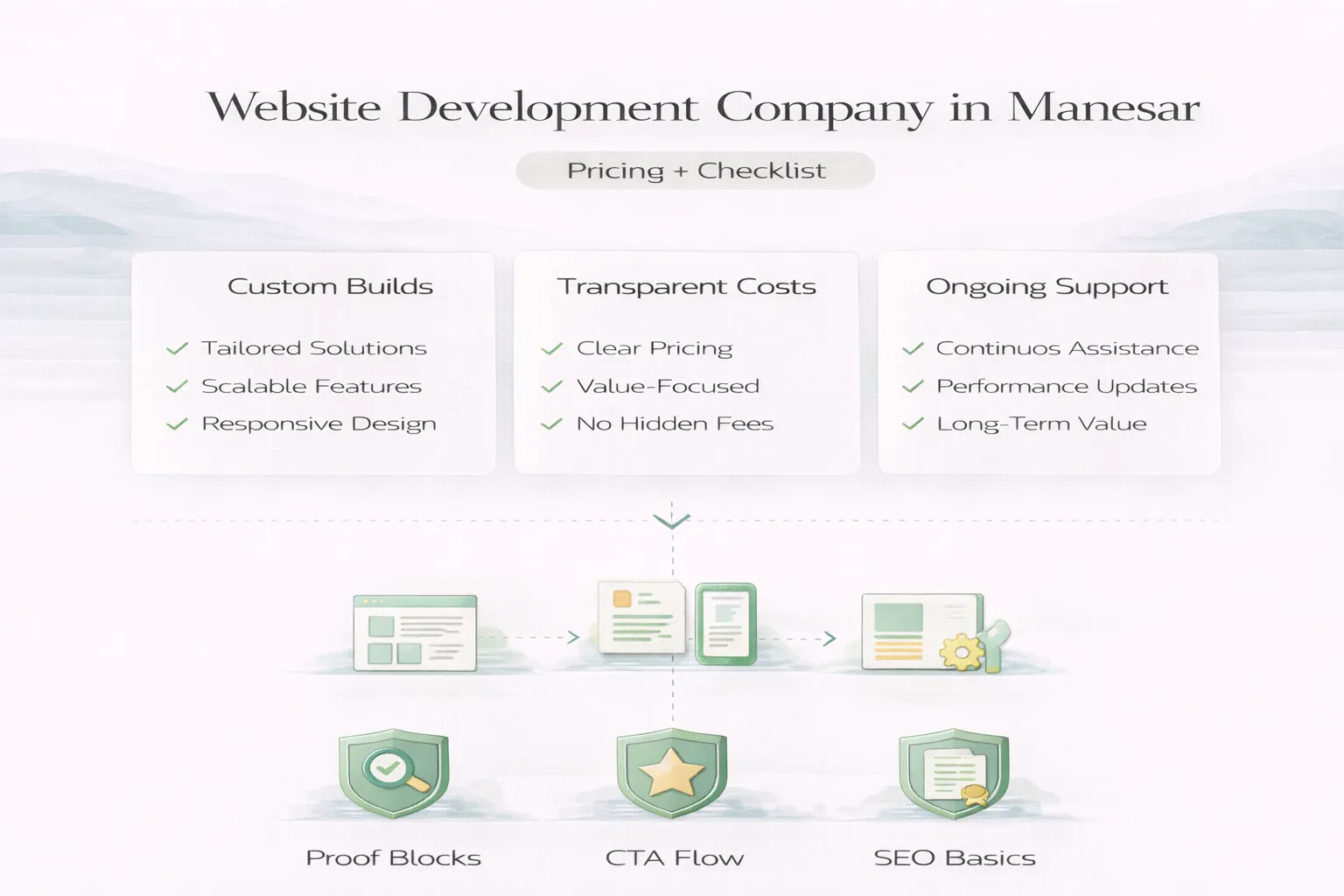
Website development company in Manesar: pricing, checklist, scope planning, and what local B2B businesses should expect in 2026.
Service-area note: VASUYASHII is based in Delhi NCR and supports businesses remotely across India. A city-focused guide describes service and planning context; it does not claim a physical office in every location mentioned.
Explore the parent topic: Website Development Delhi NCR Hub →Manesar businesses often operate in a more structured B2B environment, which changes website expectations. The buyer is usually not browsing casually. They want to know what the company does, whether it looks credible, whether the offering is relevant, and how easy it is to make contact.
That means a business website here should not behave like a decorative brochure. It should behave like a trust and enquiry system. Clear service or product explanation, certification or proof areas, responsive mobile layout, and direct CTA placement matter more than design jargon.
This guide explains what a practical Manesar website project should look like in 2026, what pricing bands are realistic, and which checklist points should be non-negotiable before hiring.
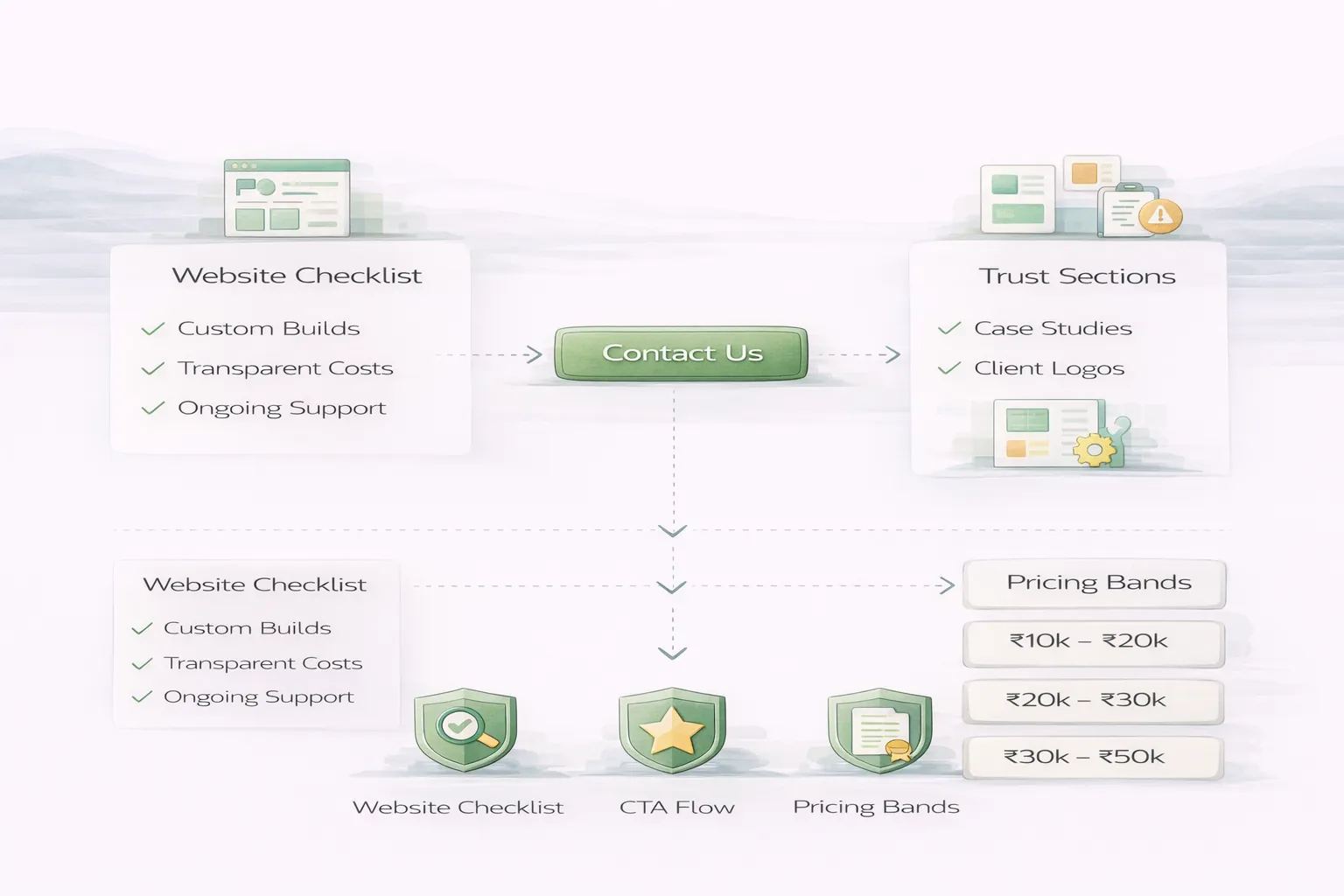
For most Manesar businesses, these bands are practical:
₹22,000 to ₹40,000₹40,000 to ₹85,000₹85,000 to ₹2.2 lakh+The right fit depends on whether the website is meant for:
If the site is going to support sales conversations, then content clarity and proof structure become much more important.
For many B2B businesses, the core sections should answer:
Then the site should also support:
Related reading:
Before hiring, confirm these items:
If a vendor cannot answer these clearly, the risk of scope confusion is high.
The vendor explains deliverables in plain language.
The vendor uses only design words and avoids scope detail.
₹22,000 to ₹40,000Good when the business mainly wants trust, company information, and enquiry basics.
₹40,000 to ₹85,000Good when the site needs more sections, more pages, and stronger lead flow.
₹85,000 to ₹2.2 lakh+Good when the site supports active marketing, SEO, and better buyer qualification.
The main thing is not whether the site is cheap or expensive. The main thing is whether the scope supports the business reality.
Normal timelines:
1 week for compact scope1 to 2 weeks for standard business website2 to 4 weeks for stronger custom structure4 to 6 weeks for larger B2B scope with approvals and contentSimple workflow:
Practical setup for most projects:
Next.jsThis works well if the site later expands into landing pages or business tools.
The biggest cost drivers are:
One extra point for B2B businesses: if approvals require many stakeholders, revision effort goes up quickly. That affects both time and cost.
Manesar businesses often need websites for manufacturing, logistics, auto components, B2B services, and industrial suppliers. A strong website should support trust, enquiries, and business verification.
Before finalizing scope, check:
Useful links: services, software development, and contact.
If you are reviewing proposals for a Manesar website, ask for a written checklist comparison. Scope becomes much easier to judge when every vendor writes the same items in black and white.
A B2B website should help a buyer decide whether the supplier is relevant before a sales conversation. Organise capabilities by product or service family, supported industries, process boundaries, order or project type, quality documentation, and the information needed for a quotation.
Avoid claims such as “best quality” or “leading supplier” when they are not supported by public evidence. Useful proof can include approved technical sheets, current certifications, process photos owned by the business, quality-control steps, facility information, and a clear enquiry process. Every document needs an owner and review date.
The first form should collect enough context to route the request without trying to replace technical discovery. Product family, requirement summary, quantity or project scale, destination, desired timeline, and contact route are often more useful than a long generic message box.
These journeys have different owners and data needs:
| Journey | Required context | Recommended destination |
|---|---|---|
| New RFQ | Requirement, volume, destination, timeline | Sales or estimation |
| Vendor registration | Category, capability, approved documents | Procurement |
| Existing-order support | Reference number and issue category | Support or account owner |
| Technical clarification | Product or drawing reference | Engineering or pre-sales |
| Career enquiry | Role and application route | HR |
Do not send every submission to a shared inbox with no ownership. Define acknowledgement, duplicate handling, internal handoff, and closure status. Sensitive drawings, contracts, and identity records may need a secure later exchange instead of a public upload.
Specifications change. Assign owners for product dimensions, material descriptions, tolerances, certifications, capacity statements, and downloadable files. A change should update the page, related category, document, and structured data together.
Retire obsolete documents deliberately. If a product is discontinued, explain the replacement or enquiry route rather than leaving an active quote button on stale information. Keep an archive only when it remains useful and clearly labelled.
Use one controlled source for product data when the catalogue becomes large. The product catalogue web-app guide explains when a managed catalogue is more suitable than manually duplicated pages.
The proposal should state how many product or capability templates are included, who enters data, whether document migration is included, and what counts as a revision. Before launch, test filters, search, RFQ routing, download permissions, mobile tables, and page performance with representative content.
Acceptance should also cover domain and hosting ownership, analytics access, backup or rollback, approved metadata, and administrator handover. Use actual products and documents in staging; placeholder records can hide layout and data problems.
VASUYASHII separates a public B2B website from authenticated vendor portals, internal approvals, and operations software. The current software development, web application, and integration pages describe available scope without claiming a Manesar office or specific industrial-client outcome.
Share representative capability records, RFQ ownership, public document rules, and future portal needs through contact for a focused first-phase plan.
Define when an RFQ is acknowledged, when clarification is requested, who can issue a technical or commercial response, and when the enquiry is closed. The acknowledgement should confirm receipt and next steps without promising capacity, compliance, price, or delivery before review.
Audit a monthly sample of enquiries. Repeated questions may show that a capability page, specification, document, or form instruction needs improvement. Irrelevant submissions may show that service boundaries are unclear. This feedback loop makes the website more useful without replacing engineering or commercial approval.
Many standard projects fall in the ₹22,000 to ₹85,000 range depending on scope and content.
Clarity, proof, mobile usability, and low-friction contact flow.
No. Only when marketing depth, SEO, or custom conversion flow actually matters.
Yes, if they help the buyer trust the company faster.
Usually yes if SEO is a real long-term goal.
Yes, if the technical base is planned properly.
Analytics and CTA tracking. Without them, lead improvement becomes guesswork.
Not always, but unrealistic delivery promises without scope clarity are risky.
If you want a business website that actually supports credibility, lead flow, and future digital growth, begin with a scope checklist that covers pages, proof, CTA logic, tracking, and launch support.
Related Articles
March 30, 2026
Compare website development pricing in Bulandshahr, essential deliverables, ownership terms, lead tracking, and questions to ask before hiring.
Read article
April 27, 2026
Plan a Chennai B2B technical website with capability pages, specifications, RFQ routing, evidence controls, multilingual needs, integrations, and ownership.
Read article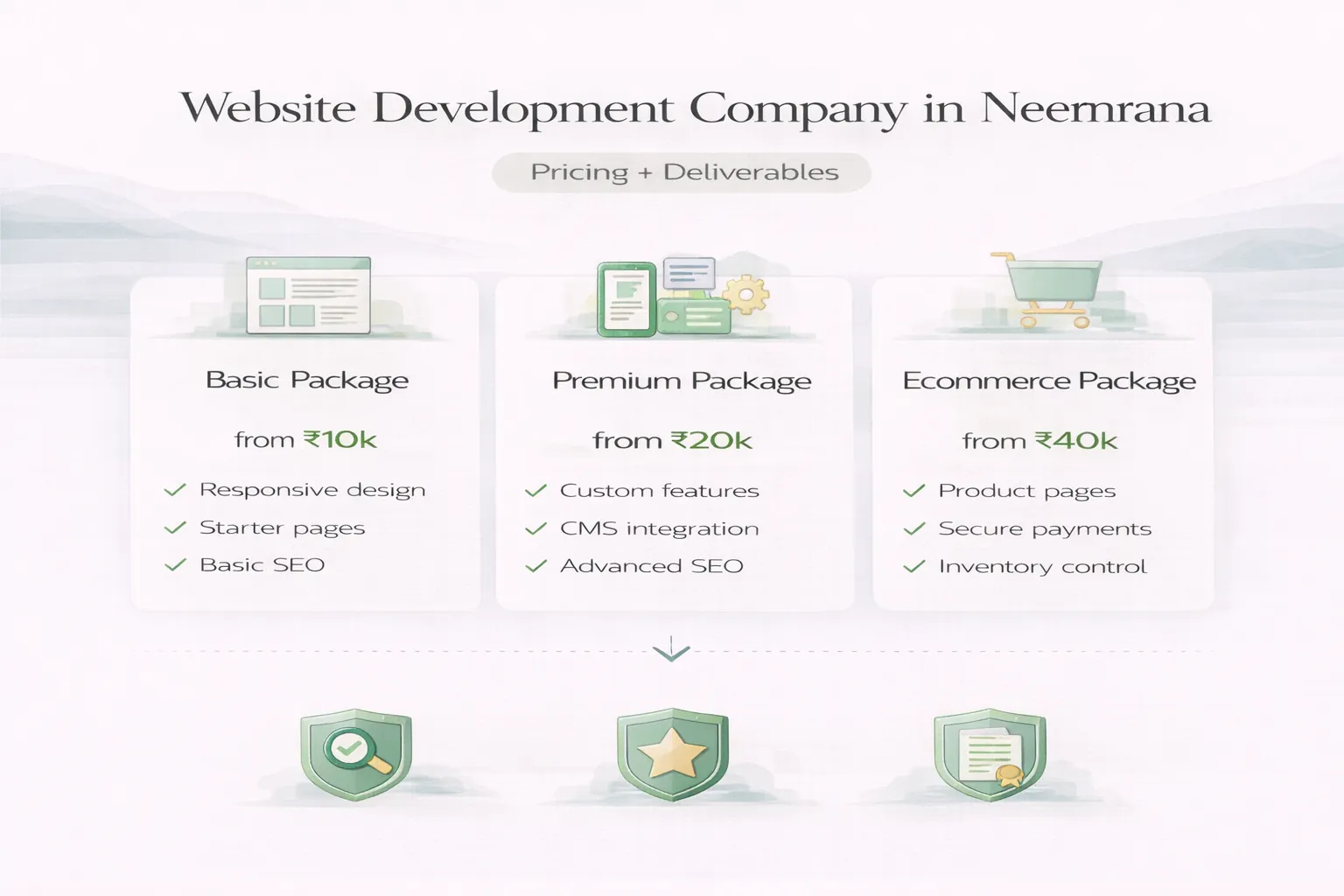
April 7, 2026
Website development company in Neemrana: pricing, deliverables, SEO basics, and how local businesses should choose scope in 2026.
Read article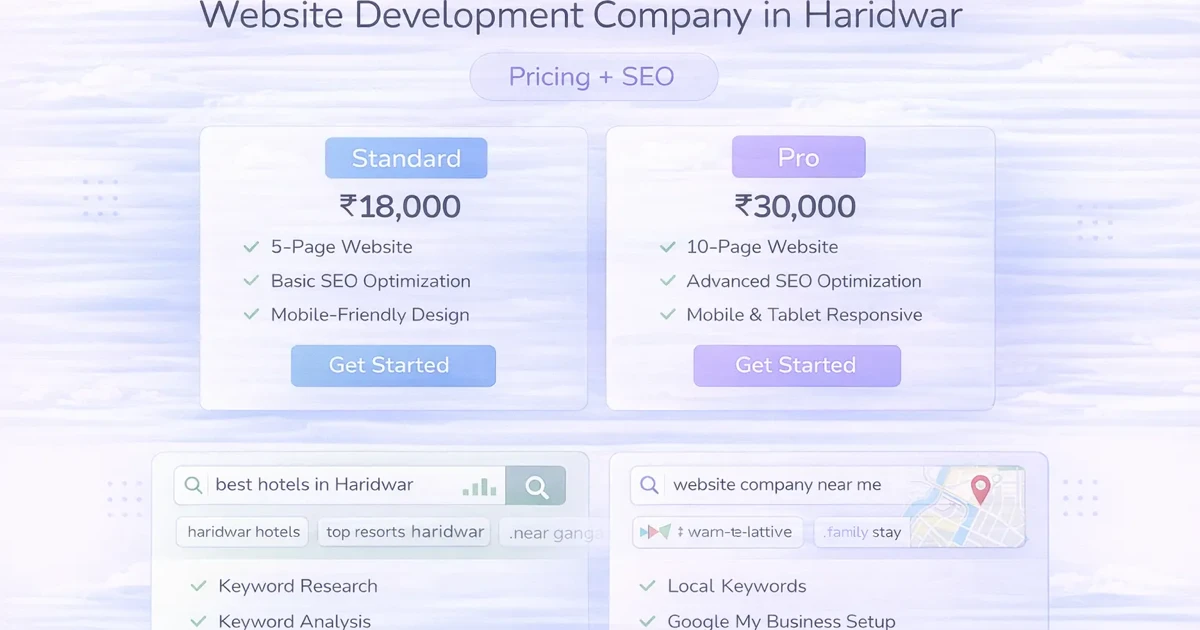
April 3, 2026
Plan a Haridwar seasonal-demand website with capacity updates, availability rules, temporary notices, booking states, SEO hygiene, and lead measurement.
Read article