
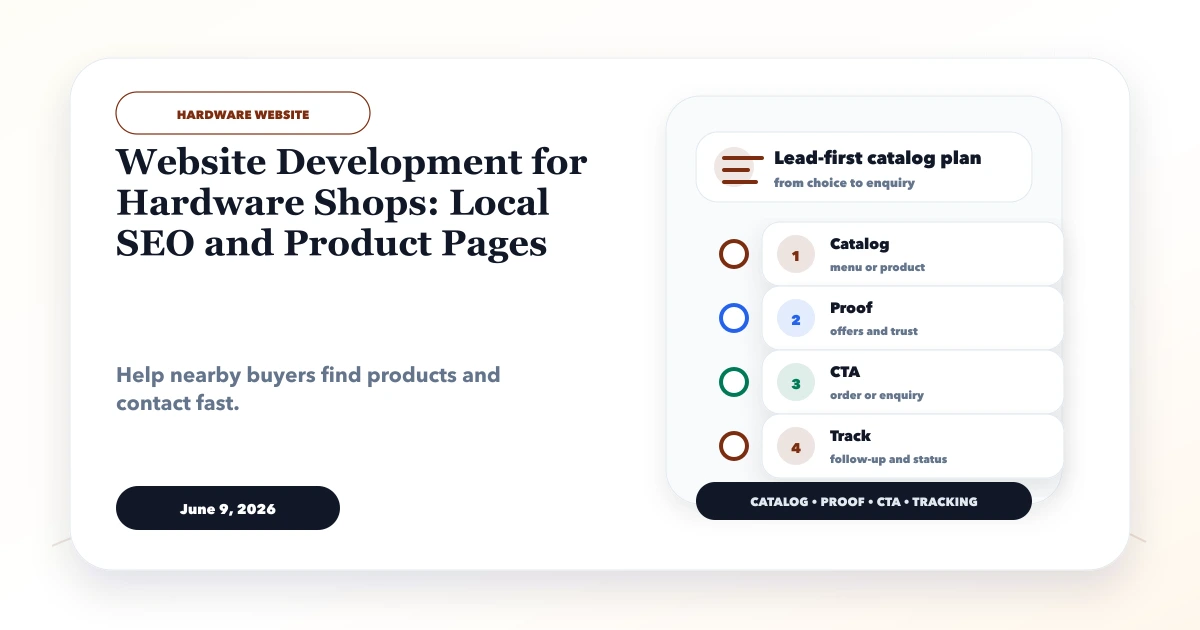
June 9, 2026
Hardware Shop Website: Local SEO and Catalog
Website development for hardware shops with local SEO, product pages, WhatsApp enquiry, service area, category catalog, and checklist.
Read articlePublished Updated
Plan a Karol Bagh retail website with a manageable product catalogue, store enquiries, WhatsApp qualification, stock boundaries, analytics, and ownership.
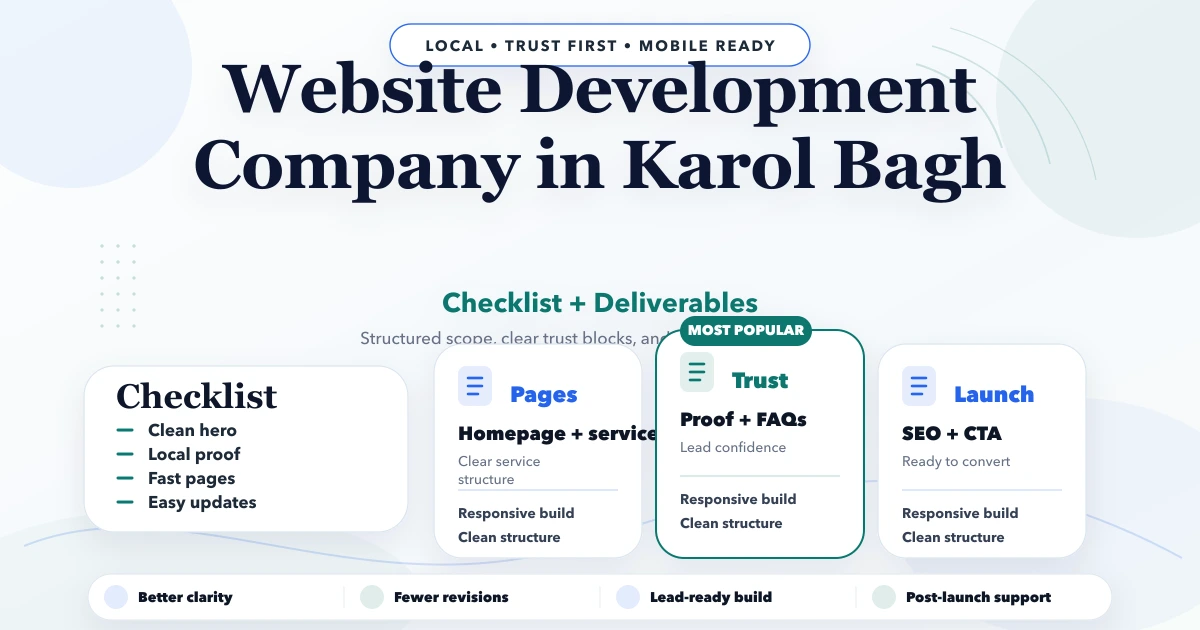
Service-area note: VASUYASHII is based in Delhi NCR and supports businesses remotely across India. A city-focused guide describes service and planning context; it does not claim a physical office in every location mentioned.
Explore the parent topic: Website Development Delhi NCR Hub →A retailer comparing a website development company in Karol Bagh should first decide what the website must do with products. A static gallery, an enquiry catalogue, and a full ecommerce store look similar in a proposal, but they require different product data, stock discipline, payment operations, return rules, and ongoing staff effort.
This guide is for retailers, wholesalers, showrooms, distributors, repair businesses, and product-led local companies planning a catalogue-to-store or catalogue-to-WhatsApp journey. It focuses on an honest operating model rather than promising online sales merely because products are published.
Written by Tushar C. (Founder, VASUYASHII) using the current VASUYASHII planning approach for catalogues, business software, lead flows, and handover. The examples are operating scenarios, not claims about a Karol Bagh office, customer, revenue, or ranking.
Choose one primary model before selecting features.
| Model | What the customer can do | What the business must maintain |
|---|---|---|
| Brand catalogue | Browse ranges and visit/contact | Categories, current photos, store details |
| Enquiry catalogue | Select products and request quote | Product codes, enquiry routing, response process |
| Reservation flow | Request item hold or appointment | Availability confirmation, expiry rules |
| Ecommerce | Order and pay online | Stock, pricing, tax, fulfilment, returns, support |
| Dealer portal | Log in for trade information | Accounts, permissions, price lists, audit trail |
Do not buy ecommerce features if the business cannot maintain inventory, dispatch, cancellations, and customer support. An enquiry catalogue can be a better first release when prices change frequently or products require consultation.
The interface cannot repair inconsistent product records. Prepare a sample sheet before development.
Useful fields may include:
The business should decide which fields are public and which remain internal. Supplier cost, private notes, or exact internal stock should not appear simply because they exist in a spreadsheet.
Customers often arrive with partial information. Some know the model; others know only the use case or budget. Support more than one path:
Avoid filters containing only one option or categories created for SEO rather than customer use. Test names with store staff because they hear the language buyers actually use.
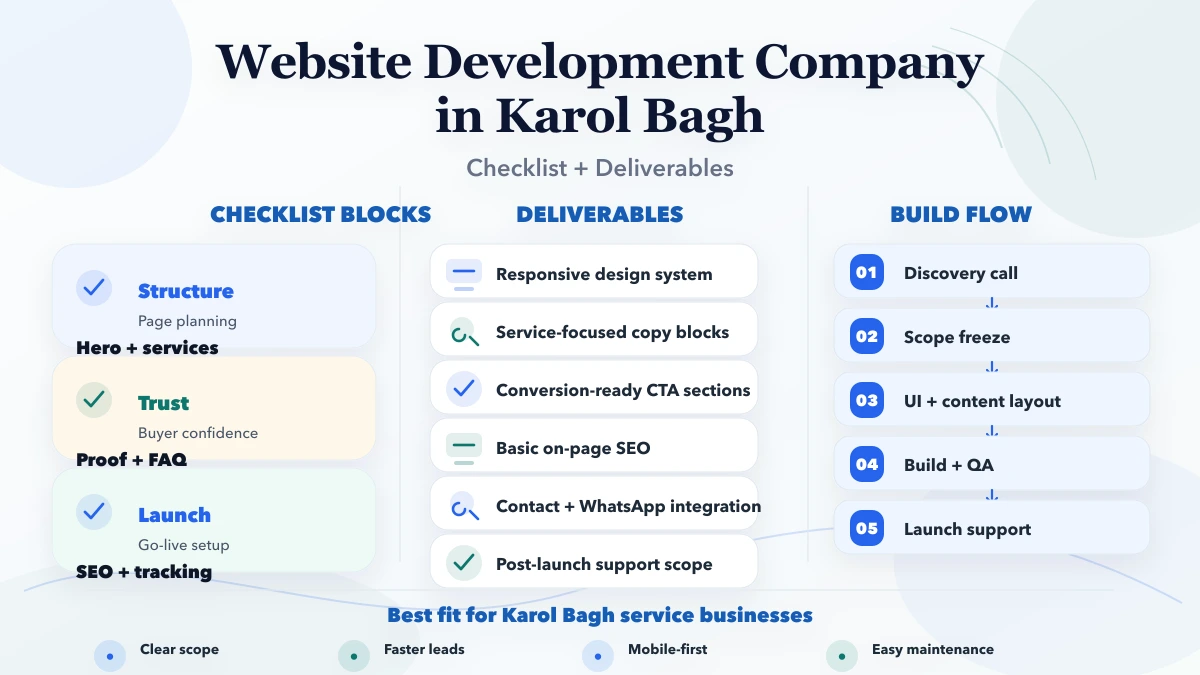
A product page should help the customer decide whether to enquire, visit, or order.
Do not show “in stock,” delivery dates, discounts, review counts, or limited-quantity messages unless the underlying system can support them. A manual catalogue can use “confirm availability” instead of pretending to provide live inventory.
For businesses that need reliable stock control, compare the catalogue with a proper inventory management system and the VASUYASHII Business Suite.
A generic “Hi” message forces staff to ask the customer what they were viewing. Build the CTA so it includes a safe product reference:
I am enquiring about product KB-104. Please confirm options and availability.
Do not place customer personal data, internal prices, or authentication tokens inside the URL. On a multi-item enquiry, let the visitor create a shortlist and send product codes together.
Track the CTA click with page and product context, but do not send the phone number or message text to analytics. The WhatsApp funnel guide explains the follow-up boundary.
A catalogue can support an offline purchase when it answers practical questions:
Keep these details consistent with verified profiles. Do not create an address for SEO. If the business serves Karol Bagh but has no customer-facing location there, state the actual service model.
Move from enquiry catalogue to ecommerce only when the following owners exist.
| Responsibility | Required decision |
|---|---|
| Product | Who maintains names, variants, images, and status? |
| Pricing | Which price is authoritative and how often can it change? |
| Inventory | Is availability live, reserved, or confirmed manually? |
| Payment | Who handles failures, refunds, and reconciliation? |
| Fulfilment | Which areas, charges, and timelines are supported? |
| Returns | What is eligible and who approves exceptions? |
| Support | Which channel owns order questions? |
| Security | Who reviews access and software updates? |
If several answers are unclear, launch the catalogue and operating process first. Read the ecommerce inventory sync guide before adding checkout.
Suitable for a business that wants searchable ranges and store enquiries:
Add shortlist, structured enquiry, staff routing, product import, and status management. This often needs an admin workflow rather than only a marketing CMS.
Add checkout, payments, tax display, stock reservation, notifications, fulfilment, returns, and support. Each integration needs an owner and test cases.
Treat login, account approval, price visibility, and order history as a web application project, not a small add-on to a public page.
Take 20 representative items across simple and difficult categories. Identify missing fields, inconsistent names, poor images, and variant complexity.
Define category, search, filter, product, shortlist, and contact paths. Decide what happens when an item is unavailable.
Build one authoritative schema for product data. Document which team owns each field.
Test the hardest product and a normal mobile enquiry before importing the full catalogue.
Validate duplicates, broken images, empty categories, and discontinued items. Do not publish every spreadsheet row automatically.
Track catalogue searches, product views, shortlist actions, qualified enquiries, and successful orders where applicable.
VASUYASHII can build catalogue websites, admin workflows, software integrations, and custom inventory or billing systems. Live stock, payment, delivery, and tax features require a defined backend and operating process. We do not claim that a website alone will create sales or that a local page guarantees rankings.
For a scoped catalogue or software discussion, use contact. The written proposal should state product volume, data source, integrations, migration, and maintenance.
No. A catalogue helps people browse and enquire. Ecommerce also accepts orders and usually requires payment, stock, fulfilment, cancellation, return, and customer-support workflows.
Yes, when pricing is variable or trade-specific. Explain how the customer can request a quote and what information is needed instead of leaving the page unclear.
Only when inventory is accurate and the business accepts the operational consequences. Many catalogue sites should use confirmation-based availability.
Usually, but the sheet needs a defined structure and quality review. Duplicate codes, inconsistent categories, missing images, and merged cells should be resolved before import.
No. Index only useful, unique pages that can satisfy search intent. Thin variants and duplicate manufacturer descriptions may create more crawl noise than value.
When approved customers need account-specific information, price lists, order history, or controlled documents. Define permissions and auditing before implementation.
For a Karol Bagh product business, begin with the catalogue and staff workflow the team can maintain honestly. Make products easy to discover, preserve context in every enquiry, and add ecommerce only when stock, payment, fulfilment, and support responsibilities are ready.
Related Articles
June 9, 2026
Website development for hardware shops with local SEO, product pages, WhatsApp enquiry, service area, category catalog, and checklist.
Read article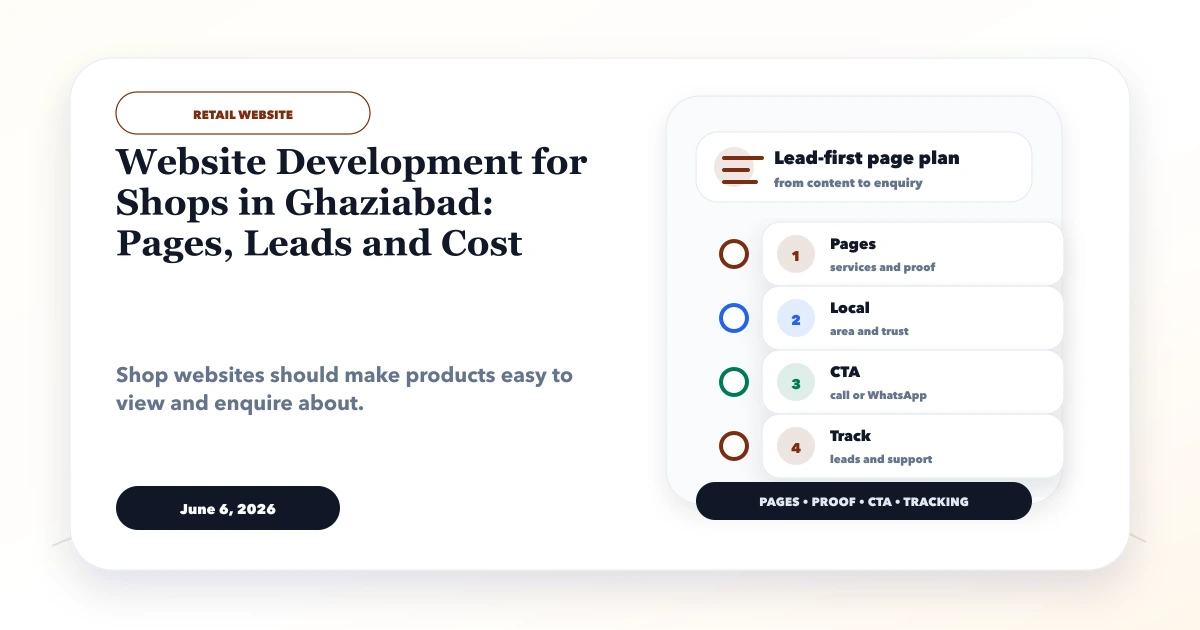
June 6, 2026
Website development for shops in Ghaziabad with pages, product catalog, WhatsApp leads, local SEO, cost ranges, and checklist.
Read article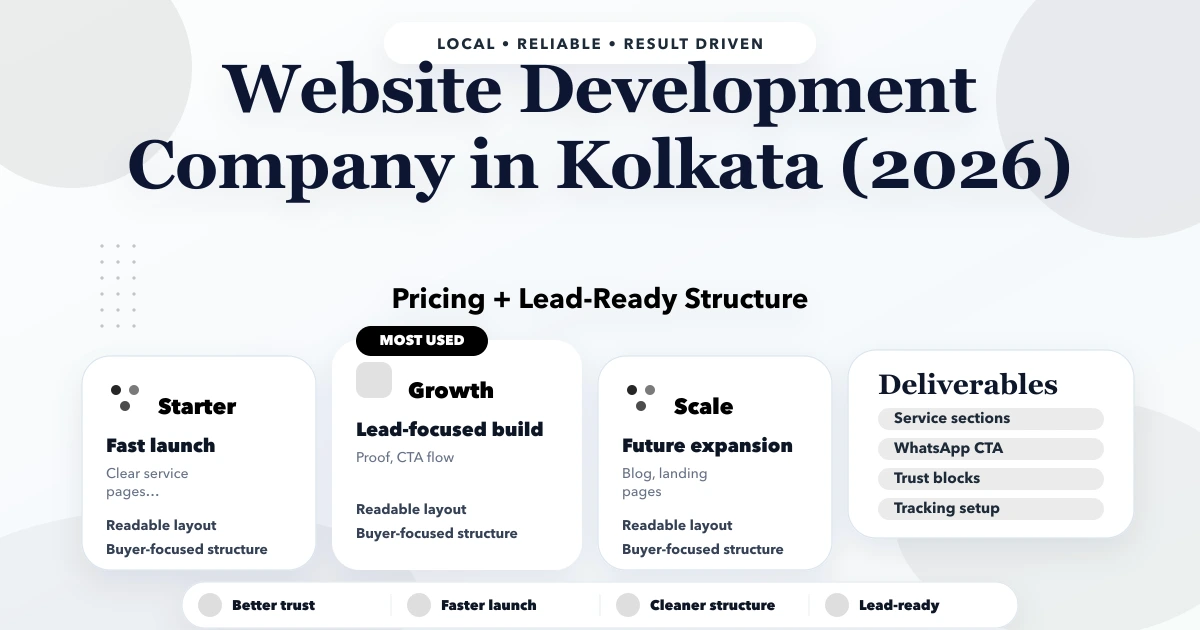
May 1, 2026
Plan a Kolkata B2B export website with product specifications, buyer qualification, document requests, market boundaries, RFQs, and ownership.
Read article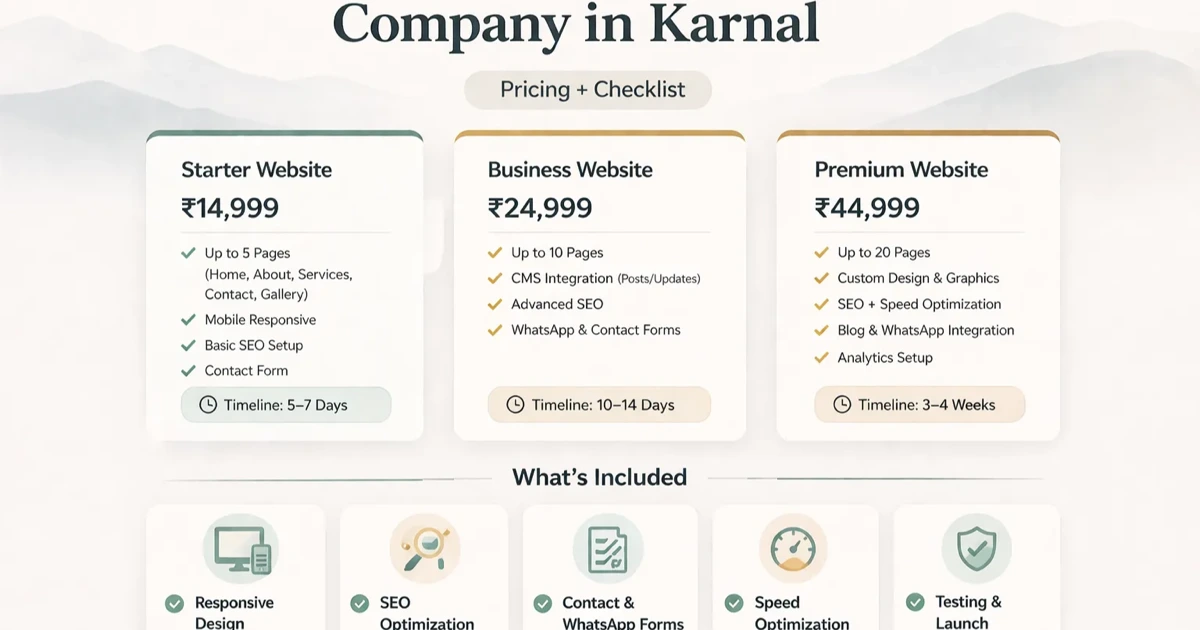
April 5, 2026
Plan a Karnal agri or dealer website with product categories, seasonal enquiry routes, RFQ inputs, documents, coverage, ownership, and acceptance checks.
Read article