
March 23, 2026
Meerut Website Development for Dealer Enquiries
Plan a Meerut manufacturer or distributor website with product families, dealer qualification, RFQs, service coverage, evidence, tracking, and ownership.
Read articlePublished Updated
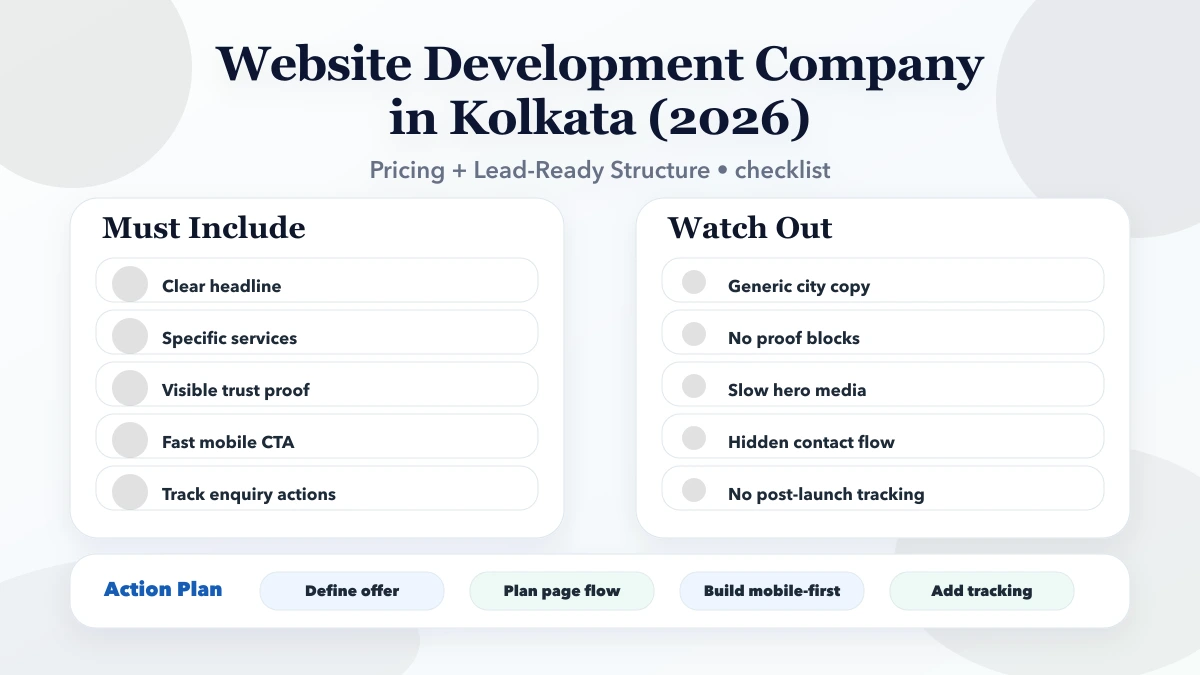
Plan a Kolkata B2B export website with product specifications, buyer qualification, document requests, market boundaries, RFQs, and ownership.
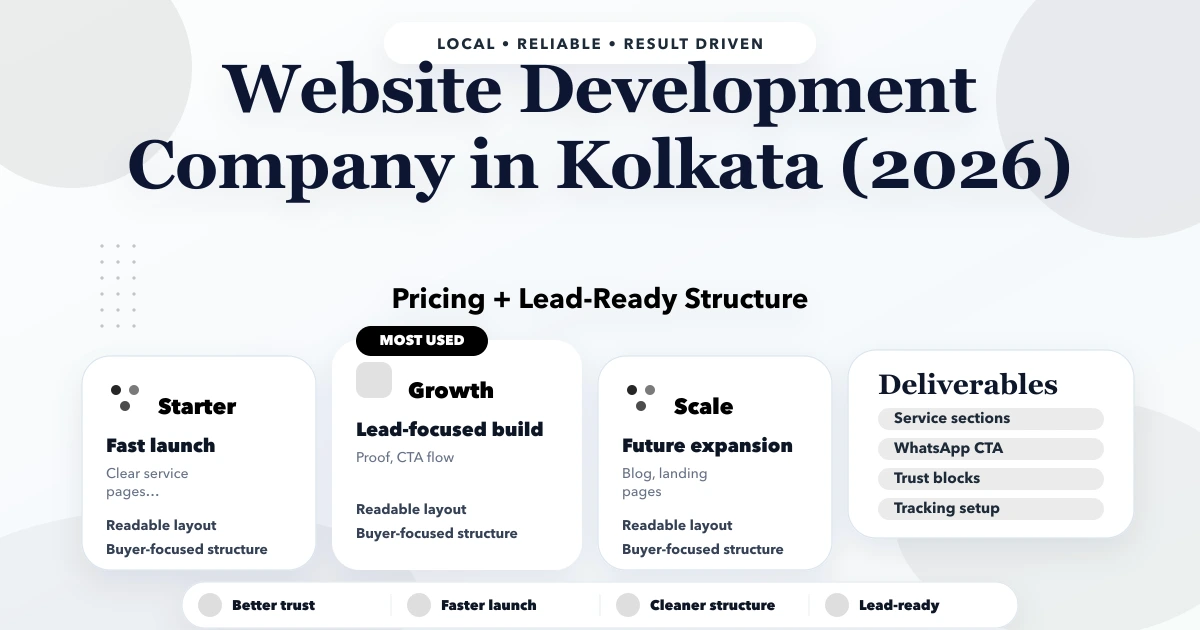
Service-area note: VASUYASHII is based in Delhi NCR and supports businesses remotely across India. A city-focused guide describes service and planning context; it does not claim a physical office in every location mentioned.
Explore the parent topic: Website Development Delhi NCR Hub →A business evaluating website development companies in Kolkata may need a B2B site for domestic and export enquiries. The website must help a serious buyer understand products, specifications, capacity boundaries, documents, markets, and the information required for a useful quotation.
This guide focuses on B2B export and cross-region buyer qualification. It does not claim that every Kolkata business exports, nor does it imply a VASUYASHII office or client in the city. The intent is to separate this page from generic local website packages.
A typical buyer may need to:
The website should support qualification without publishing confidential pricing, unsupported certifications, or vague “worldwide delivery” claims.
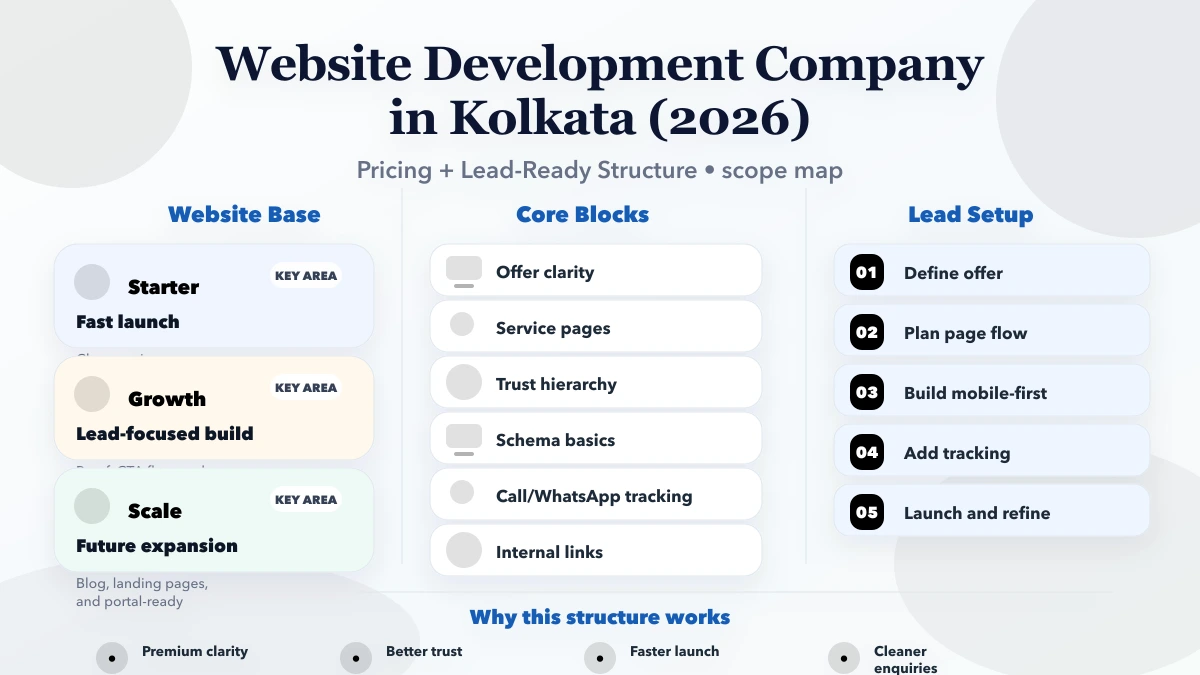
Each product family may include:
Use tables for comparable specifications. Do not hide critical data inside images or downloadable PDFs only.
Ask the visitor to identify:
Do not ask for bank documents or sensitive identity information in an open marketing form. High-risk verification belongs in a controlled later process.
Imagine a manufacturer or supplier receiving messages such as “send price list.” Staff cannot tell whether the buyer wants a sample, a trial order, a bulk order, or a product the company does not supply.
A focused website can:
This does not require public ecommerce checkout when every order needs commercial review.
The RFQ should collect information that changes the quote:
| Field | Why it matters |
|---|---|
| Product/grade | Selects the correct specification |
| Quantity | Affects production, packaging, and price |
| Destination | Affects delivery and documentation |
| Required date | Tests feasibility |
| Standard/document | Identifies compliance need |
| Incoterm or delivery basis | Clarifies commercial assumption |
| Attachment | Supports drawing/specification when secure |
Use controlled options where possible. Free text should supplement, not replace, key fields.
Possible documents include:
Publish only current, approved documents. Mark revision dates. Some records may require a buyer request rather than public download. Assign an owner for expiry and replacement.
Every claim should have evidence:
If evidence cannot be published, use cautious factual wording or remove the claim. Never borrow a certificate logo from another entity or treat an application as approval.
International buyers may need:
Maintain one authoritative source for specifications. Translation should not create different numbers or commercial promises.
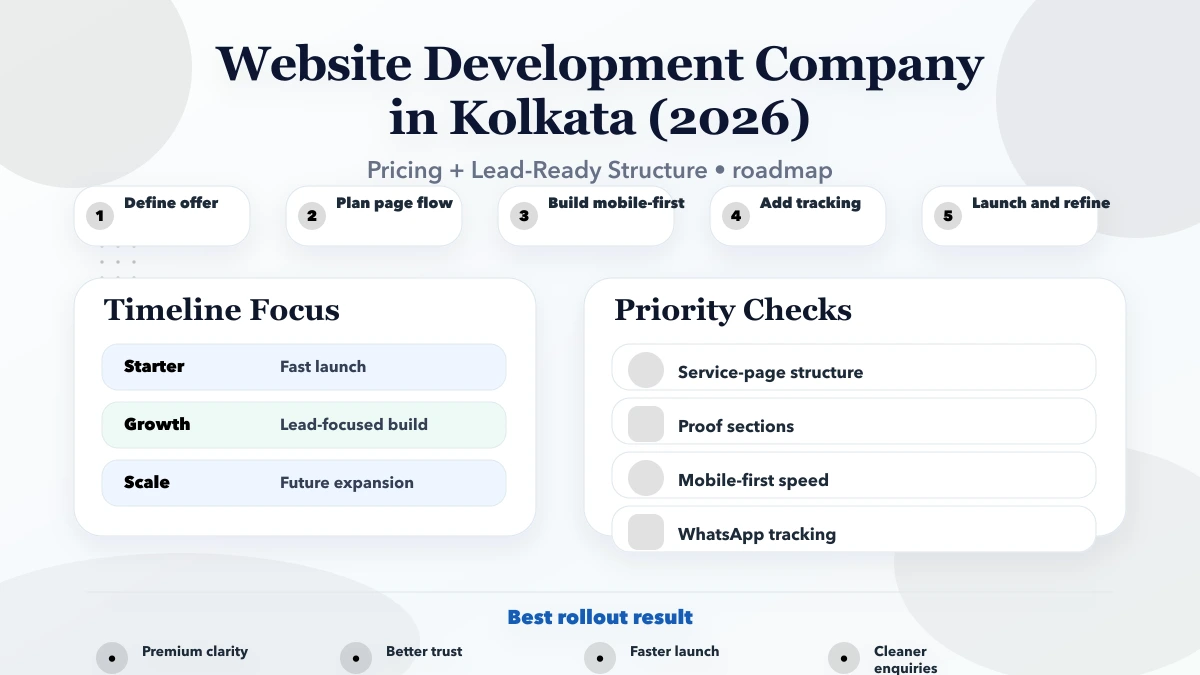
Route leads by product and market:
If this process requires shared status, approvals, and document controls, a later custom software phase may help. Do not build a CRM before the qualification rule is stable.
Public B2B forms may receive spam, impersonation, unrealistic requests, or attempts to collect sensitive documents. Use:
Do not treat a domain name or large claimed quantity as proof of a genuine buyer. Commercial and compliance teams should define verification after initial qualification. The marketing website should never request passwords, banking credentials, or unrestricted identity documents.
If a buyer requests a certificate, determine whether the public version is appropriate, whether the scope matches the product, and whether validity is current. Provide only the approved record.
At delivery, the business should receive:
Run a sample product update, document replacement, export RFQ, and ownership change during handover. A catalogue is not maintainable if only the developer can correct a specification.
Use:
Avoid generating pages for every attribute combination. Index only pages with independent buyer value.
Product websites can become heavy. Optimise:
Buyers often view specifications on mobile but download documents later. Keep critical facts readable without forcing large downloads.
Pricing depends on:
Separate catalogue data-entry cost from design and development. The business should own the product master and exportable data.
Define categories, fields, units, documents, owners, and claim evidence.
Separate domestic/export paths and approve qualification fields.
Create category, product, document, and enquiry templates with mobile QA.
Import verified records, review documents, and test internal links.
Check RFQ completeness, routing, unsupported demand, and document requests.
Current VASUYASHII service scope includes website services, web applications, and integrations. The correct solution depends on whether the requirement ends at RFQ capture or includes operational quote management.
Review a sample of submitted RFQs each month:
Use the findings to improve product data and form options. Do not add mandatory fields merely because one unusual enquiry needed them. Keep the first request proportionate and move commercial verification into the responsible follow-up process.
An RFQ page is useful only when the sales team responds consistently. Define what makes an enquiry qualified, which missing details trigger a clarification request, who owns export and domestic opportunities, and when an enquiry can be closed. Prepare acknowledgement messages that state the next step without promising price, stock, compliance, or dispatch dates before review.
Review a monthly sample of enquiries against the product data displayed on the website. If buyers repeatedly ask for the same specification, certificate, packaging detail, or market document, improve the relevant page rather than relying on one-to-one explanations. This creates a feedback loop between catalogue content and commercial conversations while keeping claims controlled by the appropriate owner.
Not when price, freight, documentation, and quantity require review. A structured RFQ may be more appropriate.
Publish fixed or indicative prices only when commercial assumptions are stable. Otherwise explain how quotations are prepared.
Yes with strict type, size, storage, retention, and access controls. A secure later exchange may be safer.
Index categories and products with unique demand and useful specifications. Avoid pages created only by filter combinations.
Only current documents approved for public use. Sensitive or buyer-specific records can use a controlled request flow.
Yes. First define product, market, owner, status, and duplicate rules; then connect the stable process.
Prepare a sample product record and a real RFQ checklist before choosing a design package. Share the catalogue size and buyer route through contact for a scoped discussion.
Related Articles
March 23, 2026
Plan a Meerut manufacturer or distributor website with product families, dealer qualification, RFQs, service coverage, evidence, tracking, and ownership.
Read article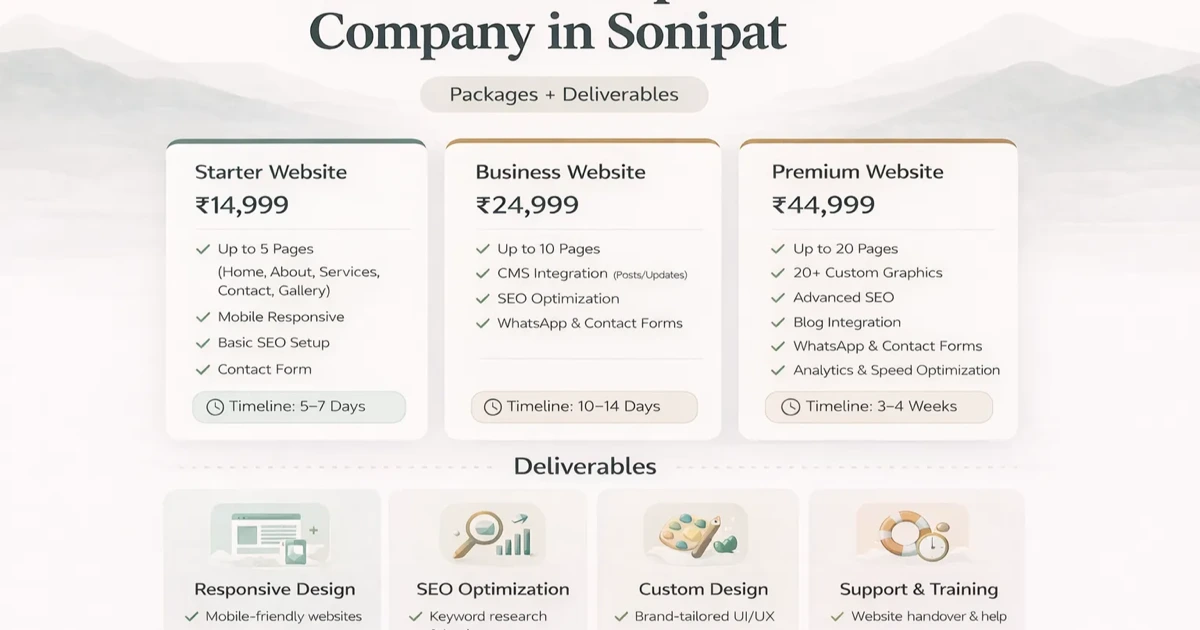
April 5, 2026
Plan a Sonipat food-supplier website with product data, label and allergen governance, quality documents, bulk enquiries, distributor routes, and ownership.
Read article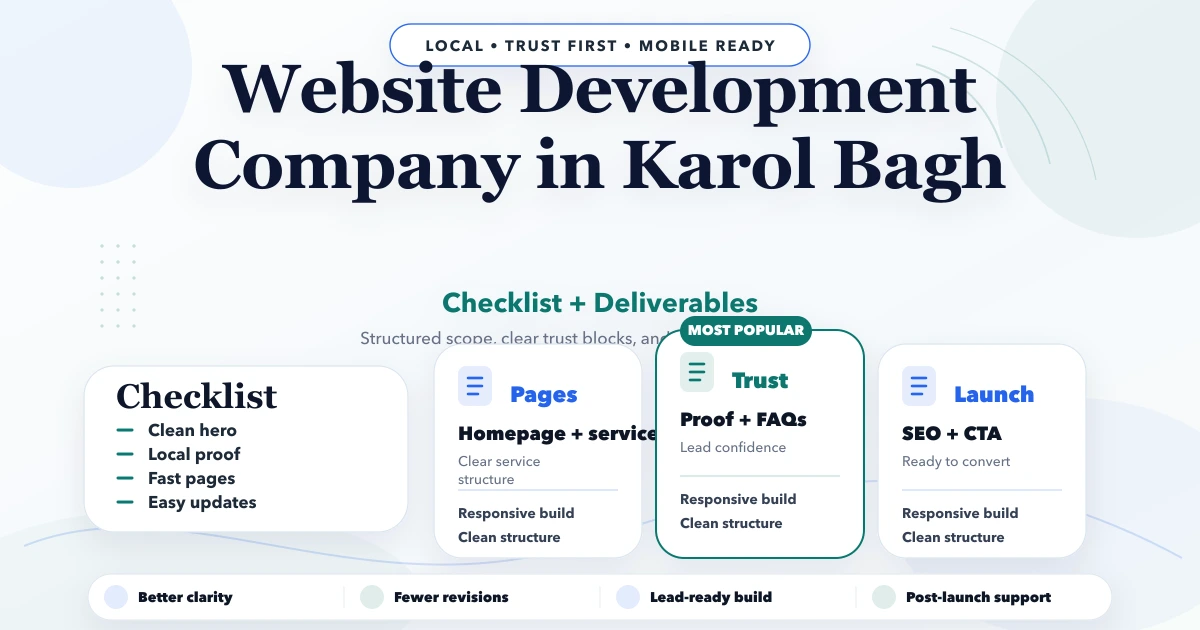
April 21, 2026
Plan a Karol Bagh retail website with a manageable product catalogue, store enquiries, WhatsApp qualification, stock boundaries, analytics, and ownership.
Read article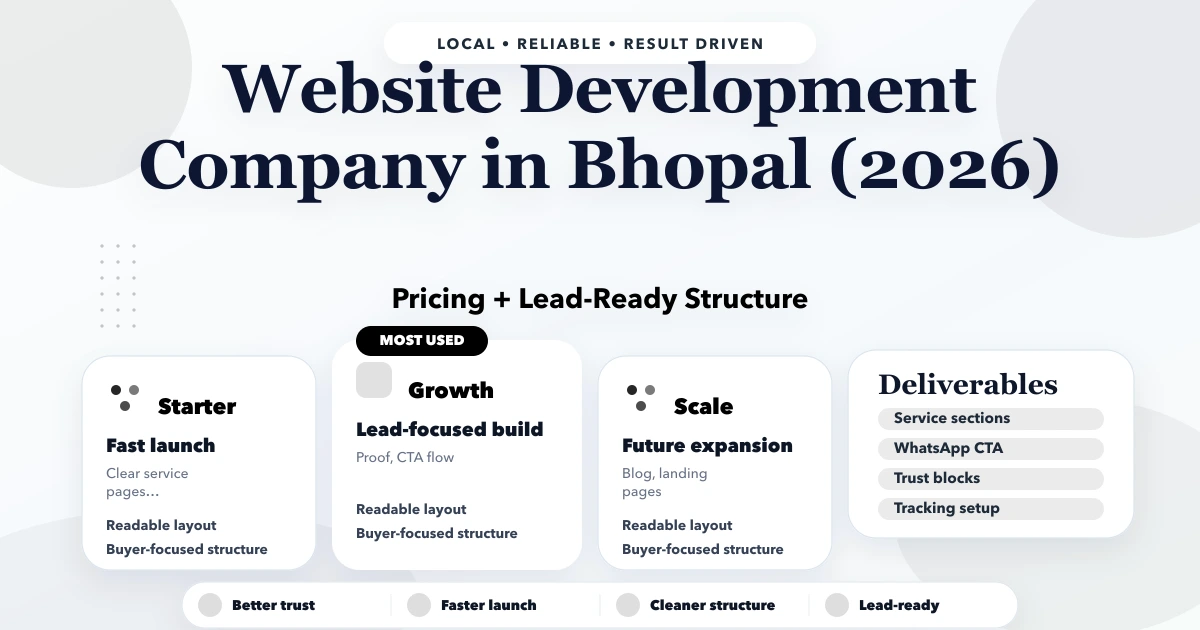
May 1, 2026
Plan a Bhopal public-programme website with eligibility, enrolment routes, evidence, accessibility, update ownership, privacy, reporting, and handover.
Read article