
June 9, 2026
Building Material Supplier Website Plan
Plan a building material supplier website with a searchable catalog, contractor RFQs, dealer enquiries, WhatsApp context, local SEO, and lead tracking.
Read articlePublished Updated
Plan a Sonipat food-supplier website with product data, label and allergen governance, quality documents, bulk enquiries, distributor routes, and ownership.
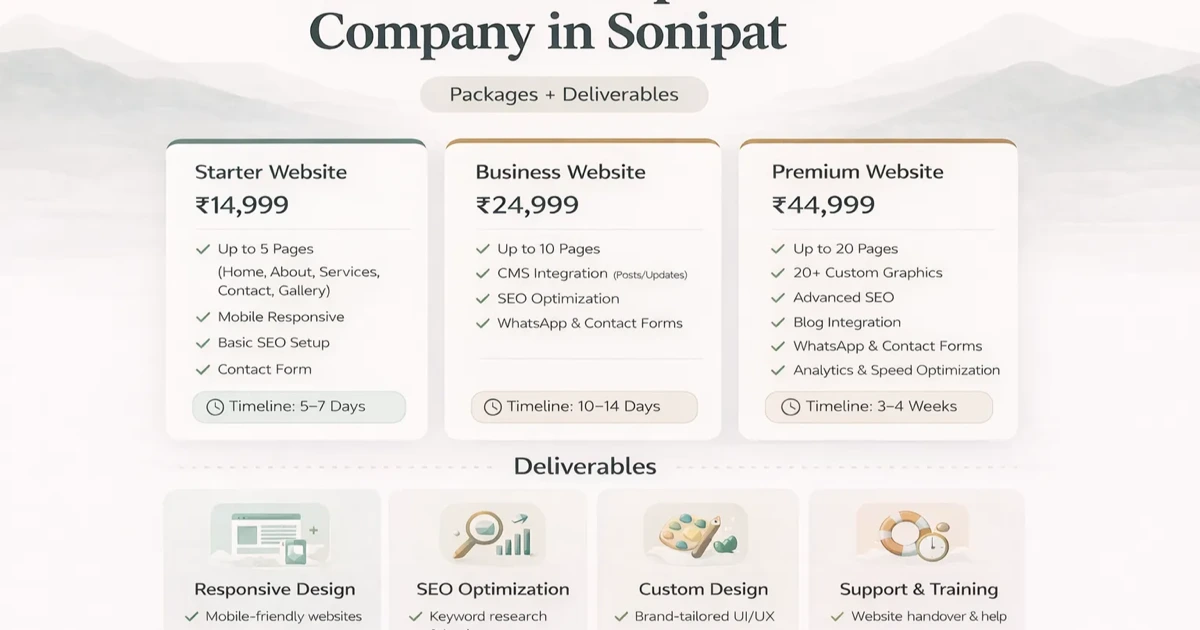
Service-area note: VASUYASHII is based in Delhi NCR and supports businesses remotely across India. A city-focused guide describes service and planning context; it does not claim a physical office in every location mentioned.
Explore the parent topic: Website Development Delhi NCR Hub →A food or packaged-goods supplier evaluating website development companies in Sonipat needs tight control over product facts. Ingredients, allergens, pack sizes, storage, shelf-life wording, certifications, distributor enquiries, and quality documents must remain accurate and approved.
This guide applies when the business actually supplies food or packaged products. It does not claim that all Sonipat businesses fit this category or that VASUYASHII has a local office or customer.
Choose an authoritative owner for:
Website editors should not infer regulated information from packaging photographs.
| Section | Purpose |
|---|---|
| Product identity | Name, category, pack, use |
| Composition | Approved ingredients and allergens |
| Storage/use | Handling and preparation |
| Commercial | MOQ, buyer type, enquiry action |
| Documents | Approved datasheet or certificate request |
| Availability | Market or distribution boundary |
| Contact | Bulk, distributor, or support route |
All public statements should match approved packaging and business records.
Show pack, price where stable, availability, shipping, returns, and support.
Collect product, quantity, delivery area, frequency, packaging, and required date.
Collect territory, business type, current network, product interest, and contact. Do not promise appointment or exclusivity at submission.
Use different forms or clear conditional fields.
Imagine a packaged-food supplier receiving “send rate list” messages. The team does not know the requested pack, quantity, destination, repeat frequency, or whether the buyer is retail or wholesale.
A focused website can:
The site should not publish a universal price list if commercial rates change by channel and quantity.
Claims such as “organic,” “natural,” “sugar-free,” “high protein,” “eco-friendly,” “certified,” or health-related statements require suitable evidence and review. The website should not expand beyond approved label wording.
Create a claim register:
| Claim | Evidence | Approved wording | Owner | Review date |
|---|---|---|---|---|
| Product attribute | Approved source | Exact public wording | Product owner | Defined |
| Certification | Current certificate | Scope-limited wording | Compliance owner | Expiry |
| Nutrition | Approved analysis | Label-aligned value | Responsible owner | Product change |
Do not use certification logos outside their authorised scope.
When formulation changes:
The website must not show an old ingredient panel next to a new product image.
The business should have an approved process for correcting public product information:
A marketing team should not independently decide whether an ingredient, allergen, certification, or safety issue is material. Escalate to the authorised business and professional advisers.
If a product is withdrawn, the public page may need a notice, support route, or removal depending on the actual requirement. Do not invent recall language or legal instructions; use approved official wording.
For each product, compare:
Flag differences and assign an owner. A polished image library is harmful if it displays obsolete packaging.
Distributor pages should clarify product categories, broad appointment criteria, territory-review process, expected business information, support after approval, and that a form does not create automatic exclusivity.
Keep internal pricing, credit rules, signed terms, and private performance data outside public pages. If approved distributors receive protected files or prices, use authenticated access with revocation and export controls.
When a product is discontinued, decide whether existing customers still need ingredients, care, warranty, or support information. Preserve useful support content while removing new-order actions. Update category links and recommend a replacement only when it is genuinely suitable.
Redirecting every retired product to the homepage loses context. Use a close replacement, retained support page, or clear unavailable state based on user need and search value.
Possible public or request-based records:
Mark revision or validity dates. Keep customer-specific or batch-specific records behind a controlled process.
Collect:
Avoid collecting sensitive identity or financial documents in the first form. Move verification into a secure later step.
Use:
The acknowledgement should not imply distributor appointment. Publish broad criteria only when approved.
Use:
Avoid thin pack-size pages and duplicate city pages.
Product facts should remain readable without zooming. Use:
Do not make the label image the only source of ingredients or allergens.
Cost changes with:
If catalogue, stock, customer, and invoice data need shared operations, review VASUYASHII Business Suite or custom software separately from the public website.
Verify products, labels, documents, owners, and buyer routes.
Approve product fields, categories, variants, and forms.
Build representative products and test mobile readability.
Import approved records and run owner sign-off.
Test enquiries, schedule product reviews, and monitor stale documents.
Current VASUYASHII service scope connects websites, web applications, and integrations only where the business process justifies it.
Before launch, ask the responsible owner to verify:
Use a representative retail, bulk, and distributor scenario. A technical pass is incomplete until the authorised product owner confirms the public facts.
Repeat the test after formulation, label, certificate, pack, or policy changes.
Define which changes can be published as normal updates and which require approval from quality, operations, or management. A spelling correction may be routine; a change to ingredients, allergen guidance, pack size, certification, shelf information, or distributor availability needs controlled evidence and a recorded effective date.
The website team should know how to pause an affected page or enquiry route while facts are reviewed. After approval, confirm the corrected information appears in category pages, product pages, downloadable documents, structured data, and sales handover material. This prevents a fast content update from creating a different claim in another public location and makes later audits easier.
Usually not. Keep variants on one product page unless each has independent buyer value.
Yes. Explain the quote factors and collect quantity, pack, frequency, and destination.
Only current documents approved for public use. Others can use a controlled request.
Parts can be routed, but territory, credit, capability, and appointment often need manual review.
Whenever formulation, label, pack, certification, availability, or policy changes, plus a scheduled periodic review.
No. A catalogue and qualified enquiry may fit B2B products better.
Prepare five approved product records and define the three buyer routes. Share the catalogue size and data owner through contact.
Related Articles
June 9, 2026
Plan a building material supplier website with a searchable catalog, contractor RFQs, dealer enquiries, WhatsApp context, local SEO, and lead tracking.
Read article
March 31, 2026
Plan a Jaipur made-to-order product catalogue with variants, specifications, sample requests, wholesale and retail routes, lead times, and ownership.
Read article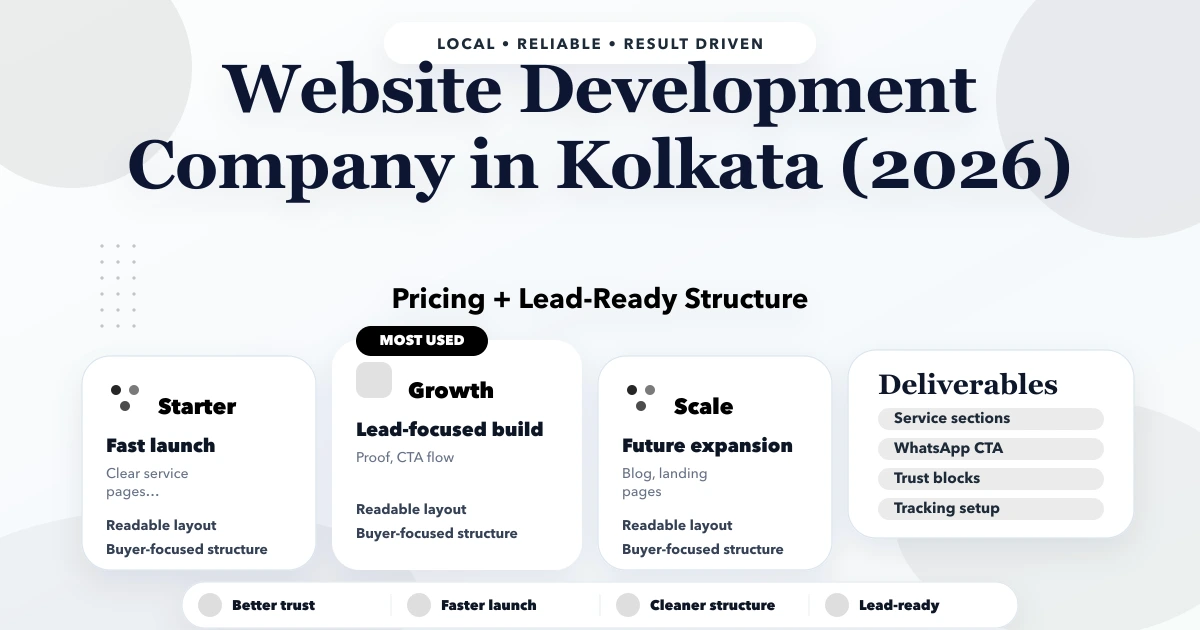
May 1, 2026
Plan a Kolkata B2B export website with product specifications, buyer qualification, document requests, market boundaries, RFQs, and ownership.
Read article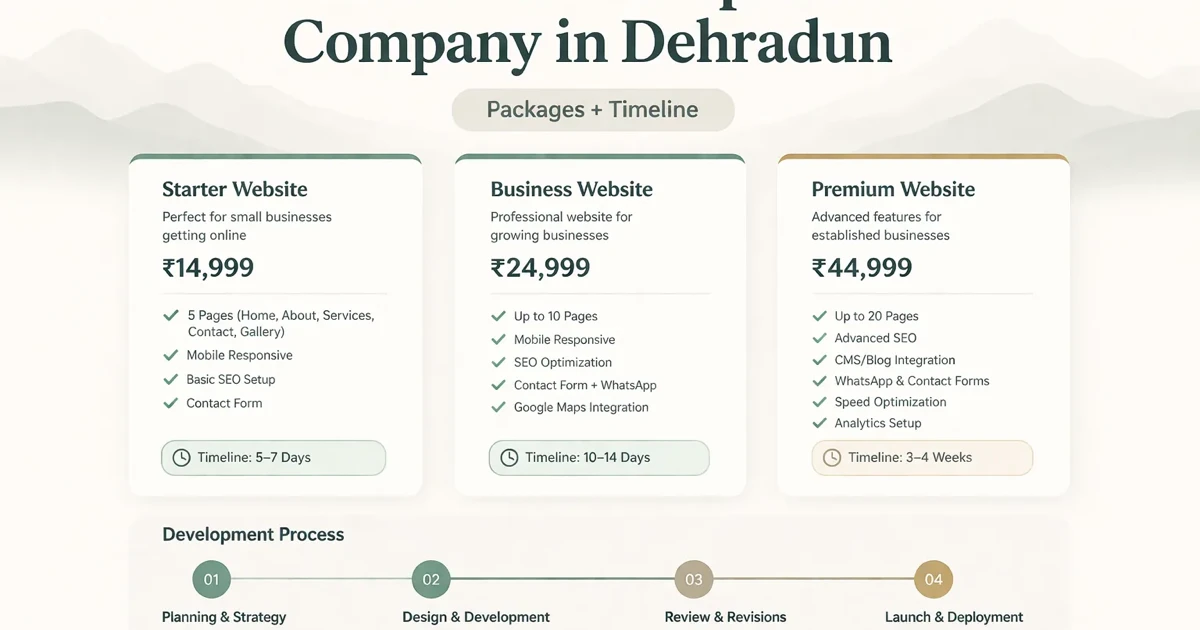
April 3, 2026
Plan a Dehradun education website with course ownership, admission enquiries, fee and batch boundaries, verified faculty proof, accessibility, and handover.
Read article