
May 9, 2026
Safe Local Backlink Strategies for Small Businesses
Safe local backlink strategies for Indian small businesses covering citations, partnerships, outreach, link checks, monitoring, and spam risks.
Read articlePublished Updated
Build backlinks safely through original resources, expert contributions, partnerships, directories, digital PR, and outreach measured by referral value.
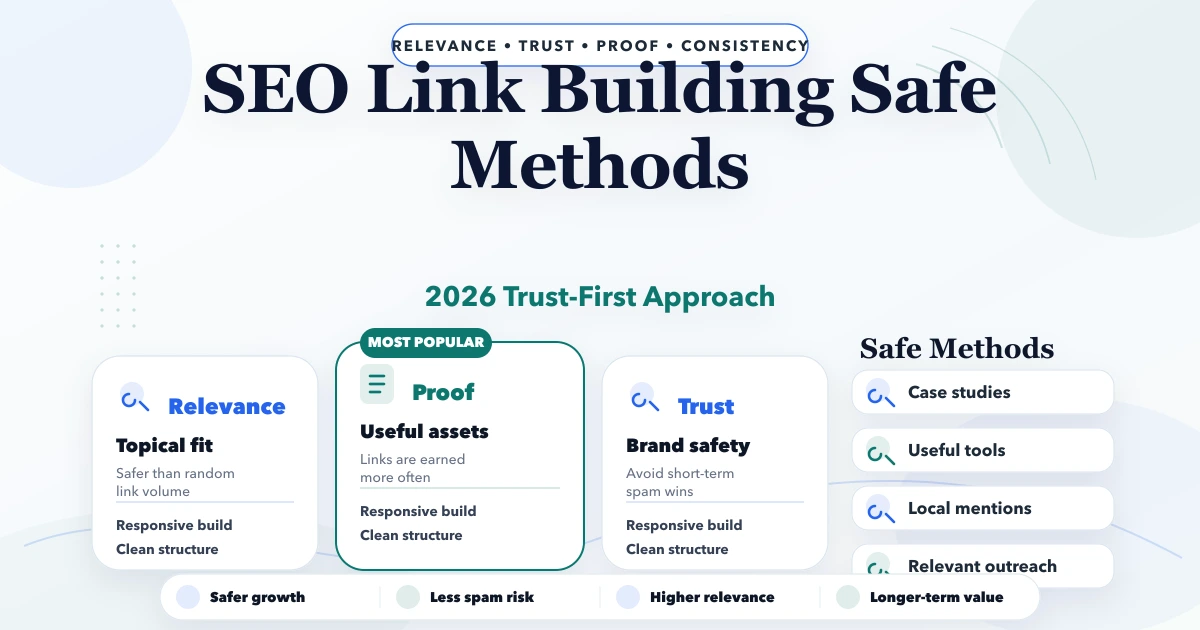
Safe link building is not the fastest way to place the largest number of links. It is the process of earning or creating legitimate references because a page, business, project, resource, or expert contribution is useful to another audience. The link should make sense even if search engines did not count it as a ranking signal.
This guide covers SEO link building safe methods for a small software or service business. It explains asset preparation, genuine outreach, expert articles, partner links, directories, digital PR, anchor text, qualification, tracking, and practices to avoid.
By Tushar C. (Founder, VASUYASHII). No method guarantees placement, authority growth, ranking, or traffic. Publishers control editorial decisions, and search engines may ignore or discount links.
Use this order:
Ten relevant references can be more useful than hundreds of unrelated profile or comment links.
Outreach fails when the destination is a thin sales page. Before contacting anyone, check whether the page offers something a publisher can confidently reference:
The page needs an accountable author, update date, clear scope, sources where required, readable structure, fast mobile experience, and a stable URL. Do not ask others to link to claims that the business cannot prove.
Create an asset that solves a repeatable problem. Examples for a software company include a project-requirement template, software quotation checklist, role-permission matrix, inventory migration sheet, API integration checklist, or calculator with documented assumptions.
The resource should:
VASUYASHII's software project requirement template is an example of a useful first-party resource. Outreach should focus on people whose audience genuinely needs the planning tool.
A guest article is useful when the publisher's audience, editorial standard, and topic fit the writer's real expertise. Pitch a specific problem and outline, not "I need a backlink."
A responsible contribution should be original, fact-checked, useful without the link, and aligned with the publisher's guidelines. Use an author bio and one or two contextual references only where they help the reader.
Check:
Do not spin one article across many sites or submit AI-generated filler. Keep a record of accepted title, URL, publication date, author bio, and link destination.
Legitimate business relationships can create natural links:
The relationship must be real. Do not exchange fabricated testimonials or require a followed link as the price of service. Obtain permission before publishing a customer name or logo.
If compensation or sponsorship exists, disclose it and use the link treatment required by the publisher and search-engine guidance.
Journalists and industry writers need evidence, not product pitches. A useful data story might analyse anonymised public information, a transparent survey, or operational patterns the business can lawfully share.
Document methodology, sample, period, limitations, and contact person. Never publish customer or personal data without permission. Avoid turning a tiny internal sample into a national claim.
Create a concise media page with the finding, chart, methodology, downloadable assets, and expert quote. Pitch writers who already cover the subject and explain why their audience may care.
Directories can support discovery and entity consistency when they are relevant to the business, industry, region, or professional membership. Complete profiles accurately with business name, website, services, contact, and description.
Prioritise:
Avoid bulk submission services that create hundreds of empty profiles. A directory link may be nofollow or ignored; its value can still come from discovery, verification, and referral traffic.
Find maintained pages that list useful tools or guides relevant to your resource. Review every suggested link manually. Contact the owner only when your page fills a real gap or replaces a genuinely broken/outdated resource.
A good message is short:
Do not automate thousands of emails or pretend to be a reader with no commercial connection.
Forums, Q&A sites, and comments can build reputation when the contribution answers the question fully. They are not places to paste business details and links repeatedly.
Link only when the referenced page materially helps the answer and the community permits it. Disclose affiliation. Many community links are nofollow or user-generated; that is normal.
The objective is expert visibility and qualified referral, not manipulating anchor text. Repeated self-promotion can damage the brand and get the account removed.
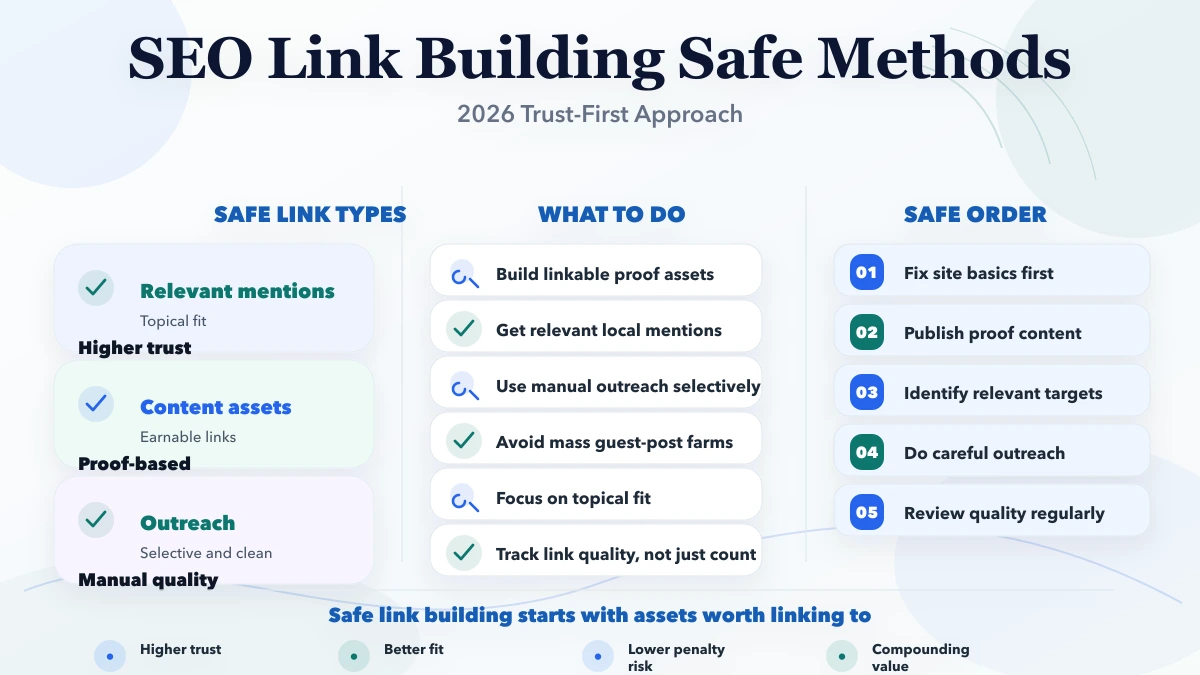
Use a review sheet with:
Do not rely only on a third-party authority score. Review whether the site is indexed, publishes coherent content, has real ownership, receives relevant engagement, and links to sensible destinations.
Red flags include mass unrelated guest posts, obvious paid-link menus, copied content, hidden ownership, malware warnings, excessive exact-match anchors, and pages created only to sell links.
Natural anchors include the brand name, page title, URL, product/resource name, or descriptive phrase. The publisher should choose wording that fits the sentence.
Avoid demanding exact-match commercial anchors across placements. A healthy profile normally contains varied brand and descriptive references. Do not hide links, use white text, place them in unrelated footers, or redirect them through deceptive URLs.
Link to the most relevant stable page rather than sending every reference to the homepage. If the destination changes, maintain a direct redirect and update important source links where possible.
Avoid sending attachments or long drafts before the publisher requests them. Follow published submission requirements exactly.
Track:
Do not judge a campaign after a few days. Links may be crawled slowly, and ranking movement depends on content, technical quality, competition, and many other signals. Annotate publication dates in reporting.
If the business has paid for placement, retain invoices and disclosure records and use appropriate sponsored treatment.
Consider a fictional custom-software company with no referring-domain baseline. Instead of buying 500 links, it publishes a software-project requirement template, contributes an original article to a relevant SME publication, creates one approved integration-partner page, and completes accurate local/industry profiles.
The team records every live URL and measures referral visits, template use, branded searches, and qualified enquiries. Some links may be nofollow, but they still establish useful visibility and relationships. This is an illustrative process, not a ranking forecast.
No. They can drive referral traffic, support discovery, verify a relationship, and expose the brand to a relevant audience. Search engines decide how links are used.
It can be when the article is original, relevant, editorially reviewed, useful, and transparent. Mass guest posting created only for exact-match links is risky and low quality.
Avoid paying for ranking manipulation. Legitimate sponsorship or advertising should be disclosed and use appropriate link attributes according to publisher/search guidance.
They may create a URL reference, often user-generated or nofollow, but repetitive self-promotional comments are spam. Comment only when contributing useful information.
There is no reliable universal number. Intent fit, content, technical quality, competition, brand, and link relevance all matter. Focus on legitimate references and business value.
Yes. VASUYASHII can help build templates, tools, technical guides, project pages, and measurement workflows. Editorial acceptance and ranking outcomes cannot be guaranteed.
Choose one strong resource, identify ten genuinely relevant prospects, and send useful personalised outreach. Record only real public placements and judge value by relevance, referral, and business outcomes.
Review the Local SEO hub, services, free project template, or contact VASUYASHII for a focused plan.
Related Articles
May 9, 2026
Safe local backlink strategies for Indian small businesses covering citations, partnerships, outreach, link checks, monitoring, and spam risks.
Read article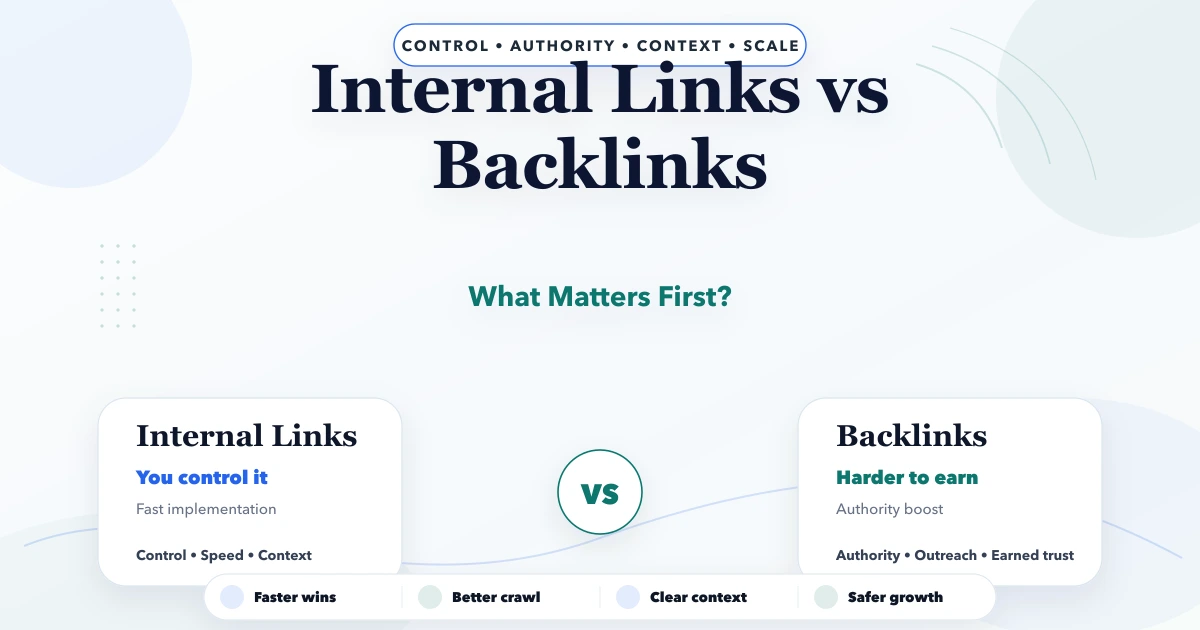
April 21, 2026
Compare internal links and backlinks, diagnose what to fix first, build topic hierarchy, strengthen discovery, earn authority, and measure SEO results.
Read article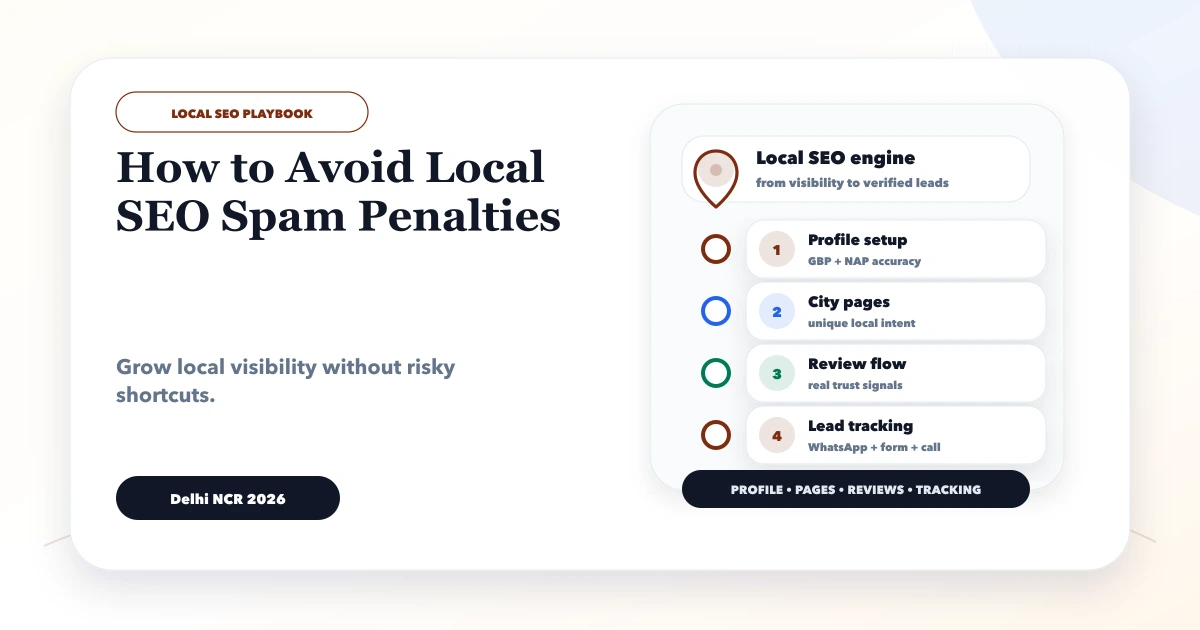
May 29, 2026
Avoid local SEO spam with accurate Business Profile details, genuine locations, useful city pages, honest reviews, clean citations and a recovery checklist.
Read article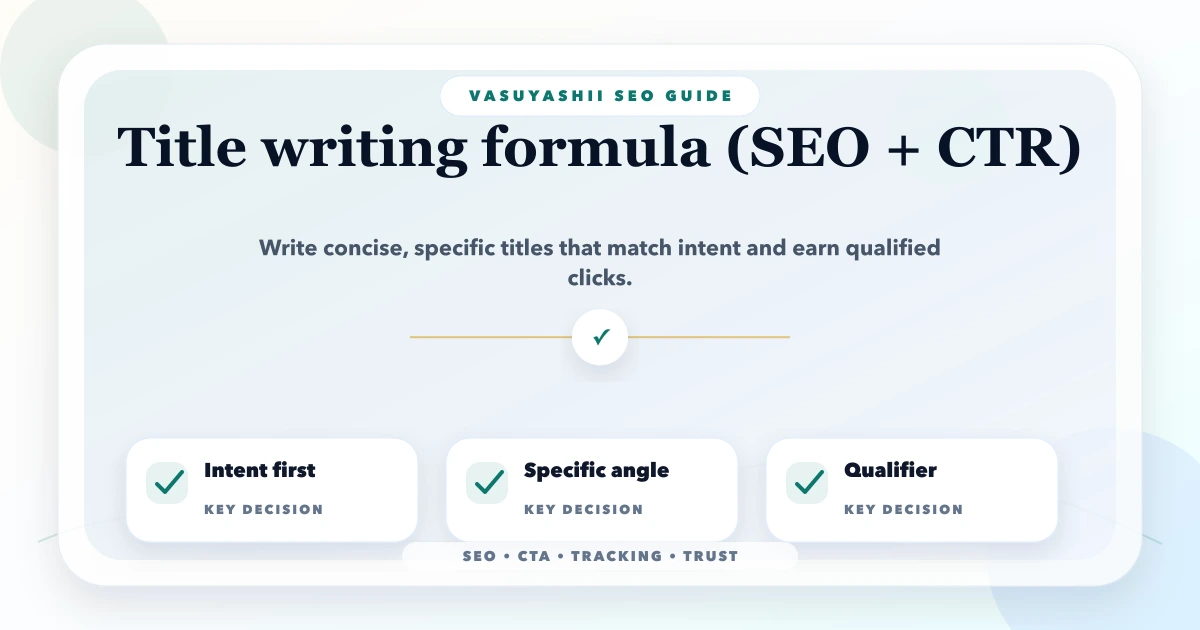
May 12, 2026
Write clearer SEO titles with intent, specificity, differentiation, honest qualifiers, Search Console evidence, practical templates, and CTR testing rules.
Read article