
April 20, 2026
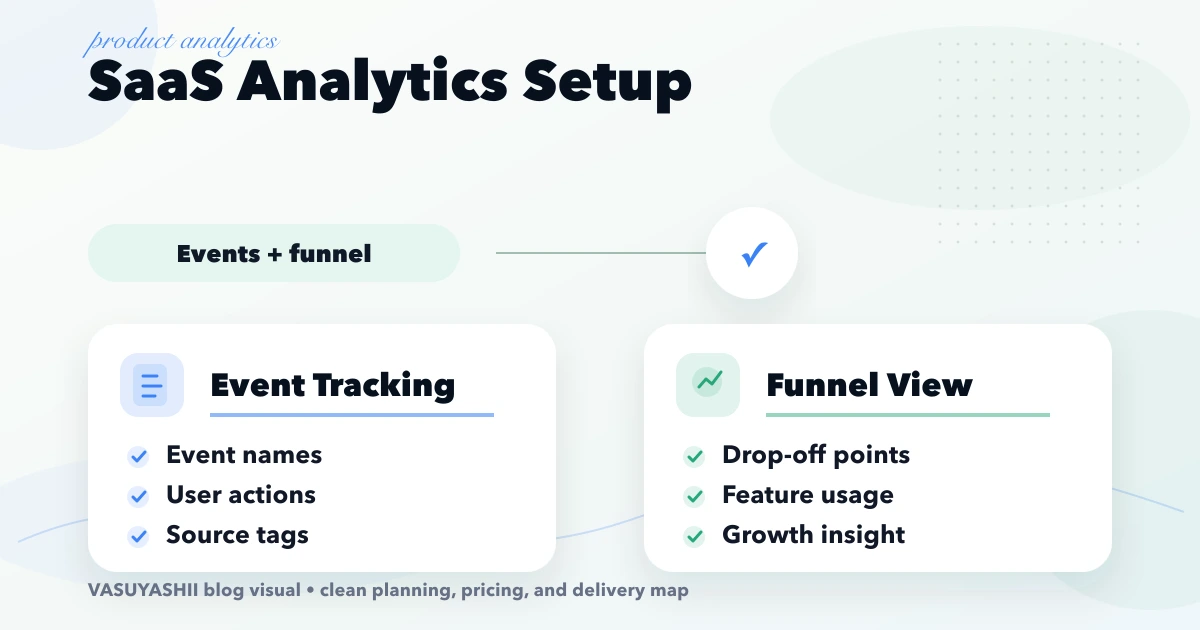
SaaS Analytics Setup: Events and Funnel
Plan SaaS analytics with a clear event contract, user and tenant identity, activation funnels, data QA, privacy controls, dashboards, and rollout checks.
Read articlePublished Updated
Improve SaaS trial conversion by defining signup, activation, onboarding, lifecycle messages, sales assistance, upgrades, analytics, and experiments.
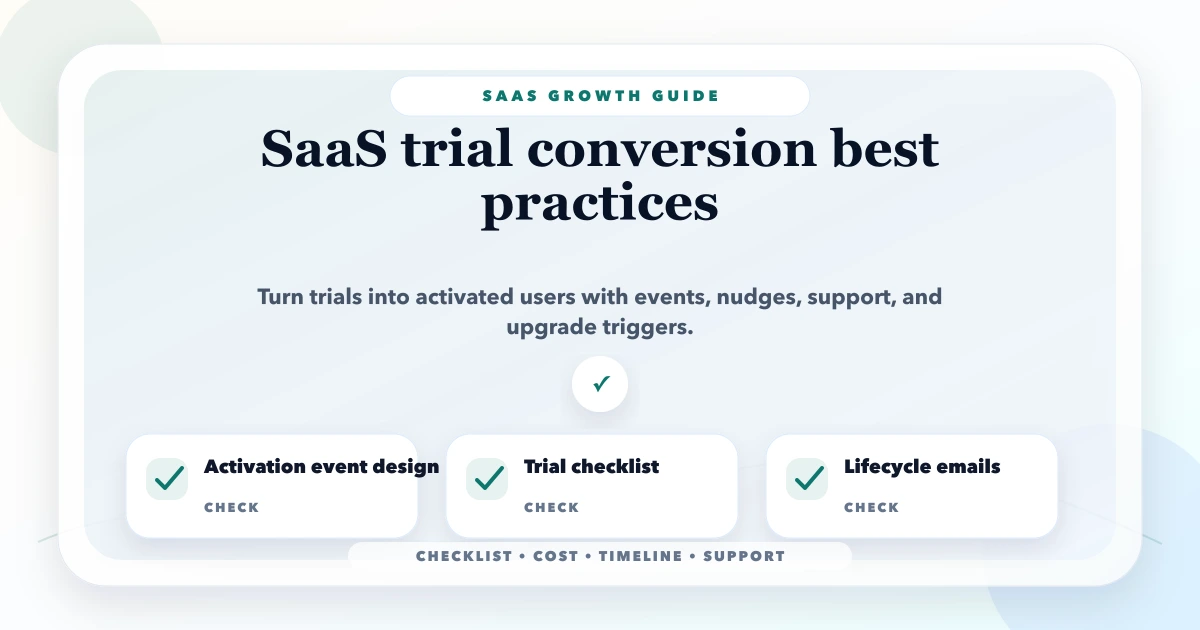
SaaS trial conversion improves when suitable users experience real product value, understand the commercial terms, and can complete an upgrade without operational friction. More emails, tooltips, or discounts do not fix a trial that attracts the wrong audience or hides the core workflow behind setup work.
Begin by defining what a qualified signup, activated account, paid conversion, and retained customer mean. Then design the trial around the shortest honest path from first intent to meaningful outcome.
The practical sequence is:
Trial conversion is not the only success metric. A product can raise conversion by admitting poor-fit customers who cancel quickly.
Decide whether the business converts a user, workspace, account, company, or subscription. B2B products often have several users in one account, so user-level conversion can overcount.
Document:
Use the SaaS analytics KPI guide to keep activation, paid status, churn, and cohorts consistent.
Best when users can reach value without heavy implementation, security approval, data migration, or sales configuration.
Useful for complex B2B workflows where qualification, stakeholder alignment, and tailored examples matter before access.
Appropriate when a real dataset, integration, role setup, or process change is required. Define pilot scope, success criteria, owner, support, duration, and data handling.
A continuing free plan can build reach but needs sustainable limits, support boundaries, and a clear reason to upgrade. It is not simply an unlimited trial.
Choose based on product complexity and buyer process, not competitor fashion.
Ask only what is needed to create a secure account and personalise the first path. Excess fields reduce starts, while zero qualification can fill the product with bots, students, competitors, or users outside the intended market.
Possible fields include work email, company, role, use case, team size, and selected goal. Collect sensitive data only with a defined need and policy.
Signup controls should cover:
Activation is the first evidence that the account experienced the product's intended value. It should not be logged in or visited dashboard unless that action itself delivers value.
Examples:
Use one primary activation event and supporting milestones. If activation requires ten unrelated steps, reconsider the trial design.
Create a journey table:
| Step | User intent | Required input | Success evidence | Recovery |
|---|---|---|---|---|
| Signup | Evaluate product | Identity and consent | Verified account | Resend/support |
| Workspace setup | Establish context | Company/use case | Valid workspace | Editable defaults |
| First data | See own workflow | Import/manual sample | Valid record | Template/dry run |
| Core action | Experience value | Product-specific input | Activation event | Guided help |
| Share/invite | Test collaboration | Recipient/role | Successful outcome | Permission fix |
| Upgrade | Continue use | Plan/payment | Active paid state | Payment recovery |
Instrument each step with stable events and error reasons.
An empty dashboard does not teach a new user. Use clear first actions, optional sample data, checklists, templates, and realistic examples. Label sample data so users do not mistake it for their own records.
Allow users to remove samples and start clean. For products involving billing, customer data, or inventory, explain which actions are simulated and which can trigger real documents, messages, or provider calls.
A checklist should represent dependencies, not marketing tasks. Keep it short and adapt it to the selected use case.
Good checklist design:
Do not force a product tour before the user understands the workspace.
Messages should respond to state, not merely day number. Useful triggers include:
Each message needs eligibility, consent, channel, owner, frequency limit, stop condition, and measurement. Do not send You are almost done when the product has no evidence of progress.
Sales or onboarding assistance is valuable for high-consideration accounts. Trigger help from fit and behaviour, not only company size.
Examples:
The helper should see consented context and avoid asking the user to repeat every step. Record outcomes for product learning.
Show what happens after the trial: price basis, billing period, taxes where applicable, user/usage limits, included support, data retention, cancellation, and upgrade/downgrade rules.
Do not hide critical limits until payment. If the trial includes premium features unavailable on the selected paid plan, label that clearly. Unexpected downgrades create immediate support and churn risk.
The upgrade should preserve workspace and progress. Handle:
Do not grant permanent paid access from a browser redirect alone. Confirm authoritative provider status on the backend.
Explain expiry before the final day. Decide whether access becomes read-only, disabled, or limited and how long data is retained. Provide export or deletion options according to product policy and applicable obligations.
Avoid deleting work immediately without clear notice. Also avoid retaining data indefinitely without purpose. Track reactivation so it does not appear as a new independent customer.
Measure by signup cohort and account:
Show cohort age and sample size. Recent trials have not had equal opportunity to convert.
Separate:
Cancellation and exit surveys should preserve optional customer wording. Do not force users to choose an inaccurate reason.
Test one meaningful hypothesis at a time. Examples include reducing a required field, changing the default template, providing sample data, moving help to a failed step, or offering assisted setup after a high-intent signal.
Define:
Do not declare a winner from a few conversions or optimise short-term payment at the expense of retained value.
Our implementation review follows trial accounts through source, use case, workspace setup, activation, errors, assistance, payment, and early retention. We reconcile product events with subscription/provider states before proposing a funnel. A conversion is not considered healthy if the account refunds or leaves before the first normal value cycle.
This method creates clearer evidence but does not guarantee conversion growth. Market fit, acquisition quality, product value, pricing, and service remain major factors.
There is no universal benchmark without product type, price, buyer, trial model, acquisition source, and conversion definition. Compare mature cohorts and retained value.
Long enough for a suitable account to complete the natural value cycle. A simple tool may need days; a B2B workflow with data and approvals may need an assisted pilot.
It depends on abuse risk, buyer expectation, product cost, and trial model. Measure both conversion quality and trust; disclose billing clearly before collection.
Only when the post-trial plan and limits remain clear. Avoid demonstrating a workflow the buyer cannot continue under the selected plan.
Use explicit requests and high-intent product signals with consented context. Avoid immediate generic calls to every signup.
Activation is evidence of meaningful product value. Conversion is the account becoming paid under an agreed definition. Strong trials usually need activation before healthy conversion.
Take the last 30 eligible trials and mark use case, activation step, failure, assistance, paid state, and early retention. Fix the most frequent verified block. Contact VASUYASHII for SaaS product workflow and analytics implementation.
Related Articles
April 20, 2026
Plan SaaS analytics with a clear event contract, user and tenant identity, activation funnels, data QA, privacy controls, dashboards, and rollout checks.
Read article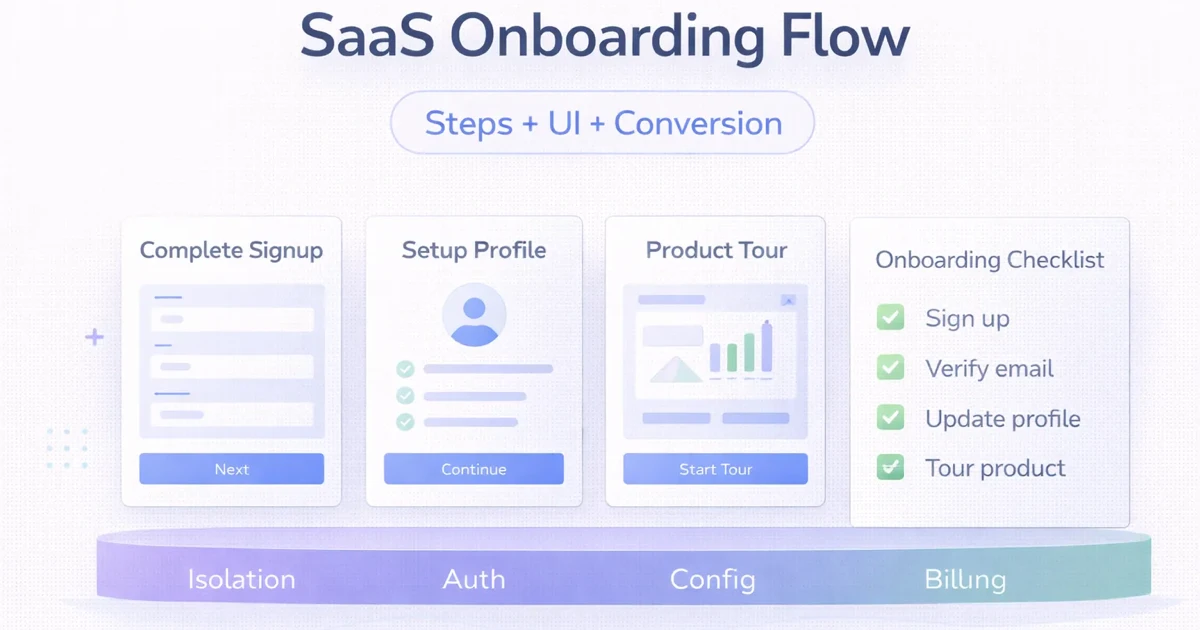
March 31, 2026
Design a SaaS onboarding flow with an activation checklist, setup dependencies, role-specific guidance, useful empty states, recovery, and measurable progress.
Read article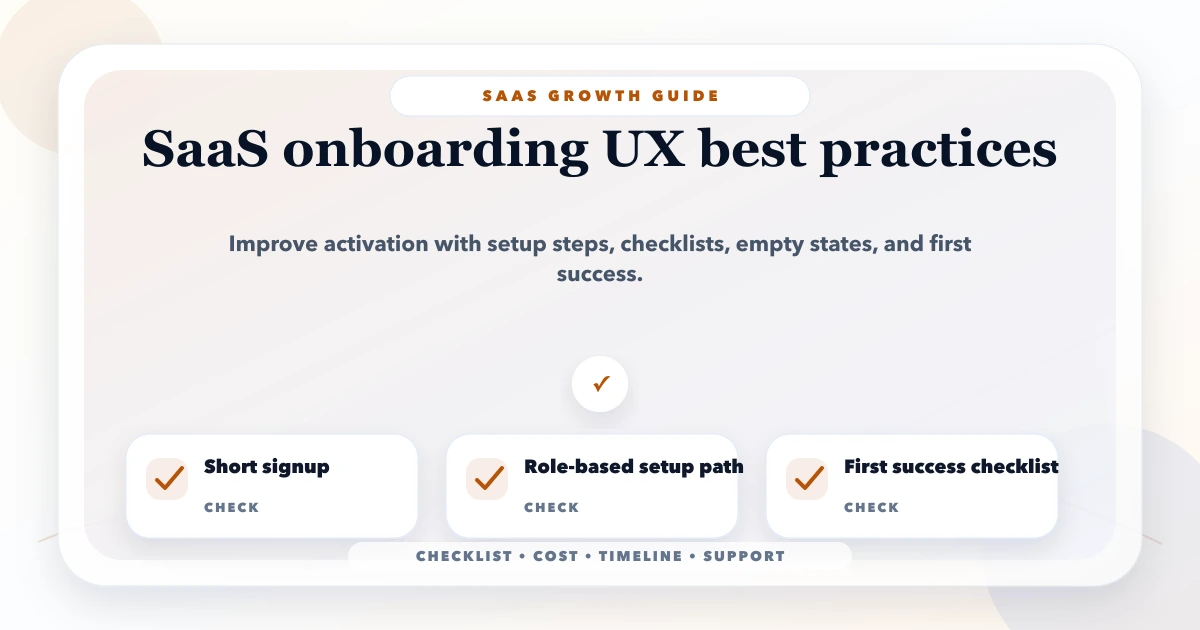
May 16, 2026
SaaS onboarding UX best practices: practical 2026 guide with checklist, cost, roadmap, tools, mistakes, FAQs, and next steps for Indian SMBs today safely.
Read article
May 18, 2026
Build ecommerce email automation around consent, lifecycle events, order truth, suppression, deliverability, failure handling, measurement, and safe rollout.
Read article