
April 20, 2026
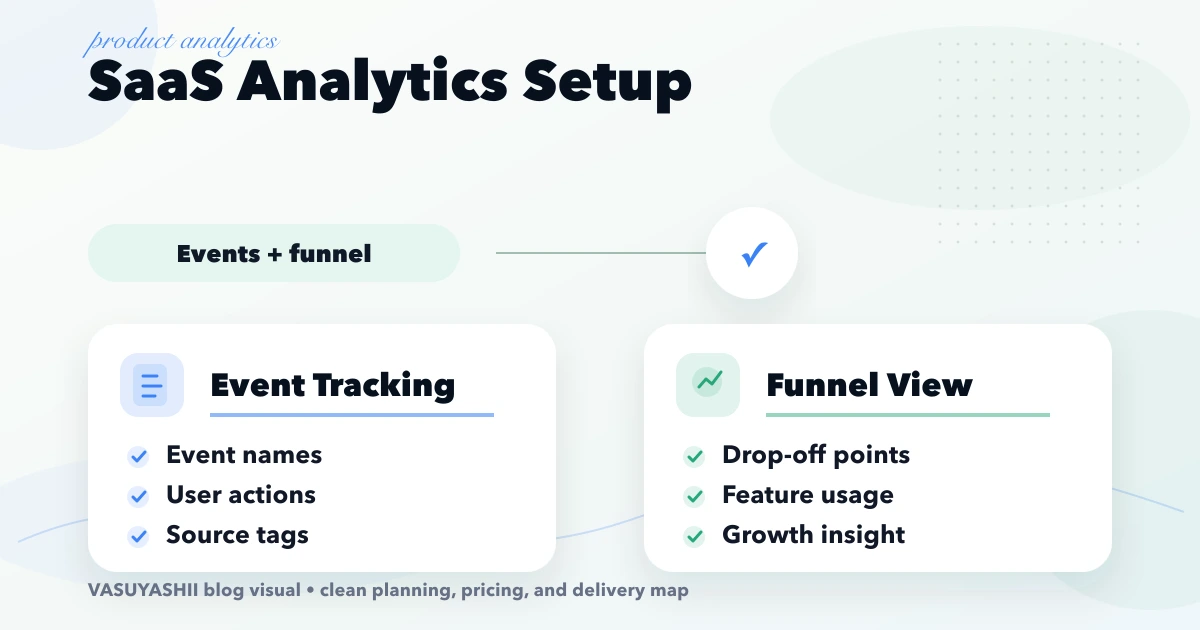
SaaS Analytics Setup: Events and Funnel
Plan SaaS analytics with a clear event contract, user and tenant identity, activation funnels, data QA, privacy controls, dashboards, and rollout checks.
Read articlePublished Updated
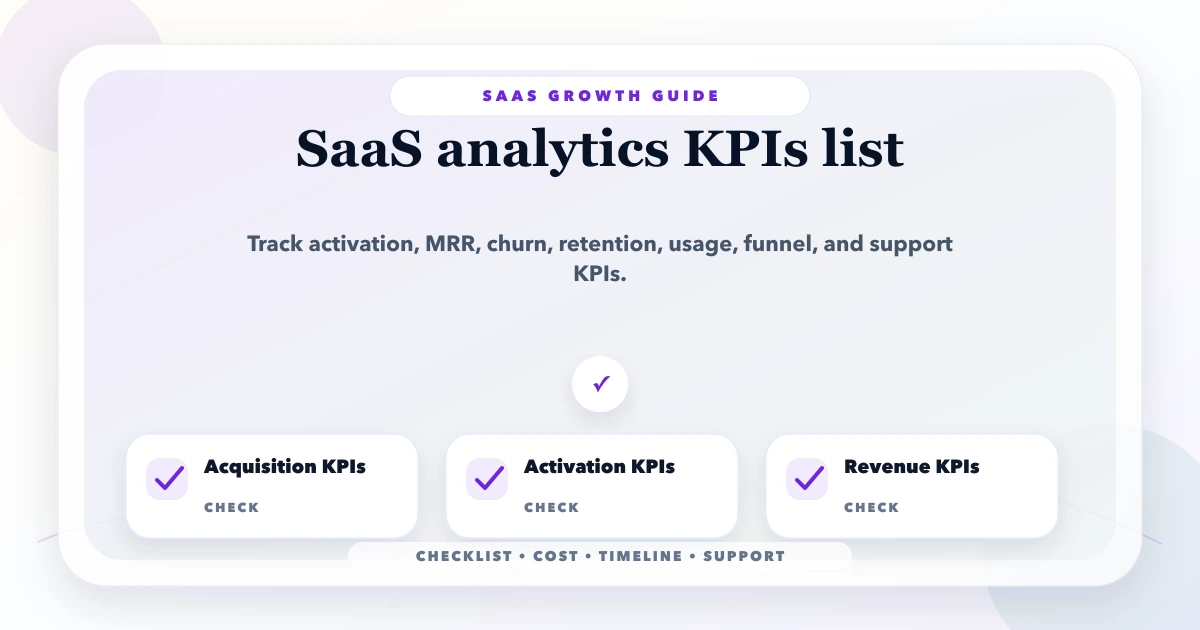
Define trustworthy SaaS analytics KPIs for acquisition, activation, retention, revenue, churn, support, reliability, cohorts, event quality, and ownership.
A SaaS KPI is useful only when its definition, source, owner, cutoff, and decision are clear. Teams often publish monthly recurring revenue, activation, retention, and churn on one dashboard while finance, product, and support calculate them differently. The problem is not missing charts; it is missing metric contracts.
This guide focuses on subscription products. It does not provide universal benchmark targets because healthy values vary by market, price, contract, customer type, maturity, and accounting policy.
For every KPI document:
| Contract field | Example |
|---|---|
| Business question | Are new workspaces reaching first value? |
| Formula | Activated eligible workspaces / eligible signed-up workspaces |
| Unit | Workspace, not user |
| Cohort window | Signup week |
| Activation event | First approved invoice issued within 14 days |
| Exclusions | Internal/test workspaces, migrated customers |
| Source | Product event plus workspace table |
| Cutoff | Daily at 02:00 UTC |
| Owner | Product operations |
| Action | Review onboarding step with highest drop-off |
Without this contract, two accurate queries can still disagree because they measure different populations.
Track acquisition by the entity that becomes a customer: lead, account, workspace, or organisation.
Do not count every form spam submission as a lead or every invited user as an acquired customer.
Activation is the first evidence that the customer reached meaningful value. It should be product-specific.
For billing SaaS, activation might require company setup, product/customer creation, and first valid invoice. For project software, it may require team invite and first completed workflow. A login is usually too weak.
Track:
Avoid changing the activation definition without versioning. Historical trends otherwise become misleading.
Daily or monthly active users can be useful, but organisation SaaS needs account-level measures too.
Do not inflate activity with page views, background sync, automated jobs, or staff support sessions. Mark event actor and source.
Monthly recurring revenue should include recurring subscription value under an agreed normalisation policy. One-time implementation, tax, usage overage, credits, annual prepayment, and discounts need explicit treatment. ARR is often a normalised annual view, not cash collected.
Track upgrades, added seats, usage expansion, downgrades, discounts, credits, and plan contraction separately. Net movement explains the final total better than one growth number.
Subscription value and collected cash are different. Track invoices due, payment success, retry state, grace period, and outstanding amount. Reconcile provider events to internal subscription/invoice records.
The SaaS subscription billing guide explains plan versions, webhooks, entitlements, and reconciliation.
Logo retention measures customer accounts; revenue retention measures recurring value. User retention measures people and can move differently when account seat counts change.
| Metric | Example definition question |
|---|---|
| Logo churn | Which paid accounts count as lost in the period? |
| Gross revenue retention | Are expansion amounts excluded? |
| Net revenue retention | Which expansion/contraction events are included? |
| Cohort retention | Is cohort based on signup, activation, or paid start? |
| Reactivation | Is a returning account new or recovered? |
| Voluntary churn | Did customer choose to cancel? |
| Involuntary churn | Was loss caused by payment/administrative failure? |
Use the SaaS churn reduction guide for diagnosis and action. Do not optimise one retention metric while hiding unpaid, deeply discounted, or inactive accounts.
Fast closure is not useful if agents mark unresolved tickets complete. Pair speed with reopen rate and outcome.
SaaS value depends on successful workflows, not server uptime alone.
Measure from the user's side and tag deployment versions. The web app performance checklist covers production diagnosis.
Avoid a vanity count of blocked attacks. Track controls the team can own:
The SaaS security checklist provides the control baseline.
Events need stable names, version, actor, tenant/workspace, timestamp, object, source, and relevant properties. Do not send passwords, tokens, invoice contents, health data, or unnecessary personal information to analytics.
Recommended controls:
Totals can improve while new cohorts perform worse. Group accounts by paid start, activation, plan, acquisition source, or product version and compare them at the same age.
For example, compare Week 4 activation and Month 2 retention for each monthly signup cohort. Do not compare a six-month-old cohort with a two-week-old cohort using the same final retention window.
Show cohort size. A 100% rate from two customers should not drive product strategy without context.
Revenue movement, retained accounts, cash/collection exceptions, activation, critical reliability, and one or two current strategic risks.
Activation funnel, workflow success, adoption, cohort retention, errors, and experiment/version comparison.
Onboarding stage, health signals, renewal window, support backlog, risk reason, and next action.
Invoice, collection, failed payment, credits, subscription changes, and reconciliation.
Every card should open its underlying records or analysis. A dashboard without drill-down becomes a presentation layer that teams stop trusting.
Choose activation, paid retention, and successful core workflow. Define contracts and validate manually.
Connect product identity to workspace, subscription, invoice, and provider records. Remove test/staff activity.
Add segment/cohort views and link every risk metric to an owner queue.
Version definitions, monitor data quality, review privacy/retention, and remove unused metrics.
For implementation, review web application development, integrations, or software development.
VASUYASHII would define a small set of decision KPIs and reconcile events against product and billing records before building a broad dashboard. Our implementation worksheet stores the formula, identity level, cohort, exclusions, source, cutoff, owner, and acceptable reconciliation difference for each KPI. A metric is not promoted to the owner dashboard until a sample can be traced back to source records.
This is an implementation method, not a claim about a specific SaaS result. Contact us with a redacted event and subscription model for a focused scope.
Track a meaningful activation event, successful core workflow, paid account status, and early retention. Add acquisition and support context once identity and events are reliable.
No. MRR normalises recurring subscription value under an agreed policy. Cash collection includes timing, advance payment, failed payment, tax, credits, and non-recurring amounts.
Only under an explicitly named free-user retention metric. Do not mix free inactivity with paid logo or revenue churn.
There is no useful universal answer without market, price, contract, maturity, customer type, and metric definition. Compare stable cohorts and business economics.
Not always. Start with reliable operational sources and a few reconciled metrics. Add a warehouse when cross-source history, scale, and analysis justify it.
Review after pricing, product, contract, identity, or event changes and on a regular governance schedule. Preserve historical versions when definitions change.
Write contracts for activation, paid retention, and one core workflow, then calculate them manually for two cohorts. Contact VASUYASHII to design the event and reporting pipeline.
Related Articles
April 20, 2026
Plan SaaS analytics with a clear event contract, user and tenant identity, activation funnels, data QA, privacy controls, dashboards, and rollout checks.
Read article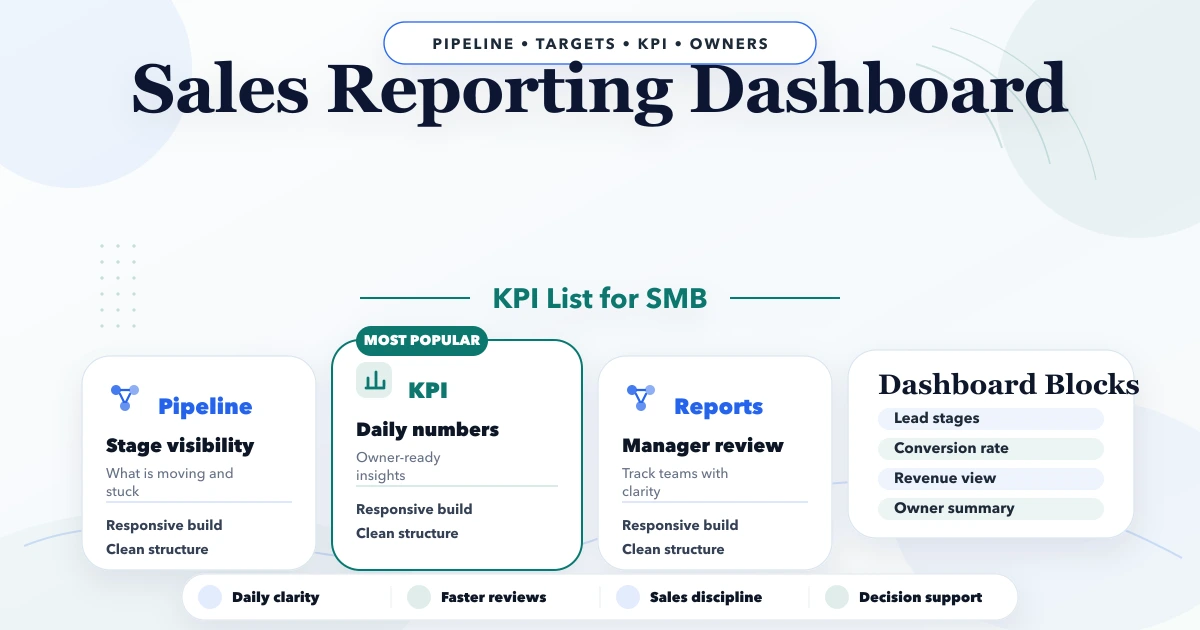
April 23, 2026
Build a reliable SMB sales dashboard with defined pipeline, conversion, revenue, collection, product, customer, rep, target, and data-quality KPIs.
Read article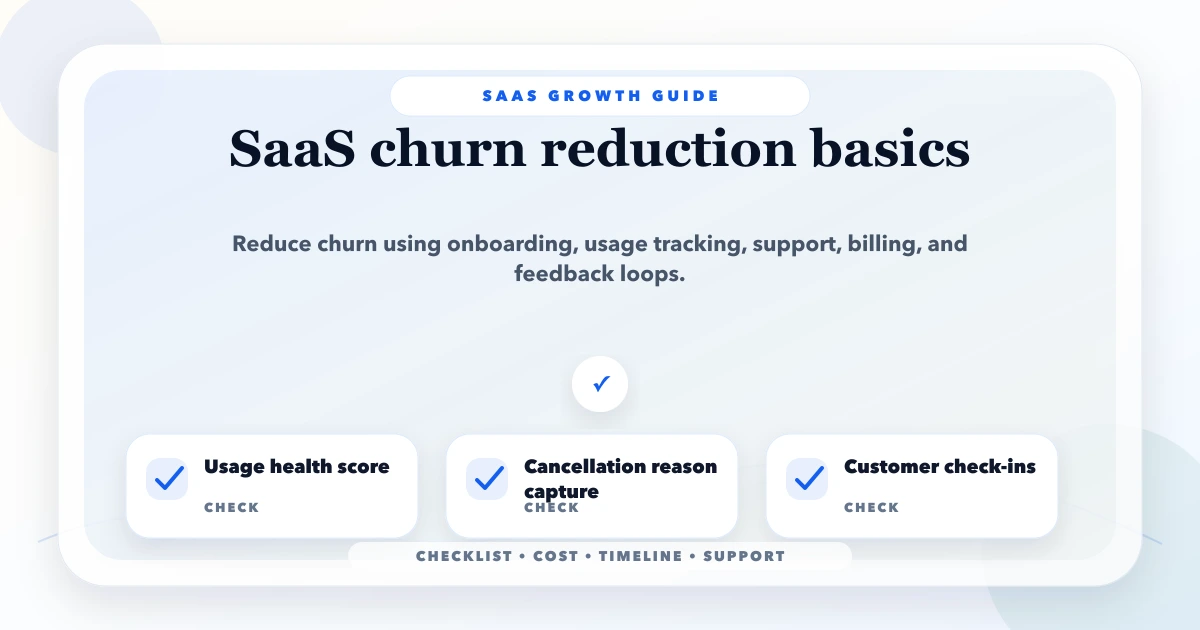
May 16, 2026
Reduce SaaS churn by defining cohorts, separating voluntary and involuntary loss, diagnosing causes, improving activation, renewal, support, and measurement.
Read article
May 16, 2026
SaaS onboarding UX best practices: practical 2026 guide with checklist, cost, roadmap, tools, mistakes, FAQs, and next steps for Indian SMBs today safely.
Read article