
May 3, 2026
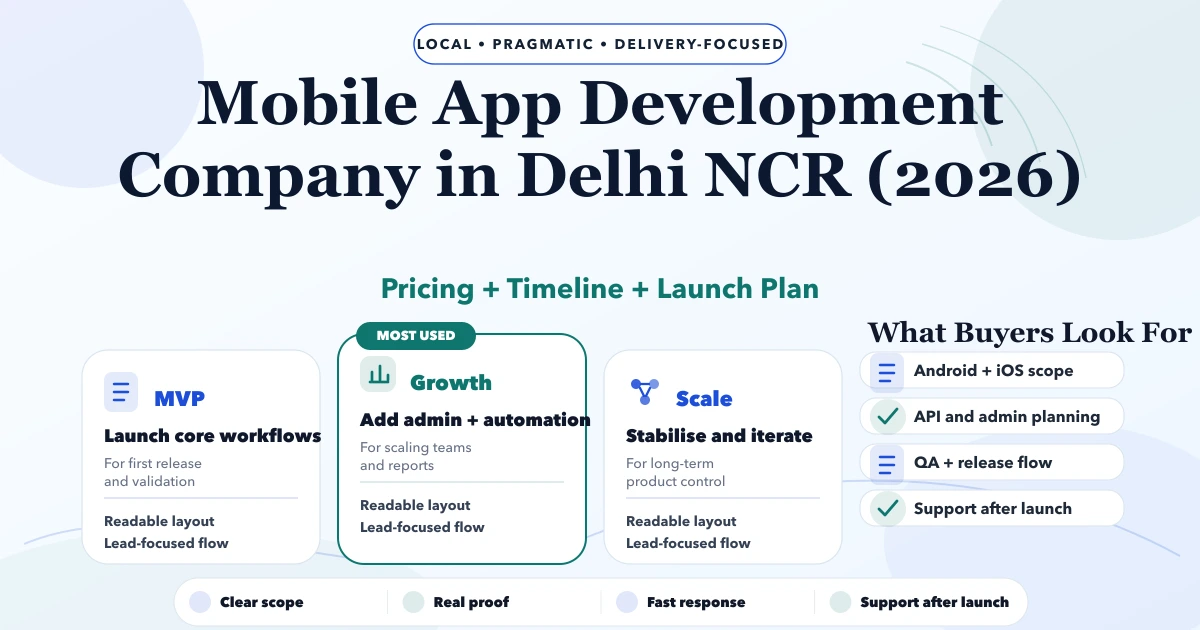
Mobile App Development Company in Delhi NCR (2026)
Plan a Delhi NCR customer self-service app with account data, requests, documents, notifications, permissions, backend ownership, security, and rollout.
Read articlePublished Updated
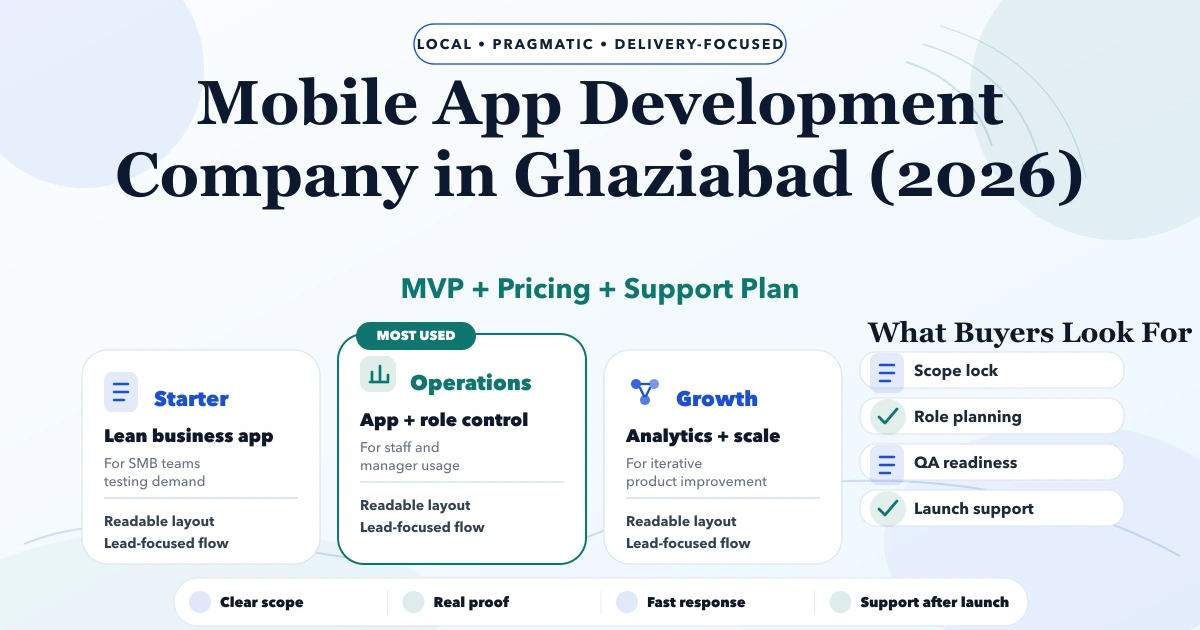
Mobile App Development Company in Ghaziabad (2026) guide with pricing, process, timeline, deliverables, proof links, and practical planning for businesses.
Service-area note: VASUYASHII is based in Delhi NCR and supports businesses remotely across India. A city-focused guide describes service and planning context; it does not claim a physical office in every location mentioned.
Explore the parent topic: Mobile App Development Services →A mobile app development company in Ghaziabad search is usually coming from founders, local service businesses, distributors, clinics, schools, and SMB operators who want real business output. In Ghaziabad, buyers compare fast, shortlist faster, and often message the team that explains scope, pricing, proof, and next steps clearly without wasting time. This guide is written for business owners who want a practical partner, not only a nice-looking proposal.
The right decision in 2026 is rarely the cheapest quote. It is usually the team that can define phase one, explain tradeoffs, show operational clarity, and launch with better trust, tracking, and support discipline from day one.
By Tushar C. (Founder, VASUYASHII). Reviewed by VASUYASHII Editorial for scope clarity, delivery practicality, SEO usefulness, and buyer relevance for 2026.
Serving Delhi NCR: Ghaziabad, Noida, Delhi, Gurugram, Faridabad, and nearby growth markets.
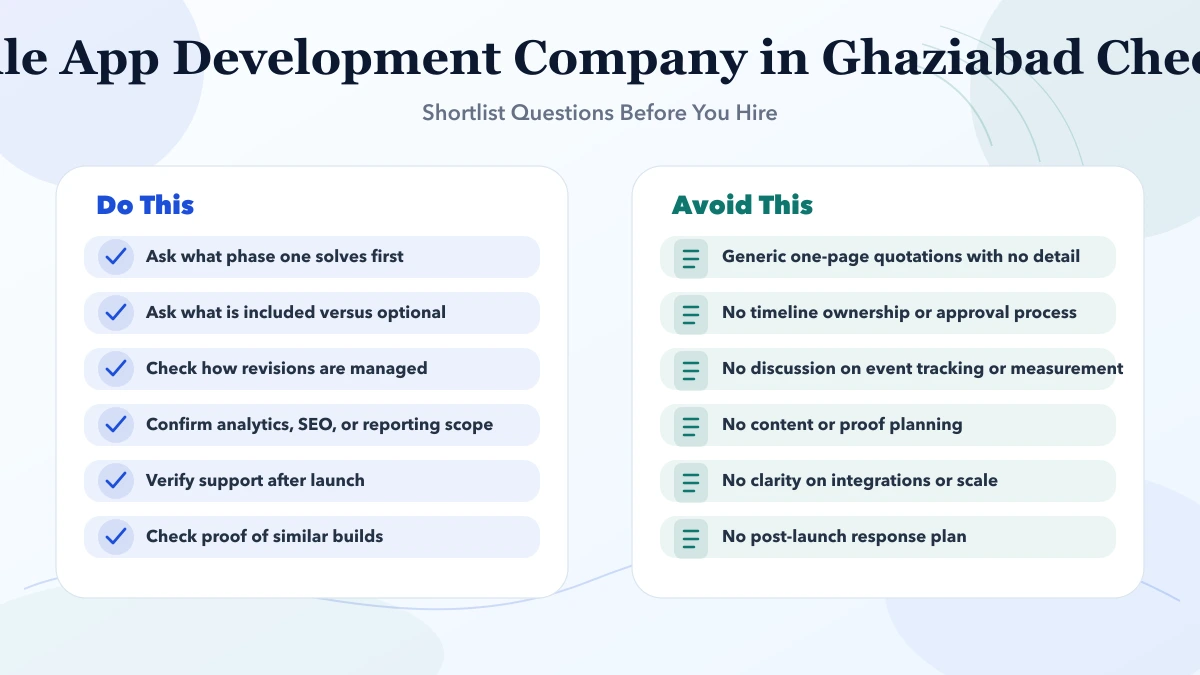
If you are comparing a mobile app development company in Ghaziabad option in Ghaziabad, shortlist teams that can explain scope, pricing logic, review flow, analytics, and post-launch support without hiding behind generic package language. A clear smaller first release usually performs better than an overloaded plan.
| Scope | Price range | Timeline |
|---|---|---|
| Prototype or lean MVP app | ₹1.8 lakh to ₹4 lakh | 4 to 8 weeks |
| Business app + admin + API | ₹4 lakh to ₹9 lakh | 8 to 14 weeks |
| Scaled mobile product | ₹9 lakh to ₹18 lakh+ | 14 to 24 weeks |
Ghaziabad buyers compare quickly and often make contact only after they see proof, clarity, and safe execution signals. That is why your shortlist should focus on delivery structure, not only visuals or low pricing.
In practical projects, the biggest wins usually come from clarity: clear phase one, clear user roles, clear reporting, and clear review checkpoints. When that clarity is missing, teams overbuild, under-adopt, and waste money fixing avoidable mistakes after launch.
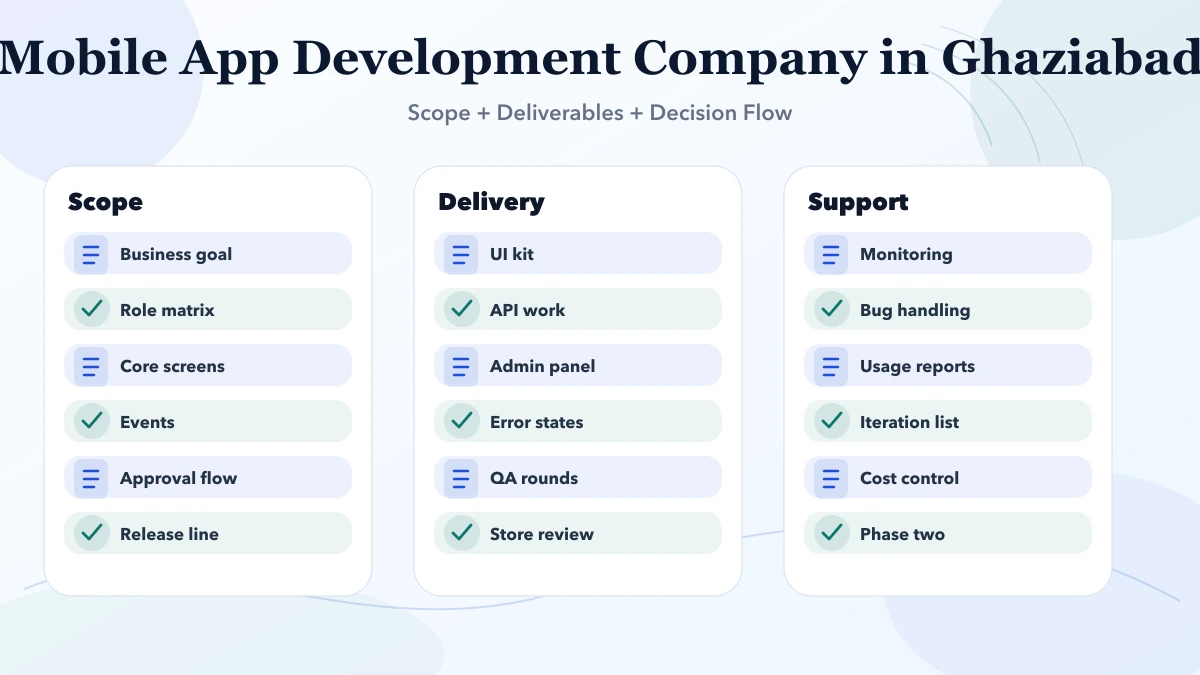
Good execution here is not about adding everything at once. It is about sequencing. The first release should remove the most expensive friction. The second release should improve visibility, control, and reporting. The third release should only add deeper automation when teams are already using the system properly.
Good execution in mobile work means the team knows exactly which user journey must work first, which role gets what access, and which events prove the launch is actually improving the business. A build that looks polished but cannot support adoption, reporting, or controlled updates is still a weak build.
For SMB apps, the strongest delivery pattern is usually one clean release, one clear admin or owner view, and one documented support path after go-live. That keeps momentum high and prevents the product from turning into a backlog of half-finished ideas.
Pricing changes based on role complexity, workflow depth, integrations, migrations, review cycles, and post-launch support. Two projects can sound similar in a proposal title and still require very different effort once the real workflow is mapped correctly.
| Scope | Price range | Timeline |
|---|---|---|
| Prototype or lean MVP app | ₹1.8 lakh to ₹4 lakh | 4 to 8 weeks |
| Business app + admin + API | ₹4 lakh to ₹9 lakh | 8 to 14 weeks |
| Scaled mobile product | ₹9 lakh to ₹18 lakh+ | 14 to 24 weeks |
The better budgeting approach is phased. Define what must go live first, what can wait, and which improvements should only be added after the first set of users starts using the system in a stable way.
Phase one should usually focus on the smallest delivery that still creates trust and measurable business value. For service companies, that may be better structure, clearer proof, faster CTAs, or one working software module instead of a giant proposal. The point is to launch something usable, reviewable, and expandable.
Before work starts, define the owner, approval cycle, communication channel, and success signal for phase one. This discipline prevents the common problem where the scope grows, pricing loses meaning, and nobody can confidently say what the first release was supposed to achieve.
The timeline becomes smoother when there is one owner for approvals, one list of must-have outcomes, and one review checkpoint per phase. Most delays are caused by scope changes, unclear content decisions, or no single stakeholder owning the final call.
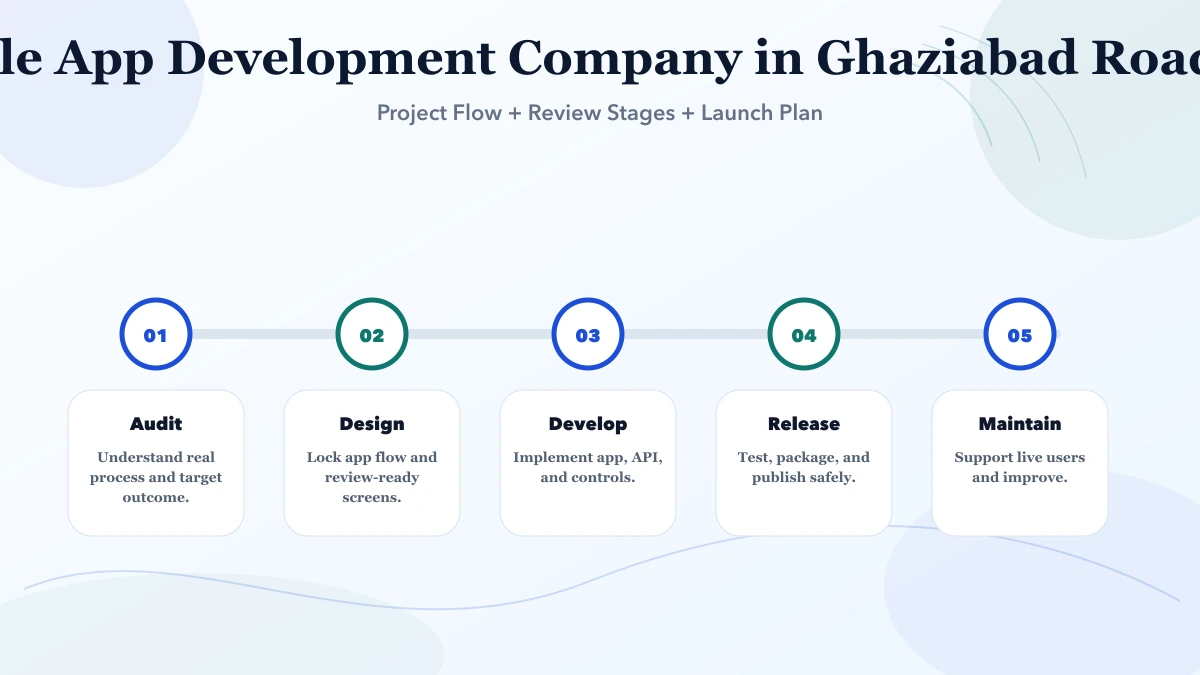
The stack should support readability, speed, scale, and clean reporting. For SMB builds, architecture discipline matters more than fashionable tooling. The system should be easy to maintain, easy to measure, and easy to extend when the business grows.
If these cost drivers are discussed early, delivery becomes more honest and implementation risk drops. If they are ignored, the project often looks cheap at proposal stage and expensive during revision, support, and rework.
If you are comparing options right now, do not compare only on price. Compare scope clarity, workflow fit, rollout discipline, analytics visibility, role control, and support after launch.
This page owns the mobile application discovery, device workflow, phase-one scope, and release-cost intent. It does not compete with the main Ghaziabad website development service, which is for public business websites and lead generation. Review mobile app development services for platform, offline, barcode, notification, testing, and release capability.
VASUYASHII does not claim a mobile-app office or local app outcome in every Ghaziabad locality. A valid estimate needs user roles, devices, offline rules, APIs, notifications, store-release responsibility, and support expectations. Submit those details through the mobile app enquiry form.
Yes. For most SMB teams, an MVP with core flows, one admin path, and clean analytics is the safer first move.
Roles, custom workflow logic, admin reporting, integrations, design depth, and revision cycles drive most of the cost.
Cross-platform is often enough for business apps. Native makes more sense when performance, hardware features, or platform-specific polish is critical.
Define support scope, bug SLAs, release ownership, and backlog review before launch. Otherwise updates become reactive and messy.
Yes. Staff apps need stronger role design, task control, reports, and permission handling. Customer apps prioritise onboarding, speed, and clarity.
Yes. In most business cases the app, backend, and admin logic need to be planned together.
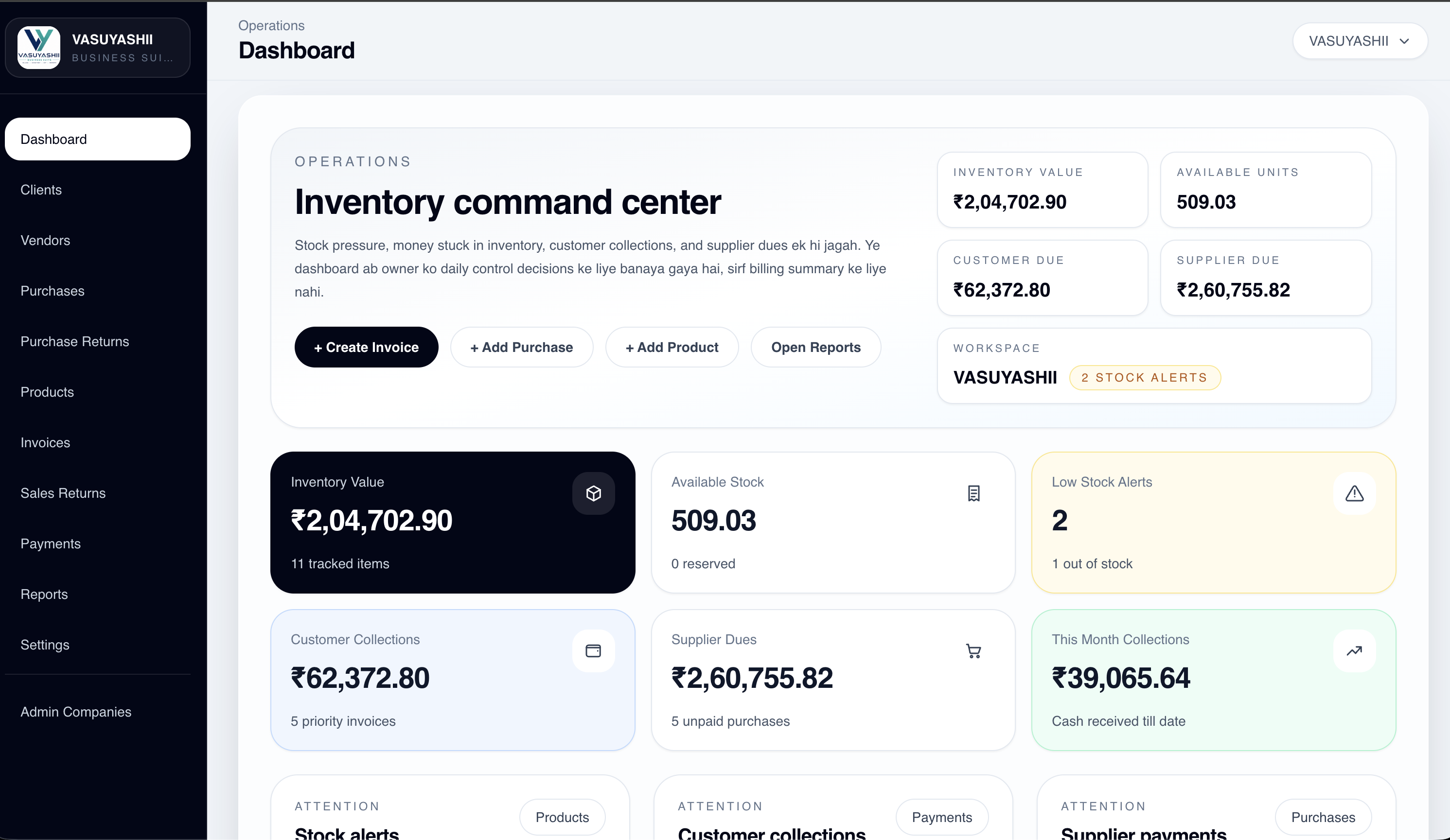
VASUYASHII plans business apps with the backend and owner dashboard in the same workflow. The current Business Suite dashboard below is first-party product evidence: an operator action such as invoice, purchase or product update must reach one source of truth before the mobile screen can display reliable totals.
| App phase | Real workflow test | Approval evidence |
|---|---|---|
| Discovery | staff completes one task using current process | signed flow and exception list |
| Prototype | user completes the same task on a phone | observed usability notes |
| Backend | offline/retry, permissions and duplicate requests are tested | API and state test results |
| Release | analytics, crash handling and store access are ready | production checklist and owner credentials |
Decision example: a Ghaziabad field-sales team that captures enquiries, photos and visit notes may need offline drafts and background sync. A customer catalogue app with always-online browsing may not. Adding offline mode without a conflict policy can increase risk rather than reliability.
Limitations: VASUYASHII's Flutter mobile and desktop directions are under development; this article does not claim an already published client app or guaranteed store approval. Hardware integrations, Apple/Google developer fees, maps, OTP, payment charges and device-specific testing must be quoted separately.
The Android architecture guide recommends clear responsibility boundaries and persistent data models. Apple's App Review Guidelines also require working backend access, complete metadata and appropriate account/demo access during review. Put both constraints in the quotation.
If you want a practical phase-one plan, realistic pricing, and a rollout path that your team can actually use, we can help you map the right scope before development starts.
Related Articles
May 3, 2026
Plan a Delhi NCR customer self-service app with account data, requests, documents, notifications, permissions, backend ownership, security, and rollout.
Read article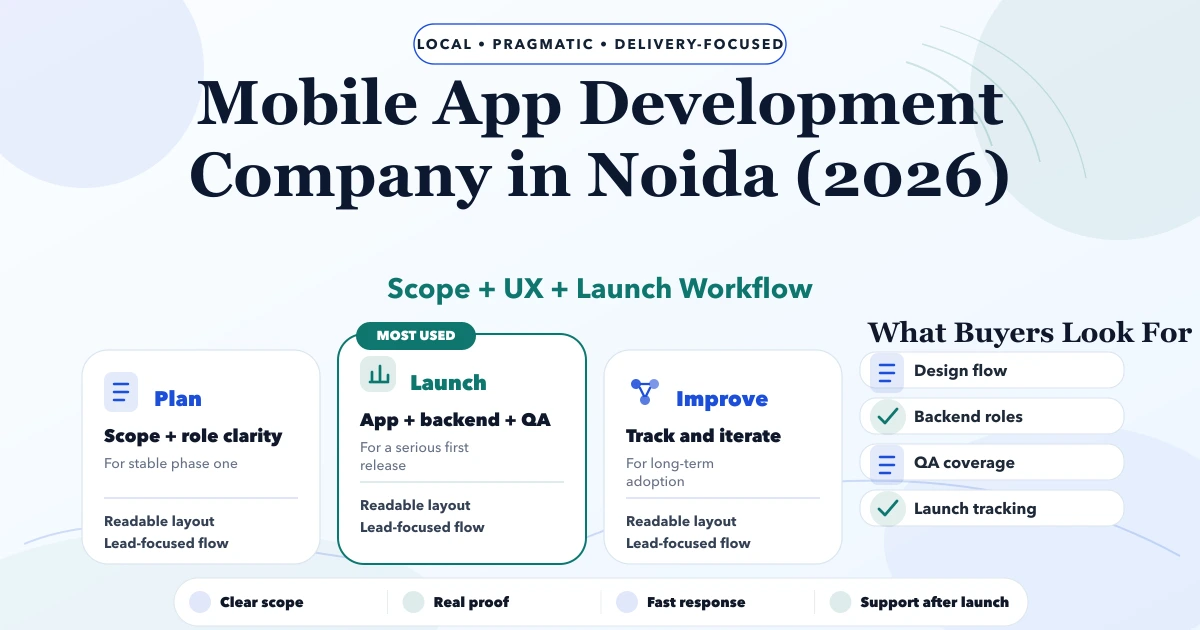
May 3, 2026
Plan a Noida field-operations mobile app with offline data capture, task assignment, photo evidence, syncing, permissions, rollout, and support.
Read article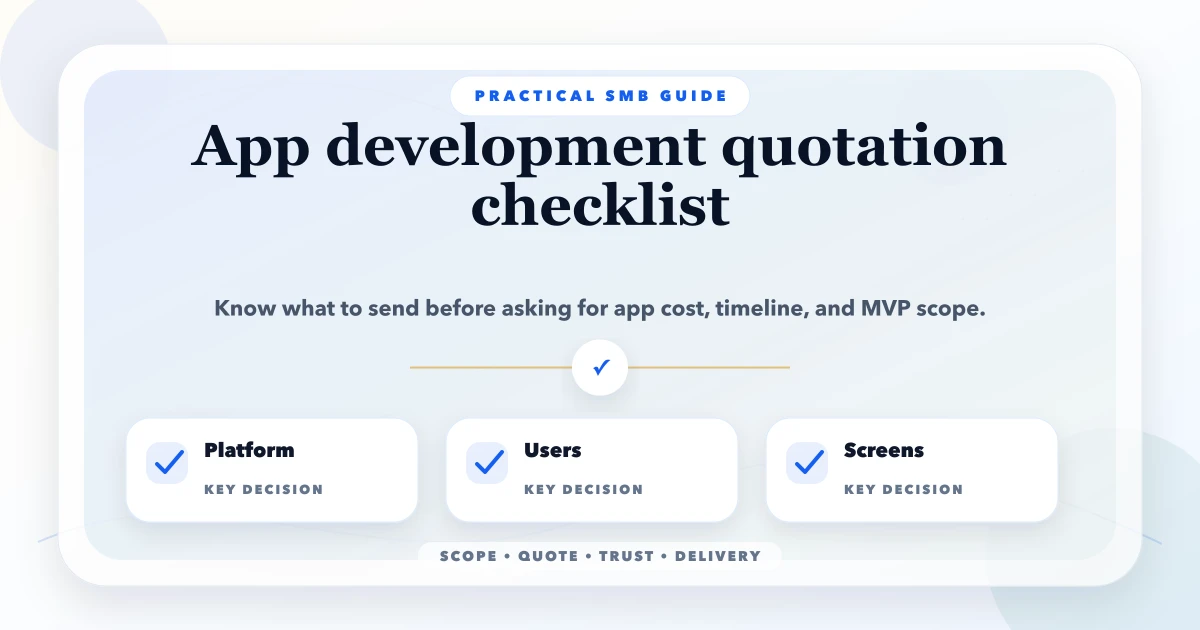
May 10, 2026
Compare app development quotations using a practical checklist for scope, platforms, backend, ownership, testing, releases, maintenance, and acceptance.
Read article
May 13, 2026
Audit a mobile app for launch speed, crashes, UX, accessibility, API failures, analytics, permissions, security, store readiness, and release quality.
Read article