
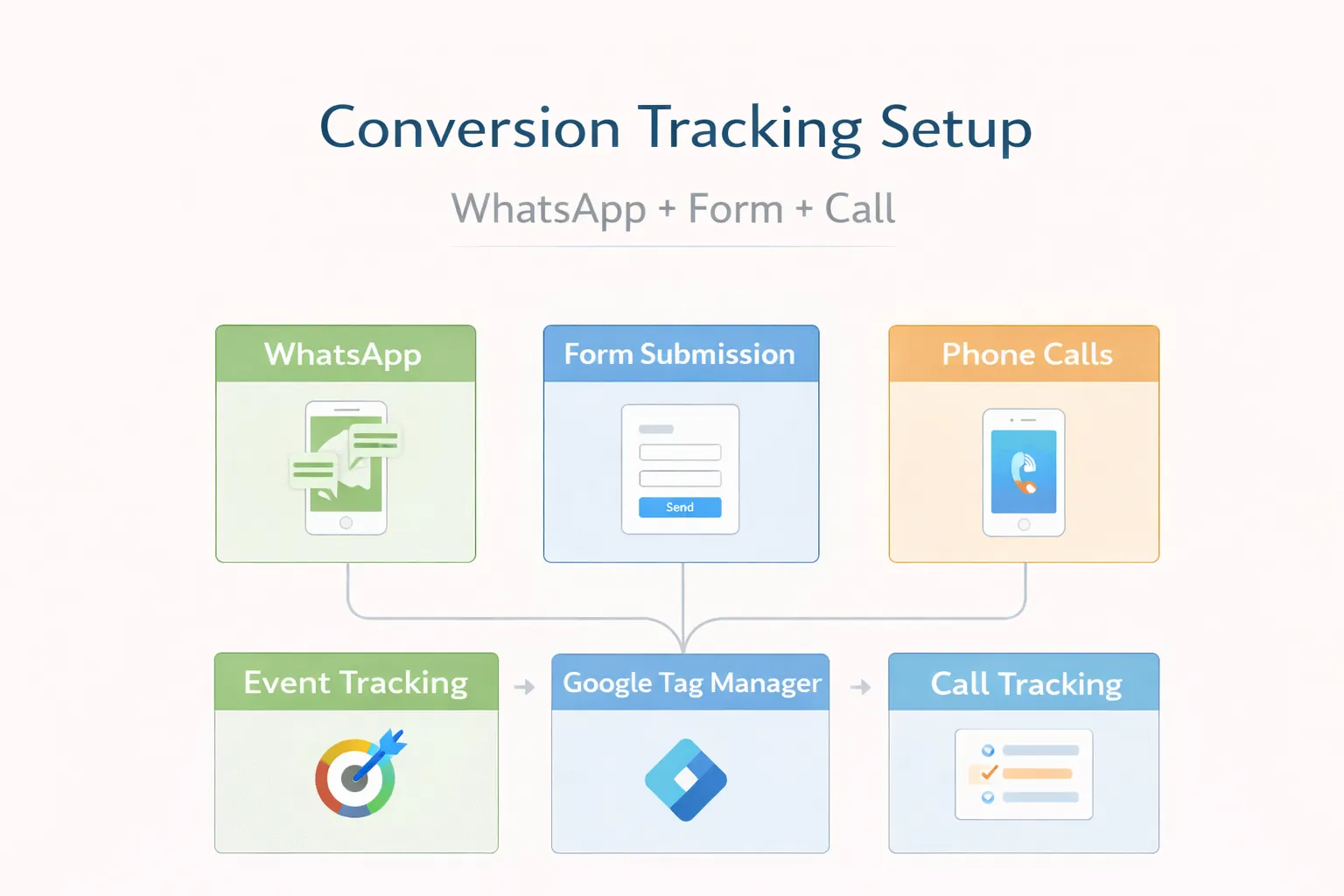
March 29, 2026
Conversion Tracking for WhatsApp, Forms and Calls
Implement privacy-safe GA4 tracking for WhatsApp, valid form leads, calls and demos with event rules, context parameters, DebugView QA and lead outcomes.
Read articlePublished Updated
Design CRM call tracking for ads, SEO, referrals, and direct leads with source capture, deduplication, consent, outcomes, offline conversion, and reporting.
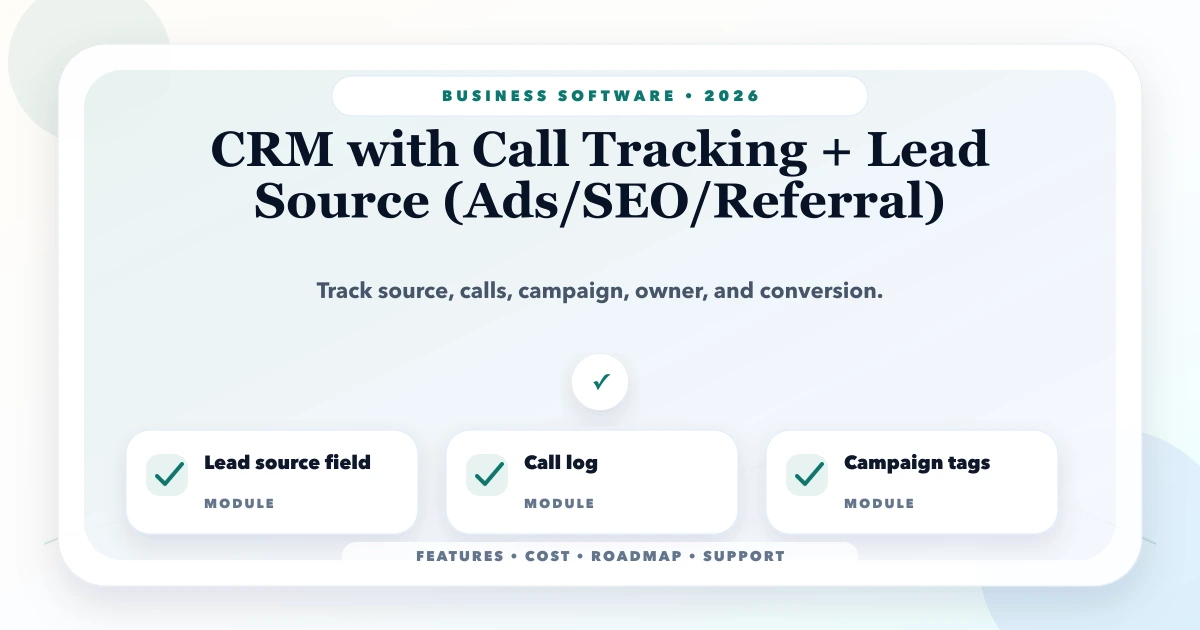
A CRM with call tracking should answer three different questions: Which marketing source created the enquiry? What happened during or after the call? Did the enquiry become qualified revenue?
Most attribution failures happen because these questions are mixed. A phone platform records a call, analytics records a click, and the CRM records a lead, but the systems do not share a stable identifier. The report then counts duplicate leads, labels repeat callers as new, or gives every converted deal to the last channel touched.
This guide explains how to design an evidence-led call and lead-source workflow for ads, SEO, referrals, WhatsApp, forms, and direct calls without treating call recording or personal data casually.
Build the flow in this order:
The objective is not to record every detail. It is to make lead ownership, quality, follow-up, and channel investment more reliable.
Useful questions include:
Each report should have a named owner and action. If nobody changes budget, content, staffing, or follow-up based on a field, reconsider collecting it.
Our implementation review starts by comparing one week of call logs, website actions, CRM leads, and closed outcomes. The differences expose duplicate creation, missing source, unanswered calls, manual attribution, and status drift before any dashboard is built.
Represents a visit or campaign interaction. Fields may include source, medium, campaign, content, keyword where legitimately available, landing page, referrer, device, and timestamp.
Represents one inbound or outbound call attempt. Fields may include call ID, tracking number, caller/callee in protected form, start time, duration, answer status, agent, queue, and provider status.
Represents the person or business relationship. It should survive across several calls and channels.
Represents a specific sales requirement with value, stage, owner, and outcome.
Do not create a new lead for every call. One prospect may call three times, submit a form, and continue on WhatsApp. Keep interactions as activities linked to one contact and one or more legitimate opportunities.
Use controlled fields:
| Field | Example | Rule |
|---|---|---|
| source | google, referral_partner, direct | broad origin |
| medium | cpc, organic, referral, phone | channel type |
| campaign | crm_delhi_q3 | stable internal name |
| landing page | /services/software-development | final path |
| referral source | partner or customer ID | permission-controlled |
| first touch | original known source | do not overwrite silently |
| latest touch | recent source before enquiry | update by rule |
| attribution status | known, matched, manual, unknown | expose confidence |
Avoid free-text values such as Google, google ads, G Ads, and PPC for the same channel. Map provider fields into a shared taxonomy and keep the raw value for audit when needed.
Call-tracking providers may use:
Choose based on traffic, concurrency, attribution precision, customer recognition, cost, and number availability. A pool that is too small can assign the same number to overlapping sessions and reduce match confidence.
Test:
Do not replace every public number without considering repeat customers, printed material, Google Business Profile consistency, and support calls.
At the first page view, record allowed campaign and referral context. Before a phone click, send a privacy-safe analytics event such as phone_click with page path and CTA placement, not the phone number or visitor identity.
The call-tracking integration may then associate the displayed number or provider session with the visit. Keep a clear consent and privacy basis for cookies, call metadata, recordings, and offline conversion use.
Use the GA4 lead tracking guide to keep web events separate from CRM personal records.
Call outcome describes the interaction:
Lead stage describes commercial progress:
A call can be answered while the lead remains unqualified. A missed call can later become won. Do not infer sales stage from duration alone.
For a software or website service business, qualification may include:
Keep fields short enough for agents to complete. Use required fields only when they change routing or reporting. Record unknown honestly rather than forcing an inaccurate value.
Define a hierarchy:
Normalize phone formats and preserve country code. Do not merge two people only because a shared office number matches. Keep merge history and an undo or controlled correction process.
When a form and call occur close together, link both activities to the same lead if evidence supports it. Do not delete one channel merely to make totals match.
Missed calls are operational leads, not a reporting footnote.
Define:
A dashboard should show unowned, overdue, repeated, and high-intent missed calls. The lead-management system guide helps connect this queue to broader assignment and follow-up.
Referrals are often entered as free text and lost. Use a referral contact or partner record when the relationship needs tracking. Capture:
Do not expose referral terms to all CRM users. Separate operational lead source from financial partner records.
Call recording rules, notice, storage, retention, and access depend on jurisdiction, purpose, provider, and business policy. Obtain current legal guidance appropriate to the operation; this article is not legal advice.
If recording is enabled:
Transcription and AI scoring introduce additional data processing. Validate accuracy and keep human review for consequential decisions.
Ad and analytics platforms may accept qualified or converted outcomes. Before sending them:
Use actual won value only when finance and CRM agree on its meaning. A proposal amount is not revenue.
Create a funnel:
marketing touches -> phone actions -> calls -> sales enquiries -> qualified leads -> opportunities -> proposals -> won/lost
Report:
Always display denominator and time range. Ten wins from 100 qualified leads and ten wins from 12 are different outcomes.
| System | Responsibility |
|---|---|
| Website | campaign context and phone CTA |
| Call provider | number assignment and call event |
| CRM | contact, lead, opportunity, owner, stage |
| Analytics | privacy-safe website interactions |
| Ad platform | campaign delivery and approved conversion feedback |
| Reporting | reconciled channel and sales view |
Use webhooks with signature validation, retries, idempotency, and failure queues. Store the provider event ID so the same callback does not create duplicate calls. Run scheduled reconciliation for events missed during outages.
Complex builds belong in CRM software development or API integration services, with source-of-truth ownership written before development.
It can create consistency problems if tracking numbers replace canonical business information without a plan. Keep official business details accurate and configure tracking around real customer and listing needs.
Analytics should track privacy-safe actions and campaign context, not store direct personal identifiers. The CRM and call provider handle customer records under appropriate controls.
No model is universally best. Keep first and latest known touch, expose unknown confidence, and choose reporting based on the decision. Avoid presenting modelled credit as objective truth.
Only with a legitimate business need, current legal/privacy review, notice or consent as required, restricted access, retention, and protection. Metadata and outcomes may be enough for many teams.
Use a structured referral source linked to the lead and opportunity. Protect commercial terms and preserve source confidence.
Often yes through native or API integrations. Verify phone matching, custom fields, activities, webhooks, deduplication, permissions, and offline conversion needs before custom development.
Call tracking becomes valuable when it improves follow-up and marketing decisions, not when it merely increases the number of dashboards. For a scoped workflow, share current numbers, call provider, CRM, channels, lead stages, consent model, and reporting decisions through contact.
Related Articles
March 29, 2026
Implement privacy-safe GA4 tracking for WhatsApp, valid form leads, calls and demos with event rules, context parameters, DebugView QA and lead outcomes.
Read article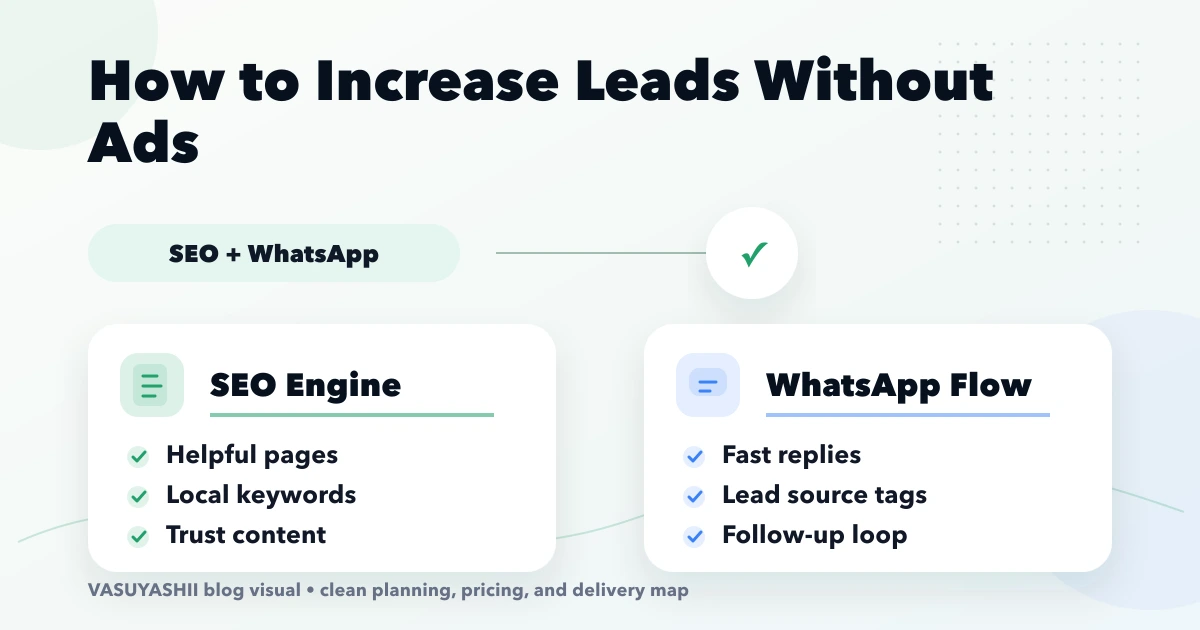
April 16, 2026
Connect SEO and WhatsApp lead generation with focused service pages, useful content, local proof, tracked conversations and a practical 90-day plan.
Read article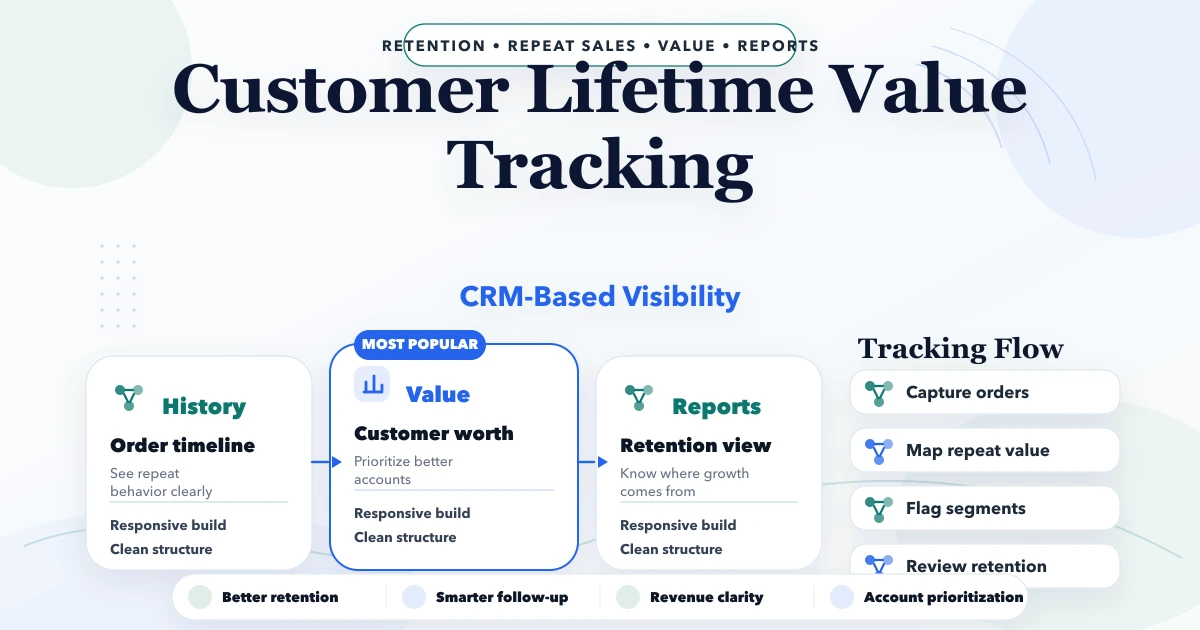
April 23, 2026
Design a customer lifetime value tracking system with identity matching, margin-aware formulas, cohorts, retention actions, data controls, and CRM integration.
Read article
June 2, 2026
How to add WhatsApp CTA properly for SEO and UX with button placement, message text, tracking, mobile behavior, and mistakes.
Read article