

March 23, 2026
Ghaziabad Website Package Scope and Acceptance Guide
Compare Ghaziabad website packages through scope, content, integrations, recurring costs, acceptance tests, account ownership, handover, and maintenance.
Read articlePublished Updated
Plan a Modinagar trade or service website with phased scope, quote inputs, product-service routes, timeline controls, proof, handover, and lead ownership.
Service-area note: VASUYASHII is based in Delhi NCR and supports businesses remotely across India. A city-focused guide describes service and planning context; it does not claim a physical office in every location mentioned.
Explore the parent topic: Website Development Delhi NCR Hub →A business searching for a website developer in Modinagar may be a trader, supplier, manufacturer, repair team, contractor, institute, clinic, or local service provider. These businesses do not need the same package. The first decision is whether the website must create product enquiries, service requests, quotations, appointments, admissions, or a combination with separate owners.
This guide provides a phased planning method instead of an unsupported fixed price or delivery promise. It does not claim a VASUYASHII office, local client, ranking, or guaranteed lead result in Modinagar.
Written by Tushar C. (Founder, VASUYASHII) using the current VASUYASHII discovery and handover process. Examples are generic operating scenarios. Actual scope, price, timeline, service area, proof, and commercial terms require a current written proposal.
Write one primary outcome before choosing pages:
One website can support several routes, but each should have clear content, fields, assignment, and success status. A generic form that asks only for name and phone shifts all qualification to manual calls.
Trade businesses often mix product categories, installation, repairs, and custom work on one page. Separate them when the buyer needs different information.
| Route | Page should explain | Useful enquiry inputs |
|---|---|---|
| Product supply | categories, specifications, order boundary | product, quantity, unit, destination |
| Custom fabrication or work | capability, inputs, process | dimensions, material, use, timeline |
| Installation | coverage, prerequisites, stages | product/site, location, preferred date |
| Repair or maintenance | supported items, exclusions | item, issue, urgency, location |
| Institutional requirement | documents, volume, process | organisation, category, quantity, due date |
Do not publish live-stock or delivery promises unless the website is connected to reliable operational data. Use “availability subject to confirmation” when that reflects the actual process.
Launch the smallest complete lead journey:
Add pages only after seeing repeated buyer questions. Possible additions include comparison pages, specification guides, downloadable documents, FAQs, case evidence, or service-area clarification.
If customers need account pricing, order history, stock, approvals, job status, or documents, consider web application development or custom software. Do not overload the public website with private workflow.
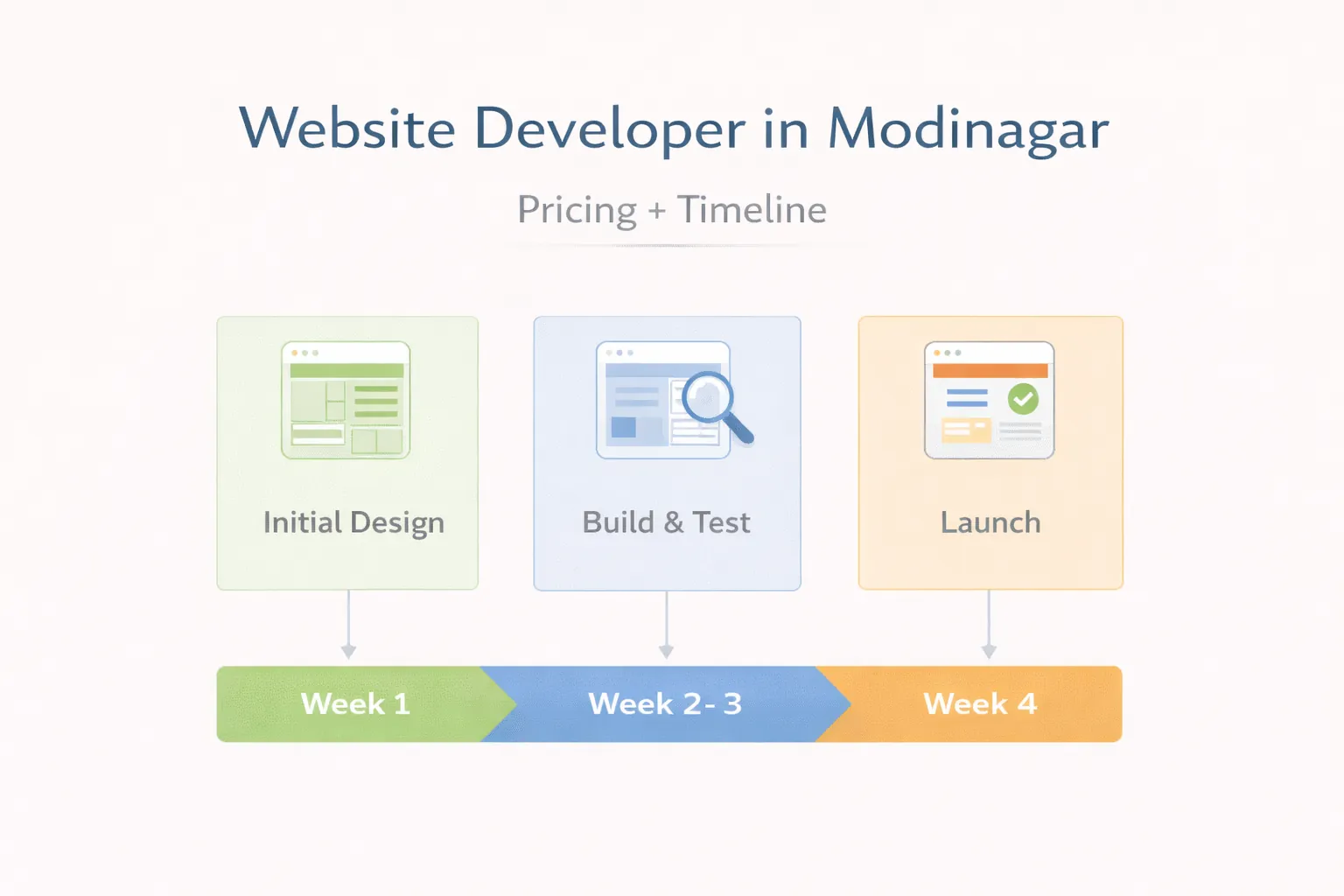
A responsible timeline begins after scope and inputs are ready. Use milestones:
The business should identify decision-makers before work starts. Late content, conflicting reviews, or unapproved integrations can change the schedule more than coding effort.
Avoid comparing only page counts. Price is affected by:
Ask for a normalised proposal showing included work, assumptions, third-party fees, recurring charges, client responsibilities, change process, and acceptance criteria. The website project agreement guide explains the contract controls to include.
A useful trade or service enquiry can follow this sequence:
If the website sends leads to a sheet or CRM, document field mapping, duplicate handling, failed delivery, access, retention, and backup. Review integration services when this handoff needs automation.
Trust content should be specific and verifiable. Good inputs include:
A demo shows design capability, not a Modinagar client or business outcome. Do not publish fabricated project counts, rankings, response times, customer logos, or local-office language.
The developer should deliver:
Connect the page to the Delhi NCR website development hub only when the service relationship is accurate. Local pages should follow the city-page quality guide.
At launch, the business should control domain, hosting, analytics, form destination, email, content system, and third-party accounts. Keep:
Review product data, services, coverage, proof, forms, and account access quarterly. A website that cannot be updated safely becomes inaccurate even if the launch was successful.
Build one complete route from relevant content to a qualified enquiry and accountable follow-up. Expand after observing real questions and lead quality.
Yes. A catalogue can organise products and collect RFQs without online payment. Keep stock and price language honest.
Show fixed prices only for a defined, honourable scope. Otherwise explain cost factors and the quotation process.
It depends on approved scope, content, integrations, reviews, and acceptance. Use milestone dates in a written proposal.
Only when the business genuinely serves the area and the page provides unique, maintainable value beyond a regional parent page.
Assign named owners for commercial content, technical releases, leads, accounts, and renewals. Maintenance terms should be written.
Use the first month to prove one complete route:
Select the primary product or service, define the suitable buyer, list required quote inputs, assign the enquiry owner, and approve evidence that can be public. Freeze optional ideas until the first route is complete.
Prepare the homepage, priority category/service pages, process, coverage, FAQs, proof, and contact content. Clean units, names, images, documents, and outdated claims. The business owner should approve facts before design is treated as final.
Implement responsive pages, forms, WhatsApp, metadata, sitemap, analytics events, and the agreed CRM/sheet/email handoff. Test duplicate, missing, and failed notification states rather than only a successful submission.
Run mobile and desktop checks, submit sample product/service requests, verify assignment, reconcile accounts, and document updates. Train the lead and content owners. Record what remains outside the first phase and the evidence required before it is added.
This sequence is not a universal delivery promise. It is a governance example that exposes dependencies and prevents an incomplete package from being called launched.
At the end of the month, compare the approved brief with production. Record missing content, untested exceptions, recurring services, and postponed modules. The business owner should sign off what is live, what remains excluded, and which evidence will trigger the next phase. This prevents optional backlog items from being mistaken for defects in the accepted first release.
Plan the Modinagar website around one qualified trade or service lead route, then phase content and software by observed demand. Make price and timeline dependent on approved scope, protect account ownership, and publish only evidence the business can support. To discuss the first phase, contact VASUYASHII.
Related Articles
March 23, 2026
Compare Ghaziabad website packages through scope, content, integrations, recurring costs, acceptance tests, account ownership, handover, and maintenance.
Read article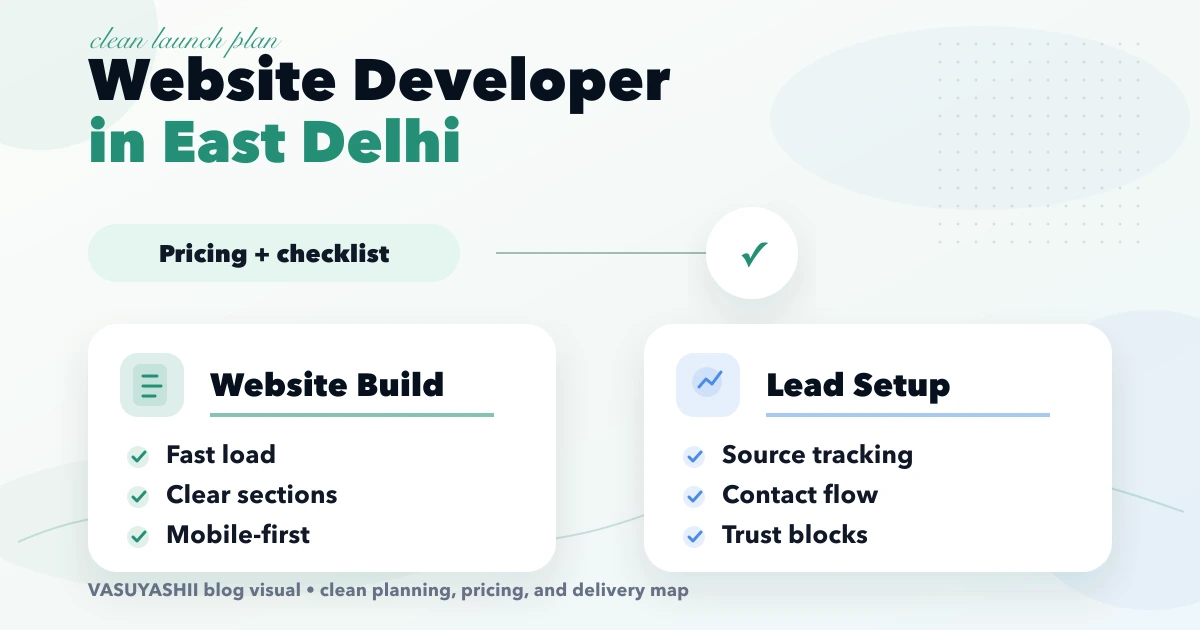
April 17, 2026
Plan an East Delhi service website with honest area coverage, mobile lead routes, page ownership, local SEO controls and developer checks.
Read article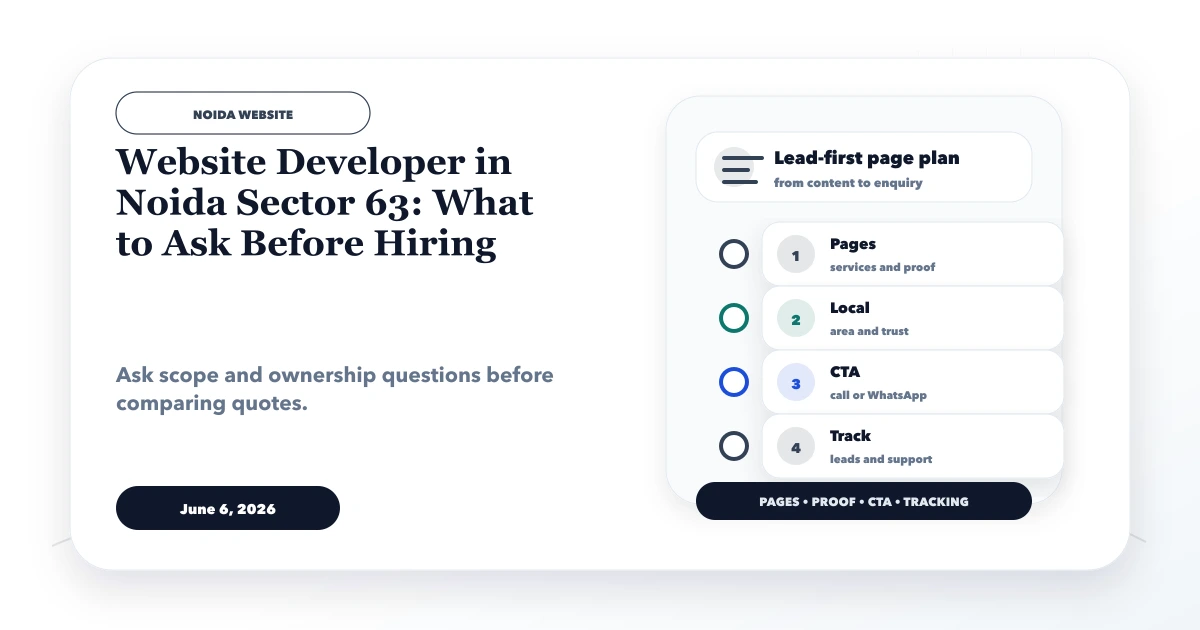
June 6, 2026
Use this Noida Sector 63 website developer due-diligence guide to verify scope, technical quality, security, ownership, acceptance, and support.
Read article
March 31, 2026
SaaS pricing models explained for India: trial vs freemium vs paid, plus flat-rate, seat-based, and usage pricing advice for founders.
Read article