
May 12, 2026
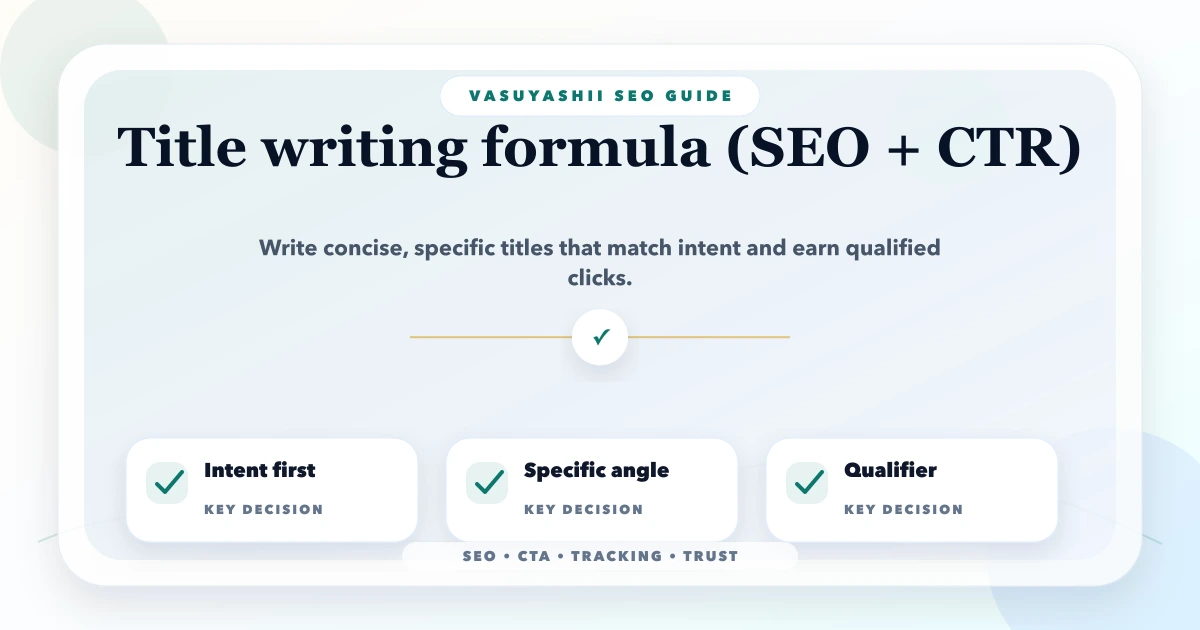
SEO Title Writing Formula for Better CTR
Write clearer SEO titles with intent, specificity, differentiation, honest qualifiers, Search Console evidence, practical templates, and CTR testing rules.
Read articlePublished
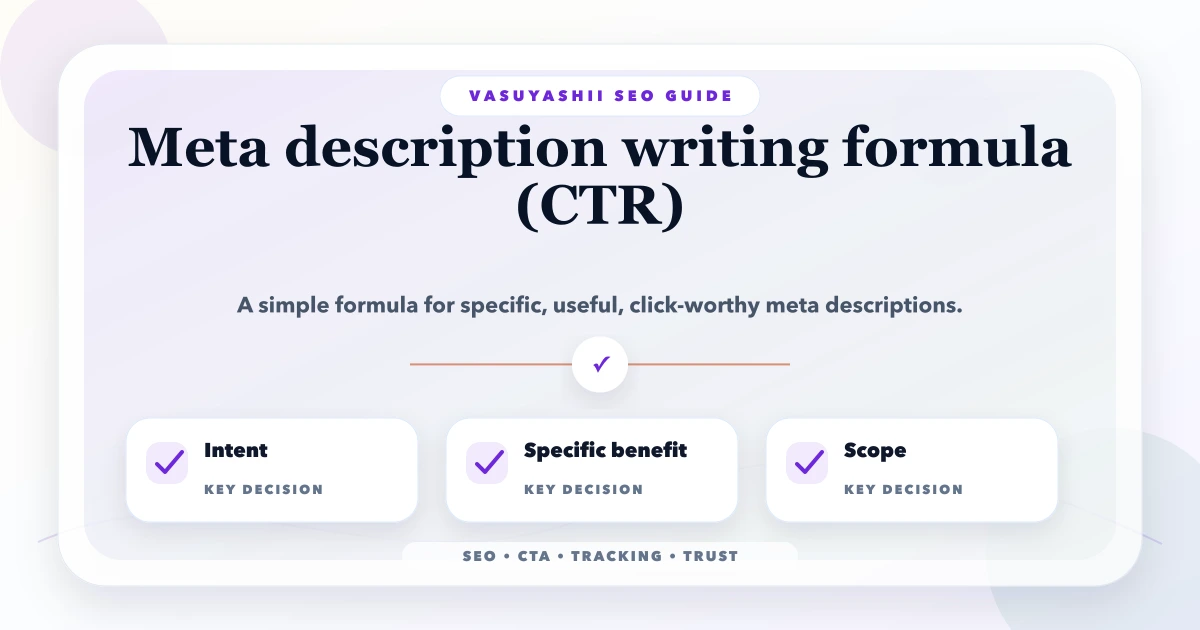
meta description writing formula: practical 2026 guide with structure, pricing, checklist, mistakes, FAQs, tracking tips, and next steps for Indian SMBs.
This guide on meta description writing formula is for business owners, content writers, and SEO teams who want search snippets that attract qualified clicks without keyword stuffing. It is written for Indian SMB owners who want practical SEO and lead-generation decisions, not confusing theory. You will learn the right page structure, WhatsApp or form setup, tracking approach, pricing in INR, common mistakes, and the next steps to improve qualified enquiries.
The goal is not to add more buttons or more keywords blindly. The goal is to make the page useful for a real buyer, easy for Google to understand, and easy for your sales team to follow up.
By Tushar C. (Founder, VASUYASHII). Reviewed by VASUYASHII Editorial for field experience, SEO usefulness, buyer clarity, and implementation practicality.
Serving Delhi NCR and nearby business markets: Ghaziabad, Noida, Delhi, Gurugram, Faridabad, Meerut, Hapur, and remote clients across India.
A strong meta description formula is: search intent plus specific benefit plus proof or scope plus next step. Keep it unique, readable, and useful instead of stuffing keywords.
If you want a simple rule, build the page for the next business decision the visitor needs to make. A person searching from Delhi NCR may want price, proof, response time, service area, process, and a quick WhatsApp or form option. If the page answers those points clearly, both SEO and conversion become easier.
We have also noticed that the highest-converting pages are not always the longest pages. They are the clearest pages. They explain who the service is for, what happens next, what proof exists, and how the buyer can contact the business without confusion.
Use this as a practical working structure before editing your website. You can apply it to a landing page, service page, homepage section, blog page, or local SEO page depending on the topic.
For Indian SMBs, the page should balance two jobs. First, it should help Google understand the topic, location, and usefulness of the page. Second, it should help the buyer take action without needing to call three times just to understand the basics.
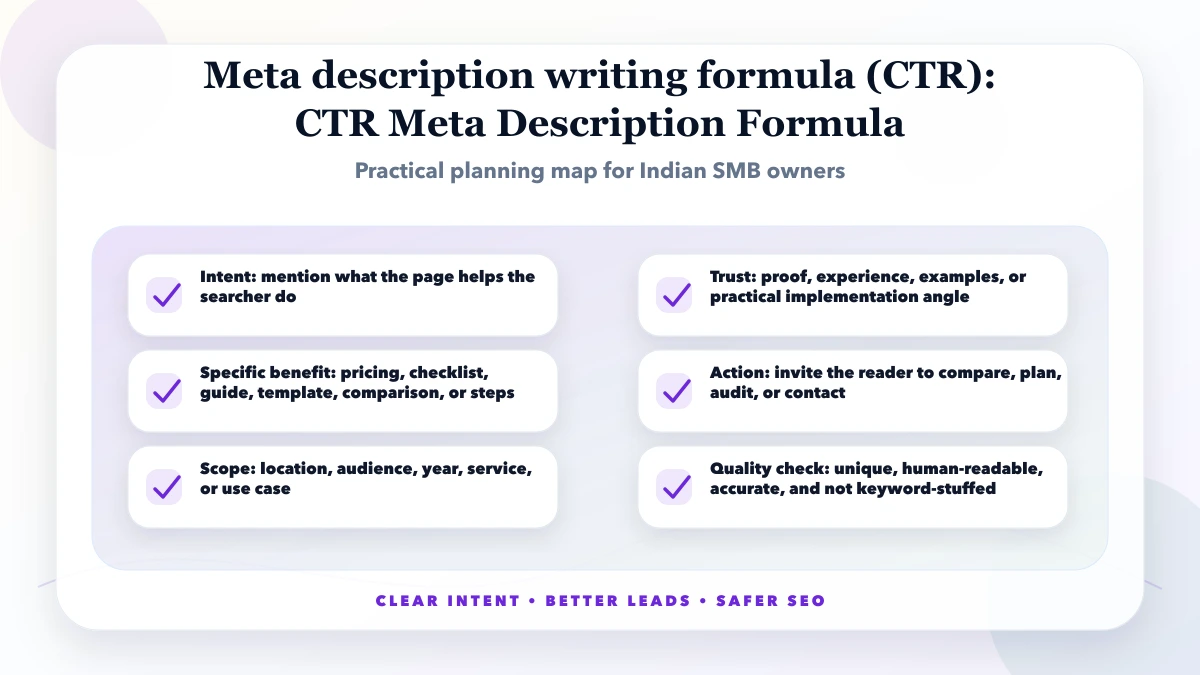
Good execution starts with intent. If the visitor is early-stage, the page should educate and build trust. If the visitor is ready to buy, the page should reduce friction and make the next step clear. If the visitor came from local search, the page should show service-area confidence without stuffing city names.
For a service business, strong execution usually includes a direct headline, a short value proposition, service-specific proof, pricing context, FAQs, and a visible contact path. For WhatsApp-focused pages, the message should be pre-filled so the user does not have to think too much. For SEO-focused pages, the content should be unique enough to deserve indexation.
The best pages also respect operations. A lead is not useful if nobody follows up. A WhatsApp click is not useful if the sales team cannot see the source. A ranking is not useful if the page attracts the wrong type of enquiry. That is why page strategy, tracking, and follow-up must be designed together.
| Scope | Practical price range | Typical timeline |
|---|---|---|
| Meta rewrite for 10 pages | ₹3,000 to ₹12,000 | 1 to 2 days |
| SEO snippet refresh for 50 pages | ₹15,000 to ₹45,000 | 3 to 7 days |
| Content QA + CTR improvement plan | ₹45,000 to ₹1.5 lakh+ | 2 to 4 weeks |
These are practical planning ranges, not a blind quote. Real cost depends on content depth, design quality, tracking setup, number of pages, integrations, and how much strategy is needed before implementation. Cheap work is not automatically bad, but it becomes risky when tracking, ownership, support, and quality checks are missing.
The safest roadmap is visible and measurable. Each step should produce an output: updated page, tracking event, CTA map, content draft, Search Console check, dashboard, or lead report. This makes progress easier to verify.
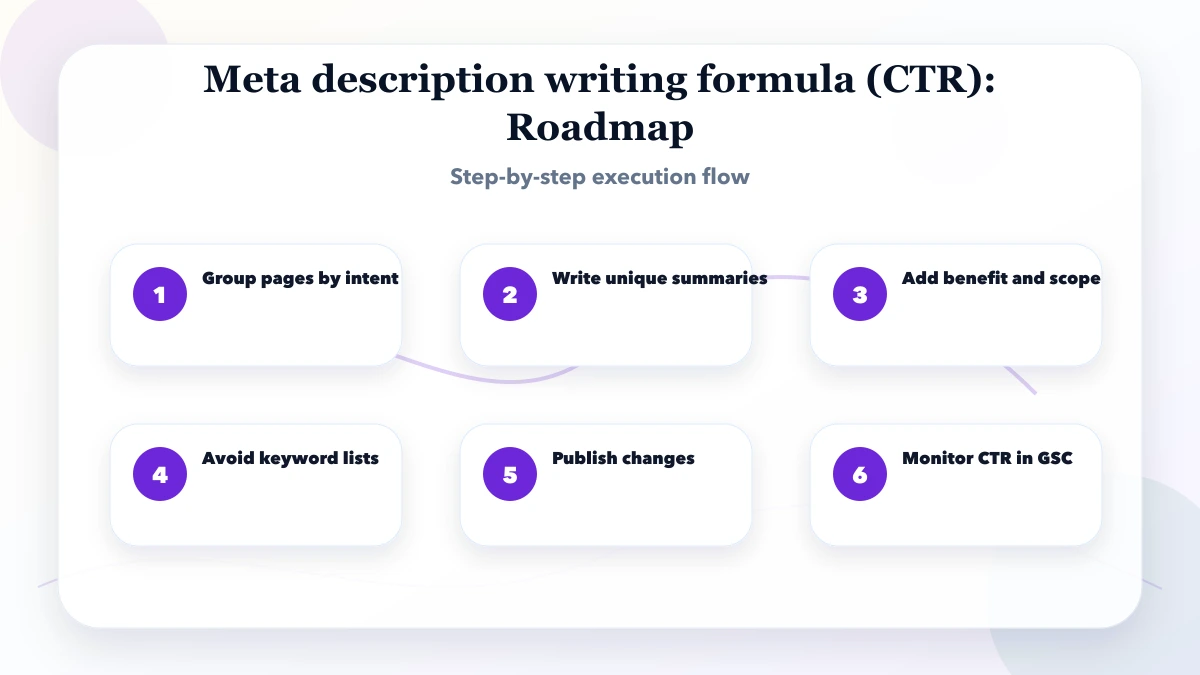
The setup does not need to be over-engineered. A small service business can start with a clean website, WhatsApp link, form, GA4 events, Search Console, and a simple lead sheet. Larger teams may need CRM integration, dashboards, and automated source capture.
Drivers should be reviewed monthly. For SEO pages, check impressions, clicks, average position, indexed status, internal links, and duplicate patterns. For lead pages, check WhatsApp clicks, form submissions, qualified leads, response time, and closed revenue.
The biggest mistake is treating SEO and conversion as separate departments. A page should attract the right user and help that user take the right action. If a page ranks but produces poor leads, the offer or intent is wrong. If a page converts only paid traffic but cannot rank, the content may be too thin for organic search.
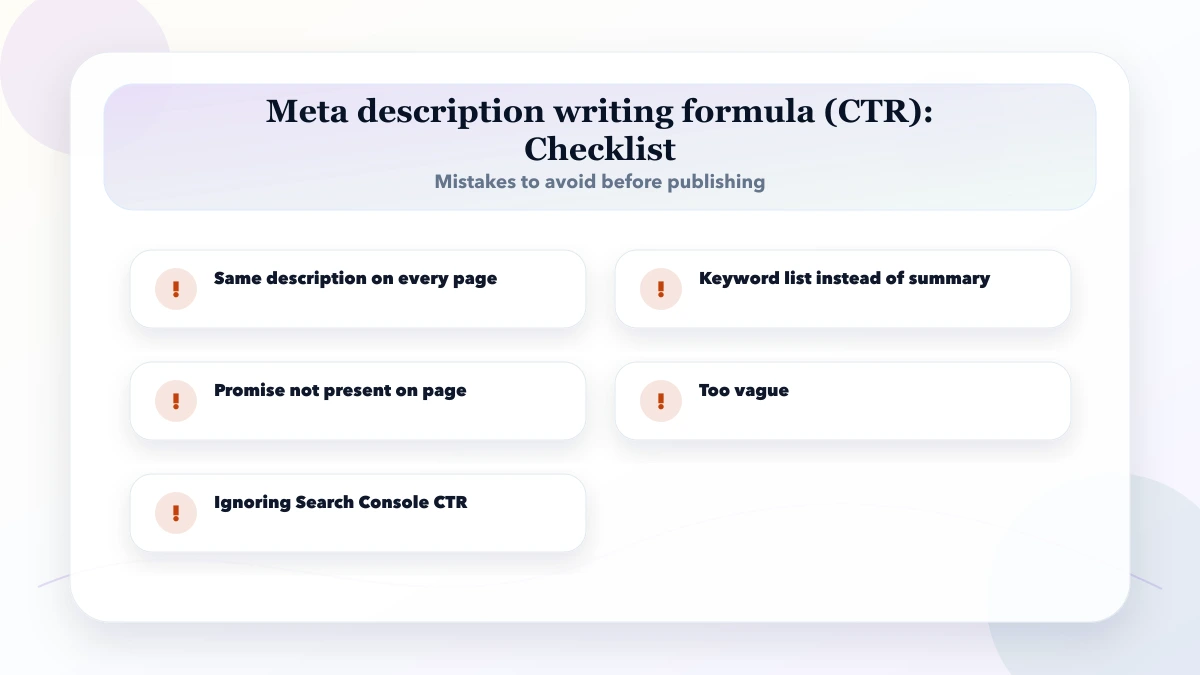
Google's meta description guidance recommends unique, descriptive summaries and warns that keyword lists are less useful.
If you are improving a service page, landing page, homepage, WhatsApp CTA, or SEO snippet, start with one page first. Fix the structure, tracking, and proof on that page, then repeat the system across your important pages.
Start with one priority page instead of changing the whole website at once. Pick a page that already gets impressions, enquiries, or sales calls. Improve the headline, proof, CTA placement, and tracking first. Then compare the next 14 to 30 days with the previous period.
For WhatsApp-heavy businesses, do not judge success only by button clicks. Check how many people actually sent a message, how many were qualified, how fast your team replied, and how many became proposals or paid customers. For SEO-heavy pages, do not judge only rankings. Check whether impressions are growing for the right queries and whether the page creates useful enquiries.
If the business serves Delhi NCR, mention locations naturally with proof, service process, response time, and relevant internal links. Avoid adding a long city list only to look local. Real local usefulness is stronger than keyword repetition.
No. Google may use page content if it better matches the query.
There is no fixed limit, but keep it concise and useful. Many teams target around 150 to 160 characters for control.
Include the main topic naturally, but do not create a keyword list.
They are mainly for snippet quality and click-through, not a direct ranking guarantee.
Yes, especially important service, city, product, and blog pages.
Check Search Console CTR, query relevance, average position, and lead quality after changes.
If you want this page, tracking flow, or SEO structure implemented properly, VASUYASHII can help you plan, write, design, build, and measure it without fake ranking promises.
Pair the description with the SEO title-writing formula and testing rules so both elements promise the same page and buyer decision.
Related Articles
May 12, 2026
Write clearer SEO titles with intent, specificity, differentiation, honest qualifiers, Search Console evidence, practical templates, and CTR testing rules.
Read article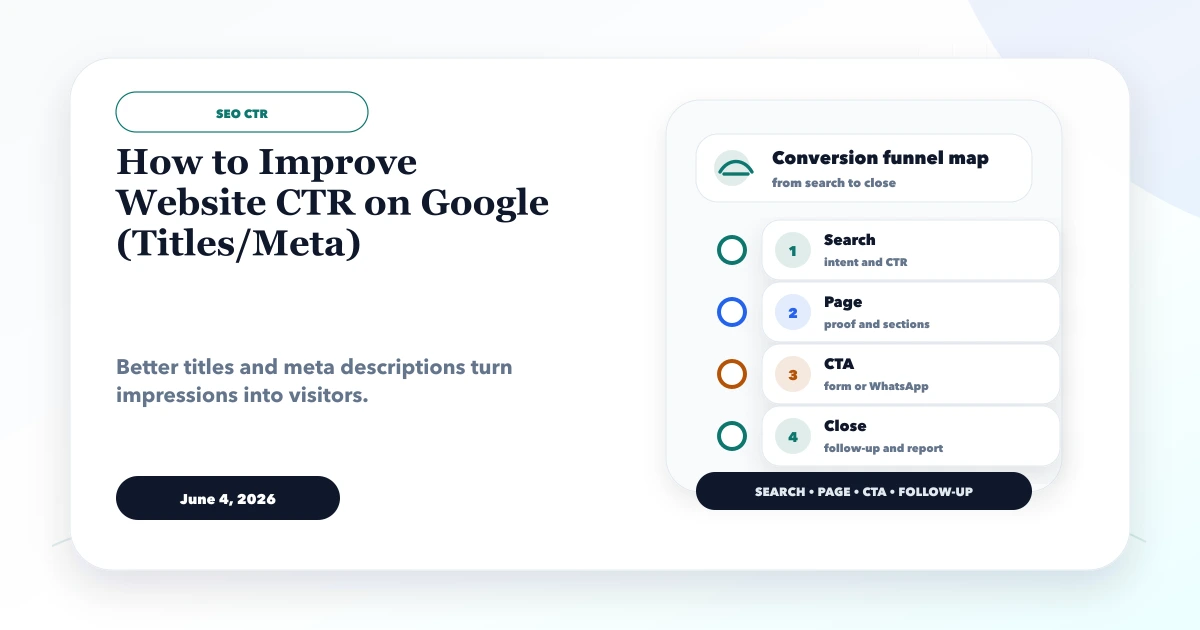
June 4, 2026
How to improve website CTR on Google with title tags, meta descriptions, search intent, page freshness, snippets, and GSC review.
Read article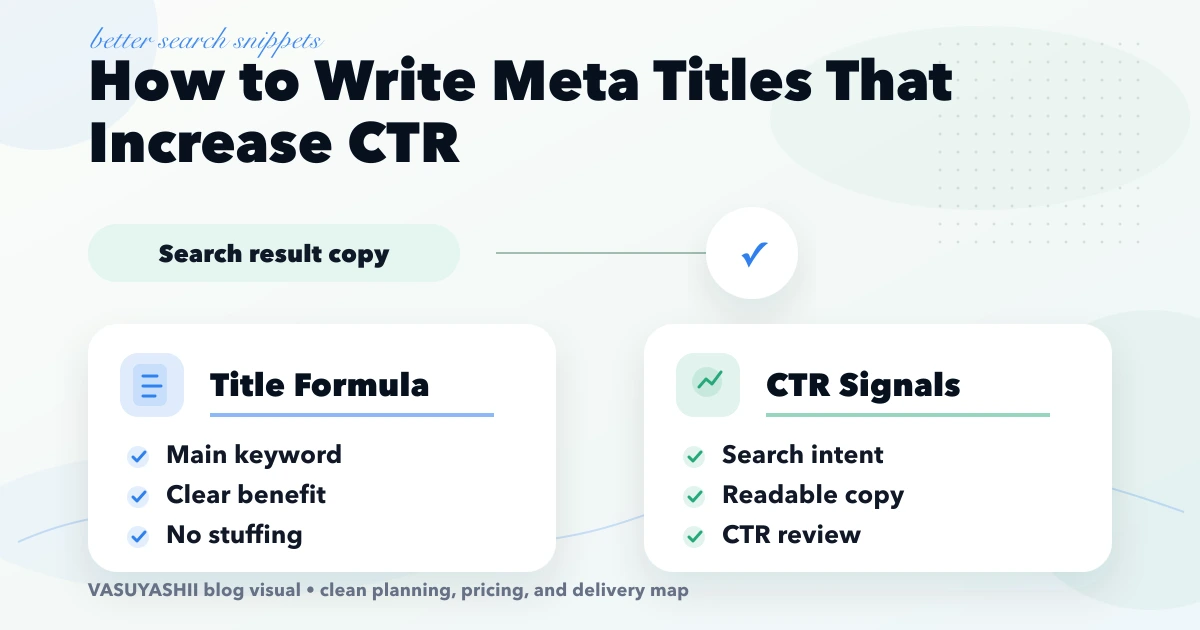
April 20, 2026
Improve organic CTR with query-matched meta titles, honest modifiers, readable length, Search Console selection, controlled testing, and conversion checks.
Read article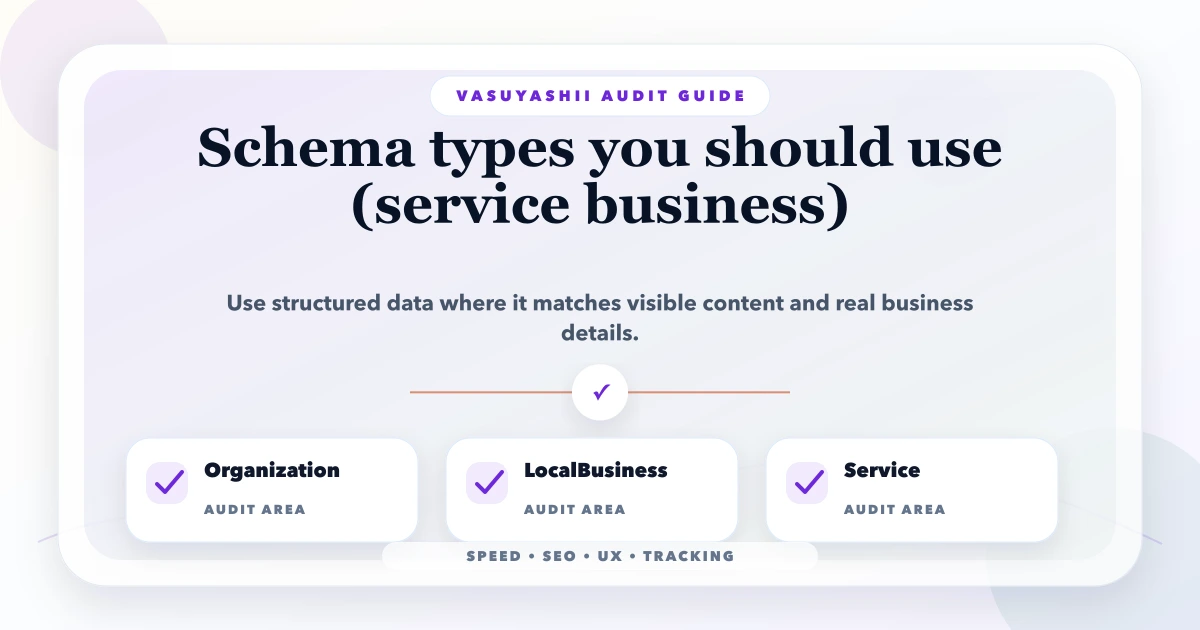
May 13, 2026
Choose accurate service-business schema: Organization, LocalBusiness, BreadcrumbList, Article and Service, with eligibility, testing, and audit rules.
Read article