
April 22, 2026
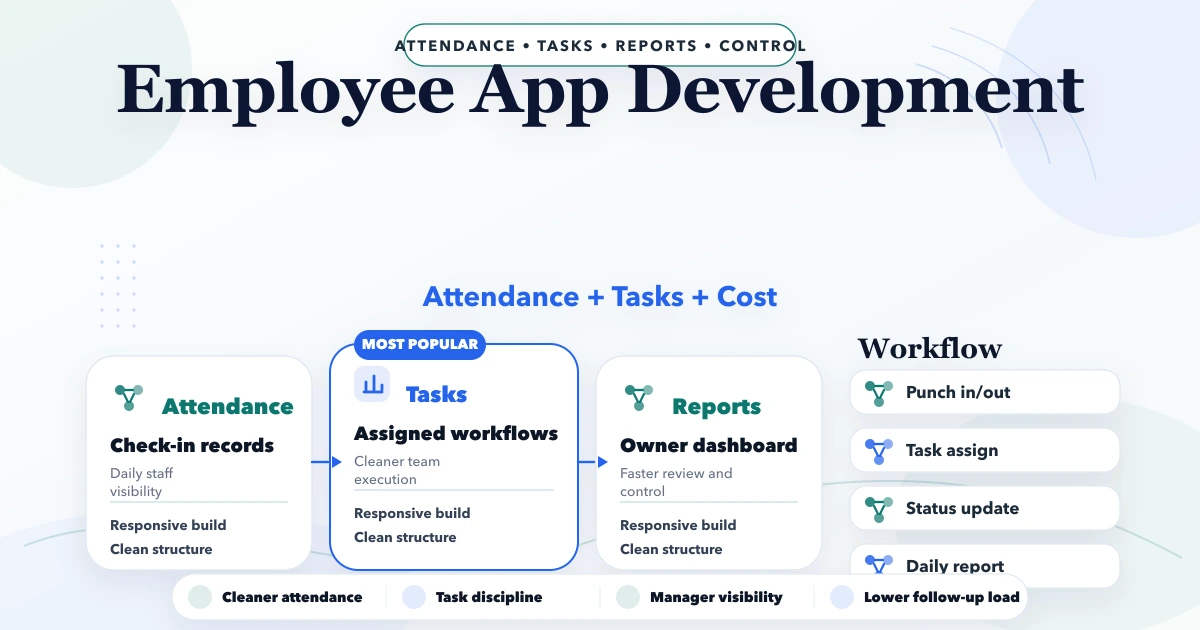
Employee Attendance and Task App Cost Guide
Plan an employee attendance and task app with role permissions, shift rules, offline use, task evidence, privacy controls, reports, timeline, and cost factors.
Read articlePublished Updated
Estimate a delivery app MVP in India by workflow, user apps, dispatch controls, proof of delivery, integrations, testing, and rollout risk.
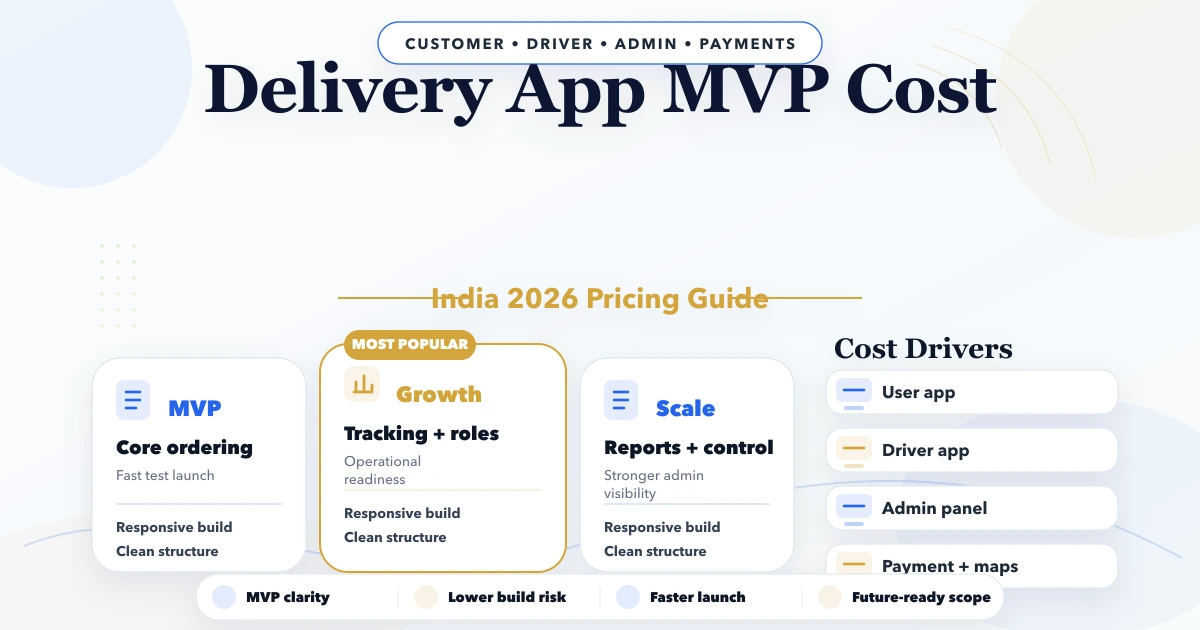
The cost of a delivery app MVP depends less on the number of screens and more on the delivery model it must control. A local store assigning ten deliveries a day needs a different system from a multi-vendor marketplace, courier aggregator, or fleet with live routing and cash reconciliation.
Before requesting a quote, define who creates an order, who assigns it, what the driver must prove, how the customer is updated, and how failed or cash-on-delivery orders are reconciled. Those decisions determine whether the MVP is a simple operations tool or a multi-sided platform.
A focused delivery web app with an admin dispatch board, driver mobile workflow, customer tracking link, status notifications, and basic reporting may start in the low single-digit lakh range in India. A production-grade multi-vendor or on-demand platform with native apps, live location, route optimisation, wallet or COD settlement, automated pricing, and several integrations can cost many times more.
Treat any price without a workflow and integration breakdown as provisional. The final estimate should separate product discovery, interface design, customer experience, driver experience, operations panel, backend, integrations, migration, QA, deployment, and support.
| Model | Typical first user | MVP focus | Complexity added later |
|---|---|---|---|
| Store-owned delivery | Shop or restaurant staff | Order queue, assignment, status, proof | Route optimisation, customer accounts |
| Distributor fleet | Sales and dispatch team | B2B order, vehicle assignment, challan, POD | Territory planning, ERP sync |
| Courier operation | Booking desk and riders | Pickup, hub movement, tracking, delivery proof | Franchise and rate engines |
| Multi-vendor marketplace | Vendor, customer, rider | Catalogue/order, allocation, payment split | Surge, wallet, dispute automation |
| Field service logistics | Technician and coordinator | Visit assignment, parts, completion proof | SLA and workforce optimisation |
Do not combine these models in one MVP unless the first paying customer genuinely operates that way.
The customer needs only the actions required for the selected model: create or view an order, enter a serviceable address, choose a delivery slot if applicable, see price and payment status, track progress, and report a problem. For assisted B2B operations, a secure tracking link may replace a full customer app in phase one.
The driver needs a mobile-first queue with pickup and drop details, call or navigation actions, status updates, failure reasons, and proof of delivery. Camera upload, signature, OTP, barcode scan, location evidence, and offline capture should be included only where they resolve a real dispute or connectivity problem.
The dispatch team needs order search, unassigned and delayed queues, driver availability, assignment controls, exception handling, and an audit trail. An attractive map is not a substitute for a clear exception queue.
If operations staff will work mainly in a browser, a custom web application can manage dispatch while the driver uses a lighter mobile experience. Review mobile app development options when offline work, scanning, background location, or device APIs are essential.
Agree the status model before designing screens. A practical baseline is:
draft -> confirmed -> assigned -> accepted -> picked_up -> out_for_delivery -> delivered
Add controlled branches such as cancelled, customer_unavailable, address_issue, payment_pending, returned, or rescheduled. For every transition, document who can trigger it, the required evidence, whether inventory or payment changes, what message is sent, and how it can be corrected.
Without this model, reports become unreliable because team members use statuses differently.
| Workstream | Lean MVP | Cost/effort drivers |
|---|---|---|
| Order capture | Admin entry or simple customer form | Catalogue, time slots, serviceability, pricing rules |
| Dispatch | Manual assignment and queue | Auto-allocation, zones, capacity, batching |
| Driver | Mobile web or basic app | Native apps, offline mode, background tracking |
| Tracking | Status timeline and secure link | Live map, ETA prediction, geofencing |
| Proof | OTP, photo, signature, or note | Multiple proofs, tamper controls, retention rules |
| Payment | Paid/COD status | Gateway, wallet, refunds, COD reconciliation |
| Notifications | Critical SMS, email, or WhatsApp events | Templates, consent, retries, provider approvals |
| Reports | Delivery count, failures, turnaround | Profitability, SLA, rider performance, analytics |
| Integrations | One source or export | ERP, ecommerce, maps, accounting, multiple vendors |
These are planning bands, not fixed quotations:
Budget separately for maps, geocoding, SMS/WhatsApp, email, payment fees, cloud infrastructure, app-store accounts, monitoring, and support. Provider usage charges can grow with orders and tracking frequency even when the application code does not change.
Continuous driver location requires permission handling, battery-aware collection, background behaviour, data retention decisions, map rendering, and support for poor connectivity. ETA prediction is a separate problem from showing a current point.
Auto-assignment needs explicit rules for zone, capacity, distance, shift, vehicle, priority, and reassignment. A manual dispatch board is often better during the pilot because it exposes the real exceptions before rules are automated.
COD is not a single status. Define amount collected, partial collection policy, handover to office, deposit evidence, driver balance, shortages, returns, and reconciliation ownership.
Vendor commissions, fees, taxes, refunds, cancellation charges, and payout schedules create finance logic that needs stronger testing and audit trails.
Offline mode requires local storage, queued actions, conflict rules, visible sync state, retry behaviour, and testing on the actual devices and networks used by drivers.
For a regional distributor, a defensible first release could include:
It would deliberately exclude customer registration, dynamic pricing, public driver onboarding, route optimisation, wallet balances, and automated settlements until pilot data proves they are necessary.
Our implementation scoping process begins with a shadow run of the current dispatch day: who receives the order, who calls the driver, which exceptions occur, and which proof finance needs. That first-party method produces a smaller and more testable estimate than copying a consumer delivery app feature list.
Write down the system of record for orders, customers, products, payments, and delivery status. If an ERP creates the order, decide whether the delivery app can edit commercial values or only append fulfilment events.
For every integration define:
Use integration and automation planning for payment, WhatsApp, ecommerce, or ERP connections. The webhook integration guide explains why retries and duplicate events need application-level controls.
Yes, when drivers need a simple foreground workflow and stable connectivity. Native apps become more valuable for background location, offline queues, scanning, push notifications, and device-specific capabilities.
Not always. Status updates and a secure tracking timeline may satisfy the customer while costing less and using less driver battery. Validate the business reason before adding continuous location.
A focused flow can be delivered faster than an integrated marketplace, but duration depends on approvals, app-store release, data quality, third-party APIs, offline needs, and testing. Ask for milestones and acceptance evidence rather than a date alone.
Share order volume, user roles, delivery model, states, service area, assignment method, proof type, payment/COD rules, integrations, device needs, reports, and the exceptions seen in a normal week.
Yes, subject to consent, approved templates, provider rules, and secure links. Decide which events genuinely help the customer and how failed messages are handled.
Prepare one real delivery journey and its exceptions, then contact VASUYASHII for a scope review. A clear workflow will produce a more reliable estimate than a long feature wishlist.
Choose the smallest delivery system that can reliably capture an order, assign responsibility, prove the outcome, handle exceptions, and reconcile money. Add automation only after the pilot shows where manual control is genuinely limiting growth.
Compare this specialised scope with the broader platform, backend, integration, QA, and support drivers in the app development cost in India guide.
Related Articles
April 22, 2026
Plan an employee attendance and task app with role permissions, shift rules, offline use, task evidence, privacy controls, reports, timeline, and cost factors.
Read article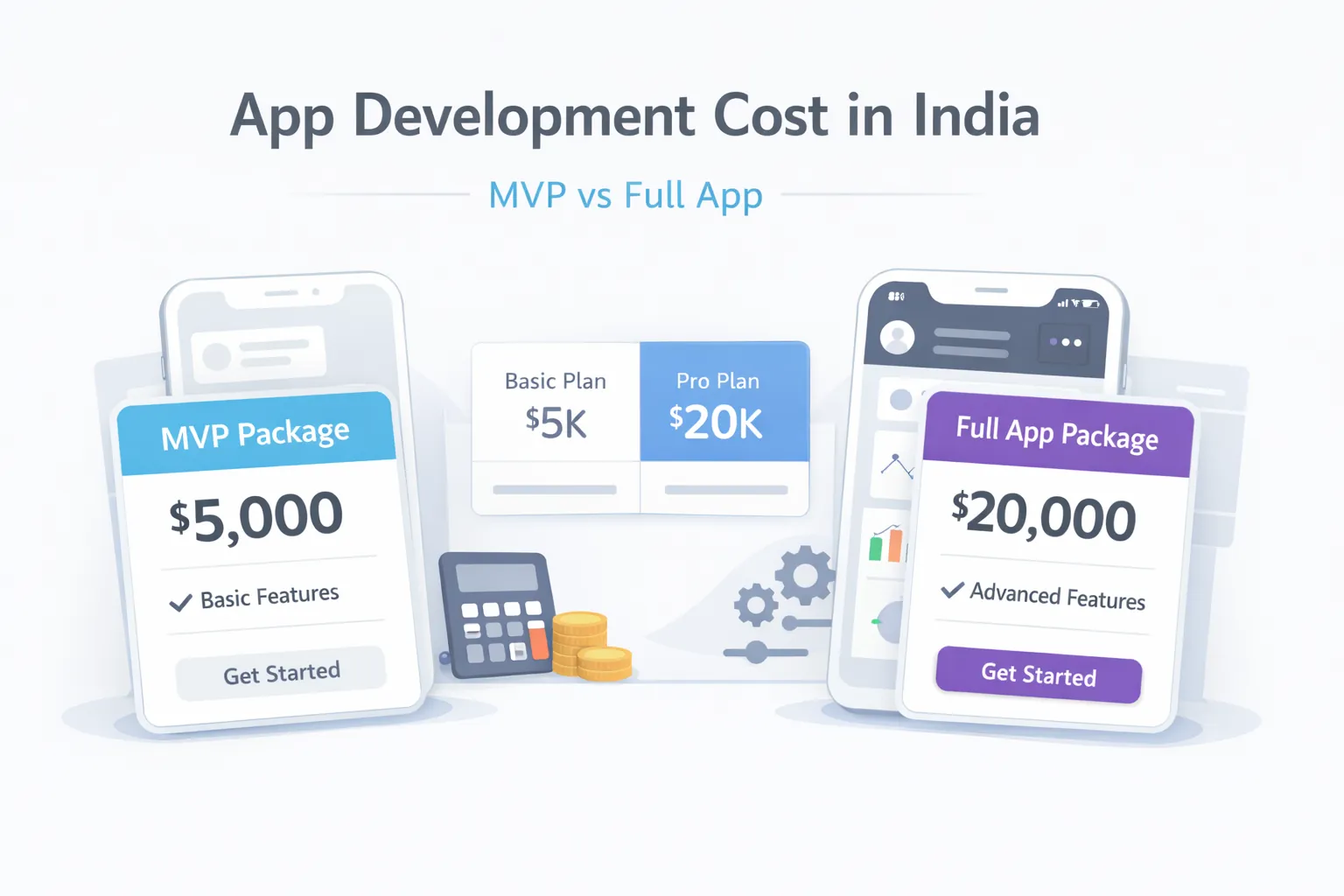
March 29, 2026
Estimate app development cost in India by comparing prototype, focused MVP, and full product scope across platforms, backend, integrations, QA, and support.
Read article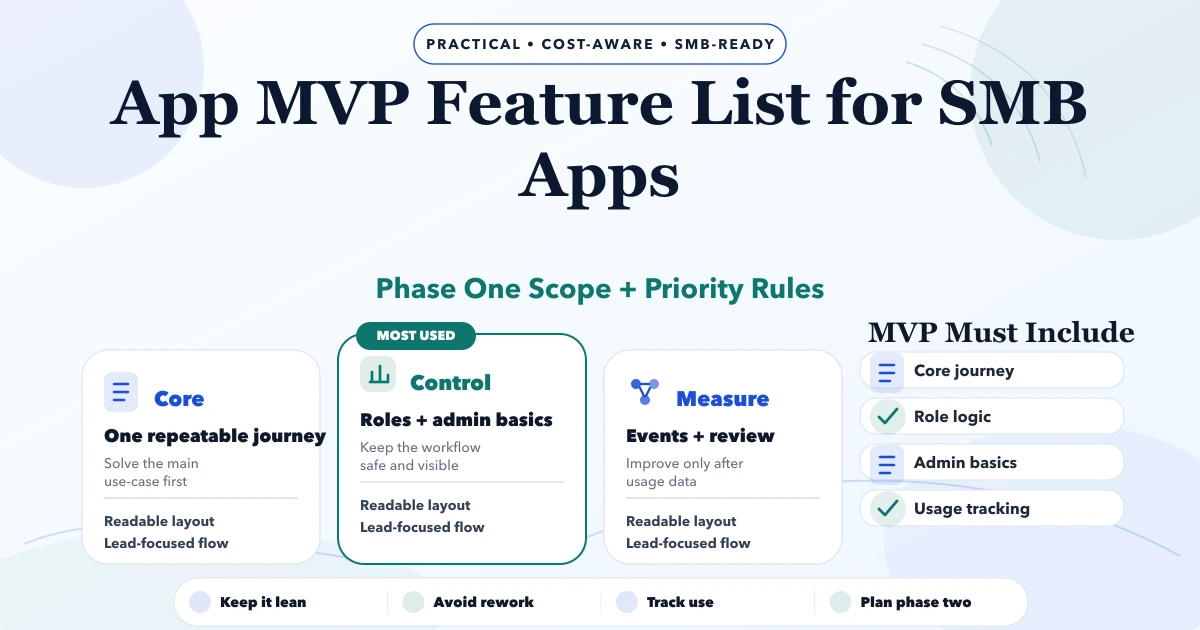
May 3, 2026
App MVP Feature List for SMB Apps guide for 2026 with practical pricing, rollout risks, implementation notes, and lead-focused decision points for SMB teams.
Read article
May 20, 2026
Build a practical website-to-WhatsApp lead flow with contextual messages, qualification, ownership, tracking, privacy controls, and reliable follow-up.
Read article