
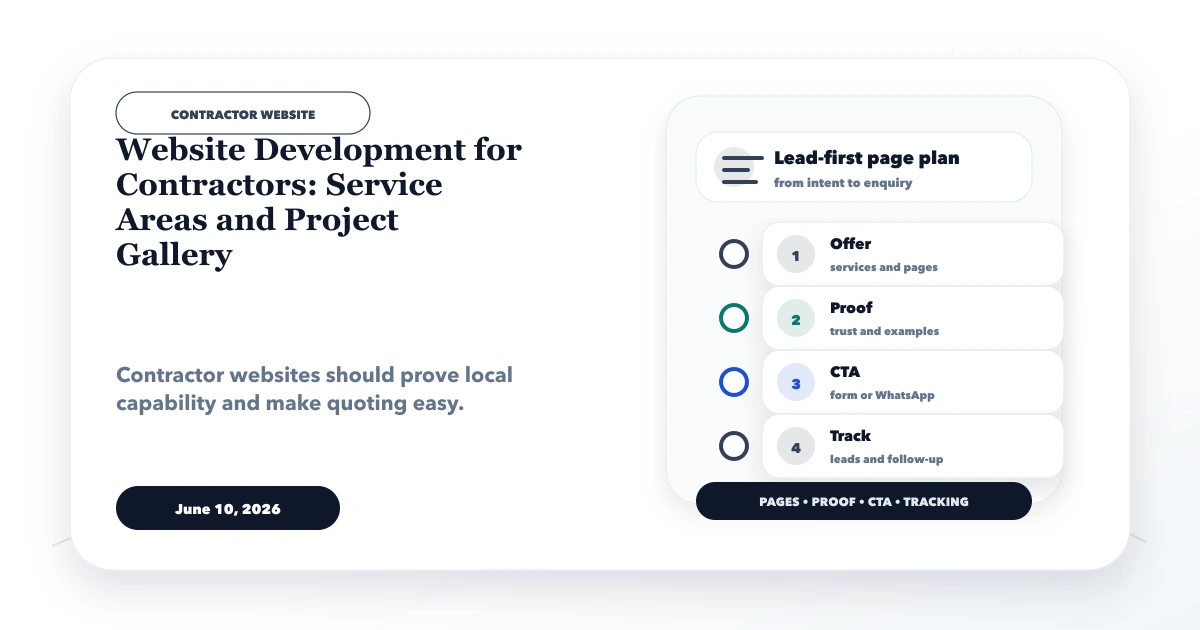
June 10, 2026
Contractor Website: Service Areas and Project Proof
Plan a contractor website with clear service areas, structured project proof, scope-aware quote forms, local SEO, and reliable lead follow-up.
Read articlePublished Updated
Plan a Roorkee contractor website with project scope, site-inspection requests, service areas, capability proof, quote forms, and handover checks.
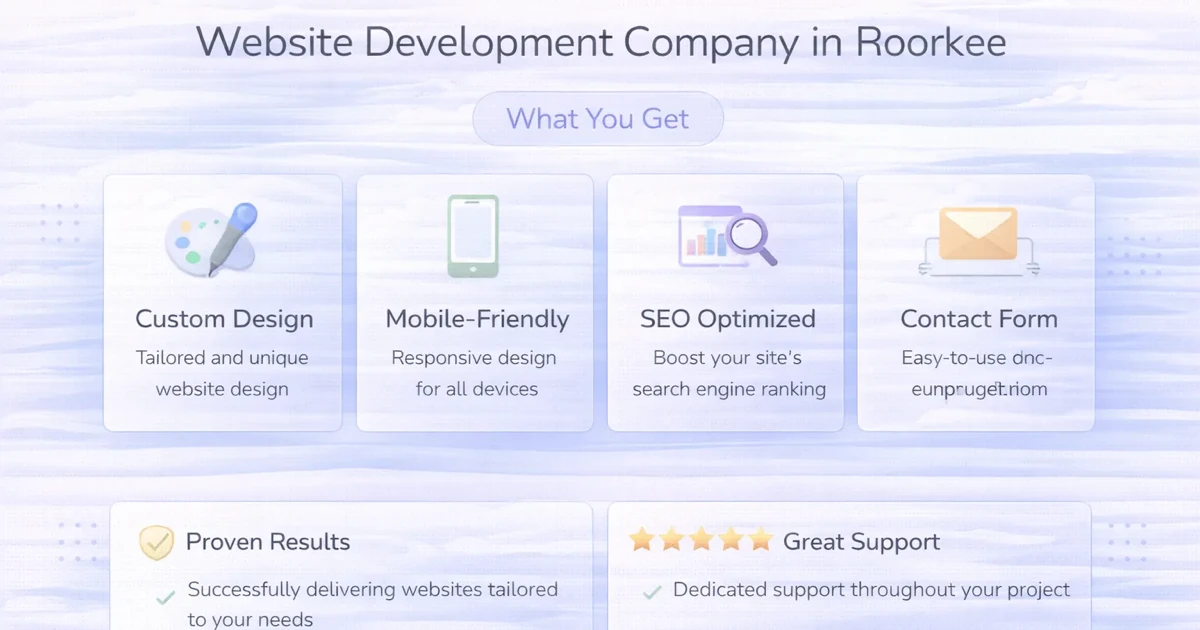
Service-area note: VASUYASHII is based in Delhi NCR and supports businesses remotely across India. A city-focused guide describes service and planning context; it does not claim a physical office in every location mentioned.
Explore the parent topic: Website Development Delhi NCR Hub →A contractor comparing website development companies in Roorkee needs more than a portfolio gallery. Buyers must understand project capability, service boundaries, inspection process, material or labour responsibility, and what information is required before a quotation can be prepared.
This guide gives the existing Roorkee URL a specific role: website planning for contractors, installers, fabricators, and project-based service providers. Its purpose is to create better site-inspection and quotation requests without inventing local projects or generic city claims.
State:
“All types of work undertaken” is not useful. Buyers need to know whether the business is suitable before they call.
| Page | What it should answer |
|---|---|
| Home | What work is handled and how to request an assessment |
| Services | Scope, process, exclusions, and required inputs |
| Sectors | Fit for residential, commercial, industrial, or institutional work |
| Capability | Team, equipment, quality process, and genuine credentials |
| Project evidence | Approved case material with scope and constraints |
| Service area | Where inspections and projects are genuinely supported |
| Request inspection | Site type, location, requirement, timeline, contact |
Avoid creating dozens of nearly identical service-location pages. Build pages around distinct services and operational differences.
The form should collect enough information for triage:
Do not promise a confirmed visit automatically unless staff capacity and calendar rules are connected. Use “request inspection” and explain the confirmation process.
Consider a fabrication and installation business receiving photos and dimensions through personal WhatsApp chats. The owner repeatedly asks for site location, project type, and deadline. Sales staff cannot tell which website page generated the enquiry.
A focused website can:
It should not claim instant pricing for work that depends on site conditions.
Strong project evidence includes:
If customer details cannot be published, show process, sample deliverables, quality checks, and team capability instead. Do not use downloaded construction photos as completed work.
Explain the commercial path:
This sets expectations and filters buyers who need an immediate fixed price for undefined work.
Useful local detail is operational:
Do not imply an office in Roorkee unless the business has a real, verifiable location. Service-area content can be honest without a fake address.
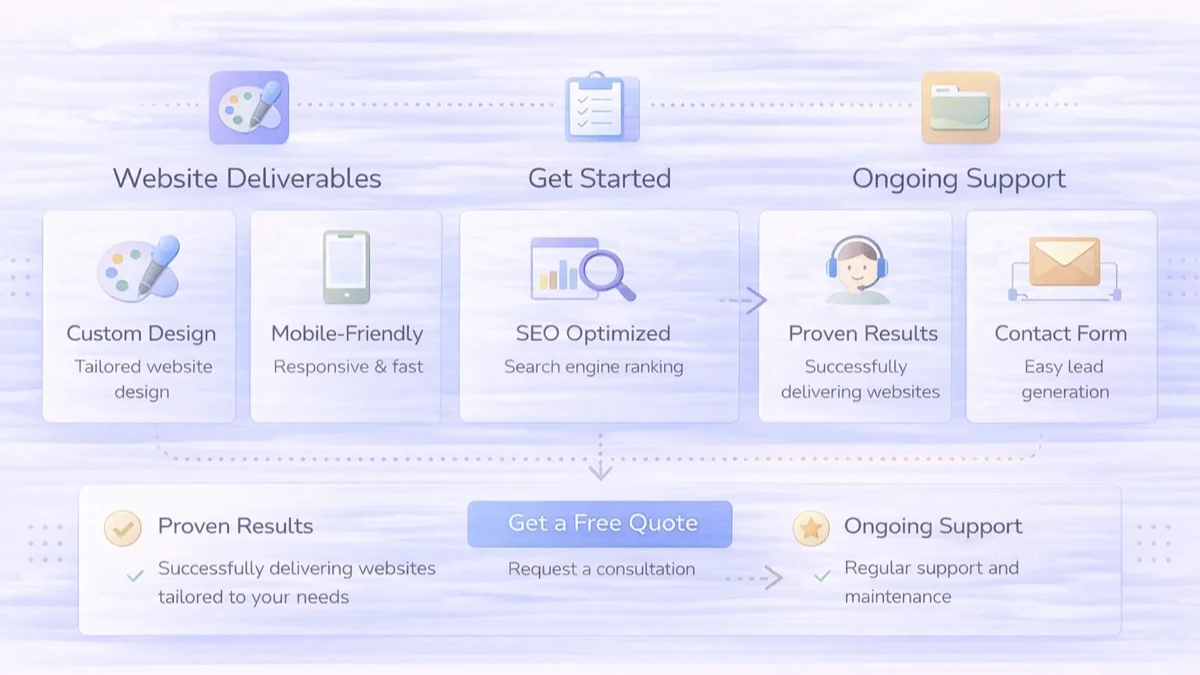
The website delivery checklist is useful before final approval.
The business should prepare source material before design begins:
For each service, state the input, work performed, output, exclusions, and when inspection is required. This prevents the website writer from guessing technical scope.
Explain whether the same service changes for homes, shops, institutions, warehouses, or industrial sites. Keep claims within genuine capability.
Document checks such as measurement, material verification, site safety, installation inspection, testing, snag correction, and handover. Publish only procedures the team actually follows.
Use a standard sheet for approved projects: type, broad requirement, constraints, supplied scope, completion evidence, and maintenance note. Remove customer identity or location when permission is absent.
Clarify whether consultation, measurement, transport, civil work, electrical work, taxes, or consumables are included. The website does not replace a quotation, but it can prevent common misunderstandings.
This pack creates original content that competitors cannot reproduce by changing the city name.
Before final payment, verify:
Run a test request from a new mobile device and follow it through the business process. A successful browser message is not enough if the operational team never receives or recognises the lead.
Assign a person to review services, coverage, contact details, project evidence, and form routing. Contractor sites become misleading when completed work is added without context or when old services remain available after operations change.
Schedule a quarterly content review and a more frequent form-delivery check. Keep an approval record for testimonials and project photographs so future updates remain evidence-safe.
Cost increases with:
A normal contractor website does not need a custom dashboard by default. If site visits, quotations, teams, and job status need role-based management, consider software development as a later operational phase.
Collect service boundaries, process, genuine proof, FAQs, and quote inputs.
Approve page intent, navigation, form fields, and internal links before visual polishing.
Test mobile layouts, file handling, forms, call/WhatsApp actions, metadata, and analytics.
Review whether requests contain enough information. Improve the form and service pages based on real gaps.
VASUYASHII would request the service list, inspection policy, quotation stages, genuine proof, and current enquiry examples. The team can then decide whether a focused website through services is enough or whether a connected workflow is required. This describes a proposed process, not a claim of completed contractor work in Roorkee.
Show fixed or starting prices only for repeatable scopes. For site-dependent work, explain the inspection and quotation method.
No. Add the project type, scope, constraints, and work performed. Use only approved, genuine material.
Only when necessary and when file security, size, retention, and access are defined. A callback can be safer for early qualification.
Create one page per meaningfully different service or buyer intent. Avoid pages that differ only by a keyword.
Yes if the team monitors it, but a structured form may capture better project information. Use both with clear roles.
Only publish an address if it is real and customer-facing. A service-area business can accurately describe coverage without inventing a location.
Prepare one sample inspection request and one approved project record. Send them through contact to receive a scope discussion for a contractor website built around qualification and quotation, not just a gallery.
Related Articles
June 10, 2026
Plan a contractor website with clear service areas, structured project proof, scope-aware quote forms, local SEO, and reliable lead follow-up.
Read article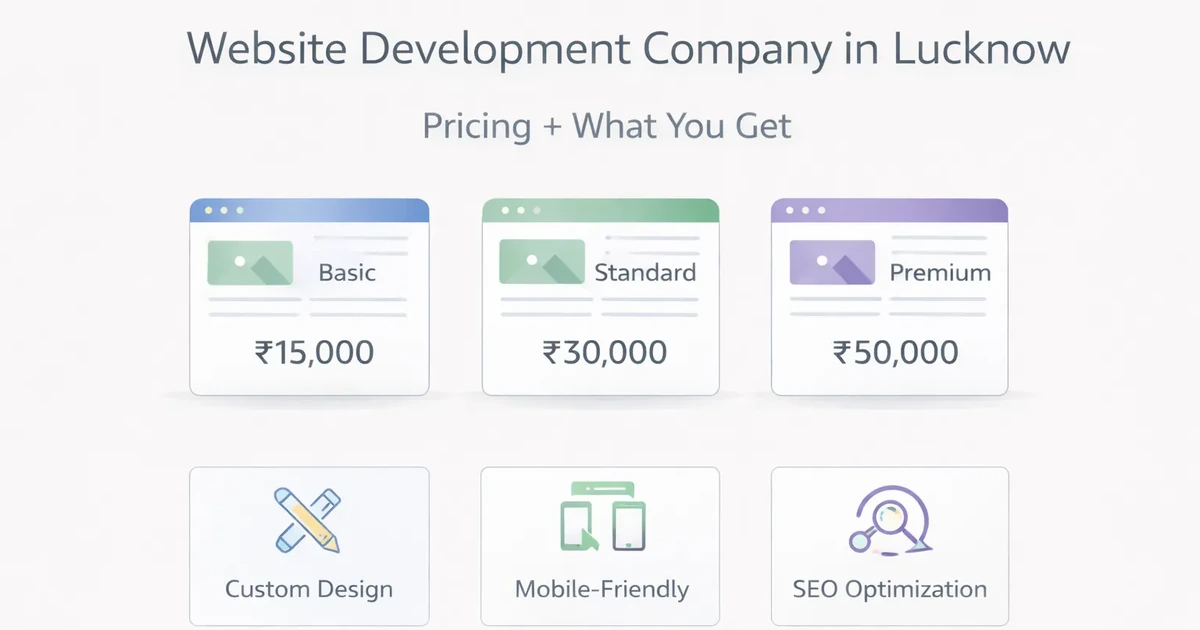
March 31, 2026
Plan a Lucknow service website with Hindi-English content ownership, branch and service routing, accessible forms, proof controls, handover, and measurement.
Read article
May 15, 2026
best website for contractors and builders: practical 2026 guide with features, cost, timeline, tech stack, mistakes, FAQs, proof, and next steps for Indian.
Read article
April 19, 2026
Plan a Rohini website for clinics, institutes, and service teams with clear service routes, enquiry triage, proof governance, tracking, and ownership.
Read article