
March 29, 2026
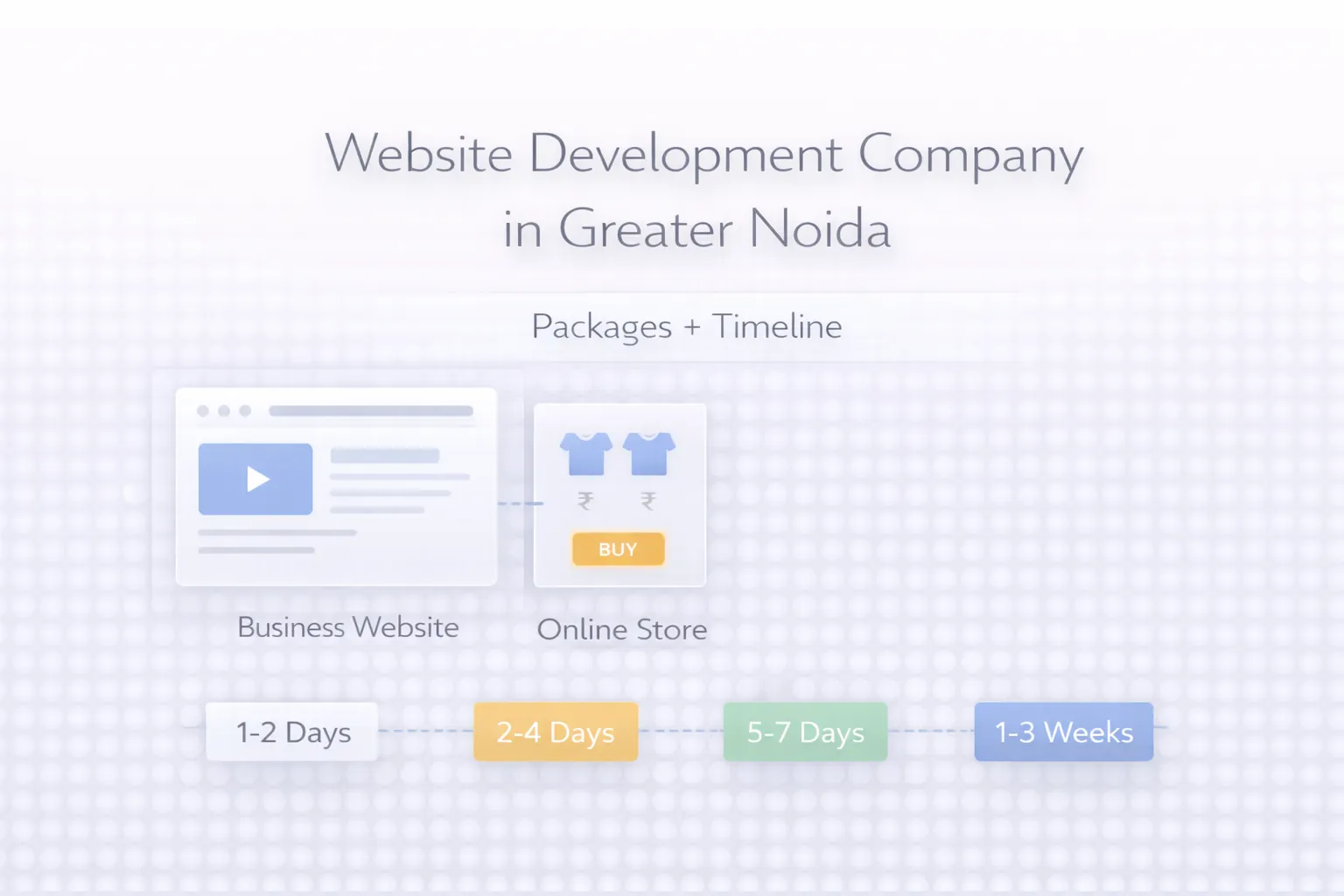
Website Development Company in Greater Noida
Website development company in Greater Noida: packages, timeline, launch scope, SEO basics, and what local businesses should build first in 2026.
Read articlePublished Updated
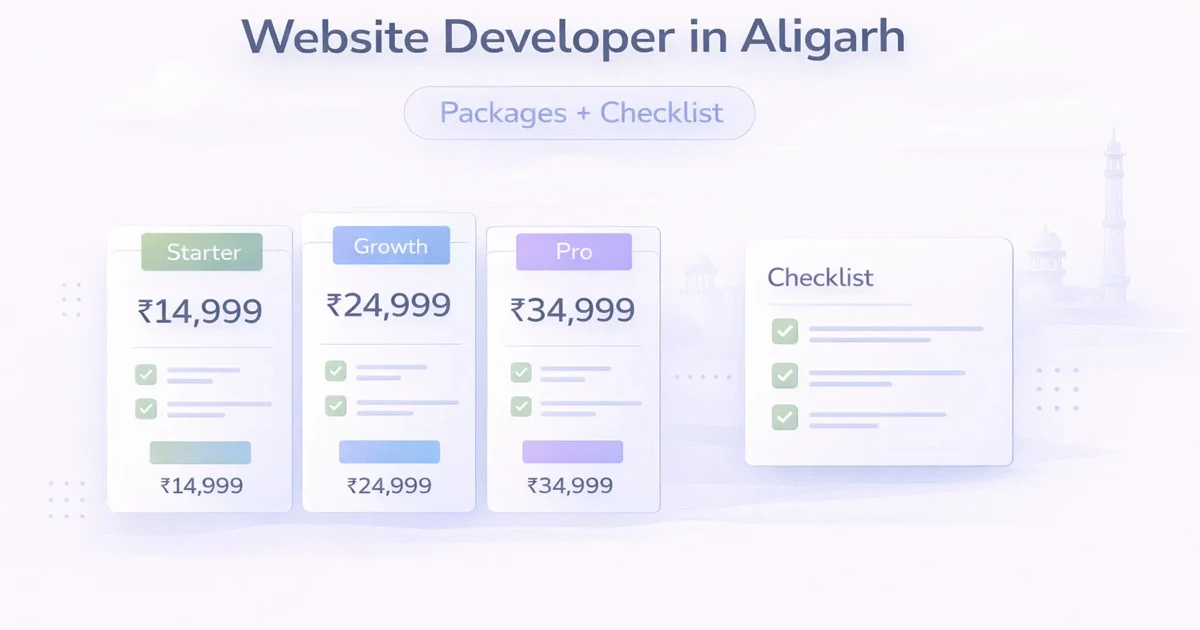
Website developer in Aligarh: packages, checklist, scope, and what local businesses should review before finalizing a 2026 project.
Service-area note: VASUYASHII is based in Delhi NCR and supports businesses remotely across India. A city-focused guide describes service and planning context; it does not claim a physical office in every location mentioned.
Explore the parent topic: Website Development Delhi NCR Hub →When a business in Aligarh asks for a website quote, the first number sounds important. But the better question is what that number actually covers. Many projects go wrong because the business compares pricing without comparing scope.
A website is not just pages. It is structure, messaging, proof, CTAs, mobile usability, and tracking. If those things are missing, even a cheap project feels expensive later because leads stay weak and fixes keep coming.
This guide explains common package ranges in Aligarh, what a proper checklist should include, and how to avoid vague proposals.
For most Aligarh businesses, website projects fit into three practical ranges:
₹15,000 to ₹28,000₹28,000 to ₹60,000₹60,000 to ₹1.5 lakh+If you only compare page count, you miss the important part. A 6-page site with better content flow and CTA placement can outperform a 15-page site with weak structure.
Usually works for:
Expected scope:
Usually works for:
Expected scope:
Usually works for:
Expected scope:
Related reading:
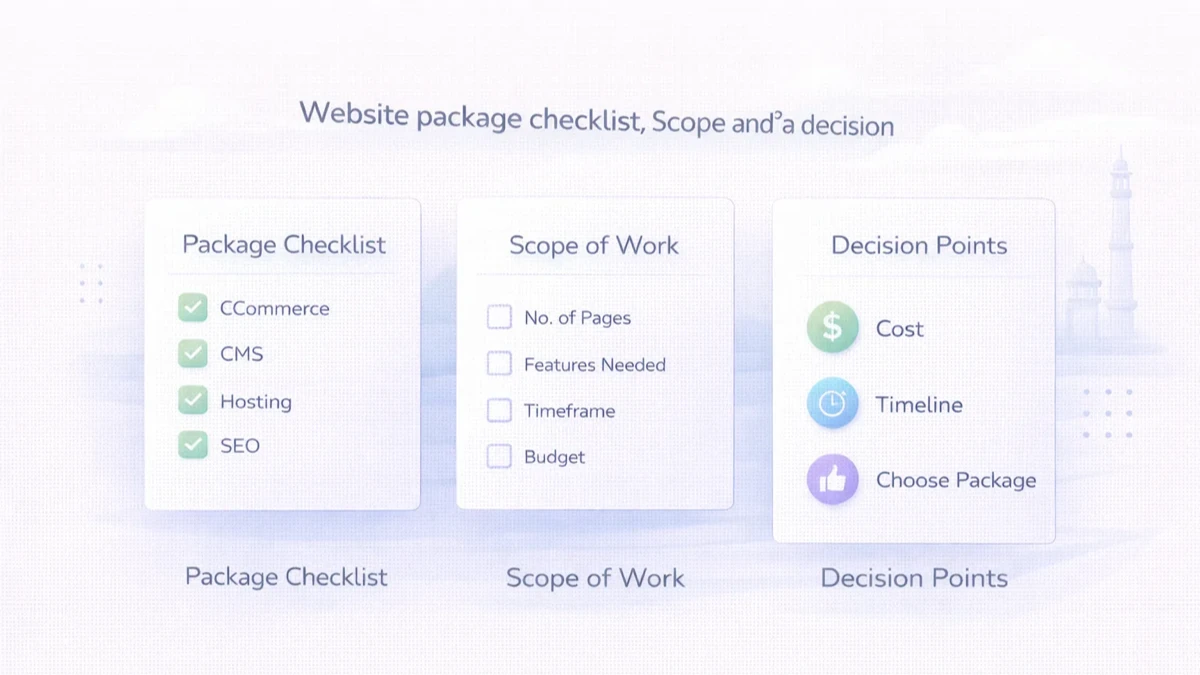
This is the checklist that matters more than presentation slides.
If a quote does not answer these points clearly, it is incomplete even if the price looks attractive.
Many owners ask for design first. That is understandable, but design is only one layer. The usual misses are:
These are the items that directly affect outcome.
Typical timelines in Aligarh look like this:
4 to 7 days: compact brochure website1 to 2 weeks: standard business website2 to 4 weeks: stronger growth website with proper content structure4+ weeks: bigger custom scope with more review loopsDelays usually happen because of:
A practical stack for most business sites:
Next.js for performance and routingWebP images for speedThis keeps the site fast now and easier to scale later.
What changes website cost the most:
Businesses often underestimate content work. But clear copy and proof sections usually affect conversion more than visual extras.
An Aligarh business website should fit the business type: lock industry, education, retail, manufacturing, healthcare, or services. The right package should include content, SEO, mobile UX, and lead setup.
Before selecting a package, confirm:
Useful links: services, web application services, and contact.
If you are speaking to website developers in Aligarh, ask for a written checklist-based scope. It will save time, reduce confusion, and make pricing comparison far easier.
A manufacturer, wholesaler, or dealer-facing business should decide whether the website is a brochure, structured catalogue, quotation tool, or ecommerce system. These are different products. A brochure explains categories and capability. A catalogue provides consistent product data. A quotation flow qualifies requirements. Ecommerce also needs reliable price, stock, tax, payment, delivery, cancellation, and return logic.
Start with representative records rather than a page count. Prepare ten products that include the difficult cases: multiple sizes, finishes, technical documents, custom options, minimum quantities, or discontinued variants. If the template can handle those records cleanly, expansion is more predictable.
Use a product structure that matches the sales conversation:
| Data group | Example purpose |
|---|---|
| Identity | Product name, code, family, application |
| Specification | Material, dimensions, finish, compatibility |
| Commercial qualifier | MOQ, customisation, buyer type, destination |
| Evidence | Approved images, technical sheet, certification |
| Action | Request quote, ask for sample, contact dealer desk |
Do not publish an unverified specification or reuse a supplier image without permission. Assign one owner for product facts and another authorised reviewer where technical or compliance statements carry risk.
Dealer enquiries may need firm type, sales area, product interest, expected volume, and existing channel information. Collect only what is necessary for initial review, and explain that submission is not automatic appointment or territory approval.
Sample and customisation requests need operating rules before the button is added. Define eligibility, charges, quantity limits, dispatch process, expected response, and what happens when the requested variant is unavailable.
For custom requirements, state which inputs are needed for an initial discussion. Do not encourage confidential drawings or payment details through a general form. Use a secure follow-up route after the business verifies the request.
Track the request status separately from ordinary contact enquiries. Acknowledged, clarification required, approved, dispatched, delivered, quoted, and closed are useful states only when a named team owns them.
Before launch:
The handover should include the product template, data export, image originals, document register, account ownership, and update instructions. A future team should be able to change a specification or retire a product without rebuilding the catalogue.
VASUYASHII can build a lead-first catalogue website and can scope a managed web application when products, permissions, imports, or dealer workflows require structured data. Integration services can be considered only after the source of truth and failure rules are defined.
These capabilities do not imply an Aligarh office, client list, ranking, or sales guarantee. Share a representative product sheet and buyer routes through contact for a scoped recommendation.
When a specification, variant, document, or availability state changes, update every public reference from one approved source. Record the effective date and identify older quotations or samples that may still be in circulation.
For a discontinued item, remove invalid actions and explain an approved alternative or contact route where useful. Redirect only when the replacement serves the same intent. A product archive should not imply current supply, support, certification, or price.
For many businesses, ₹15,000 to ₹60,000 covers the practical range depending on page count and quality.
For some businesses, yes. For others, separate service pages are necessary for clarity and SEO.
At least the structure should be SEO-ready from the beginning.
Both matter, but weak content can hurt even a visually good website.
Yes, if the initial structure is planned properly.
Yes. Even basic sites should track form submissions and key CTA clicks.
Sometimes yes, sometimes not. It should be written clearly in the proposal.
Compare deliverables, tracking, content scope, revisions, and support window, not just final price.
If you want to avoid vague packages and choose a website build based on checklist clarity, lead flow, and real deliverables, start with scope and content planning first.
Related Articles
March 29, 2026
Website development company in Greater Noida: packages, timeline, launch scope, SEO basics, and what local businesses should build first in 2026.
Read article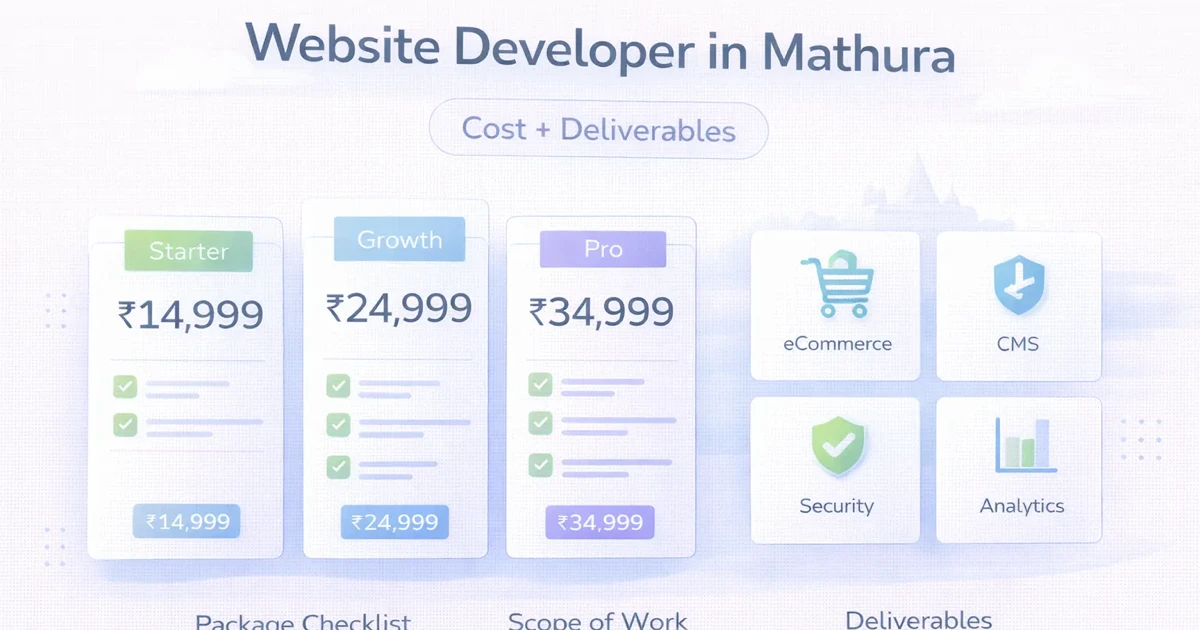
April 1, 2026
Website developer in Mathura: cost, deliverables, package expectations, and what local businesses should ask before signing in 2026.
Read article
March 30, 2026
Compare website development pricing in Bulandshahr, essential deliverables, ownership terms, lead tracking, and questions to ask before hiring.
Read article
March 24, 2026
Compare website development packages in India by price, scope, deliverables, timelines, exclusions, ownership, acceptance checks, and maintenance needs.
Read article